
What is the most important measurement when buying a new kitchen sink? The most important measurements are the overall length and width of the sink to ensure it fits your existing countertop cutout and cabinet base.
Replacing a kitchen sink can seem daunting, but with accurate measurements, it becomes a straightforward task. Whether you’re upgrading to a sleek new design, switching from a drop-in to an undermount, or simply replacing a damaged sink, getting the measurements right is paramount for a smooth kitchen sink installation. This guide will walk you through every step, ensuring you select a sink that fits perfectly and functions beautifully in your kitchen.
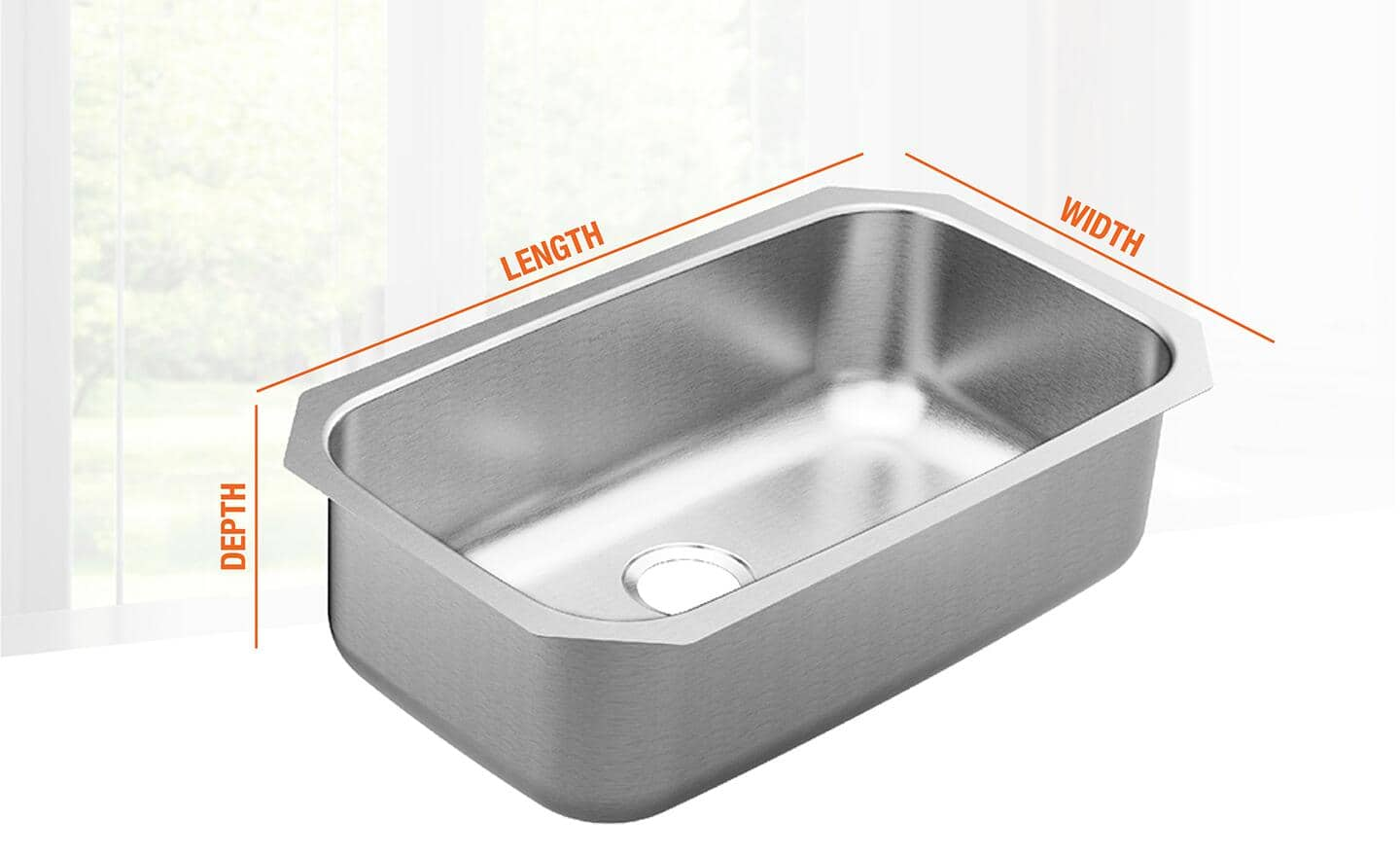
Image Source: dam.thdstatic.com
Why Precise Sink Measurements Matter
Mistakes in measuring can lead to costly errors and significant installation headaches. A sink that’s too large won’t fit into the countertop opening, requiring either a new countertop or significant modifications. A sink that’s too small might leave unsightly gaps that are difficult to seal, allowing water to seep into your cabinetry. Beyond the physical fit, understanding kitchen sink dimensions is crucial for cabinet compatibility and faucet placement.
Avoiding Costly Mistakes
- Incorrect Sink Size: Leads to either a sink that doesn’t fit the cabinet or countertop, or a sink that leaves awkward gaps.
- Faucet Hole Mismatch: If your new sink doesn’t have the correct number or placement of faucet holes for your desired faucet.
- Plumbing Compatibility: Ensuring the drain and overflow are positioned correctly for your existing plumbing.
- Aesthetic Compromises: A sink that’s out of proportion with your countertop or cabinetry can detract from the overall kitchen design.
Essential Tools for Accurate Measurement
Before you begin, gather these simple yet crucial tools:
- Tape Measure: A sturdy metal tape measure is essential.
- Pen and Paper or Smartphone: To record your measurements.
- Safety Glasses: Always a good idea when working under a sink.
- Flashlight: To see clearly in the often dimly lit space under the sink.
Measuring for a Replacement Sink: Key Dimensions
When replacing an existing sink, you’ll primarily be working with the current countertop cutout and the cabinet below.
1. Measuring the Countertop Cutout
This is often the most critical measurement. You need to know the size of the hole already in your countertop.
For Drop-In (Top-Mount) Sinks:
- The Reveal: For drop-in sinks, the rim of the sink sits on top of the countertop. The critical measurement here is the actual size of the hole in the countertop.
- How to Measure:
- Access the Underside: Clear out everything from under your sink. Use a flashlight to get a clear view.
- Measure the Opening: Place the tape measure across the widest part of the hole from the inside edge of the countertop to the opposite inside edge. Do this for both length and width.
- Record These Numbers: These are your minimum required internal dimensions for a new drop-in sink.
- Consider the Rim: Remember that the new sink’s outer rim will overlap this opening. The sink’s overall dimensions will be larger than the cutout.
For Undermount Sinks:
- Seamless Integration: Undermount sinks are installed from beneath the countertop, creating a clean, seamless look. The measurements here are more about the edge of the countertop rather than a hole.
- How to Measure:
- Measure the Entire Sink’s Outer Edge: From the underside of the countertop, measure the overall length and width of your current undermount sink where it meets the countertop material.
- Record These Numbers: These measurements represent the maximum size of the sink that will fit flush with the countertop edge.
- Consider Countertop Support: Ensure your countertop material (especially if it’s granite or quartz) has adequate support around the sink area. Very large or heavy sinks may require extra support brackets.
2. Measuring Cabinet Space
Your new sink must fit within the cabinet base. This is especially important if you’re changing sink styles or sizes.
Sink Width Calculation:
- The Standard: Most base cabinets are designed for standard sink widths. A 36-inch base cabinet typically accommodates sinks up to 33 inches wide. However, always measure.
- How to Measure:
- Measure the Cabinet Interior Width: Open the cabinet doors or drawer below your sink. Measure the internal width of the cabinet from one side wall to the other.
- Subtract for Clearance: You’ll need some clearance for plumbing and cabinet bracing. A general rule of thumb is to subtract 1 to 2 inches from the total cabinet interior width. For example, if your cabinet interior is 35 inches, aim for a sink that is no wider than 33-34 inches.
- Consider Sink Depth: The depth of the sink bowl itself doesn’t usually impact cabinet fit, but the overall sink depth (front to back) does. Ensure there’s enough clearance for plumbing fittings behind the sink.
Sink Length Estimation (Front to Back):
- Countertop Depth: This measurement is usually dictated by your countertop depth. Standard countertops are 25 inches deep.
- How to Measure:
- Measure Cabinet Interior Depth: From the back of the cabinet to the front edge where the countertop overhangs.
- Factor in Countertop Edge: Also, consider the thickness of your countertop material and any edge detailing.
- Sink Depth Measurement: The sink’s front-to-back dimension should be slightly less than the available countertop depth to allow for proper installation and mounting hardware. For undermount sinks, it must fit within the countertop’s footprint.
3. Measuring Sink Depth
The depth of the sink bowl affects its capacity and how much you can fit inside.
- Sink Depth Measurement: This is a measurement of the sink itself, from the bottom of the bowl to the top rim.
- How to Measure:
- Measure the Bowl: Measure from the inside bottom of the sink bowl to the underside of the sink rim.
- Consider Cabinet Clearance: Very deep sinks (10 inches or more) might interfere with the pipes or garbage disposal in the cabinet below, especially in smaller cabinets. Check for clearance.
4. Measuring for Faucet Holes
If you’re installing a new faucet, you need to ensure the sink has the correct number and placement of holes.
- How to Measure:
- Count Existing Holes: Count the number of holes in your current sink.
- Measure Hole Spacing: If you plan to reuse your faucet, measure the distance between the center of the existing faucet holes. Manufacturers have standard spacing for 1, 2, 3, or 4-hole configurations.
- Consider Faucet Style: Some faucets are single-hole, while others use multiple holes for sprayers or soap dispensers. Modern sinks often come with options for covering unused holes with plates.
Measuring for a New Kitchen Layout or Renovation
If you’re installing a sink in a new kitchen or during a significant renovation, you have more flexibility but also more variables to consider.
1. Countertop Fabrication
- Sink Cutout Dimensions: When you order a new countertop, you’ll provide the sink cutout dimensions. These are the precise measurements of the hole that will be cut into the countertop material.
- Drop-In Sink Cutout: For a drop-in sink, the cutout dimensions are typically 1/4 inch to 1/2 inch smaller than the sink’s outer rim dimensions to allow the rim to rest securely on the countertop. Always consult the sink manufacturer’s template or specifications.
- Undermount Sink Cutout: For an undermount sink, the cutout dimensions are usually the exact outer dimensions of the sink bowl, or slightly larger to accommodate mounting clips. Again, always refer to the manufacturer’s specifications or template.
2. Cabinet Requirements
- Cabinet Base Width: The cabinet designed to house your sink will need to be wider than the sink itself to allow for the cabinet walls, bracing, and any internal components like drawer slides.
- Standard Cabinet Sizes: Kitchen cabinets come in standard widths (e.g., 24″, 30″, 33″, 36″). Your sink choice must align with these standard cabinet sizes. A 33-inch sink will fit comfortably in a 36-inch base cabinet. A 30-inch sink might fit in a 30 or 33-inch cabinet.
- Custom Cabinetry: If you have custom cabinetry, you have more freedom, but you still need to ensure adequate space for the sink and plumbing.
3. Sink Size Chart and Considerations
Here’s a general sink size chart to help you visualize common sink dimensions and their typical cabinet base requirements:
| Sink Width (inches) | Typical Cabinet Base Width (inches) | Common Sink Styles |
|---|---|---|
| 20-23 | 24 | Bar/Prep sinks, Small single bowls |
| 27-30 | 30-33 | Standard single bowl, Small double bowl |
| 30-33 | 33-36 | Popular single bowl, Medium double bowl |
| 33-36 | 36-39 | Large single bowl, Large double bowl, Triple bowl |
| 36+ | 39+ | Farmhouse/Apron-front sinks, Extra-large custom |
Note: These are general guidelines. Always check the specific sink manufacturer’s recommendations for cabinet size.
Specific Sink Types and Their Measurements
Different sink types have unique measurement considerations.
Drop-In Sink Measurements
- Key Dimensions: Overall length, overall width, bowl dimensions, and the size of the lip or rim.
- Cutout Focus: The measurement that matters most for a drop-in is the size of the hole in your countertop. The sink’s overall dimensions will be larger to cover this hole.
Undermount Sink Measurements
- Key Dimensions: Overall length, overall width, bowl dimensions, and the radius of the corners.
- Countertop Edge Focus: For undermount sinks, the sink cutout dimensions are critical for the countertop fabricator. The sink’s external bowl dimensions dictate the cutout size.
Farmhouse (Apron-Front) Sink Measurements
- Unique Profile: Farmhouse sinks have an exposed front apron.
- Measurement Focus:
- Overall Width and Length: Standard measurements.
- Apron Height: This is the visible part of the sink from the front.
- Cabinet Compatibility: Farmhouse sinks often require a special “sink base cabinet” or modifications to a standard one to accommodate the apron. Measure the front face of your cabinet to ensure the apron will fit flush.
- Countertop Cutout: The cutout for the top of a farmhouse sink is usually a simple rectangle, but its size depends on how much of the sink is recessed into the countertop.
Bar/Prep Sink Measurements
- Compact Design: These are smaller sinks used for secondary prep areas or wet bars.
- Measurement Focus: Their compact size means they fit into smaller countertop sections and cabinets, often 18-24 inches wide. The primary concern is fitting them into the available countertop space.
Measuring the Sink Bowls
Most sinks have one or more bowls. Measuring these helps you assess their usability.
- Measuring Kitchen Sink Bowl Dimensions:
- Length: Measure the interior length of each bowl.
- Width: Measure the interior width of each bowl.
- Depth: Measure the interior depth of each bowl from the bottom to the rim.
- Corner Radius: Note the radius of the bowl corners. Tight radii offer a more modern look but can be harder to clean. Larger radii are more practical for everyday use.
Important Considerations for Sink Selection
Beyond basic dimensions, think about:
- Material: Stainless steel, cast iron, granite composite, fireclay, copper. Each has different weight and installation requirements.
- Drain Placement: Does the drain location in the new sink align with your existing plumbing? This is crucial for a smooth installation.
- Accessories: Will strainers, cutting boards, or drying racks fit your chosen bowl dimensions?
- Weight: Heavy sinks like cast iron or fireclay may require extra cabinet support.
Putting It All Together: A Step-by-Step Checklist
- Identify Your Goal: Are you replacing an existing sink or installing a new one in a renovation?
- Gather Your Tools: Tape measure, pen, paper, flashlight.
- Measure Existing Countertop Cutout:
- Drop-in: Measure the internal length and width of the hole.
- Undermount: Measure the overall outer length and width of the current sink where it meets the countertop.
- Measure Cabinet Space:
- Width: Measure the interior width of the base cabinet. Subtract clearance.
- Depth: Measure the interior depth of the cabinet. Ensure clearance for plumbing.
- Measure Sink Depth: Measure the depth of your current sink bowl. Check for cabinet clearance.
- Check Faucet Hole Requirements: Count existing holes and measure spacing if reusing the faucet.
- Consider Sink Style: Drop-in, undermount, farmhouse – each has specific installation and measurement needs.
- Consult Manufacturer Specifications: Once you have potential sink models in mind, always check their specific installation guides and required cutout dimensions.
- Create a Sink Size Chart Comparison: Use our chart and the manufacturer’s specs to compare your measurements against potential new sinks.
Frequently Asked Questions (FAQ)
Q: Can I install a larger sink than my current one?
A: Generally, yes, if your cabinet base is wide enough and you are willing to have a new countertop cutout made. For a direct replacement, you’re typically limited by the existing cutout and cabinet size.
Q: What is sink depth measurement?
A: Sink depth measurement refers to the vertical distance from the bottom of the sink bowl to the top rim of the sink.
Q: How do I measure for an undermount sink cutout?
A: For an undermount sink, you measure the exact outer dimensions of the sink bowl where it will meet the countertop edge. This is the size of the hole the countertop fabricator will cut. Always refer to the sink manufacturer’s template for precise cutout dimensions.
Q: What are sink cutout dimensions?
A: Sink cutout dimensions are the specific measurements provided by the sink manufacturer for the hole that needs to be cut into your countertop to accommodate the sink. These vary for drop-in and undermount sinks.
Q: How do I measure sink width calculation for a new cabinet?
A: When ordering a new cabinet, you’ll specify its width. You then choose a sink that is typically 3 inches narrower than the cabinet’s interior width to allow for mounting and clearance. For example, a 36-inch base cabinet can usually accommodate a sink up to 33 inches wide.
Q: What is a sink size chart?
A: A sink size chart is a reference guide that lists common sink dimensions (length, width, depth) and suggests the corresponding minimum cabinet base width required for installation.
Q: How do I measure kitchen sink bowl dimensions?
A: Measure the interior length, width, and depth of each individual sink bowl from its inner bottom surface to its inner rim.
By following these detailed steps and paying close attention to every measurement, you can confidently select and install a new kitchen sink that fits your space perfectly, enhancing both the functionality and beauty of your kitchen. Happy renovating!