
What is the kitchen in pickleball? The kitchen in pickleball, also known as the non-volley zone, is the seven-foot area on each side of the net where players are prohibited from hitting volleys.
Pickleball, a sport that has exploded in popularity, offers a unique blend of tennis, badminton, and ping pong. At the heart of its strategic complexity lies a crucial area: the kitchen. This seven-foot zone on either side of the net is not just a marking on the court; it’s a dynamic space that dictates much of the game’s flow and requires specific skills to navigate effectively. Understanding how the kitchen works in pickleball is paramount to improving your game, moving from basic rallies to strategic dominance. This guide will delve deep into the intricacies of the non-volley zone, demystifying its rules, common strategies, and the techniques that make playing in the kitchen pickleball a critical skill.
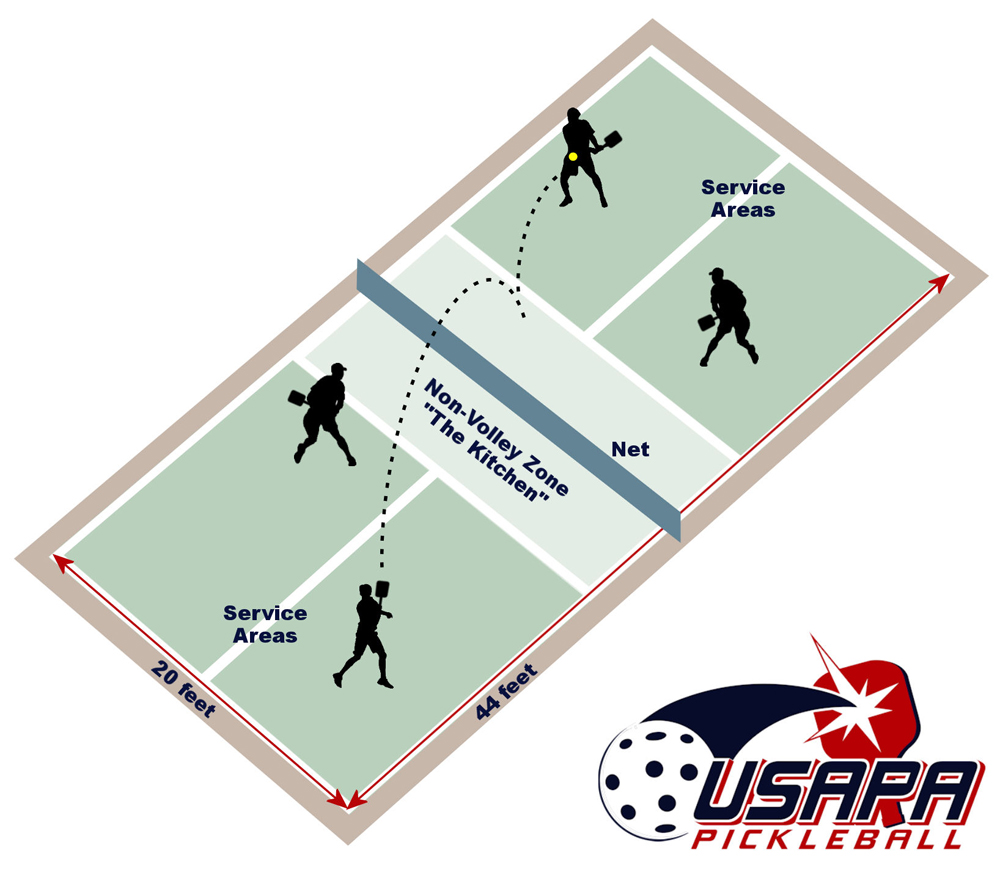
Image Source: pickleballcentral.com
Deciphering the Non-Volley Zone Pickleball
The non-volley zone, or “the kitchen” as it’s affectionately called, is a defining feature of the pickleball court. It’s the area extending seven feet from the net on both sides. Its primary purpose is to prevent players from standing at the net and smashing the ball with excessive force, thus promoting a more nuanced and strategic style of play.
Key Features of the Kitchen Area:
- Dimensions: The kitchen extends seven feet from the net towards the baseline. This area is marked by a distinct line, the kitchen line pickleball.
- Purpose: To limit aggressive net play and encourage softer shots, dinks, and rallies.
- Prohibition: Players cannot volley the ball while standing in the kitchen or on the kitchen line.
The Core Rule: No Volleys in the Kitchen
The most fundamental rule governing the kitchen area is the prohibition of volleys. A volley is defined as hitting the ball in the air, before it bounces.
What Constitutes a Kitchen Violation?
- Stepping into the Kitchen: If a player steps on or inside the kitchen line while hitting a volley.
- Reaching into the Kitchen: If a player’s body (including their paddle or clothing) touches the kitchen area while hitting a volley, even if their feet are outside.
- Momentum: If a player hits a legal volley from outside the kitchen but their momentum carries them into the kitchen before the ball becomes dead. This includes falling into the kitchen.
- Hitting a Ball That Has Already Bounced: It’s important to note that you can enter the kitchen to hit a ball that has bounced. The prohibition is only against volleying within the kitchen.
Example Scenario:
Imagine you are outside the kitchen and your opponent hits a high lob. You can run forward, hit the ball in the air before it bounces (a volley), and then land outside the kitchen. However, if you hit that volley and your momentum causes you to land in the kitchen, it’s a fault. Conversely, if the ball bounces inside the kitchen and you then hit it, that is a legal play.
The Art of the Pickleball Dink Shot
The kitchen is the domain of the pickleball dink shot. A dink is a softly hit shot, typically hit with an open paddle face, that lands in the opponent’s kitchen. The goal is to keep the ball low and short, forcing the opponent to hit an upward trajectory, ideally leading to an opportunity for an aggressive shot or a weak return.
Mastering the Dink:
- Paddle Control: Focus on a gentle touch and controlling the paddle face. Think of “lifting” the ball over the net rather than hitting it.
- Trajectory: Aim for a soft arc that drops just over the net and into the opponent’s kitchen.
- Placement: Vary your dinks. Aim for different spots within the kitchen, towards the sidelines, or directly at the opponent’s feet if they are close to the kitchen line.
- Anticipation: Be ready to dink when your opponent is near the net and to attack dinks that sit up too high.
The pickleball dink shot is crucial for controlling the pace of the game and setting up your next move. It’s a fundamental weapon in the arsenal of any serious pickleball player.
Navigating Pickleball Net Play and Volleys
While you can’t volley in the kitchen, mastering net play and executing clean pickleball volleys from outside the kitchen is essential. This involves quick reflexes, precise paddle control, and smart court positioning.
Effective Net Play Techniques:
- Ready Position: Maintain a balanced stance with knees bent, ready to move in any direction. Hold your paddle in front of you, slightly angled upwards.
- Punch Volley: For faster shots, a controlled “punch” motion with your arm and wrist is effective. Keep your wrist firm.
- Block Volley: When faced with a powerful shot, a block volley absorbs the pace and redirects the ball back. This often involves a shorter, more compact swing.
- Footwork: Efficient footwork is key. Take small, quick steps to get into position for your volley. Avoid overstriding.
- Paddle Face Angle: Adjust your paddle face angle to control the depth and trajectory of your volley. An open face sends the ball up, while a more closed face sends it down.
- Vision: Keep your eye on the ball until contact. Track the ball from your opponent’s paddle to yours.
Pickleball volleys are often used to end points quickly or to put significant pressure on your opponents. When executed from outside the kitchen, they can be powerful offensive weapons.
The Pickleball Third Shot Drop: A Kitchen Strategy Essential
The pickleball third shot drop is arguably one of the most important shots in the game, and it’s directly related to the kitchen. After the serve and return, the third shot is hit by the serving team. A well-executed third shot drop lands softly in the opponent’s kitchen, allowing the serving team to move forward to the non-volley zone line.
Executing the Third Shot Drop:
- Goal: To land the ball in the opponent’s kitchen, preventing them from attacking.
- Technique: This shot requires a soft touch, similar to a dink, but it’s hit from further back in the court. Use a continental grip or a slightly modified forehand grip.
- Swing: A smooth, fluid motion, focusing on getting under the ball and lifting it with a gentle follow-through. Avoid a hard, forceful swing.
- Trajectory: Aim for a high arc that descends into the kitchen. The higher the arc, the more time you have to move forward.
- Patience: Don’t rush the shot. Wait for the right moment and the right ball.
- Common Mistakes: Hitting it too hard and long, or hitting it too short and into the net.
The pickleball strategy kitchen heavily relies on successful third shot drops. If you can consistently drop the ball into the kitchen, you gain a significant advantage by moving to the net, a position of power.
Pickleball Strategy Kitchen: Dominating the Non-Volley Zone
The kitchen isn’t just a place to avoid; it’s a strategic battleground. Pickleball strategy kitchen revolves around controlling the play near the net, dictating the pace, and creating offensive opportunities.
Key Kitchen Strategies:
- Dink Battles: Engage in controlled dink rallies with your opponents. Aim to out-place them, forcing errors or weak returns.
- Moving Opponents: Vary your dinks to move your opponents wide or deep in the kitchen. This opens up angles for your next shot.
- Attacking High Dinks: If an opponent hits a dink that sits up too high in the kitchen, be ready to attack it with a volley or a sharp-angled shot.
- Patience: Don’t force shots if the opportunity isn’t there. Wait for your opponent to make a mistake or give you a clear opportunity.
- Court Positioning: Once you’ve executed a successful third shot drop or advanced to the net, position yourself just outside the kitchen line. This allows you to hit volleys while giving you room to move forward if necessary to hit a dink that lands in the kitchen.
- The “Reset” Shot: When you are under pressure near the net, and you can’t hit a hard volley, a “reset” shot is a soft dink that gets the ball back into the opponent’s kitchen, neutralizing the attack and allowing you to recover.
Playing in the kitchen pickleball requires finesse, patience, and strategic thinking. It’s about outmaneuvering your opponent through smart shot placement and timing.
Playing in the Kitchen Pickleball: Advanced Techniques and Tactics
Beyond the basic rules, there are nuanced ways to play in and around the kitchen that can elevate your game. This involves understanding when to be aggressive, when to be defensive, and how to use the kitchen to your advantage.
Advanced Kitchen Tactics:
- The “Third Shot Drive”: While the drop is preferred, sometimes a well-placed drive on the third shot can surprise opponents who are expecting a soft shot. This is risky as it can lead to an easy put-away for the opponent if not executed perfectly.
- The “Inside-Out” Dink: When an opponent dinks the ball wide to your backhand, and you have the agility, you can cross over and hit an “inside-out” dink from your forehand side, often with a sharper angle.
- The “Bait and Smash”: This is a more aggressive tactic. You might deliberately hit a slightly higher, softer shot towards the opponent in the kitchen, baiting them into a shot that is too high, and then pouncing on the return with a powerful volley.
- The “Drop Volley”: This is a shot hit from just outside the kitchen, similar to a dink, but hit with a bit more pace and a shorter swing to make it harder for the opponent to reach.
- Using Momentum: If you are moving forward and your opponent hits a weak shot that you can reach before it bounces, you can hit a controlled volley and then carefully manage your momentum to ensure you don’t step into the kitchen. This requires excellent balance and body control.
Pickleball Court Kitchen Area: A Visual Guide
The pickleball court kitchen area is clearly marked. The crucial element is the kitchen line pickleball.
-
Visual Representation:
Feature Description Non-Volley Zone (NVZ) The 7-foot area on each side of the net. Kitchen Line The line marking the front boundary of the NVZ. Center Line Divides the court lengthwise, from the net to the baseline. Sidelines Mark the outer boundaries of the court. Baseline The back boundary of the court.
The pickleball court kitchen area is where much of the strategic decision-making occurs. Understanding its boundaries is the first step to mastering its use.
Common Pickleball Kitchen Rules Violations and How to Avoid Them
Awareness of common violations is key to improving your game and playing fairly.
Table of Common Violations:
| Violation Type | Description | How to Avoid |
|---|---|---|
| Volleying in the Kitchen | Hitting the ball in the air while your feet are on or within the kitchen line. | Always check your foot position before a volley. Ensure your feet are clearly outside the kitchen line when hitting a ball in the air. |
| Momentum into Kitchen | Your momentum carries you into the kitchen after hitting a legal volley outside it. | Control your follow-through and landing. Practice stopping your movement after a volley. If you’re lunging for a shot, be prepared to stop your momentum. |
| Touching the Kitchen | Any part of your body, paddle, or clothing touching the kitchen while you volley. | Be aware of your reach. If you’re close to the line, a small movement can lead to a fault. Keep your extremities controlled. |
| Interference | Hindering your opponent’s ability to play a shot by being in or near the kitchen. | Stay out of your opponent’s way. If you’re moving for a shot, try to do so without obstructing their path to the ball. |
| Serving into the Kitchen | The serve must land beyond the non-volley zone. | Aim for the diagonal service box, ensuring the ball bounces outside the kitchen line. |
Frequently Asked Questions (FAQ)
Q1: Can I hit a ball that bounces in the kitchen?
A1: Yes! You can enter the kitchen and hit a ball after it has bounced. The rule only prohibits volleying (hitting the ball before it bounces) while in the kitchen.
Q2: What happens if I volley a ball from outside the kitchen, but my paddle hits the net and then goes into the kitchen?
A2: This is a fault. If your paddle touches the net while you are volleying, it is a fault, regardless of where your feet are.
Q3: Can my partner stand in the kitchen while I hit a volley outside of it?
A3: Yes, as long as your partner is not interfering with your opponent’s ability to play the ball. The kitchen rule primarily applies to the player hitting the volley.
Q4: Is it a fault if my clothing touches the kitchen line while I’m hitting a volley outside the kitchen?
A4: Yes, it is a fault. Any part of your body, including clothing or your paddle, touching the kitchen area or the kitchen line while you are volleying is a violation.
Q5: How can I improve my pickleball dink shot?
A5: Practice consistently! Focus on soft hands, a gentle touch, and a high but controlled arc. Experiment with different placements within the kitchen and practice dinking against various types of shots. Watching professional players dink can also provide valuable insights.
Q6: What is the primary objective of playing in the kitchen pickleball?
A6: The primary objective is to control the net position, wear down opponents with consistent, well-placed dinks, and create opportunities to attack with volleys or put-away shots when the opponent makes a mistake.
Q7: How do I avoid losing points due to momentum into the kitchen?
A7: Practice controlled movements. Learn to stop your forward momentum after hitting a volley, especially when lunging. Many players find it helpful to practice hitting volleys and then immediately stopping their feet to ensure they don’t drift into the kitchen.
By focusing on these principles, practicing diligently, and developing a keen sense of court awareness, you can truly master the kitchen and significantly elevate your pickleball game. The non-volley zone, far from being a simple restriction, is the strategic heart of pickleball, offering endless possibilities for clever play and exciting rallies.