
Can I arrange a sectional in a small living room? Yes, you can arrange a sectional in a small living room by choosing a smaller, more compact sectional, using corner placements strategically, and ensuring you have enough space to walk around it. What is the best way to arrange a sectional? The best way to arrange a sectional is to consider your room’s shape, the placement of windows and doors, the location of your TV, and the flow of traffic.
Arranging a sectional sofa can be a game-changer for your living room design. These versatile pieces offer ample seating and a cozy, communal feel. However, their size and shape can also make them a bit tricky to position. Getting the living room furniture arrangement right with a sectional is key to creating a balanced, functional, and inviting space. This guide will dive deep into sectional layout ideas, exploring modular sofa placement, and offering sectional sofa placement tips to help you achieve the best way to arrange sectional in your home.
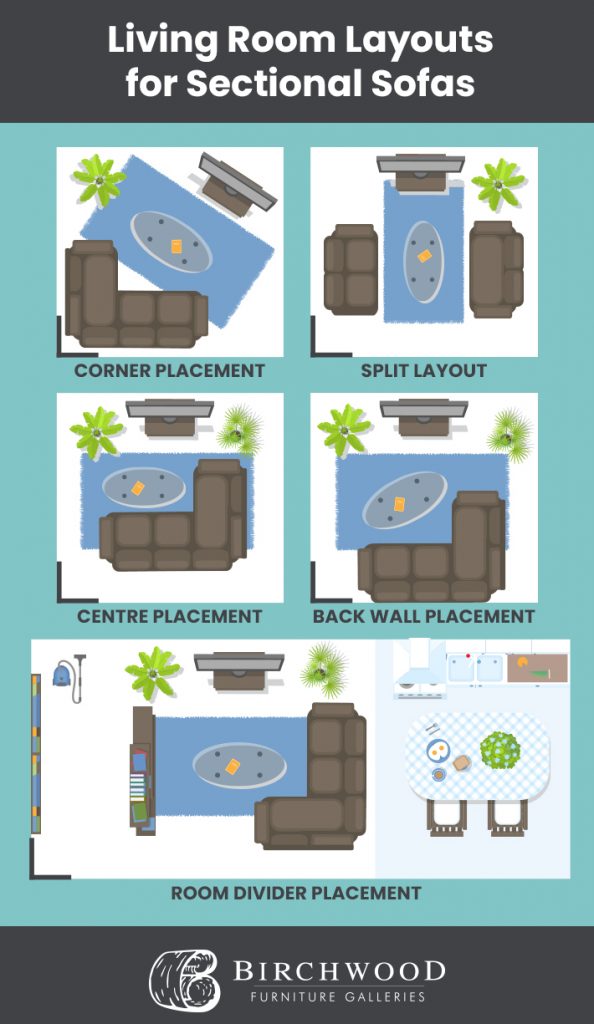
Image Source: birchwoodfurniture.ca
Deciphering Sectional Configuration: What’s Your Shape?
Before you start pushing furniture around, take a moment to identify the type of sectional you have. The sectional configuration is crucial to its placement.
- L-Shaped Sectional: This is the most common type. It features two sections that meet at a right angle. It’s perfect for corner placements or defining zones.
- U-Shaped Sectional: Offering even more seating, a U-shaped sectional wraps around an area, creating a very social and enclosed feel. These are best for larger rooms or open-plan living areas.
- Chaise Sectional: This often involves a sofa with an attached chaise lounge, providing a luxurious spot for lounging. Its placement can be more flexible.
- Modular Sectional: These are made of individual pieces that can be rearranged to create different configurations. This offers the ultimate flexibility but requires more thought about how to connect the pieces.
Optimizing Sectional in Living Room: Key Considerations
Optimizing sectional in living room involves more than just finding a spot where it fits. Several factors need to be considered to ensure a harmonious and practical layout.
Traffic Flow: The Unseen Path
Good traffic flow is essential in any room. Your sectional should not block doorways, windows, or natural pathways.
- Doorways: Always leave at least 2-3 feet of clear space around doorways.
- Pathways: Ensure there’s enough room to walk comfortably between the sectional and other furniture or walls. Aim for 2-3 feet for main pathways.
- Secondary Paths: Even smaller paths between seating elements should be at least 18 inches wide.
Focal Point: Where’s the Eye Drawn?
Every living room needs a focal point. This is typically the television, a fireplace, a large piece of art, or even a beautiful window with a view. Your sectional should be arranged to face and complement this focal point.
- TV Placement: If the TV is your focal point, arrange your sectional so everyone has a comfortable viewing angle. Avoid placing the TV directly opposite a bright window.
- Fireplace: Position your sectional to encourage conversation around the fireplace. Often, an L-shaped sectional can create a cozy nook facing a fireplace.
- Windows/Views: If you have a stunning view, arrange seating to take advantage of it. The longest part of an L-shaped sofa might angle towards a window.
Conversation Areas: Fostering Connection
A well-arranged living room encourages conversation. Your sectional should facilitate this by bringing seating elements close enough for easy interaction.
- Proximity: Aim to have the longest part of the seating pieces within 8-10 feet of each other.
- Facing: If possible, have at least two seating elements facing each other or arranged in a U-shape, with the sectional forming one side.
Scale and Proportion: Fitting the Space
A large sectional can overwhelm a small room, while a too-small sectional can get lost in a large one.
- Measure Your Room: Before buying or arranging, measure your living room dimensions carefully.
- Measure Your Sectional: Know the exact dimensions of each piece of your sectional.
- Visualize: Use painter’s tape on the floor to outline the sectional’s footprint. This helps you see how much space it will occupy and if it allows for adequate movement.
Perfecting the Sectional Arrangement: Layout Ideas
Now, let’s explore specific sectional layout ideas and how to implement them, focusing on living room design with sectional.
The Classic Corner Placement (L-Shaped Sectional)
This is the most straightforward and often the most efficient way to arrange an L-shaped sectional.
- How it Works: Position the corner piece of the sectional snugly into a corner of the room. The longer and shorter arms then extend out from the corner.
- Benefits: This arrangement maximizes seating, defines a cozy zone, and often allows for good traffic flow around the open side. It’s excellent for creating a focal point, especially when the TV or fireplace is on the wall opposite the sectional’s opening.
- Tips for Success:
- Ensure the corner piece fits the actual corner of your room.
- Leave space between the sofa and the walls for airflow and to prevent a cramped feel.
- Use the open side to anchor other furniture, like an armchair or a console table.
- This is a great L-shaped sofa arrangement for rooms with a natural corner that can serve as the anchor.
Creating Zones in Larger Rooms
In spacious or open-plan living areas, your sectional can be a powerful tool for dividing the room into distinct zones.
- How it Works: Position the sectional away from the walls, using its back to separate the living area from another space, like a dining area or a hallway.
- Benefits: This creates a defined and intimate seating area within a larger expanse. It provides a sense of purpose and encourages a more intimate feel.
- Tips for Success:
- Modular sofa placement: Modular sectionals are ideal here as you can tailor the configuration to create specific shapes that define zones.
- Behind the sectional: Use a console table or a slim bookshelf behind the sectional to add visual interest and functionality. This also helps to soften the look of the sofa’s back.
- Balance: Add other pieces of furniture, like accent chairs or ottomans, on the open sides to balance the arrangement and complete the zone.
- Consider the back of the sectional as a design element. If it’s a low-profile back, it might not create a strong visual barrier.
Floating the Sectional: A Bold Statement
“Floating” furniture means placing it away from the walls. This can be a highly effective strategy for sectionals, especially in larger rooms or those with multiple entry points.
- How it Works: Position the sectional in the middle of the room, or at least a few feet away from the walls, often perpendicular to a wall or facing a focal point.
- Benefits: This creates a dynamic and open feel, improves traffic flow around the seating area, and can make a room feel larger. It allows you to create a very deliberate and designer-led living room design with sectional.
- Tips for Success:
- Anchor with a rug: Use a large area rug to anchor the floating sectional and define the seating area. The rug should be large enough so at least the front legs of the sectional and any accompanying chairs sit on it.
- Consider the back: The back of the sectional becomes a visible element. Ensure it’s upholstered nicely or consider placing a console table behind it.
- Balance with other furniture: Place accent chairs, side tables, and floor lamps around the sectional to create a complete and cohesive seating arrangement.
- This approach is particularly effective for sectional sofa placement tips when you want to draw attention to the sofa itself as a statement piece.
The Symmetrical Approach
For a more formal or balanced feel, consider a symmetrical arrangement.
- How it Works: Place the sectional against a wall, then balance it with matching pieces on either side. For example, two identical armchairs or two identical side tables with lamps.
- Benefits: Creates a sense of order and calm. It’s a classic design choice that is always pleasing to the eye.
- Tips for Success:
- Ensure the scale of the balancing furniture pieces is appropriate for the sectional.
- Use lighting symmetrically, with lamps on either side.
- This works well with an L-shaped sofa arrangement where the longer portion is against a wall.
Facing the Focal Point Directly
Sometimes, the simplest arrangement is the most effective.
- How it Works: Position the sectional so its main seating area directly faces the room’s focal point. If it’s an L-shaped sectional, the longer part might face the TV, with the shorter part extending to the side.
- Benefits: Maximizes viewing or enjoyment of the focal point. It’s a very functional layout for media rooms or living rooms centered around a fireplace.
- Tips for Success:
- Ensure there’s enough space between the sectional and the focal point for comfortable viewing.
- Add side tables within easy reach for drinks and remotes.
- Use rugs to define the seating space.
Arranging a U-Shaped Sectional
U-shaped sectionals create a wonderfully intimate and enclosed seating area, perfect for conversation.
- How it Works: The U-shape is designed to wrap around a central area, like a coffee table. It can be placed against walls, or for a dramatic effect in larger rooms, it can “float” to create a distinct zone.
- Benefits: Excellent for large families or those who entertain frequently, as it maximizes seating and encourages interaction.
- Tips for Success:
- Central Coffee Table: A large coffee table is essential to bridge the gaps and provide a surface within reach of all seats.
- Room Size: U-shaped sectionals require ample space. Ensure there’s enough room to walk around and between the arms of the U. Aim for at least 3-4 feet of open space within the U.
- Visual Weight: These can be visually heavy, so balance them with lighter furniture pieces or open shelving.
Sectional Corner Placement: Maximizing Awkward Corners
The sectional corner placement is often dictated by the room’s architecture, but you can also use it to your advantage.
- How it Works: Utilize the existing corner of a room to nestle the L-shaped corner of your sectional.
- Benefits: Saves space, creates a cozy nook, and helps define the living area.
- Tips for Success:
- Measure the Corner: Ensure the corner is a true 90-degree angle for a snug fit.
- Don’t Push Too Far: Leave a small gap between the sofa and the walls to avoid a “stuck” feeling and allow for better airflow.
- Complementary Seating: Add a floor lamp or a small side table in the “empty” corner behind the sectional for added function and visual appeal.
Practical Tips for Sectional Placement
Here are some additional sectional sofa placement tips to refine your living room design with sectional:
The Role of the Area Rug
A rug is your best friend when arranging a sectional. It anchors the furniture, defines the seating area, adds color, texture, and warmth.
- Size Matters: The rug should be large enough to accommodate the majority of the sectional. Ideally, all pieces should have at least their front legs on the rug.
- Placement: Position the rug so it’s centered within the seating arrangement, typically with a few inches of floor visible around the edges of the rug between it and the walls.
Coffee Table and Side Tables
These are crucial for functionality and completing the look.
- Coffee Table: Should be proportionate to the sectional. For an L-shaped sectional, a rectangular coffee table often works best, placed where it’s easily accessible from the main seating spots. For a U-shaped sectional, a larger, perhaps round or square, coffee table is ideal.
- Side Tables: Place side tables within reach of seating for lamps, drinks, and decor. Aim for a height that’s similar to the armrest of your sofa.
Lighting Strategy
Layered lighting is key to a well-designed living room.
- Ambient Lighting: Overhead lights or floor lamps provide overall illumination.
- Task Lighting: Table lamps on side tables are perfect for reading.
- Accent Lighting: Uplights behind the sectional or spotlights on artwork can add depth and mood.
Balancing the Visual Weight
A large sectional can dominate a room. Balance its visual weight with other pieces.
- Opposite Side: Place an armchair, a bookshelf, or even another smaller sofa opposite the main seating area to create balance.
- Height: Vary the heights of your furniture. If your sectional is low, consider taller pieces like floor lamps or tall plants on the other side of the room.
Modifying Modular Sectionals
For those with modular sofa placement flexibility, experimentation is key.
- Connectors: Ensure you use any provided connectors to keep the modules securely in place.
- Configurations: Don’t be afraid to try different arrangements. A sectional can often be reconfigured from an L-shape to a U-shape, or even a straight sofa with a chaise, depending on the modules.
Sectional Layout Examples Table
| Room Type | Sectional Configuration | Primary Layout Strategy | Key Considerations | Example Furniture Placement |
|---|---|---|---|---|
| Small Living Room | Compact L-Shape | Corner Placement | Maximize seating, avoid blocking traffic, use vertical space for storage. | L-shaped sectional in the corner, facing the focal point. A slim console table behind the short arm. A single armchair opposite the longer arm. Small round coffee table. Wall-mounted TV. |
| Medium Living Room | Standard L-Shape | Define a Zone / Facing Focal Point | Good traffic flow, create conversation area, anchor with a rug. | L-shaped sectional placed slightly off the wall, angled towards a fireplace or TV. Area rug anchors the sectional and two accent chairs. Coffee table in the center. Side tables with lamps. |
| Large Living Room | Large L-Shape / U-Shape | Floating to Create Zones / Symmetrical Arrangement | Balance visual weight, improve flow, create distinct areas, use back of sofa as design element. | U-shaped sectional floating in the center, creating an enclosed conversation pit around a large coffee table. A console table behind the open end. Two large armchairs opposite. Tall plants. |
| Open Concept | Modular Sectional | Zoning / Creating a “Room within a Room” | Clear separation of functions, ensure smooth flow between areas, visual appeal of the back of the sofa. | Modular sectional configured to face a TV area, with its back subtly separating it from the dining space. A credenza behind the sectional. Accent chairs to complete the seating arrangement. |
Frequently Asked Questions (FAQ)
Q1: Can a sectional sofa work in a small living room?
A: Absolutely! Opt for a smaller, more compact sectional. Look for pieces with clean lines and exposed legs to create a sense of openness. Placing the sectional in a corner or along one wall can maximize usable floor space. Avoid bulky designs and ensure there’s enough room to move around.
Q2: How far should the coffee table be from the sectional?
A: The ideal distance between a coffee table and a sectional is typically 14 to 18 inches. This allows enough space for comfortable legroom and easy reach, without making it a struggle to get past.
Q3: Should the back of my sectional face a walkway?
A: Ideally, no. The back of a sectional can look unfinished and can obstruct traffic flow. If you must place it this way, consider using a console table behind it to create a more intentional look and a surface for decor.
Q4: How do I arrange seating when the TV and fireplace are on adjacent walls?
A: This can be tricky! You’ll need to decide which is the primary focal point. Often, the TV takes precedence for daily use. You could place the longest part of your L-shaped sectional to face the TV, with the shorter part angled towards the fireplace, allowing for a view of both. Alternatively, you might place the sectional to face one, and use accent chairs to create a secondary conversation area focused on the other.
Q5: What’s the best way to arrange a modular sectional?
A: The beauty of modular sofa placement is its adaptability. Consider the shape of your room and the function you need. You can create an L-shape, a U-shape, a sofa with a chaise, or even separate pieces. Start by placing the largest modules first and then connect the smaller ones to complete the configuration. Always test different arrangements to see what works best for your space and lifestyle.
Arranging a sectional sofa is a rewarding process that can significantly enhance your living room’s comfort and style. By carefully considering your room’s layout, your lifestyle, and the various sectional layout ideas available, you can create a functional and beautiful space that you’ll love for years to come. Experiment, have fun, and don’t be afraid to rearrange until it feels just right!