
Can you place a sectional sofa floating in a room? Yes, you absolutely can float a sectional sofa, creating a distinct zone or acting as a room divider. What is the best way to arrange a sectional in a living room? The best way to arrange a sectional in a living room involves considering the room’s size and shape, the focal points, and how you intend to use the space, aiming for a balance of comfort, flow, and style.
Arranging a sectional sofa in your living room can feel like solving a puzzle. These versatile pieces offer ample seating and can define a space, but their size and shape require careful thought. Whether you have an L-shaped sectional living room setup or a sprawling U-shaped sectional living room configuration, the goal is to create a welcoming and functional area. This guide will walk you through the process of sectional sofa placement, offering sectional layout ideas to transform your living room.
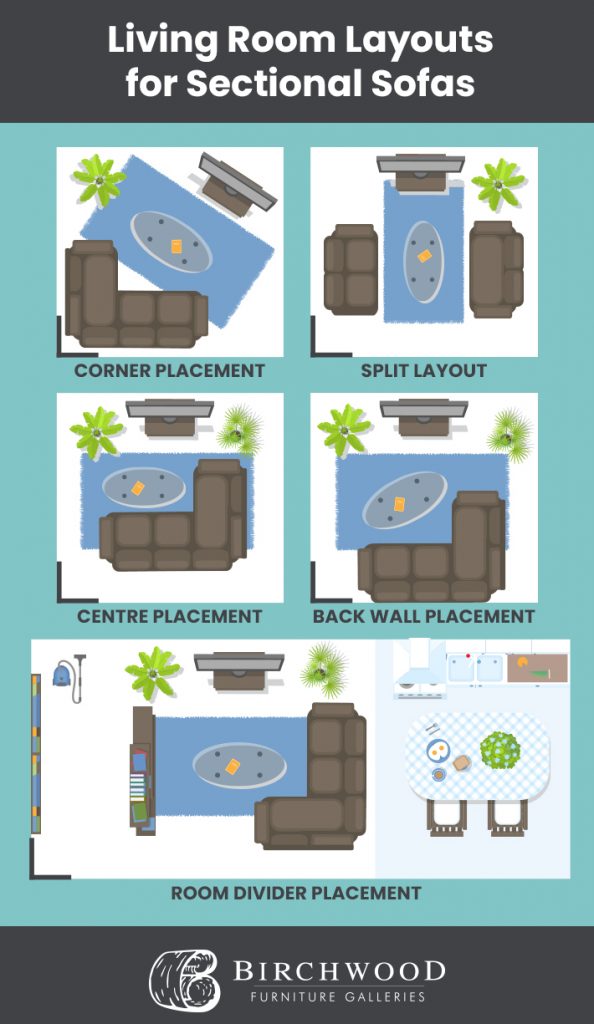
Image Source: birchwoodfurniture.ca
Grasping Your Sectional’s Potential
Sectionals are the workhorses of living rooms, providing comfortable seating for family and guests. However, their bulk means that where you put them significantly impacts the entire room’s feel and usability. The key to successful living room sectional arrangement is to treat the sectional not just as a piece of furniture, but as a foundation for your entire room’s design.
Decoding Your Space
Before you even think about pushing furniture around, take a good look at your living room. What are its key features?
- Size and Shape: Is it a large, open rectangle? A cozy square? Or perhaps an irregular shape with nooks and crannies?
- Focal Points: What draws the eye? A fireplace? A stunning view from a window? A television?
- Traffic Flow: How do people move through the room? You need clear pathways.
- Windows and Doors: Where are they located? You don’t want to block access or natural light.
Measuring Up
This step is crucial. Grab a tape measure and get precise.
- Measure the Room: Get the length and width of your living room. Note the ceiling height.
- Measure Your Sectional: Know the exact dimensions of your sectional, including each individual piece if it’s modular. This includes depth and height.
- Measure Doorways and Hallways: Ensure your sectional can actually get into the room!
Sketching it Out
A simple floor plan is your best friend. You can draw this on paper or use online tools.
- Draw the Room: Sketch the outline of your living room, marking windows, doors, and any permanent features like fireplaces.
- Draw the Sectional: Cut out paper shapes to scale representing your sectional. This allows you to move them around on your floor plan easily.
Strategic Sectional Layout Ideas
With your measurements and sketches in hand, it’s time to explore different sectional layout ideas. The goal is to create conversation areas, optimize maximizing sectional space, and ensure good flow.
1. The Classic Corner Tuck: L-Shaped Sectional Living Room
This is perhaps the most common way to arrange an L-shaped sectional living room.
- Placement: Position the longer part of the ‘L’ against one wall and the shorter part extending out into the room.
- Benefits: This layout is great for defining a seating area, especially in larger rooms. It naturally creates a cozy nook for conversation.
- Considerations:
- Focal Point: If your focal point is a fireplace or TV, orient the sectional so that most seats have a view.
- Traffic: Ensure there’s a clear path around the extended portion of the sectional so people don’t have to squeeze past.
- Balance: If the sectional is very large, balance it with other furniture like a console table or a floor lamp on the opposite side of the room.
Variations for the Corner Tuck
- Facing the Focal Point: If the focal point is on an adjacent wall, you might turn the ‘L’ so the longer side faces it.
- Creating Zones: In an open-plan space, the extended part of the ‘L’ can act as a subtle room divider, separating the living area from a dining or kitchen space.
2. The Cozy Enclosure: U-Shaped Sectional Living Room
A U-shaped sectional living room arrangement offers a more enclosed and intimate feel.
- Placement: This arrangement typically involves placing the sectional against three walls, or using the back of the sectional pieces to create boundaries.
- Benefits: Excellent for larger families or those who entertain frequently, as it maximizes seating and encourages conversation.
- Considerations:
- Room Size: This layout works best in larger, squarish rooms to avoid making the space feel cramped.
- Openness: If the room feels too enclosed, consider leaving one side open to the rest of the house or using a more open configuration of the ‘U’.
- Focal Point: Ensure the open side of the ‘U’ faces the primary focal point, or that the sectional itself creates a comfortable viewing angle for entertainment.
Adapting the U-Shape
- Floating the U: In a very large room, you can “float” a U-shaped sectional away from the walls to create a central conversation pit. This is a bold but effective way to define a large space.
- Modular U: If your sectional is modular, you can create a more relaxed, less rigid U-shape, perhaps with a gap or a different seating piece to break it up.
3. The Bold Statement: Floating Sectional
A floating sectional means the sofa isn’t pushed against any walls. This is a fantastic way to maximize sectional space and create a dynamic layout.
- Placement: Position the sectional away from walls, often in the center of the room or as a divider.
- Benefits: Creates a more open and airy feel, allows for better traffic flow around the furniture, and can define zones in an open-plan living area.
- Considerations:
- Room Size: This works best in medium to large rooms. In a small room, it can make the space feel cluttered.
- Back Appeal: The back of the sectional will be visible, so ensure it’s attractive. Consider a console table or decorative pieces behind it.
- Anchoring: You’ll need other furniture to anchor the space around the floating sectional, such as armchairs, coffee tables, and rugs.
Floating Sectional Strategies
- Room Divider: Use the back of the sectional to separate a living area from a dining area or workspace.
- Conversation Hub: Place the sectional in the center of a large room, with armchairs and a coffee table arranged around it to create a cozy conversation zone.
- Balancing Act: Ensure the rest of the room’s furnishings balance the visual weight of the sectional.
4. The Dual-Purpose Divider: Sectional Furniture Arrangement
Sectionals can be incredibly versatile when you think about their function beyond just seating.
- Placement: Use a sectional piece (like a chaise or a sofa armless chair) to divide a larger room.
- Benefits: Creates distinct zones without solid walls, offering both separation and connection.
- Considerations:
- Scale: Choose a piece that is proportionate to the room size.
- Flow: Ensure the divider doesn’t impede natural movement.
Creative Dividing Tactics
- Chaise as a Divider: A chaise lounge attached to a sofa can extend into the room, acting as a soft visual barrier.
- Armless Chairs: Use armless chairs from a modular sectional to create a more open divider effect.
Arranging Your Connecting Sectional Pieces
Most sectionals come in modular pieces that connect. The way you join these is key to the overall sectional furniture arrangement.
Understanding Your Modular Options
- Chairs with Arms: These have arms on one side only.
- Armless Chairs: These can go in the middle or at the ends.
- Corner Pieces: These are essential for creating corners.
- Chaises: These add a lounging element.
- Ottomans/Benches: These can extend the seating or act as coffee tables.
Joining the Pieces for Optimal Flow
- Identify the Core: Start with the longest section or the main seating component.
- Form the Corner: If you have an L-shape, connect the corner piece to the two sections that form the angle.
- Extend and Define: Add chaises or armless chairs to extend the seating or create a more open feel.
- Connect Securely: Most sectionals have clips or connectors underneath to keep pieces together. Use them to prevent shifting.
Table: Common Sectional Configurations and Their Placement Strategies
| Sectional Type | Typical Room Size | Best Placement | Key Considerations |
|---|---|---|---|
| L-Shaped Sectional | Medium to Large | Against two walls forming a corner; can also float to define a zone. | Focal point orientation, traffic flow around the extended arm. |
| U-Shaped Sectional | Large to Extra Large | Against three walls; can also float in the center of a very large room to create a conversation pit. | Avoid making the room feel too enclosed; ensure adequate space around it. |
| Chaise Sectional | Medium | Often placed with the chaise extending into the room from the main sofa section, near a focal point or window. | The chaise can act as a soft room divider; consider its orientation for comfort. |
| Armless Chairs | Various | Can be added to any sectional to extend it, create a curved shape, or used independently. | Use them to adjust the size and shape of your sectional to fit the room perfectly. |
Small Living Room Sectional Strategies
Small living room sectional arrangements require extra attention to detail to avoid making the space feel cramped.
Maximizing Sectional Space in Compact Areas
- Choose Wisely: Opt for a smaller-scale sectional, a chaise sectional, or a modular sectional that can be configured with fewer pieces.
- Leggy Designs: Furniture with visible legs creates a sense of airiness and makes the room feel larger.
- Color Palette: Lighter colors for the sectional and surrounding decor can make the room feel more spacious.
- Placement:
- Against the Longest Wall: This is often the most practical solution.
- Floating a Corner: A small L-shaped sectional can sometimes float to create a cozy corner, leaving more open floor space.
- Avoid Blocking Pathways: This is paramount in a small room.
Clever Tricks for Small Spaces
- Ottoman as Coffee Table: A large ottoman can serve as a coffee table, and many have hidden storage.
- Wall-Mounted TV: Free up floor space by mounting your television on the wall.
- Strategic Lighting: Good lighting can make a small room feel much larger and more inviting.
- Mirrors: Place mirrors opposite windows or to reflect light and open up the space visually.
Enhancing Your Sectional Arrangement
Once your sectional is in place, you can use other elements to complete the look and functionality.
Coffee Tables and Side Tables
- Coffee Table: Should be proportionate to your sectional. Aim for a height that’s slightly lower than the seat cushions. Options include traditional coffee tables, ottomans, or nesting tables.
- Side Tables: Place them next to the ends of the sectional or in gaps to hold lamps, drinks, and decor.
Rugs for Anchoring
- A rug is essential for defining the seating area and grounding your sectional furniture arrangement.
- The rug should be large enough so that at least the front legs of the sectional, and ideally all pieces, sit on it.
Lighting
- Ambient Lighting: Overhead fixtures.
- Task Lighting: Floor lamps or table lamps placed strategically to read or work.
- Accent Lighting: Sconces or smaller lamps to highlight art or features.
Wall Art and Decor
- Hang art at eye level (around 57-60 inches from the floor to the center of the artwork).
- Consider a large piece of art above the longest section of the sectional or a gallery wall.
Common Sectional Arrangement Mistakes to Avoid
- Blocking Traffic Flow: This is the number one sin of furniture arrangement.
- Ignoring the Focal Point: Your seating should be oriented towards the room’s main attraction.
- Wrong Scale: A massive sectional in a tiny room, or a tiny sofa in a huge room, will look out of place.
- Too Many Pieces: Don’t overcrowd the room. Sometimes less is more.
- Not Anchoring with a Rug: This makes the seating area feel unfinished.
Frequently Asked Questions (FAQ)
Q1: What is the best way to position an L-shaped sectional?
The best way is often to place the longer side of the ‘L’ against the longest wall, with the shorter side extending into the room. This naturally creates a cozy seating zone and can be oriented towards a focal point like a fireplace or TV.
Q2: Can I float a sectional sofa if my living room is small?
Generally, floating a sectional is best suited for medium to large rooms. In a small living room, a floating sectional can make the space feel cramped. However, if you have a very compact sectional, or a modular one that you can configure to be less imposing, it might be possible to float it slightly away from the wall to improve traffic flow, but be very mindful of the scale.
Q3: How do I connect sectional pieces securely?
Most sectionals come with built-in clips or connectors that slide or latch underneath the sofa frames. Ensure these are properly engaged to keep the pieces from shifting apart.
Q4: What size coffee table should I use with a sectional?
The coffee table should be about two-thirds the length of your sectional. Its height should be about the same as, or slightly lower than, the seat height of the sofa.
Q5: Should all pieces of a sectional sit on a rug?
Ideally, yes. For the best visual anchoring, the rug should be large enough that at least the front legs of all the sectional pieces rest on it. In very large rooms, you might even have the entire sectional and a few additional seating pieces on one large rug.
Q6: How do I arrange a sectional in a room with a fireplace?
If the fireplace is on a wall opposite where the sectional would naturally face, place the sectional so that the main seating faces the fireplace. You can use the corner of the ‘L’ to define the seating area, or even position a modular piece to create a more open setup facing the fire.
Q7: My sectional has a chaise. Where is the best place for it?
The chaise can be placed at either end of the main sofa section. Often, placing it so it extends into the room from a corner or from the end of the sofa can create a nice visual break and a comfortable lounging spot. It can also act as a soft divider between seating areas.
By following these guidelines and considering your unique space, you can master the art of sectional sofa placement and create a living room that is both stylish and functional. Experiment with different arrangements, and don’t be afraid to move things around until it feels just right!