
So, how long does it take to repaint kitchen cabinets? Generally, you can expect a DIY cabinet repaint to take anywhere from 5 to 10 days, while professional cabinet painting often spans 1 to 3 weeks. This wide range depends on many factors, including the number of cabinets, the chosen method, and the overall condition of your current cabinets.
Refinishing your kitchen cabinets can dramatically transform the heart of your home without the hefty cost of a full remodel. But before you dive in, you’re likely wondering about the cabinet painting time. This guide will break down the kitchen cabinet refinishing duration for both DIY enthusiasts and those opting for professional help, giving you a clear time to update kitchen cabinets. We’ll cover everything from prep work to the final coat, helping you plan your project effectively.
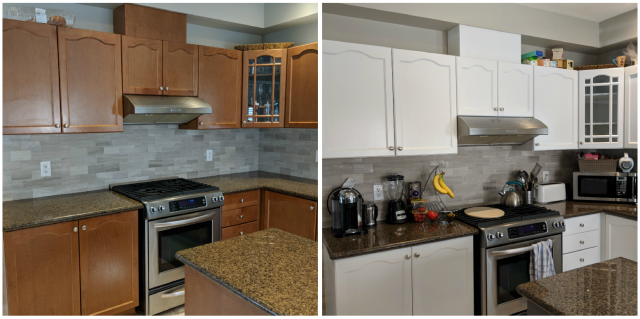
Image Source: www.paintmycabinets.ca
Deciphering Cabinet Repaint Project Length
The total cabinet repaint project length is a sum of many smaller tasks. Each step requires time and careful execution to achieve a durable and beautiful finish. Let’s explore the typical phases involved and how they contribute to the overall timeline.
The Prep Work: The Foundation of Your Finish
This is arguably the most critical stage, and rushing it will lead to a less-than-perfect outcome. Proper preparation ensures that your paint adheres well and lasts for years.
Cleaning and Degreasing
Kitchen cabinets are notorious for accumulating grease and grime. This needs to be removed completely.
- Time Estimate: 1-2 days for a standard-sized kitchen.
- Process:
- Remove all cabinet doors and drawers from their hinges.
- Clean each surface thoroughly with a good degreaser. You can use TSP (trisodium phosphate) or a dedicated kitchen degreaser.
- Wipe down with a damp cloth to remove residue, then dry thoroughly.
Hardware Removal
Screws, hinges, and knobs all need to come off. Keep them organized to make reassembly easier.
- Time Estimate: 2-4 hours.
- Process:
- Use a screwdriver to remove hinges, handles, and knobs.
- Place hardware in labeled bags or containers to avoid mixing them up. Consider storing them in the corresponding cabinet door or drawer so you know where each piece goes.
Sanding for Adhesion
Sanding creates a smooth surface for the new paint to grip onto.
- Time Estimate: 1-3 days. This depends heavily on the cabinet material and the number of cabinets.
- Process:
- Start with a medium-grit sandpaper (around 120-150 grit) to scuff the surface.
- Follow up with a finer-grit sandpaper (around 220 grit) for a smoother finish.
- For laminate or thermofoil cabinets, a thorough degreasing and a specialized bonding primer might be more important than heavy sanding, as sanding can damage these surfaces.
Filling Imperfections
Any holes from old hardware or minor dents should be filled.
- Time Estimate: 4-8 hours (including drying time between coats).
- Process:
- Use a wood filler or putty to fill any holes or imperfections.
- Allow it to dry completely according to the product’s instructions.
- Once dry, sand the filled areas smooth with fine-grit sandpaper.
Dust Removal
This is crucial. Any residual dust will compromise your paint job.
- Time Estimate: 2-4 hours.
- Process:
- Use a vacuum with a brush attachment to remove dust from all surfaces.
- Follow up with a tack cloth to pick up any remaining fine particles.
Priming: The Undercoat for Durability
Primer seals the surface and provides an even base for your paint, enhancing adhesion and hiding the original finish.
- Time Estimate: 1-2 days (including drying time between coats). Most projects require at least one coat of primer.
- Process:
- Apply a thin, even coat of high-quality primer designed for cabinets. Oil-based primers are excellent for blocking stains and odors, while water-based acrylic primers are easier to clean up.
- Allow the primer to dry completely as per the manufacturer’s instructions.
- Lightly sand with a fine-grit sandpaper (220-320 grit) after the primer is dry to ensure a super smooth surface for paint.
- Wipe down again with a tack cloth.
Painting: The Transformation
This is where your cabinets start to get their new look. The method you choose will significantly impact the time and the final finish.
Brush and Roller Method
This is the most common DIY approach. It requires patience and a steady hand.
- Time Estimate: 2-5 days for application and drying between coats.
- Process:
- Apply thin, even coats of your chosen cabinet paint.
- Use a high-quality angled brush for corners and edges and a foam roller for flat surfaces.
- Allow each coat to dry completely before applying the next. This can take anywhere from 4 to 24 hours per coat, depending on the paint and humidity.
- Most projects require 2-3 coats of paint.
Spraying (DIY or Professional)
Spraying offers a smooth, factory-like finish but requires specialized equipment and a good setup. This is where you might focus on the time to spray kitchen cabinets.
- Time Estimate (DIY): 3-6 days for application and drying. This includes setup, masking, spraying, and drying.
- Time Estimate (Professional): Often completed within 1-3 days for the spraying process itself, but the overall project can still take 1-2 weeks due to scheduling and drying times.
- Process:
- Setup: This is crucial for spraying. You’ll need to thoroughly mask off surrounding walls, floors, appliances, and countertops using painter’s tape and plastic sheeting. Ventilation is key.
- Application: Apply thin, even coats of paint. Multiple light coats are better than one heavy coat.
- Drying: Allow adequate drying time between coats as per the paint manufacturer’s recommendations. This is critical for achieving a hard, durable finish.
- Number of Coats: Typically 2-3 coats of paint are applied.
Cabinet Staining Time Estimate
If you’re opting for staining rather than painting, the process is different, and the cabinet staining time estimate will also vary.
- Time Estimate: Similar to painting, the entire process can take 5-10 days for DIY.
- Process:
- Sanding: This is even more critical for staining. You’ll need to sand thoroughly to remove all existing finish and ensure the wood is bare and smooth. Sanding up to 220 or even 320 grit is often recommended for stain application.
- Pre-Stain Conditioner: For some wood types (like pine), applying a pre-stain conditioner is essential to prevent blotchiness. This adds an extra drying step.
- Stain Application: Apply the stain evenly, wiping off excess as directed by the product.
- Top Coat: After the stain has dried thoroughly (often 24-72 hours), you’ll need to apply several coats of a protective topcoat (like polyurethane or varnish) for durability. Each coat requires drying and often light sanding between coats.
Cabinet Resurfacing Labor
Cabinet resurfacing labor is a broad term. It can include refacing (adding new veneers or doors) or a thorough refinishing. If you’re just talking about the “labor” involved in a high-quality repaint or restain, it’s essentially what we’ve detailed above. If resurfacing means adding new materials, the timeline can increase significantly, as it involves custom fabrication and installation.
Top Coating: Protecting Your Work
A clear topcoat adds durability and protects your painted or stained cabinets from wear and tear.
- Time Estimate: 1-2 days for application and drying between coats.
- Process:
- Apply 2-3 thin coats of a clear protective topcoat (polyurethane, polycrylic, or lacquer).
- Allow adequate drying time between coats.
- Lightly sand with a very fine-grit sandpaper (320-400 grit) between coats for maximum smoothness.
Reassembly
Putting everything back together.
- Time Estimate: 1-2 days.
- Process:
- Reattach cabinet doors and drawers.
- Install new or reinstalled hardware.
How Long Does It Take To Repaint Kitchen Cabinets: A Detailed Breakdown
Let’s break down the cabinet painting time by project scope and method.
DIY Cabinet Repaint Timeline: The Homeowner’s Journey
The DIY cabinet repaint timeline is often longer than professional jobs because you’re fitting it in around other life commitments, and you might be learning as you go.
-
Small Kitchen (10-15 cabinet doors/drawer fronts):
- Prep Work: 2-4 days
- Priming: 1-2 days (including drying and light sanding)
- Painting: 3-5 days (applying 2-3 coats with drying time)
- Top Coating: 1-2 days (applying 2-3 coats with drying time)
- Reassembly: 1 day
- Total DIY Time: Approximately 5-10 days of active work, spread over 1-2 weeks due to drying times.
-
Medium Kitchen (15-25 cabinet doors/drawer fronts):
- Prep Work: 3-5 days
- Priming: 2-3 days
- Painting: 4-7 days
- Top Coating: 2-3 days
- Reassembly: 1-2 days
- Total DIY Time: Approximately 7-14 days of active work, spread over 2-3 weeks.
-
Large Kitchen (25+ cabinet doors/drawer fronts) or Complex Designs:
- Prep Work: 4-7 days
- Priming: 3-4 days
- Painting: 5-10 days
- Top Coating: 3-4 days
- Reassembly: 2-3 days
- Total DIY Time: Approximately 10-20 days of active work, spread over 3-4 weeks or more.
Table 1: Estimated DIY Cabinet Repaint Timeline
| Task | Small Kitchen (10-15 units) | Medium Kitchen (15-25 units) | Large Kitchen (25+ units) |
|---|---|---|---|
| Prep Work | 2-4 days | 3-5 days | 4-7 days |
| Priming | 1-2 days | 2-3 days | 3-4 days |
| Painting | 3-5 days | 4-7 days | 5-10 days |
| Top Coating | 1-2 days | 2-3 days | 3-4 days |
| Reassembly | 1 day | 1-2 days | 2-3 days |
| Total Active Days | 7-14 days | 10-17 days | 14-24 days |
| Total Project Weeks | 1-2 weeks | 2-3 weeks | 3-4+ weeks |
Note: “Units” refers to cabinet doors and drawer fronts.
Professional Cabinet Painting Hours: The Expert Approach
Professionals have the experience, tools, and dedicated time to complete the job more efficiently. The professional cabinet painting hours translate to a quicker turnaround for you.
-
Small Kitchen:
- Prep Work & Masking: 1-2 days
- Priming & Drying: 1 day
- Spraying/Painting & Drying: 1-2 days
- Top Coating & Drying: 1 day
- Reassembly & Cleanup: 0.5-1 day
- Total Professional Time: 4.5-7 days, often completed within 1 week.
-
Medium Kitchen:
- Prep Work & Masking: 2-3 days
- Priming & Drying: 1-2 days
- Spraying/Painting & Drying: 2-3 days
- Top Coating & Drying: 1-2 days
- Reassembly & Cleanup: 1 day
- Total Professional Time: 7-11 days, typically completed within 2 weeks.
-
Large Kitchen or Complex Finishes:
- Prep Work & Masking: 3-4 days
- Priming & Drying: 2-3 days
- Spraying/Painting & Drying: 3-5 days
- Top Coating & Drying: 2-3 days
- Reassembly & Cleanup: 1-2 days
- Total Professional Time: 11-17 days, usually completed within 2-3 weeks.
Table 2: Estimated Professional Cabinet Painting Timeline
| Task | Small Kitchen (10-15 units) | Medium Kitchen (15-25 units) | Large Kitchen (25+ units) |
|---|---|---|---|
| Prep & Masking | 1-2 days | 2-3 days | 3-4 days |
| Priming & Drying | 1 day | 1-2 days | 2-3 days |
| Spraying/Painting & Drying | 1-2 days | 2-3 days | 3-5 days |
| Top Coating & Drying | 1 day | 1-2 days | 2-3 days |
| Reassembly & Cleanup | 0.5-1 day | 1 day | 1-2 days |
| Total Project Days | 4.5-7 days | 7-11 days | 11-17 days |
| Total Project Weeks | ~1 week | ~2 weeks | ~2-3 weeks |
Note: Professionals often remove doors and drawers and take them to a controlled environment (like a spray booth) for painting, which can expedite the process and improve finish quality.
Factors Influencing Cabinet Painting Time
Several variables can sway the overall cabinet repaint project length. Being aware of these can help you set realistic expectations.
Number of Cabinets and Doors
This is the most obvious factor. More cabinets mean more doors, drawer fronts, and cabinet boxes to clean, sand, prime, paint, and topcoat.
Cabinet Material
- Wood (Maple, Cherry, Oak): Generally easier to prep and paint.
- Laminate/Thermofoil: Can be trickier. Requires specialized primers to ensure adhesion, and aggressive sanding can damage the surface.
- Painted MDF: A good surface for painting, but also requires thorough prep.
Current Finish Condition
- Good Condition: If your cabinets are in good shape with minimal wear, prep will be quicker.
- Damaged/Worn: If they have significant peeling paint, water damage, or deep scratches, more extensive prep work (filling, sanding, possibly repairs) will be needed, adding time.
Chosen Painting Method
- Spraying: Faster application time for professionals, but extensive masking for DIY.
- Brushing/Rolling: Slower application, but less masking required for DIY.
Paint and Primer Type
- Drying/Curing Times: Some paints and primers have longer recoat and dry times than others. High-quality, durable finishes often require longer drying periods between coats to achieve hardness.
- Number of Coats: Most projects require at least two coats of primer and two coats of paint, plus a topcoat.
DIYer’s Experience Level
An experienced DIYer will work more efficiently than a novice. Mistakes or a need to re-do steps will add significant time to a DIY project.
Whether Doors are Sprayed Off-Site
Professionals often spray cabinet doors and drawer fronts in a workshop. This is much faster and cleaner than spraying in place and allows cabinet boxes to be worked on simultaneously. This significantly impacts the overall cabinet painting time.
Time to Update Kitchen Cabinets: Beyond Just Painting
The time to update kitchen cabinets can also be influenced by ancillary tasks:
- Hardware Replacement: Changing knobs, pulls, or even hinges can add a few hours.
- New Backsplash: If you’re doing a backsplash at the same time, factor in that installation time.
- Countertop Replacement: A much larger project that will extend the overall renovation timeline.
Time to Spray Kitchen Cabinets: Getting That Professional Finish
The time to spray kitchen cabinets is a key consideration for those aiming for a smooth, factory-quality finish.
- DIY Spraying: As mentioned, DIY spraying involves significant setup. You’ll need to seal off the kitchen, cover every inch of surfaces you don’t want painted, and ensure good ventilation. This prep can take a full day or more. Then, each spraying session requires careful application of multiple thin coats with adequate drying time in between. Expect this to take at least 3-6 days for the spraying process itself, plus the prep and drying time.
- Professional Spraying: Professionals are highly efficient. They typically remove doors and drawers and take them to a dedicated spray booth. This allows for faster, more even application and better control over the environment. They will still mask your kitchen thoroughly, but the actual spraying and drying of doors can happen concurrently with painting the cabinet boxes in place (or off-site if the entire kitchen is being done in a shop). This speeds up the process considerably, often allowing for the main spraying work to be completed in 1-3 days, with the overall project taking 1-3 weeks including all drying and curing.
How Long Does Kitchen Cabinet Renewal Take?
How long does kitchen cabinet renewal take? This is a broader question. Renewal can mean:
- Painting: As detailed above, typically 1-3 weeks for professionals, 1-4 weeks for DIY.
- Staining: Similar timelines to painting, but often with longer drying requirements for the stain and topcoats.
- Refacing: This involves covering existing cabinet boxes with new material (veneer) and installing new doors and drawer fronts. This process can take 2-4 weeks or more, as it involves measuring, ordering custom doors, and installation.
- Hardware Updates: This is a quick add-on, usually taking a few hours.
Frequently Asked Questions (FAQ)
Q1: Can I paint my kitchen cabinets in a week?
Answer: While it’s possible for a very small kitchen and if you dedicate all your time to it, a DIY repaint in just one week is ambitious. Many steps require drying time, which can’t be rushed. A professional can often complete a cabinet repaint in about a week for a small kitchen.
Q2: How long does paint need to dry between coats on cabinets?
Answer: This varies significantly by paint type, temperature, and humidity. Always check the manufacturer’s instructions. Generally, you can expect 4-24 hours between coats for latex/acrylic paints and 24-72 hours for oil-based paints. Ensure the paint is dry to the touch and not tacky before applying the next coat. Full curing (when the paint reaches maximum hardness) can take 30 days or more.
Q3: Is it faster to spray or brush and roll cabinet doors?
Answer: Spraying is generally faster for application, especially for professionals. However, for DIYers, the extensive masking and cleanup required for spraying can negate some of that time savings compared to brush and roll. Brushing and rolling may take longer per coat but require less prep.
Q4: How long does it take to stain kitchen cabinets?
Answer: The time to stain kitchen cabinets is comparable to painting, typically 5-10 days for a DIYer. The process involves thorough sanding, stain application, and multiple coats of protective topcoat, each with its own drying time.
Q5: What is cabinet resurfacing labor?
Answer: Cabinet resurfacing labor can refer to the work involved in a thorough repaint or restain, or it can mean adding new veneers to existing cabinet boxes and installing new doors and drawer fronts. The latter is a more involved process with a longer timeline.
Q6: How long does kitchen cabinet renewal take with a professional?
Answer: Professional cabinet renewal (painting or staining) typically takes 1-3 weeks, depending on the size of the kitchen and the complexity of the job.
Conclusion: Planning Your Cabinet Transformation
Repainting kitchen cabinets is a rewarding project that can completely refresh your kitchen’s aesthetic. By carefully considering the cabinet painting time for each step, whether you’re tackling it as a DIY project or hiring professionals, you can plan effectively. Remember that thorough preparation is key to a lasting, beautiful finish, and patience during the drying stages will pay off. Whether you’re aiming for a quick update or a complete transformation, this guide should help you estimate the kitchen cabinet refinishing duration and set yourself up for success.