
Replacing your kitchen countertops can significantly impact your kitchen’s look and feel, but the cost can vary widely. The average cost to replace kitchen countertops generally falls between $2,500 and $7,000, with the final price depending on the material chosen, the complexity of the installation, and your location.
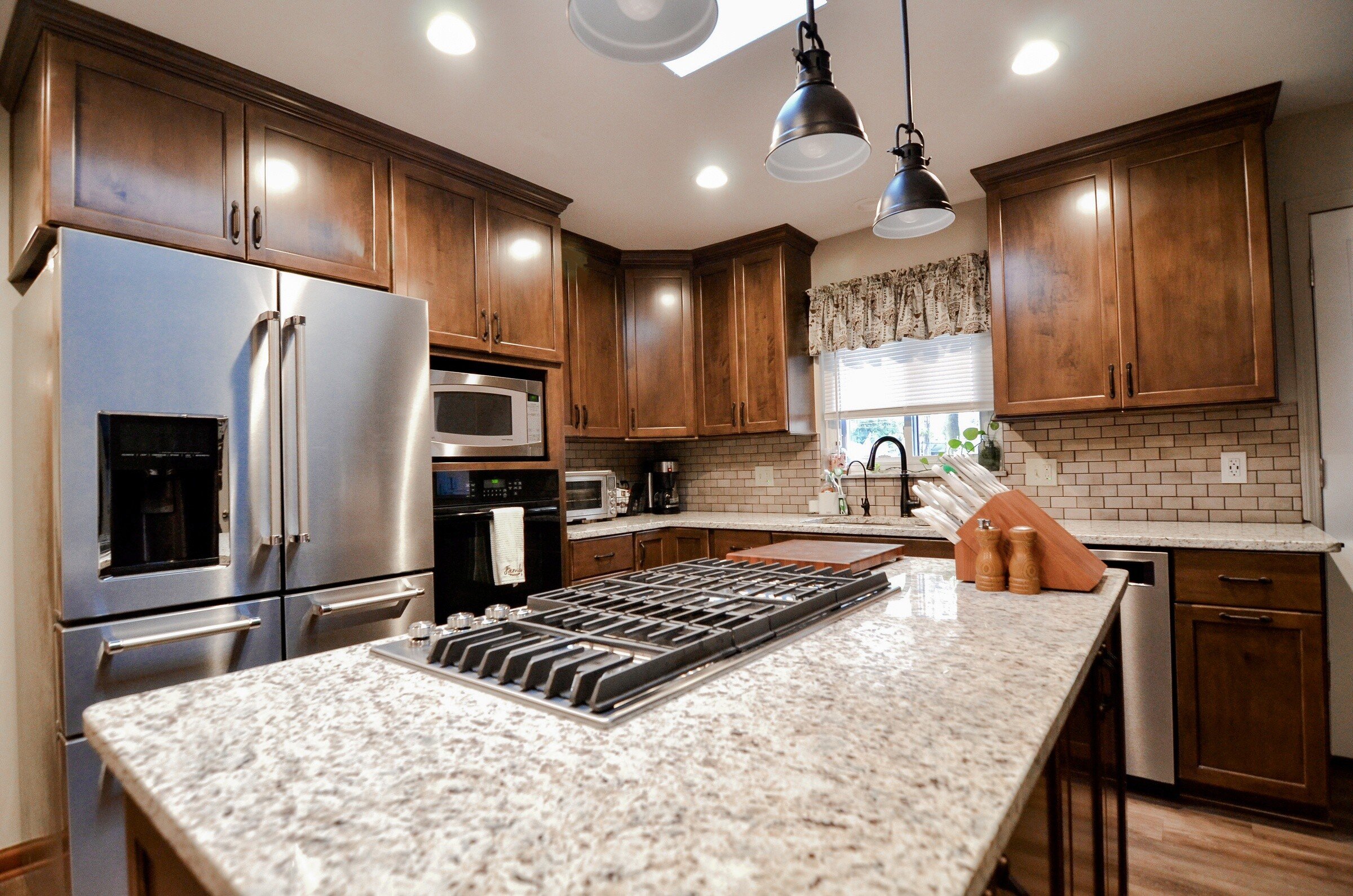
Image Source: www.jsbhomesolutions.com
Deciphering Your Kitchen Countertop Replacement Budget
When planning a kitchen remodel, the countertop is often a focal point, and for good reason. It’s a large surface area that gets a lot of use and contributes heavily to the overall aesthetic. But how much to replace kitchen countertops becomes the burning question for many homeowners. This guide will break down the costs associated with various materials and factors, helping you set a realistic kitchen remodel countertop budget.
The Big Picture: Factors Affecting Countertop Replacement Prices
Several elements play a role in the final countertop replacement prices. It’s not just about the material itself; the entire process involves labor, fabrication, and sometimes removal of old materials.
Here’s a breakdown of what influences the overall cost:
- Material Choice: This is arguably the biggest driver of cost. From budget-friendly laminates to luxurious natural stones, the price per square foot can differ dramatically.
- Square Footage: The larger your kitchen, the more material you’ll need, naturally increasing the cost.
- Edge Profiles: Simple, straight edges are typically the most affordable. More complex or decorative edge profiles, like bullnose, ogee, or waterfall edges, add to the fabrication cost.
- Cutouts: For sinks, cooktops, or decorative features, precise cutouts are needed. These add to the fabrication complexity and therefore, the cost. The number and shape of cutouts can influence the price.
- Seams: Depending on the layout of your kitchen and the size of the slabs available, seams might be necessary. Minimizing seams often requires larger, more expensive slabs and more careful fabrication and installation, which can increase the overall cost.
- Removal and Disposal of Old Countertops: If you have existing countertops, you’ll need to factor in the cost of their removal and proper disposal. Some installers include this in their quote, while others charge separately.
- Installation Labor: The complexity of the installation, the skill of the installers, and prevailing labor rates in your area all contribute to the final price.
- Location: Geographic location plays a significant role in labor costs and the availability of certain materials. Prices can be higher in major metropolitan areas compared to rural regions.
- Additional Features: This could include things like integrated sinks, custom backsplashes, or intricate designs.
New Kitchen Counters Cost: Material by Material Breakdown
Let’s dive into the cost of common countertop materials. These are approximate ranges and can fluctuate based on brand, quality, and installation specifics.
Laminate Countertop Replacement Cost
Laminate countertops are a popular choice for those on a tighter budget. They are made from layers of plastic bonded to particleboard or plywood.
- Pros: Affordable, wide variety of colors and patterns, easy to clean, lightweight.
- Cons: Not as durable as stone, susceptible to heat and scratches, seams can be visible, cannot be repaired if damaged deeply.
Laminate countertop replacement cost typically ranges from $30 to $100 per square foot, installed. This includes fabrication and installation. For a standard 30-square-foot kitchen, you could expect to pay between $900 and $3,000.
Butcher Block Countertop Cost
Butcher block countertops, usually made from hardwoods like maple, oak, or walnut, bring a warm, natural feel to the kitchen.
- Pros: Beautiful natural look, can be sanded and refinished, relatively affordable for natural materials, self-healing properties for minor cuts.
- Cons: Requires regular sealing and oiling to prevent drying and cracking, susceptible to stains and water damage if not properly maintained, can show knife marks and dents.
The butcher block countertop cost typically ranges from $50 to $150 per square foot, installed. For 30 square feet, this would be approximately $1,500 to $4,500. Higher-end hardwoods and thicker profiles will push the price towards the higher end.
Tile Countertop Replacement Cost
Tile countertops offer a classic look and can be customized with a vast array of colors, shapes, and patterns.
- Pros: Durable, heat-resistant, stain-resistant, easy to clean, can be a DIY project for cost savings, wide design flexibility.
- Cons: Grout lines can be difficult to clean and can stain or crack, tiles can chip or crack if heavy objects are dropped on them, not a seamless surface.
The tile countertop replacement cost can vary significantly based on the type of tile used.
- Ceramic/Porcelain Tiles: $40 – $120 per square foot, installed.
- Natural Stone Tiles (Marble, Slate): $70 – $150+ per square foot, installed.
For 30 square feet, expect to pay between $1,200 and $4,500 or more.
Granite Countertop Replacement Cost
Granite is a natural stone known for its beauty, durability, and unique patterns. Each slab is one-of-a-kind.
- Pros: Very durable, heat and scratch-resistant, adds value to a home, unique natural beauty, can be sealed to resist stains.
- Cons: Porous if not sealed properly, can chip or crack under heavy impact, requires periodic sealing, can be heavy and expensive to transport and install.
The granite countertop replacement cost typically ranges from $50 to $200 per square foot, installed. For 30 square feet, this translates to $1,500 to $6,000. The price depends heavily on the specific granite slab chosen, its rarity, and the complexity of the installation. Exotic granites can easily push prices higher.
Quartz Countertop Replacement Cost
Quartz countertops are engineered from natural quartz crystals mixed with resin binders and pigments. They offer a consistent look and superior durability.
- Pros: Non-porous (highly resistant to stains, bacteria, and moisture), extremely durable, low maintenance (no sealing required), wide range of colors and patterns including solid colors and realistic stone imitations.
- Cons: Can be more expensive than granite, susceptible to damage from extreme heat, seams can be more noticeable in solid colors, not a natural product.
The quartz countertop replacement cost typically ranges from $75 to $225 per square foot, installed. For 30 square feet, this means an investment of $2,250 to $6,750. High-end quartz brands and intricate edge profiles will be at the higher end of this spectrum.
Other Popular Materials and Their Costs
- Marble: Known for its luxurious veining and classic beauty, marble is softer than granite and quartz, making it more susceptible to etching and staining.
- Cost: $75 – $250+ per square foot, installed.
- Soapstone: A dense, non-porous natural stone that develops a patina over time. It’s heat-resistant and durable.
- Cost: $70 – $150 per square foot, installed.
- Solid Surface (e.g., Corian): A composite material that is non-porous and seamless. It’s repairable and available in many colors.
- Cost: $40 – $100 per square foot, installed.
- Stainless Steel: Offers a modern, professional look, is heat and stain-resistant, and hygienic.
- Cost: $75 – $150 per square foot, installed.
- Concrete: Can be customized with colors and finishes, offering an industrial or modern aesthetic. Requires sealing.
- Cost: $70 – $140 per square foot, installed.
- Recycled Glass: Made from recycled glass chips set in cement or resin, offering an eco-friendly and unique look.
- Cost: $90 – $180 per square foot, installed.
The Kitchen Countertop Installation Cost Component
The kitchen countertop installation cost is a significant part of the overall project. This covers the labor involved in measuring, fabricating (cutting to size, creating edge profiles, making cutouts), transporting the heavy slabs, and fitting them precisely into your kitchen.
- Standard Installation: For simpler kitchens with basic edge profiles and minimal cutouts, installation might be a smaller percentage of the total cost.
- Complex Installation: Kitchens with intricate layouts, numerous cabinets, unusual angles, or demanding edge details will require more time and expertise, driving up labor costs. This also includes ensuring the cabinets are level and strong enough to support the weight of the new countertops.
- Specialty Requirements: If you opt for features like waterfall edges (where the countertop material extends down the side of a cabinet) or integrated sinks, the installation becomes more specialized and thus more expensive.
Generally, kitchen countertop installation cost can range from $500 to $2,000 or more, depending on the factors above. This is often bundled into the per-square-foot price from the supplier.
DIY Countertop Replacement Cost
Can you save money by doing it yourself? The DIY countertop replacement cost can indeed be lower, but it’s crucial to assess your skills honestly.
What can you DIY?
- Removal of Old Countertops: This is often the most physically demanding part and can be done with basic tools. Be careful not to damage surrounding cabinets or walls.
- Simple Material Installation: Laminate or certain tile countertops might be manageable for an experienced DIYer.
What is generally NOT recommended for DIY?
- Measuring and Templating: Precision is paramount. Even a slight error can lead to expensive mistakes or countertops that don’t fit. Professional templating ensures accuracy.
- Fabrication (Cutting Stone): Cutting granite or quartz requires specialized diamond blades, water cooling systems, and significant skill to prevent cracking or chipping.
- Heavy Slab Installation: Lifting and maneuvering heavy stone slabs requires multiple people and specialized equipment to avoid injury or damage.
- Complex Edge Profiles and Cutouts: These demand precise machinery and expertise.
If you choose to DIY, you’ll save on labor, but you’ll need to factor in tool rentals or purchases, potential mistakes, and your time. For most homeowners, especially with natural stone or engineered quartz, hiring professionals for fabrication and installation is the safer and more reliable route.
Cost Considerations for Specific Kitchen Countertop Materials
Let’s delve deeper into specific material costs.
Granite Countertop Replacement Cost: Deeper Dive
The world of granite is vast, and prices reflect this.
- Entry-Level Granites: These are common, widely available colors and patterns. They might have more consistent veining or simpler patterns.
- Price Range: $40 – $70 per square foot, installed.
- Mid-Range Granites: Offer more unique colors, bolder patterns, and higher quality.
- Price Range: $70 – $120 per square foot, installed.
- High-End/Exotic Granites: These include rare colors, intricate veining, and unique geological formations. They are often quarried in limited quantities.
- Price Range: $120 – $200+ per square foot, installed.
Factors affecting granite cost:
- Slab Thickness: Standard thickness is usually 3 cm (about 1 ¼ inches). Thicker slabs (4 cm) cost more.
- Edge Profiles: A simple eased edge is standard. Bullnose, demi-bullnose, or custom edges add cost.
- Number of Cutouts: Each sink or cooktop cutout adds to fabrication time and cost.
- Seam Placement: Minimizing seams or placing them in less visible areas can increase fabrication complexity.
- Sealing: Most granite needs sealing. Some installers include this, others charge extra.
Quartz Countertop Replacement Cost: Deeper Dive
Quartz offers a more predictable cost structure than granite, but prices still vary.
- Standard Quartz: Common colors and patterns, often with simpler veining.
- Price Range: $75 – $125 per square foot, installed.
- Premium Quartz: Unique colors, intricate veining that mimics natural stone, or specialized finishes.
- Price Range: $125 – $175+ per square foot, installed.
- High-End/Designer Quartz: Often features advanced designs, special textures, or large-format slabs that minimize seams.
- Price Range: $175 – $225+ per square foot, installed.
Factors affecting quartz cost:
- Brand: Different manufacturers have varying price points based on reputation and quality.
- Color and Pattern: Pure white quartz or quartz with very intricate veining can be more expensive.
- Edge Profiles: Similar to granite, decorative edges add to the cost.
- Seams: While quartz is less porous, visible seams can be a concern, and designers often aim to minimize them, which can influence slab selection and cost.
Laminate Countertop Replacement Cost: Deeper Dive
Laminate is the most budget-friendly option, but quality can vary.
- Standard Laminate: Basic colors and patterns, often with a post-formed edge (rounded front edge).
- Price Range: $30 – $50 per square foot, installed.
- Premium Laminate: Features more realistic stone or wood patterns, higher-definition images, and sometimes more sophisticated edge options (like a square edge or a subtle bevel).
- Price Range: $50 – $100 per square foot, installed.
Factors affecting laminate cost:
- Edge Treatment: A square edge is standard. A bevel or a more decorative edge will cost more.
- Backsplash Integration: Some laminate countertops come with an integrated backsplash, which can add a small amount to the cost.
- Specialty Finishes: Matte or textured finishes can sometimes be priced higher than standard gloss.
Butcher Block Countertop Cost: Deeper Dive
The type of wood and its construction significantly impact butcher block pricing.
- Maple/Birch: These are common, relatively affordable hardwoods.
- Price Range: $50 – $80 per square foot, installed.
- Oak/Hickory: Slightly more expensive woods with attractive grain patterns.
- Price Range: $70 – $100 per square foot, installed.
- Walnut/Cherry: Premium hardwoods with rich colors and desirable grain.
- Price Range: $100 – $150+ per square foot, installed.
Factors affecting butcher block cost:
- Wood Species: As listed above, different woods have different price points.
- Construction Method:
- Edge Grain: Strips of wood are glued together along their edges. Most common and usually most affordable.
- Face Grain: The widest surface of the wood is glued together, showing the full grain pattern. Often more expensive.
- End Grain: Small blocks of wood are glued together at the end grain, creating a checkerboard pattern. This is the most expensive as it’s best for actual chopping and is the most labor-intensive to produce.
- Thickness: Thicker butcher block slabs will cost more.
- Finish: If you want it pre-finished or professionally oiled, that adds to the cost.
Tile Countertop Replacement Cost: Deeper Dive
The type of tile is the primary cost driver.
- Ceramic Tile: Most affordable, wide variety of styles.
- Price Range: $40 – $70 per square foot, installed.
- Porcelain Tile: More durable and denser than ceramic, often mimicking natural stone.
- Price Range: $50 – $90 per square foot, installed.
- Natural Stone Tile (Travertine, Slate, Marble): More expensive, unique aesthetic.
- Price Range: $70 – $150+ per square foot, installed.
- Glass Tile: Can be used for accents or full countertops, offering a modern look.
- Price Range: $80 – $200+ per square foot, installed.
Factors affecting tile cost:
- Tile Material and Quality: As detailed above.
- Grout and Sealer: The cost of quality grout and sealant is included.
- Complexity of Pattern: Intricate tile layouts or mosaics will increase labor costs.
- Grout Line Width: Smaller grout lines often require more precise tile placement.
Estimating Your Total Kitchen Countertop Cost
To get a clearer picture of your new kitchen counters cost, it’s helpful to break it down:
Sample Kitchen (30 sq ft)
| Material Type | Low End (per sq ft) | High End (per sq ft) | Total Low End (30 sq ft) | Total High End (30 sq ft) |
|---|---|---|---|---|
| Laminate | $30 | $100 | $900 | $3,000 |
| Butcher Block | $50 | $150 | $1,500 | $4,500 |
| Tile (Ceramic/Porc.) | $40 | $90 | $1,200 | $2,700 |
| Tile (Natural Stone) | $70 | $150 | $2,100 | $4,500 |
| Granite | $50 | $200 | $1,500 | $6,000 |
| Quartz | $75 | $225 | $2,250 | $6,750 |
| Marble | $75 | $250 | $2,250 | $7,500 |
| Solid Surface | $40 | $100 | $1,200 | $3,000 |
| Stainless Steel | $75 | $150 | $2,250 | $4,500 |
| Concrete | $70 | $140 | $2,100 | $4,200 |
| Recycled Glass | $90 | $180 | $2,700 | $5,400 |
Note: These prices are for installed countertops and are approximate averages. They do not include sink replacement, faucet replacement, or significant cabinet modifications.
Hidden Costs and Considerations
Beyond the per-square-foot price, be aware of potential extra expenses:
- Sink and Faucet Replacement: If your new countertops require a different sink type or you plan to update your faucet, factor in those costs. Undermount sinks, for example, require a specific type of installation that can add to the fabrication cost.
- Plumbing Modifications: If your sink or dishwasher plumbing needs to be adjusted for the new layout or sink type, this adds to the labor cost.
- Backsplash: While sometimes installed with the countertops, the backsplash is often a separate project with its own material and labor costs.
- Cabinet Reinforcement: Heavy materials like granite and quartz might require reinforcement of existing cabinets to ensure they can bear the weight.
- Permits: In some areas, significant kitchen renovations might require building permits.
Getting Quotes and Making Your Decision
To accurately determine how much to replace kitchen countertops for your specific project, follow these steps:
- Measure Your Space: Get a rough estimate of your countertop square footage.
- Research Materials: Decide which materials align with your budget, lifestyle, and aesthetic preferences.
- Get Multiple Quotes: Contact several reputable countertop fabricators and installers in your area. Provide them with your measurements and desired material. Be sure to ask what is included in their quote (e.g., removal of old countertops, sink cutout, edge finishing, sealing).
- Ask for Detailed Breakdowns: A good quote will detail material costs, fabrication costs, and installation labor.
- Check Reviews and References: Ensure you’re working with experienced and trustworthy professionals.
By diligently researching materials, understanding all the cost components, and obtaining detailed quotes, you can confidently plan your budget and select the perfect new kitchen counters for your home.
Frequently Asked Questions (FAQ)
Q1: What is the cheapest material for kitchen countertops?
A1: Laminate is generally the cheapest material for kitchen countertops, with prices starting around $30 per square foot installed.
Q2: Can I install countertops myself to save money?
A2: While you can potentially save on labor by doing some parts of the DIY countertop replacement yourself (like removing old countertops), installing materials like granite or quartz is complex and requires specialized tools and skills. It’s often best left to professionals to avoid costly mistakes.
Q3: Who is the best person to hire for countertop installation?
A3: You should hire a reputable countertop fabricator and installer who specializes in the material you choose. Look for companies with good reviews, a strong portfolio, and who offer detailed quotes.
Q4: How much does it typically cost to remove and dispose of old countertops?
A4: The cost to remove and dispose of old countertops can range from $200 to $800, depending on the material (stone is heavier and harder to remove than laminate), the amount of labor involved, and local disposal fees. Some installers include this in their quote, while others charge separately.
Q5: Are quartz countertops more expensive than granite?
A5: On average, quartz countertops can be slightly more expensive than granite, especially when comparing entry-level options for both. However, high-end granite and exotic quartz can have similar or even higher price points.
Q6: Does the edge profile significantly impact the cost?
A6: Yes, decorative or complex edge profiles (like bullnose, ogee, or waterfall) will increase the kitchen countertop installation cost compared to a simple eased or square edge due to the extra fabrication time and skill required.
Q7: What is the average lifespan of granite countertops?
A7: Properly sealed and maintained granite countertops can last for decades, often outlasting the lifespan of your kitchen cabinets.
Q8: Is it worth investing in more expensive countertop materials?
A8: It often is. Higher-quality materials like granite and quartz are more durable, resistant to stains and heat, and can increase your home’s resale value. However, the “worth” depends on your budget and long-term plans for the home.