
Can you install a Kohler kitchen faucet yourself? Yes, with the right tools and a little patience, you can absolutely tackle a DIY kitchen faucet installation. This guide will walk you through every step of the Kohler faucet installation process, making kitchen sink faucet replacement a breeze. We’ll cover everything from gathering your supplies to the final checks. Even if you’re installing an undermount sink faucet installation, the core principles are the same. Let’s get started with how to connect a Kohler faucet and ensure a secure Kohler faucet mounting.
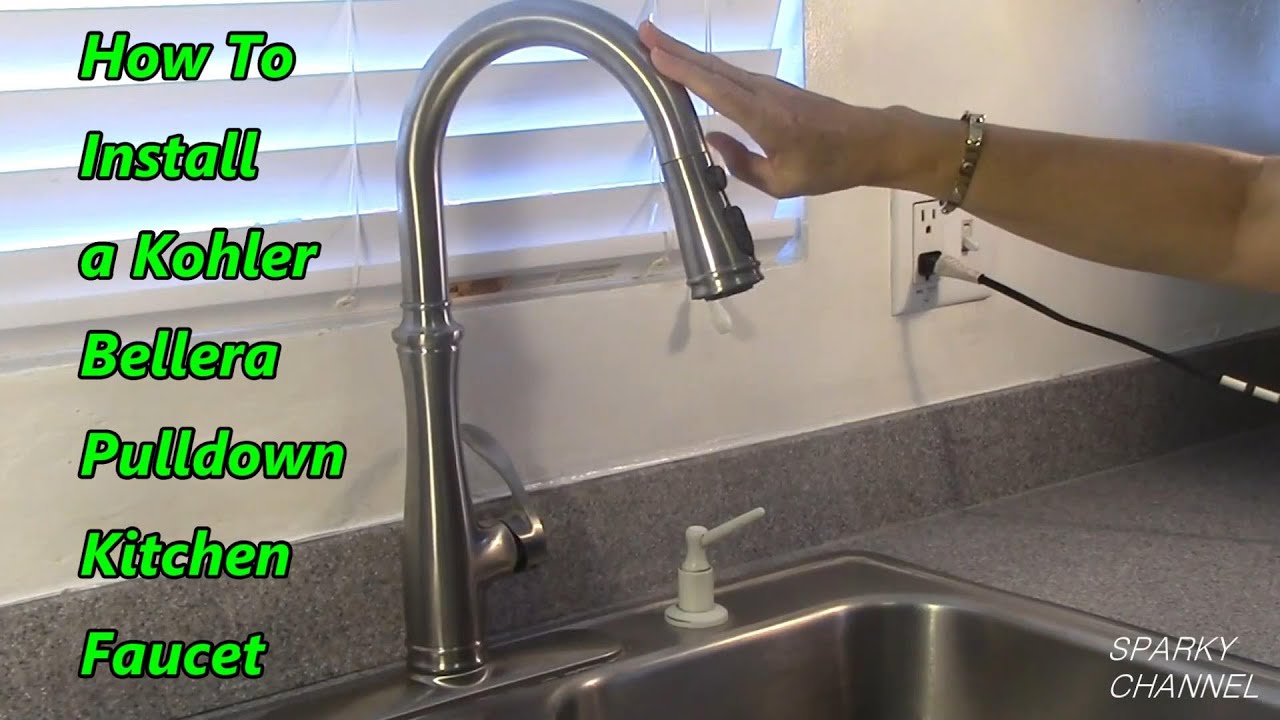
Image Source: i.ytimg.com
Gathering Your Supplies and Tools
Before you dive into your DIY kitchen faucet installation, it’s crucial to have everything you need ready. This will save you time and frustration. Refer to your specific Kohler faucet manual for any unique requirements for your model.
Essential Tools for Kohler Faucet Installation
- Adjustable Wrenches (2): You’ll need these to loosen and tighten various nuts and fittings. Having two allows you to hold one part steady while turning another.
- Basin Wrench: This specialized tool is a lifesaver for reaching nuts in tight spaces, especially those that secure the faucet to the sink or countertop.
- Plumber’s Tape (PTFE Tape): Used to create a watertight seal on threaded connections.
- Plumber’s Putty: This pliable putty creates a watertight seal between the faucet base and the sink or countertop.
- Bucket: To catch any residual water from the old pipes.
- Towels or Rags: For wiping up spills and keeping your workspace dry.
- Safety Glasses: Protect your eyes from debris and falling water.
- Flashlight or Headlamp: To illuminate the often dark and cramped space under the sink.
- Screwdriver Set: Both Phillips and flathead screwdrivers might be needed for removing mounting hardware.
- Putty Knife: For scraping away old plumber’s putty.
- Gloves: To keep your hands clean and protected.
- Safety Glasses: Essential for eye protection.
What to Expect from Your Kohler Faucet Parts
Your new Kohler faucet will come with several key Kohler faucet parts. Familiarize yourself with them before you begin:
- Faucet Body: The main part of the faucet that houses the spout and handles.
- Mounting Hardware: This typically includes a mounting bracket, washers, and nuts to secure the faucet to the sink or countertop.
- Water Supply Lines: Flexible hoses that connect the faucet to your home’s hot and cold water shut-off valves.
- Gaskets and Seals: Various rubber or silicone components to ensure watertight connections.
- Aerator: The small piece at the tip of the spout that mixes air into the water stream.
- Drain Assembly (if included): For faucets that come with a matching drain.
Tip: Always consult your specific Kohler faucet manual for a detailed breakdown of your faucet’s components and any specialized installation instructions.
Step 1: Preparation and Removing the Old Faucet
This is a critical stage in your kitchen sink faucet replacement. Proper preparation ensures a smooth installation of your new Kohler faucet.
Turning Off the Water Supply
This is the MOST important step. Failure to do so will result in a flood.
- Locate Shut-Off Valves: Look under your sink for two valves, usually made of brass or plastic. One is for hot water, and the other is for cold water.
- Turn Valves Clockwise: Turn both handles clockwise until they are completely closed.
- Test the Old Faucet: Turn on the old faucet handles to drain any remaining water in the lines and to confirm that the water is indeed shut off. Let it run until no more water comes out.
Disconnecting the Old Faucet
Now, you’ll disconnect the old plumbing.
- Place a Bucket: Position a bucket directly under the water supply connections to catch any drips.
- Disconnect Supply Lines: Use an adjustable wrench to loosen the nuts connecting the flexible supply lines to the shut-off valves. Turn counter-clockwise. Be prepared for a small amount of water to drip out.
- Disconnect from Faucet: If your supply lines are integrated into the faucet, you’ll disconnect them from the faucet itself under the sink. Again, use your wrench.
- Remove Sprayer Hose (if applicable): If your old faucet has a side sprayer, disconnect its hose from the faucet body. There might be a clip or a threaded connection.
Detaching the Faucet from the Sink
This is where the basin wrench often comes in handy for Kohler faucet installation.
- Locate Mounting Nuts: Look under the sink where the faucet body passes through the sink or countertop. You’ll see large nuts (mounting nuts) and possibly a mounting bracket holding the faucet in place.
- Loosen Mounting Nuts: Use your basin wrench or an adjustable wrench to loosen these nuts. They can be tight, so you may need to apply some force. Turn them counter-clockwise.
- Remove Any Washers or Brackets: Once the nuts are off, carefully remove any washers or mounting brackets.
- Lift Out the Old Faucet: With everything disconnected and unmounted, you should be able to gently lift the old faucet straight up and out of the sink holes.
Cleaning the Sink Surface
Before you can proceed with attaching the kitchen faucet, you need a clean surface.
- Scrape Away Old Putty: Use a putty knife to gently scrape away any old plumber’s putty or sealant from the sink or countertop where the faucet was mounted.
- Clean the Area: Wipe down the area with a damp cloth and a little dish soap to remove any grime or residue. A clean surface ensures a proper seal for your new Kohler faucet.
Step 2: Preparing the New Kohler Faucet
Before you start attaching the kitchen faucet, it’s wise to prepare your new Kohler faucet according to the instructions in your Kohler faucet manual.
Assemble Faucet Components
Many modern Kohler faucets are partially assembled. However, you may need to attach the spout, handles, or escutcheon plate (the decorative plate that covers extra holes). Follow your manual carefully.
Attach Supply Lines to Faucet
This is a crucial part of how to connect a Kohler faucet.
- Identify Hot and Cold: Ensure you know which supply line is for hot water (usually marked red) and which is for cold water (usually marked blue or white).
- Apply Plumber’s Tape (if needed): Some supply lines have rubber gaskets that don’t require tape. Check your faucet manual. If your supply lines have threaded ends that connect to the faucet body without rubber seals, wrap plumber’s tape clockwise around the threads a few times.
- Thread Supply Lines: Screw the supply lines onto the corresponding hot and cold inlets on the faucet body. Hand-tighten them first, then use an adjustable wrench to snug them up. Do not overtighten, as this can damage the fittings.
Install Gaskets and Sealing Components
Your Kohler faucet parts include seals to prevent leaks.
- Base Gasket/Putty: Most faucets come with a rubber gasket for the base. If yours does not, or if your manual recommends it, apply a rope of plumber’s putty around the underside of the faucet base or escutcheon plate. This creates a watertight seal against the sink.
Step 3: Installing the New Kohler Faucet
Now it’s time for the exciting part – installing your new Kohler kitchen faucet!
Positioning the Faucet
- Feed Lines Through Holes: Carefully guide the faucet’s supply lines and mounting posts through the designated holes in the sink or countertop.
- Align Faucet: Position the faucet so it is straight and centered in the holes. Make sure the escutcheon plate (if used) is sitting flush against the sink surface.
Securing the Faucet (Kohler Faucet Mounting)
This step ensures your faucet is firmly attached.
- Place Mounting Bracket and Washers: From underneath the sink, slide the mounting bracket (if provided) over the faucet shanks. Then, place any required rubber or plastic washers onto the shanks.
- Thread Mounting Nuts: Screw the mounting nuts onto the faucet shanks. Hand-tighten them first.
- Tighten Mounting Nuts: Use your basin wrench or adjustable wrench to tighten the nuts. Alternate between nuts to ensure even pressure. Tighten them enough to hold the faucet securely in place without distorting the sink or countertop. Check the faucet’s position from above to ensure it remains straight as you tighten. This is a key part of Kohler faucet mounting.
Connecting Water Supply Lines to Shut-Off Valves
This is the core of how to connect Kohler faucet.
- Align Supply Lines: Position the hot water supply line to connect to the hot water shut-off valve and the cold water supply line to the cold water shut-off valve.
- Thread Connectors: Thread the supply line connectors onto the shut-off valves. Hand-tighten them first.
- Tighten with Wrench: Use an adjustable wrench to tighten the nuts. Again, ensure there’s a good seal, but do not overtighten. Many modern supply lines have flexible braided hoses with rubber seals that do not require plumber’s tape. Consult your Kohler faucet manual.
Attaching the Sprayer Hose (if applicable)
If your faucet has a pull-out or side sprayer, you’ll need to connect its hose.
- Locate Connection Point: Find the connection point under the sink where the sprayer hose attaches to the faucet body.
- Connect Hose: Connect the sprayer hose, often with a quick-connect fitting or a threaded connection. Make sure it’s securely attached according to your Kohler faucet manual.
- Attach Weight: If your faucet has a pull-out sprayer, attach the counterweight to the designated spot on the hose. This helps the sprayer retract smoothly.
Step 4: Testing for Leaks and Final Checks
This is the moment of truth! Proper testing prevents future kitchen faucet troubleshooting.
Turning on Water Supply
- Slowly Open Valves: Slowly turn the hot and cold water shut-off valves counter-clockwise to restore water flow.
- Check for Leaks Immediately: Inspect all connections under the sink – where the supply lines meet the shut-off valves and where they meet the faucet. Look and feel for any drips or moisture.
Testing the Faucet Operation
- Turn on Faucet: Turn on the new Kohler kitchen faucet handles. Let the water run for a minute or two.
- Check Hot and Cold: Ensure you are getting both hot and cold water.
- Inspect Sprayer (if applicable): Test the sprayer function and check its hose connection for leaks.
- Run Water with Stopper Closed: Fill the sink partially and then drain it to check the drain assembly (if you installed one) for leaks.
- Re-tighten if Necessary: If you find any small drips, try tightening the offending connection slightly (just a quarter-turn might be enough). If a leak persists, you may need to turn off the water, disconnect the line, re-apply plumber’s tape (if applicable), and reconnect.
Final Wipe Down
- Clean Up: Wipe down the faucet and the sink area to remove any fingerprints or water marks.
Troubleshooting Common Kohler Faucet Installation Issues
Even with careful installation, sometimes you might encounter a minor issue. Here’s how to handle common kitchen faucet troubleshooting.
Leaky Connections
- Cause: Loose fittings, missing gaskets, or improperly applied plumber’s tape.
- Solution:
- Turn off the water supply.
- For threaded connections, ensure plumber’s tape is applied correctly (clockwise).
- Check that rubber gaskets are seated properly.
- Gently tighten the connection. If it still leaks, disconnect, re-tape/reseat, and reconnect.
Low Water Pressure
- Cause: Aerator is clogged, supply lines are kinked, or shut-off valves are not fully open.
- Solution:
- Unscrew the aerator from the end of the spout and clean out any debris.
- Ensure the supply lines under the sink are not kinked or bent sharply.
- Double-check that the shut-off valves are fully open.
Faucet Wobbles
- Cause: Mounting nuts are not tight enough.
- Solution:
- Turn off the water supply.
- Access the mounting nuts from under the sink.
- Tighten them securely using a basin wrench or adjustable wrench.
Sprayer Not Retracting
- Cause: Hose is kinked, weight is misaligned, or debris is obstructing movement.
- Solution:
- Check the sprayer hose for any kinks or knots.
- Ensure the counterweight is attached to the correct spot on the hose.
- Look for any obvious obstructions.
Drip from Spout (After Installation)
- Cause: Internal cartridge issue or debris in the valve seat.
- Solution:
- Turn off the water supply.
- Consult your Kohler faucet manual for instructions on how to access and clean or replace the cartridge. This is a more advanced step.
Important Note: Always refer to your specific Kohler faucet manual for detailed troubleshooting guidance tailored to your model.
FAQs About Kohler Faucet Installation
Here are answers to some common questions you might have during your DIY kitchen faucet installation.
Q1: How much water pressure do I need for a Kohler faucet?
A: Most Kohler faucets are designed to operate efficiently within a standard household water pressure range of 20 to 80 psi (pounds per square inch). Check your faucet’s specific manual for any particular requirements.
Q2: Can I install a Kohler faucet myself if I have an undermount sink?
A: Yes, the process for an undermount sink faucet installation is very similar to a standard sink. The main difference is accessing the mounting hardware might be slightly more confined, making a basin wrench even more essential. The Kohler faucet mounting principles remain the same.
Q3: What are the most common Kohler faucet parts I need to be aware of?
A: Key Kohler faucet parts include the faucet body, spout, handles, mounting hardware (nuts, washers, bracket), water supply lines, gaskets, and the aerator. Familiarizing yourself with these before you start will make the process smoother.
Q4: How do I ensure I’ve connected the Kohler faucet correctly?
A: To connect the Kohler faucet correctly, ensure the hot and cold water supply lines are attached to the corresponding inlets on the faucet and shut-off valves. Use plumber’s tape on threaded connections if recommended and tighten fittings securely but without overtightening. Proper sealing is key to how to connect a Kohler faucet.
Q5: What if my new faucet has different mounting hardware than my old one?
A: Kohler often updates its mounting systems for easier installation. Your new Kohler faucet parts will include specific hardware designed for that model. Follow the instructions in your Kohler faucet manual for how to attach the kitchen faucet using the provided components.
Q6: How do I deal with connecting kitchen faucet hoses?
A: Typically, you’ll connect the flexible supply hoses to the faucet inlets under the sink and then to the shut-off valves. Many modern hoses have quick-connect fittings or rubber seals that don’t require plumber’s tape. Always refer to your Kohler faucet manual for the specific method for your model.
Q7: My old faucet had three holes, but my new Kohler faucet only uses one. What do I do?
A: If your new faucet is a single-hole design and your sink has multiple holes, your faucet likely came with an escutcheon plate (also called a deck plate). This plate covers the unused holes for a clean look. Make sure to install this plate before mounting the faucet.
Q8: How tight should I make the supply line connections?
A: For most connections with rubber gaskets, hand-tight plus a quarter to half turn with a wrench is usually sufficient. If you’re using plumber’s tape on threaded pipes, tighten until snug. Overtightening can strip threads or crack fittings. When in doubt, check your Kohler faucet manual.
Q9: What is a basin wrench and why is it so important for faucet installation?
A: A basin wrench is a specialized tool with a long shaft and a swiveling jaw. It’s designed to reach and turn nuts in the tight, awkward spaces found behind a sink or around plumbing fixtures. It’s indispensable for Kohler faucet installation, especially for tightening or loosening the nuts that secure the faucet to the sink.
Q10: Where can I find a Kohler faucet manual for my specific model?
A: You can usually find your Kohler faucet manual on the Kohler website. Search for your faucet model number, and the manual should be available for download as a PDF. It contains all the specific details for your Kohler faucet parts and installation.
By following these detailed steps, you should be well-equipped to successfully complete your DIY kitchen faucet installation. Enjoy your new Kohler faucet!