
Can you place a TV above a fireplace? While technically possible, it’s generally not recommended due to heat and eye-level viewing concerns. This guide will help you discover fantastic living room layout ideas that gracefully accommodate both a television and a fireplace, creating a harmonious and functional space. We’ll explore furniture placement TV fireplace strategies, how to artfully arrange furniture around these key features, and how to make your fireplace the true fireplace focal point furniture arrangement. Let’s dive into balancing TV and fireplace with expert advice on media console placement, optimizing seating arrangements TV fireplace, incorporating a sectional sofa living room if you have one, and achieving the best living room design with TV and fireplace. Finally, we’ll cover the art of decorating around a fireplace and TV.
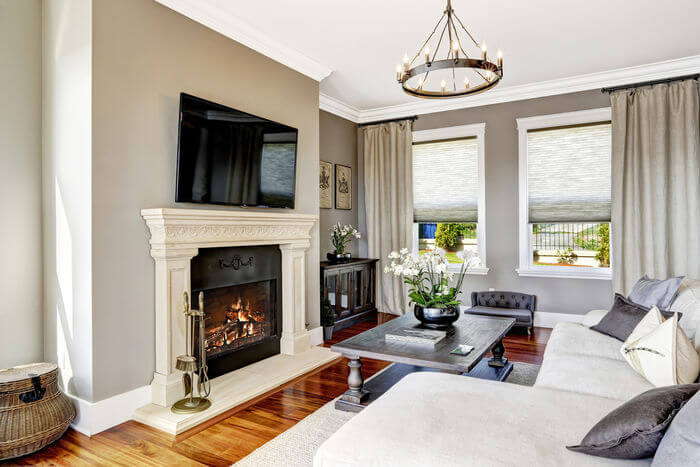
Image Source: cdn.direct-fireplaces.com
Designing a Dual Focal Point Room
Many homes feature both a television and a fireplace, presenting a common design challenge: how to make both elements work together without one overshadowing the other. The key is balance and thoughtful arrangement. This isn’t just about aesthetics; it’s about creating a space that’s comfortable for both entertainment and relaxation.
Fathoming the Flow: Establishing a Layout
Before you even think about furniture, consider the room’s natural flow. Where are the main entryways? How do people typically move through the space? Your living room layout ideas should support this natural movement.
- Traffic Paths: Ensure clear pathways from doors to seating areas and between different zones of the room. Avoid blocking entryways with furniture.
- Natural Light: Consider where windows are located and how natural light affects the viewing experience for both the TV and the general ambiance.
- Room Dimensions: The size and shape of your living room will dictate what is possible. A large room can accommodate more elaborate arrangements, while smaller spaces require efficient use of every inch.
Prioritizing Your Focal Points
When you have both a TV and a fireplace, you have two potential focal points. The goal is to make them coexist harmoniously.
- Option 1: Designated Focal Point: Decide which element will be the primary focal point. Often, the fireplace is the architectural centerpiece, making it a natural choice. The TV can then be integrated in a way that complements it.
- Option 2: Balanced Approach: In some cases, you can create a balanced visual weight where both the fireplace and the TV hold significant visual interest, but neither dominates. This often involves strategic furniture placement TV fireplace that directs attention to both.
Arranging Furniture Around the TV and Fireplace
This is where the magic happens. Effective furniture placement TV fireplace is crucial for creating a comfortable and engaging living room.
The Fireplace as the Anchor
When the fireplace is your primary focal point, your furniture arrangement should naturally draw the eye towards it.
Seating with the Fireplace in Mind
- Facing the Fireplace: Arrange seating pieces like sofas and armchairs so they directly face the fireplace. This creates an inviting conversation area.
- Angle for Comfort: Chairs can be angled slightly towards the fireplace and the main seating area to encourage interaction.
- Armchair Placement: Accent chairs can be placed on either side of the fireplace or at an angle to frame it, adding symmetry and visual interest.
- Ottomans and Coffee Tables: These can be centered in front of the main seating arrangement, providing a surface for drinks and decor, and also acting as a visual anchor for the seating group.
Integrating the TV When the Fireplace is Primary
If the fireplace is the main focus, the TV needs to be placed thoughtfully.
- Adjacent Wall: The most common solution is to place the TV on a wall adjacent to the fireplace. This allows both elements to be visible without competing directly.
- Side-by-Side Considerations: If you have a wide wall, you might be able to place the TV on one side of the fireplace and a complementary piece of furniture (like a bookshelf or cabinet) on the other.
- Media Console Placement: Choose a media console placement that is at a comfortable viewing height when seated. It should not obstruct the fireplace or overpower the mantle.
The TV as the Star: Furniture Placement Strategies
If your household prioritizes television viewing, you might choose to make the TV the primary focal point. This doesn’t mean the fireplace is ignored, but the furniture arrangement will lean towards optimizing the viewing experience.
Seating for Optimal Viewing
- Direct Line of Sight: Arrange sofas and chairs so that the majority of seating offers a clear, comfortable view of the television.
- Distance Matters: Ensure adequate distance between the seating and the TV to prevent eye strain. A general guideline is 1.5 to 2.5 times the diagonal screen size.
- Sectional Sofa Living Room Dynamics: A sectional sofa living room arrangement can be excellent for TV viewing, as it can often wrap around a corner to face the screen directly. Consider an L-shaped sectional that can angle towards the TV.
- Swivel Chairs: Incorporating swivel chairs offers flexibility, allowing viewers to turn towards the TV or engage in conversations with those seated differently.
Accommodating the Fireplace
When the TV is the main draw, the fireplace becomes a secondary feature to be integrated.
- Placement Options: The fireplace can be on a side wall, or even on the same wall as the TV, but positioned in a way that doesn’t interfere with viewing angles.
- Balancing TV and Fireplace: If they are on the same wall, ensure there’s enough space between them. A console table or decorative item can help create visual separation.
- Low-Profile Mantle: A lower mantle can make the fireplace less dominant, allowing the TV to take center stage more easily.
- Mantel Decor: Keep mantel decor minimal to avoid distracting from the TV.
The Balanced Approach: Making Them Both Shine
This is often the most challenging, but also the most rewarding, approach. It involves creating a layout where both the TV and fireplace are equally appealing.
Seating Arrangements for Dual Focus
- Perpendicular Placement: Arrange seating perpendicular to the wall where the TV is located, and orient other seating pieces to face the fireplace. This creates two distinct, yet connected, zones.
- L-Shaped Seating: An L-shaped sofa or a sofa with chairs arranged in an L can effectively address both focal points. One part of the L faces the TV, while the other can be angled towards the fireplace.
- Central Coffee Table: A large coffee table can act as a central hub, with seating arranged around it, allowing guests to easily shift their gaze between the TV and the fireplace.
- Ottoman or Pouf Placement: Place ottomans or poufs strategically to facilitate movement and interaction between the two focal points.
Media Console Placement in a Balanced Room
- Centering is Key: If possible, position the TV and media console on the main wall opposite the primary seating area.
- Fireplace Integration: If the fireplace is on the same wall, try to center the TV on one side of it, and balance it with artwork or shelving on the other side. This creates a symmetrical composition.
- Height Considerations: Ensure the TV is at a comfortable viewing height, not too high that it forces you to crane your neck, and not so low that it gets lost when people are standing.
Specific Furniture Placement TV Fireplace Scenarios
Let’s explore some common furniture placement TV fireplace arrangements and how to make them work.
Scenario 1: Fireplace Centered on a Wall, TV on an Adjacent Wall
This is a popular and often easier layout.
- Living Room Design with TV and Fireplace: Place your primary sofa facing the TV.
- Seating Arrangements TV Fireplace: Arrange armchairs or secondary seating pieces angled towards the fireplace, or perpendicular to the sofa to create conversation nooks.
- Balancing TV and Fireplace: The adjacency naturally separates the two, reducing direct competition. Use decor on the mantle to tie in with the overall color scheme and style of the room.
- Media Console Placement: Ensure the media console is at a height that complements the TV screen and doesn’t obstruct the fireplace view when seated.
Scenario 2: TV and Fireplace on the Same Wall
This requires careful consideration to avoid visual clutter.
- Living Room Design with TV and Fireplace:
- Option A: TV Above Fireplace (with caution): If the fireplace is gas and the mantle is high enough, you can place the TV above it. However, this often leads to poor viewing angles and potential heat damage to the electronics. If you opt for this, use a heat-resistant mount and ensure the TV is not too close to the firebox.
- Option B: TV Beside Fireplace: This is a much better option. Place the TV on a media console to one side of the fireplace.
- Furniture Placement TV Fireplace:
- Sofa Placement: Position your sofa facing the TV.
- Balancing TV and Fireplace: Use the other side of the fireplace to place a tall bookcase, a large piece of art, or a floor lamp to create visual symmetry. The media console itself can also be balanced with a larger decorative element on the opposite side of the fireplace.
- Seating Arrangements TV Fireplace: Add accent chairs that can be angled towards the TV or used for secondary seating when the fireplace is in use.
- Media Console Placement: The console’s height is critical here. It should be at a comfortable viewing height, and its width should be proportionate to the TV and the space around the fireplace.
Scenario 3: Fireplace in a Corner, TV on an Adjacent Wall
Corner fireplaces can be tricky.
- Living Room Design with TV and Fireplace: This layout often lends itself to an L-shaped seating arrangement.
- Furniture Placement TV Fireplace: Place a sectional or a sofa and chairs to create an L that embraces both the fireplace and the TV wall. One arm of the L can point towards the TV, while the other can angle towards the fireplace.
- Balancing TV and Fireplace: The corner placement of the fireplace naturally draws attention. Ensure the TV is not too high or too close to the fireplace if they are on adjacent walls.
- Media Console Placement: A corner media unit can be ideal here, or place the TV on the wall opposite the sofa if the corner fireplace is less of a priority.
Scenario 4: TV Mounted on the Wall Above the Fireplace (Use with Caution)
As mentioned, this isn’t ideal, but it’s a common choice for space-saving.
- Living Room Design with TV and Fireplace: This is a very TV-centric design.
- Furniture Placement TV Fireplace:
- Sofa and Seating: Arrange all seating to face the TV wall. Sofas should be positioned at a comfortable distance.
- Eye Level: The major drawback is the viewing angle. The TV is often too high, leading to neck strain. Consider a tilting wall mount to bring it forward slightly.
- Heat Management: Ensure there’s adequate ventilation. A glass-fronted fireplace or a fireplace with a raised hearth can help protect the electronics.
- Balancing TV and Fireplace: The fireplace becomes the base, with the TV directly above. Decorate the mantle sparingly.
- Media Console Placement: A media console might still be useful below the TV for storing media components, but it needs to be low-profile to avoid obstructing the fireplace.
Incorporating a Sectional Sofa Living Room
A sectional sofa living room offers great flexibility in arranging furniture around a TV and fireplace.
- L-Shaped Sectional: This is your best friend. The longer part of the sectional can face the TV, while the shorter part can angle towards the fireplace, creating an intimate seating area.
- U-Shaped Sectional: If space allows, a U-shaped sectional can create a cozy enclosure around a central coffee table, with clear sightlines to both the TV and the fireplace.
- Placement Considerations: Ensure the sectional doesn’t block traffic flow. You might need to position it slightly away from the wall to create a more open feel.
Decorating Around a Fireplace and TV
Once the furniture is in place, it’s time to add those finishing touches. Decorating around a fireplace and TV is about creating visual harmony.
Mantle Styling
- Fireplace Focal Point Furniture: If the fireplace is the main focus, let the mantle shine.
- Symmetrical: A mirror above the fireplace, flanked by matching lamps or decorative objects, creates a classic, balanced look.
- Asymmetrical: A large piece of art or a statement mirror can be the centerpiece, with smaller items arranged around it.
- TV Integration: If the TV is prominent, keep mantle decor minimal.
- Art Placement: Consider hanging art on either side of the TV if it’s mounted.
- Minimalism: A few well-chosen items like a vase, a small plant, or a framed photo can add personality without competing with the screen.
- Avoid Clutter: Too many knick-knacks can be distracting.
Wall Decor
- Balancing Visual Weight: If the TV is on one side of the fireplace, use artwork, shelving, or decorative mirrors on the other side to balance the visual weight.
- Gallery Walls: A curated gallery wall can work well on a wall adjacent to either the TV or fireplace, drawing the eye around the room.
- Color Palette: Use your wall decor to tie together the colors of your furniture and accessories, unifying the entire living room design with TV and fireplace.
Lighting
- Layered Lighting: Combine ambient lighting (overhead fixtures), task lighting (reading lamps), and accent lighting (lamps on side tables or picture lights) to create depth and ambiance.
- Fireplace Mood: Use dimmer switches on lamps to create a cozy atmosphere when the fireplace is lit.
- TV Viewing: Ensure there’s no glare on the TV screen from lamps or windows.
FAQs
Q1: What is the best way to arrange furniture if I have both a TV and a fireplace?
The best way depends on which element you want to be the primary focal point. If the fireplace is your priority, arrange seating to face it. If the TV is more important, arrange seating for optimal viewing. A balanced approach involves arranging seating so it can comfortably engage with both.
Q2: Can I place my TV above my fireplace?
While possible, it’s generally not recommended. The heat from the fireplace can damage electronics, and the viewing angle is often too high, leading to neck strain. If you must, use a heat-resistant mount and ensure adequate ventilation.
Q3: How do I balance a TV and a fireplace in the same room?
Achieve balance by arranging furniture so that seating allows for comfortable viewing of the TV and also faces or angles towards the fireplace. Use decorative elements on the mantle and surrounding walls to create visual symmetry and direct attention to both features without making one overpower the other.
Q4: What is good media console placement?
Media console placement should ensure the TV screen is at a comfortable viewing height. Typically, the center of the screen should be at eye level when seated. Avoid placing it too high or too low, which can cause discomfort and poor viewing angles.
Q5: How do I decorate around a fireplace and TV?
Decorate the mantle with minimal, impactful pieces if the TV is the main focus. If the fireplace is the star, allow the mantle to be more decorative. Use wall art and accessories on adjacent walls to balance the visual weight of the TV and fireplace. Layered lighting is key to creating ambiance.
By carefully considering your room’s layout, prioritizing your focal points, and thoughtfully arranging your furniture, you can create a stunning and functional living room design with TV and fireplace that everyone will enjoy. Happy decorating!