
When designing your dream kitchen, a central island can be the star of the show. But what’s the right size? The ideal kitchen island size depends on your kitchen’s overall dimensions, how you plan to use it, and the required clearances for comfortable movement.
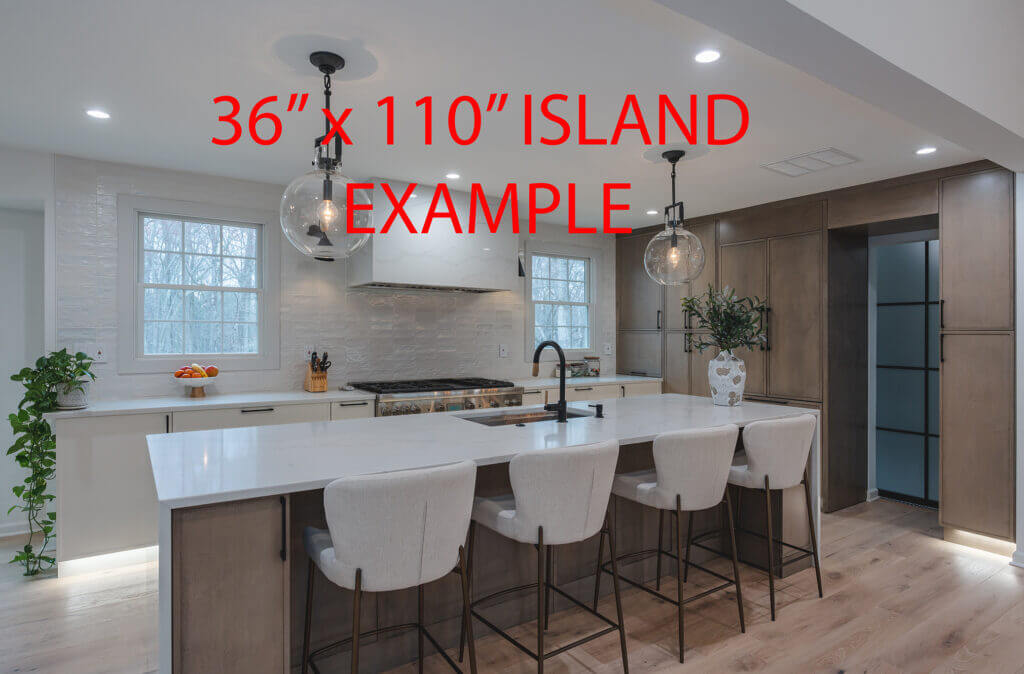
Image Source: bossdesigncenter.com
What is the standard kitchen island width?
The standard kitchen island width typically falls between 36 and 48 inches. This range offers a good balance of workspace and flow. However, this is a guideline, not a rigid rule. Your specific needs and kitchen layout will ultimately determine the best width for your space.
Deciphering Your Kitchen Island Width Needs
Choosing the right width for your kitchen island is crucial for both functionality and aesthetics. A kitchen island isn’t just a piece of furniture; it’s a workhorse that can offer prep space, dining, storage, and even a place to gather. Getting the width wrong can lead to a cramped kitchen or an island that feels out of place.
Key Considerations for Island Width
To select the perfect width, consider these vital factors:
- Kitchen Size and Layout: The most significant factor is the size of your kitchen. A tiny kitchen can’t accommodate a massive island, while a sprawling kitchen can feel empty with a narrow one.
- Intended Use: Will your island be primarily for prep, dining, or both? Islands used for dining often need to be wider to accommodate seating comfortably.
- Traffic Flow and Clearance: Adequate space around the island is non-negotiable. This ensures easy movement, safe passage, and comfortable access to appliances and cabinets.
- Aesthetic Balance: The island’s width should complement the overall scale of your kitchen and cabinetry.
Fathoming the Kitchen Island Width Guide
This guide aims to help you navigate the options and make an informed decision. We’ll cover standard dimensions, minimum clearances, and how different widths impact usability.
Standard Kitchen Island Widths and Their Uses
Let’s break down typical widths and what they’re best suited for.
- 36-42 inches: This width is excellent for smaller kitchens or as a more compact island. It provides a good amount of counter space and can still offer some storage.
- Pros: Suitable for tighter spaces, easier to maneuver around.
- Cons: Limited prep area, may not comfortably accommodate seating for more than two.
- 42-48 inches: This is a very popular and versatile range. It offers a substantial workspace and can often accommodate a couple of stools for casual seating.
- Pros: Good balance of prep space and seating potential, suits many kitchen sizes.
- Cons: Might feel a bit tight in very small kitchens.
- 48-60 inches: For larger kitchens, a wider island becomes a practical choice. It allows for more extensive prep areas, significant storage, and comfortable seating for three to four people.
- Pros: Ample prep and serving space, comfortable seating for multiple people.
- Cons: Requires a larger kitchen to avoid feeling overwhelming.
- Over 60 inches: These are substantial islands for very large kitchens. They can often incorporate sinks, cooktops, and extensive seating, becoming a true kitchen centerpiece.
- Pros: Maximizes workspace, storage, and seating; creates a commanding presence.
- Cons: Demands a significant amount of floor space; can make smaller kitchens feel cramped.
The Nuance of Narrow Kitchen Island Dimensions
Sometimes, a narrower island is the only feasible option, or it’s a deliberate design choice for a galley kitchen or to maintain open sightlines.
- Narrow Kitchen Island Dimensions: These typically range from 24 to 36 inches in width.
- Functionality: Even at this width, an island can serve as a prep surface, a serving station, or a narrow dining bar.
- Considerations:
- Depth: Standard cabinet depth is 24 inches. For a narrow island, you might opt for shallower cabinets (18-20 inches) to gain a little more clearance.
- Overhang: Factor in overhang for seating. A 10-12 inch overhang is common for comfortable seating.
- Single-Sided Use: Narrow islands often work best with a single line of traffic and use on one side.
Large Kitchen Island Measurements and Their Impact
When you have ample space, large kitchen island measurements unlock more possibilities.
- Large Kitchen Island Measurements: Islands exceeding 60 inches in width fall into this category.
- Features: These can easily accommodate double sinks, professional-grade cooktops, multiple seating areas, and extensive storage drawers and cabinets.
- Design Impact: A large island can become the primary hub of your kitchen, influencing the entire kitchen layout width. It can define zones for cooking, dining, and socializing.
- Crucial Factor: Ensure adequate clearance is maintained, even with a large island, to prevent a cluttered feel.
The Kitchen Island Layout Width: Beyond Just the Island
The width of your island is part of a larger picture – the overall kitchen island layout width. This refers to how the island interacts with other elements in your kitchen, such as your work triangle, cabinetry, and doorways.
Key Layout Width Considerations
- Work Triangle: Ensure the island doesn’t obstruct the flow between the sink, refrigerator, and stove.
- Appliance Doors: Account for the swing of refrigerator doors, oven doors, and dishwasher doors. They shouldn’t hit the island.
- Cabinetry and Drawers: Make sure you can open all your base cabinets and drawers without interference from the island.
Essential Clearance: The Minimum Kitchen Island Clearance
This is arguably the most critical aspect of island placement. Without proper clearance, your kitchen becomes inefficient and potentially unsafe.
Minimum Kitchen Island Clearance Guidelines
The minimum kitchen island clearance is a universally accepted standard to ensure ease of use and safety.
- Minimum Kitchen Island Clearance:
- Between Island and Perimeter Cabinets/Appliances (working side): Aim for at least 42 inches. This allows one person to work comfortably at the island and another to pass behind them.
- Between Island and Perimeter Cabinets/Appliances (traffic side): A minimum of 36 inches is acceptable, but 42 inches is still preferred for better flow, especially if there’s a walkway or doorway on that side.
- Between Two Islands (if applicable): If you have a kitchen with two islands, at least 48 inches is recommended to allow passage between them.
Why is Minimum Kitchen Island Clearance So Important?
- Ease of Movement: Allows you to walk around the island freely, carry groceries, and navigate the kitchen without bumping into things.
- Appliance Access: Ensures you can open appliance doors (refrigerator, oven, dishwasher) fully without obstruction.
- Comfortable Workflow: Provides enough space for multiple people to work in the kitchen simultaneously without feeling crowded.
- Safety: Prevents accidents, especially when carrying hot items or sharp objects.
Expanding Clearance for Enhanced Functionality
While minimums are essential, more clearance often translates to better usability.
- 48 inches+ Clearance: Ideal if you frequently have multiple people in the kitchen or if you have a high-traffic pathway that includes the island area. This is especially important for a kitchen island with seating width.
- Seating Clearance: When planning for seating at your island, ensure enough space for people to pull out chairs and sit comfortably. This often means more clearance behind the seating area.
Customizing Your Kitchen Island Width
The beauty of kitchen design is that you can tailor elements to your specific needs. A custom kitchen island width allows you to maximize your space and functionality perfectly.
When to Consider a Custom Kitchen Island Width
- Unusual Kitchen Dimensions: If your kitchen is unusually long and narrow, or has awkward angles, a standard island size might not fit well.
- Specific Functional Needs: If you require a very large workspace for baking, a dedicated dining area, or specialized appliance integration, custom sizing is key.
- Achieving a Perfect Aesthetic: To ensure the island perfectly balances with your cabinetry and creates the desired visual impact.
Designing for Kitchen Island with Seating Width
If you envision your island as a gathering spot, the width becomes even more critical.
- Kitchen Island with Seating Width:
- Minimum for Seating: For comfortable seating, aim for a width that allows for at least 15 inches of knee space per person.
- Countertop Overhang: You’ll need a countertop overhang. A 10-12 inch overhang is standard for counter-height seating, while a 12-15 inch overhang is better for bar-height seating.
- Total Width Calculation: If you need seating for three people, and each needs 24 inches of linear counter space, plus the depth of the island structure itself, your width will increase.
- Example: Three people needing 24 inches each = 72 inches of linear space. Add 24 inches for island depth (cabinetry) + 12 inches overhang = a 96-inch long island. This is for the length, but the principle applies to width considerations if the seating is along the long side.
- Width for Seating and Workspace: If you want seating on one side and a workspace on the other, you’ll need to ensure adequate width for both. A width of 42-48 inches is often a good starting point for a dual-purpose island with seating.
Exploring Narrow Kitchen Island Dimensions for Seating
Even a narrow kitchen island can accommodate seating.
- Narrow Islands with Seating:
- Option 1: Peninsula Style: If your island is attached to a wall or cabinet run on one end, it effectively becomes a peninsula, allowing for seating on the open side. A width of 30-36 inches can work here.
- Option 2: Narrow Island with Extended Countertop: A slightly wider island (e.g., 36-42 inches) with a significant overhang on one side can accommodate a couple of stools.
The Role of Corner Kitchen Island Size
Corner islands are less common but can be a smart solution for maximizing space in kitchens with specific layouts or L-shaped configurations.
- Corner Kitchen Island Size:
- Shape: These are often L-shaped or U-shaped themselves.
- Width Considerations: The “width” here refers to the depth of each leg of the island. You’ll still need to apply the same clearance rules to all open sides of the island.
- Space Management: The key is to ensure the corner island doesn’t impede access to cabinets or appliances in the corner itself.
Design Tips for Optimizing Your Island Width
Beyond just measurements, thoughtful design can make your chosen island width work harder for you.
Maximizing Functionality with Your Chosen Width
- Storage Solutions:
- Drawers vs. Doors: Deep drawers are often more functional than cabinets for storing pots, pans, and small appliances.
- Pull-Outs: Consider pull-out trash/recycling bins, pull-out shelves, or spice racks.
- Open Shelving: For a less bulky look, incorporate open shelving for display or easy access to frequently used items.
- Integrated Appliances: If your budget allows, integrating appliances like a dishwasher, microwave drawer, or wine fridge can be highly efficient and save valuable counter space.
- Task Lighting: Ensure your island has adequate lighting for prep work. Pendant lights are a popular choice.
Aesthetics and Proportion
- Scale: Ensure the island’s width is proportional to the overall size of your kitchen. A massive island in a small kitchen will overwhelm the space.
- Visual Weight: Consider the materials used. A thick, solid stone countertop will have more visual weight than a thinner quartz or butcher block.
- Color and Finish: Lighter colors can make an island feel less imposing, while darker colors can make it a statement piece.
Kitchen Island Layout Width: Flow and Balance
The placement and width of your island are integral to the overall kitchen island layout width, influencing how you move and work.
- The Galley Kitchen: In a galley kitchen, the island’s width must be carefully balanced with the width of the opposing cabinets or walls to ensure sufficient clearance. A narrower island is often necessary.
- The Open Plan Kitchen: In an open-plan space, the island’s width can help define the kitchen area from the living or dining space. It acts as a visual anchor.
- The U-Shaped Kitchen: A U-shaped kitchen often benefits from an island that doesn’t fully block the opening, or one that is narrow enough to allow easy passage in and out.
Kitchen Island Width for Different Styles
- Modern Kitchens: Often feature sleek, minimalist islands with clean lines. Width can vary, but functionality and seamless integration are key.
- Traditional Kitchens: May have more ornate islands with furniture-like details. Width can be more substantial to accommodate these features.
- Farmhouse Kitchens: Often feature a more casual, often larger, island, sometimes with a butcher block top, providing ample workspace.
Practical Examples: Putting It All Together
Let’s look at how different kitchen sizes might accommodate various island widths.
Scenario 1: Small Kitchen (e.g., 10 ft x 12 ft)
- Ideal Island Width: 30-36 inches.
- Layout: A narrow island, perhaps a peninsula style attached to a wall, or a freestanding island with careful clearance.
- Considerations: Focus on storage within the island itself. Seating might be limited to two small stools tucked underneath, or forgo seating altogether to maximize workspace and flow. You’d be looking at narrow kitchen island dimensions.
Scenario 2: Medium Kitchen (e.g., 12 ft x 15 ft)
- Ideal Island Width: 36-48 inches.
- Layout: This size allows for a more substantial island with good workspace and potential for seating for 2-3 people.
- Considerations: Ensure at least 42 inches of clearance on all sides. You can comfortably accommodate standard cabinet depths on the island. This falls within standard kitchen island width.
Scenario 3: Large Kitchen (e.g., 15 ft x 20 ft+)
- Ideal Island Width: 48 inches and upwards, even 60+ inches if the layout permits.
- Layout: You can accommodate a large kitchen island with significant workspace, storage, and multiple seating areas.
- Considerations: Even with large kitchen island measurements, maintaining adequate clearance is vital. You could even consider a double island layout in very spacious kitchens.
Frequently Asked Questions About Kitchen Island Width
Here are some common questions people have when planning their kitchen island width.
Q1: Can I fit an island in my small kitchen?
A: Yes, you often can! You might need to opt for narrower kitchen island dimensions (24-36 inches wide), a peninsula style, or a rolling island cart. Prioritize clearance.
Q2: How much overhang do I need for seating?
A: For comfortable seating, you typically need a 10-12 inch overhang for counter-height seating and 12-15 inches for bar-height seating. This is crucial for kitchen island with seating width.
Q3: What is the minimum clearance around my island?
A: The absolute minimum is 36 inches on traffic sides, but 42 inches on working sides is highly recommended for optimal functionality.
Q4: Should my island match my cabinets?
A: Not necessarily! Many designers opt for a contrasting color or material for the island to make it a focal point. This can also help break up a large expanse of cabinetry.
Q5: How do I determine the best kitchen island layout width for my space?
A: Measure your kitchen carefully, sketch out your existing layout, and mark potential island locations. Consider traffic flow, appliance access, and the desired function of the island. Using painter’s tape on the floor can help visualize the space.
Choosing the right width for your kitchen island is a balancing act between maximizing functionality, ensuring comfortable movement, and achieving the desired aesthetic. By following these guidelines and considering your unique kitchen space and needs, you can create an island that is both beautiful and a joy to use.