
Yes, you can absolutely paint kitchen cabinets with a sprayer for a professional, smooth cabinet finish, and it’s often the best way to achieve a factory-like look. This guide will walk you through the entire kitchen cabinet painting process, from choosing the right equipment to achieving flawless results when spray painting kitchen cabinets.
Refinishing kitchen cabinets can be a daunting task, but with the right preparation and techniques, you can transform your kitchen on a budget. Spray painting kitchen cabinets offers a superior finish compared to brushing or rolling, providing a durable and aesthetically pleasing result. Let’s dive into how to achieve a professional look for your cabinets using a sprayer.
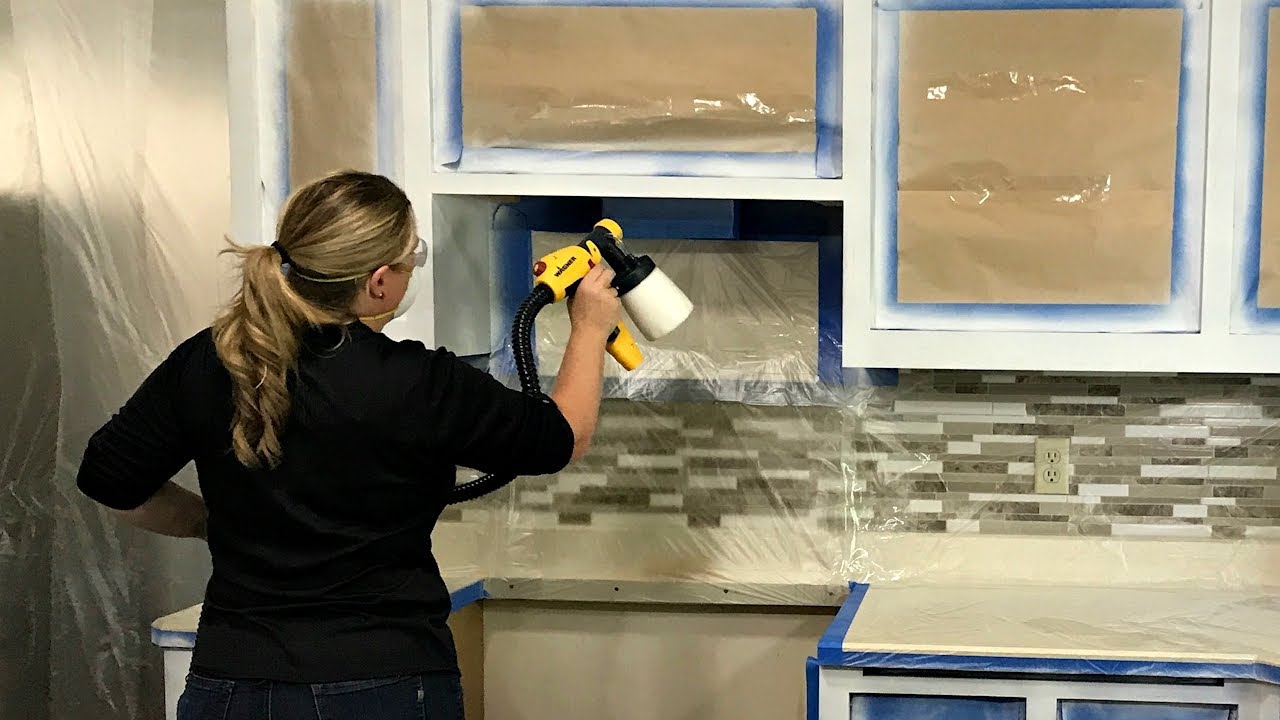
Image Source: i.ytimg.com
Choosing the Right Sprayer for Your Project
The best sprayer for kitchen cabinets depends on your budget, the scale of your project, and the desired finish. Not all sprayers are created equal, and selecting the right one is crucial for a smooth cabinet finish.
Types of Paint Sprayers
- Airless Sprayers: These are powerful and efficient, ideal for large projects and thicker paints. They use high pressure to atomize the paint.
- Pros: Fast application, can handle a wide range of paints, good for large areas.
- Cons: Can be overkill for small projects, requires more masking, produces more overspray.
- HVLP (High Volume, Low Pressure) Sprayers: These are the preferred choice for furniture and cabinetry due to their precision and low overspray. They deliver a fine, even coat of paint.
- Pros: Excellent control, minimal overspray, produces a very smooth finish, uses less paint.
- Cons: Slower application than airless sprayers, can clog with thicker paints if not thinned correctly, generally more expensive for professional-grade units.
- Electric HVLP (Handheld Sprayers): These are convenient for DIYers and smaller projects. They are self-contained units with the motor and sprayer in one piece.
- Pros: Easy to use, no external compressor needed, portable, affordable.
- Cons: Can struggle with very thick paints, may produce a slightly less refined finish than professional HVLP systems, can overheat on extended use.
Top Sprayer Recommendations for Kitchen Cabinets
When spray painting kitchen cabinets, consider these factors:
- Project Size: Are you painting a few cabinets or an entire kitchen?
- Paint Type: Different paints require different sprayer capabilities.
- Budget: Sprayers range from under $100 to several hundred dollars.
- Ease of Use: Some sprayers have a steeper learning curve than others.
Here’s a look at some popular options:
| Sprayer Type | Brand/Model Example | Ideal For | Key Features |
|---|---|---|---|
| Airless Sprayer | Graco Magnum X5 | Large Kitchens, Doors, Trim | Powerful, fast, handles various paints, requires more overspray control. |
| HVLP Sprayer | Fuji 2202 Mini-Mite 4 | All Cabinet Projects, Fine Furniture Finishing | Excellent atomization, low overspray, smooth finish, requires thinning. |
| Handheld Sprayer | Wagner Flexio 5000 | Small to Medium Kitchens, DIYers | Portable, no compressor needed, good for latex paints, easy to clean. |
| Professional HVLP | Kremlin Rexon Aircoat 35 | High-End Finishes, Professional Results | Superior atomization, exceptional smooth finish, requires an air source. |
For most DIYers tackling refinishing kitchen cabinets, a good quality electric HVLP sprayer or a powerful handheld sprayer is the sweet spot.
The Essential Cabinet Painting Prep Work
Cabinet painting prep is arguably the most critical step in achieving a professional, long-lasting finish. Skipping or rushing this phase will lead to a poor result, no matter how good your cabinet sprayer techniques are.
Step-by-Step Preparation Guide
- Empty Cabinets: Remove all items from your cabinets.
- Remove Doors and Drawer Fronts: This allows you to spray each piece individually for a seamless finish. Label each door and its corresponding cabinet so you know where it goes later. You can use painter’s tape and a marker.
- Remove Hardware: Take off all hinges, knobs, and drawer pulls. Store them safely.
- Clean the Cabinets Thoroughly: This is non-negotiable. Kitchen cabinets accumulate grease, grime, and food particles.
- Use a degreaser like TSP (Trisodium Phosphate) substitute or a strong kitchen cleaner.
- Work in sections, wiping down all surfaces.
- Rinse with clean water and a damp cloth.
- Allow to dry completely.
- Sand the Cabinets: Sanding creates a surface for the primer and paint to adhere to.
- Type of Sandpaper: Start with a medium-grit sandpaper (120-150 grit) to remove any old finish or imperfections. Follow up with a finer grit (180-220 grit) for a smoother surface.
- Method: Sand all surfaces you plan to paint, including the cabinet boxes and the backs of doors and drawer fronts if they will also be painted.
- Dust Removal: After sanding, wipe down all surfaces with a tack cloth or a microfiber cloth dampened with mineral spirits (if using oil-based primer/paint) or denatured alcohol (if using water-based products) to remove all dust.
- Repair Imperfections: Fill any holes, dents, or gouges with wood filler. Let it dry completely, then sand smooth.
- Prime the Cabinets: Primer is essential for adhesion, stain blocking, and creating a uniform base for your paint color.
- Best Primer: Use a high-quality bonding primer or a stain-blocking primer. Alkyd (oil-based) primers are excellent for cabinets, offering superior adhesion and durability, but require mineral spirits for cleanup. Water-based primers are easier to clean but may require more coats for optimal coverage.
- Application: Apply a thin, even coat of primer using your sprayer. Allow it to dry thoroughly according to the manufacturer’s instructions.
- Sanding Between Coats (Optional but Recommended): Lightly sand the primed surfaces with 220-320 grit sandpaper and wipe with a tack cloth to ensure a super smooth base for the paint.
- Masking and Protection: This is where you protect everything you don’t want to paint.
- Cover Floors: Use drop cloths or plastic sheeting to protect your floors.
- Mask Appliances and Walls: Use painter’s tape (high-quality tape for clean lines) and masking paper or plastic sheeting to cover appliances, countertops, backsplashes, and walls.
- Spray Booth: If possible, set up a dedicated spraying area. This could be a garage, a spare room, or even outside on a calm day. Use plastic sheeting to create a temporary spray booth to contain overspray.
Mastering Cabinet Sprayer Techniques
Achieving that smooth cabinet finish with a sprayer requires practice and proper technique. Cabinet sprayer techniques are key to avoiding drips, runs, and an uneven application.
Setting Up Your Spray Gun
- Fluid Adjustment: Adjust the paint flow to match the paint’s viscosity and your desired thickness.
- Air Cap Adjustment: Ensure the air cap is clean and properly aligned. This controls the spray pattern.
- Fan Pattern Adjustment: Many sprayers allow you to adjust the fan pattern (round or oval). For cabinets, an oval pattern is generally preferred. You can also adjust the width of the fan.
- Test Spray: Before spraying your cabinets, test your settings on a piece of cardboard or scrap wood. Adjust the fluid, air pressure, and fan width until you achieve an even, mist-like spray.
The Art of Spraying
- Maintain Consistent Distance: Hold the spray gun a consistent distance from the surface, typically 8-12 inches. This is crucial for even coverage.
- Maintain Consistent Speed: Move the spray gun at a steady, even pace. Don’t stop in the middle of a pass.
- Overlap Your Passes: Each spray pass should overlap the previous one by about 50%. This ensures complete coverage and avoids holidays (missed spots).
- Trigger Control:
- Start and Stop: Start moving the spray gun before you pull the trigger and release the trigger after you stop moving the gun. This prevents paint buildup at the beginning and end of each pass.
- Edge Control: For edges, start your trigger pull just before the edge and continue past it.
- Spray in Stages: Spray the inside of doors first, then the outside. For cabinet boxes, start with the interior areas that will be less visible.
- Thin Coats are Key: It’s always better to apply multiple thin coats than one thick coat. Thin coats dry faster, adhere better, and are less prone to drips and runs.
- Vertical and Horizontal Passes: For cabinet doors and drawer fronts, spray vertically first, then horizontally. This ensures even coverage on all surfaces.
Common Spraying Errors and How to Fix Them
| Error | Cause | Solution |
|---|---|---|
| Drips/Runs | Too much paint, spraying too close, too slow, or not overlapping enough | Reduce paint flow, increase spray distance, move faster, overlap passes correctly. If a drip occurs, stop, let it dry, and then lightly sand and re-spray the affected area. |
| Orange Peel | Paint too thick, too much air pressure, spraying too far away | Thin the paint properly, reduce air pressure slightly, maintain a consistent closer distance. |
| Uneven Finish | Inconsistent speed or distance, not overlapping passes | Focus on maintaining a steady pace and distance. Ensure 50% overlap between passes. |
| “Holidays” | Missing spots due to improper overlap or inconsistent coverage | Ensure proper overlap. If missed spots are found after drying, lightly sand and apply a targeted coat. |
| Tiger Stripes | Uneven paint buildup at the start/end of passes | Practice trigger control: start moving before pulling the trigger, stop moving before releasing it. |
Paint Selection for Kitchen Cabinets
Choosing the right paint is crucial for durability and appearance when spray painting kitchen cabinets. Kitchen cabinets endure a lot of wear and tear, so you need a paint that is tough and easy to clean.
Types of Paint and Their Suitability
- Alkyd Enamels (Oil-Based):
- Pros: Excellent durability, hardness, and a smooth, glass-like finish. Great adhesion and resistance to moisture and stains.
- Cons: Strong odor, requires mineral spirits for cleanup, longer drying times, can yellow over time (especially lighter colors).
- Water-Based Enamels (Latex/Acrylic):
- Pros: Low VOCs (Volatile Organic Compounds), easy cleanup with soap and water, fast drying times, less prone to yellowing.
- Cons: Can be less durable than alkyds if not specifically formulated for cabinetry. Requires a good primer. Look for “cabinet and trim” formulations.
- Luxeir (Waterborne Alkyd): These are a newer generation of paints that combine the durability and smooth finish of alkyds with the ease of cleanup of latex paints.
- Pros: Excellent durability, smooth finish, good adhesion, easier cleanup.
- Cons: Can be more expensive.
Recommended Paint Finishes
- Satin: A popular choice for kitchen cabinets. It offers a soft sheen that is easy to clean and hides minor imperfections better than gloss.
- Semi-Gloss: Provides a higher sheen, making it very durable and easy to wipe down. It’s a classic choice for kitchens.
- Gloss: Offers the highest sheen and is the most durable and easiest to clean. However, it highlights every imperfection on the surface, so meticulous prep is essential.
Paint Viscosity and Thinning
Most paints need to be thinned to spray properly, especially with HVLP sprayers.
- Check Manufacturer Recommendations: Always consult the paint manufacturer’s instructions regarding thinning for spray application.
- Thinning Ratio: Typically, you’ll thin paint with a specific paint thinner (e.g., lacquer thinner for lacquer-based paints, water for latex, or specialized reducers for other types) at a ratio of about 5-10%.
- Test Viscosity: Use a viscosity cup (often included with sprayers or available at paint stores) to ensure the paint flows at the correct rate.
The Drying and Curing Process
Patience is key after you finish spray painting kitchen cabinets. The drying and curing times significantly impact the final durability of your finish.
Drying vs. Curing
- Drying: This is when the solvent (water or mineral spirits) evaporates, and the paint transitions from liquid to a solid film. The surface will feel dry to the touch.
- Curing: This is a longer process where the paint continues to harden and achieve its maximum durability. During this time, the paint film undergoes chemical changes.
Recommendations for Drying and Curing
- Allow Adequate Drying Time Between Coats: Follow the paint manufacturer’s recommendations for recoating. Generally, this is 2-4 hours for water-based paints and 6-8 hours or more for oil-based paints.
- Avoid Handling Too Soon: Even after drying, the paint can be delicate. Handle doors and drawers by the edges.
- Curing Time: Most paints take 7 to 30 days to fully cure. During this period, be gentle with your cabinets.
- Avoid abrasive cleaners.
- Do not bang objects against the cabinets.
- Avoid prolonged exposure to moisture.
- Reassembly: Once all coats are dry and you’ve allowed a reasonable drying period (at least 24-48 hours), you can reattach hardware and hang the doors and drawers.
Frequently Asked Questions (FAQ)
Q1: Can I use a Wagner sprayer for kitchen cabinets?
A1: Yes, many DIYers have success using Wagner sprayers, particularly the Flexio series, for kitchen cabinets. They are a good entry-level option for DIY cabinet spraying. Ensure you use the correct settings and thin the paint if necessary for the best results.
Q2: Do I need to sand before spraying cabinets?
A2: Absolutely. Sanding is a critical part of cabinet painting prep. It creates a profile for the primer and paint to adhere to, ensuring a durable finish.
Q3: How many coats of paint should I apply?
A3: Typically, you’ll apply 2-3 thin coats of primer (if needed) and 2-3 thin coats of paint. It’s always better to apply multiple thin coats for a smoother, more durable finish than fewer thick coats.
Q4: What is the best paint to use for spray painting kitchen cabinets?
A4: High-quality cabinet and trim paints, often acrylic lacquers or waterborne alkyds, are recommended. These paints are formulated for durability and a smooth finish. Semi-gloss or satin sheens are popular choices.
Q5: How do I avoid drips when spray painting kitchen cabinets?
A5: Drips usually occur from applying too much paint at once. Ensure you’re spraying thin, even coats, maintaining a consistent distance and speed, and overlapping your passes correctly. Proper trigger control is also vital.
Q6: How long does it take to paint kitchen cabinets with a sprayer?
A6: The actual spraying time is relatively quick, but the entire kitchen cabinet painting process, including prep, drying, and reassembly, can take several days to a week or more, depending on your experience and the size of your kitchen.
Q7: Can I spray paint directly over existing cabinet finish?
A7: While you might be able to spray over some finishes after light scuff sanding, for the most durable and professional result, it’s best to remove the old finish, prime, and then paint. This ensures excellent adhesion and longevity.
Q8: What is the best way to clean my spray gun after use?
A8: Clean your spray gun immediately after use. For water-based paints, use soap and water. For oil-based paints, use mineral spirits or the manufacturer-recommended solvent. Flush the system thoroughly.
Conclusion: Elevate Your Kitchen with a Sprayed Finish
Refinishing kitchen cabinets with a sprayer is a rewarding project that can dramatically update your kitchen’s look and feel. By following this comprehensive guide, focusing on meticulous prep, selecting the right tools, and mastering cabinet sprayer techniques, you can achieve a professional, smooth cabinet finish that rivals custom cabinetry. Remember to be patient, work methodically, and enjoy the transformation of your kitchen.