
What is the standard kitchen counter depth? The standard kitchen counter depth is 25 inches. This measurement typically refers to the depth of the countertop itself, extending from the front edge to the back, and it’s designed to work in conjunction with standard base cabinets.
When designing or renovating a kitchen, numerous elements contribute to its functionality and aesthetic appeal. Among the most critical are the countertops. They serve as the primary workspace, a decorative focal point, and a crucial element dictating the flow and usability of the kitchen. While many homeowners focus on material, color, and edge profiles, the depth of these surfaces plays an equally vital role. This article delves into the intricacies of kitchen counter depth, exploring standard dimensions, factors influencing choices, and how this seemingly simple measurement impacts your kitchen experience.
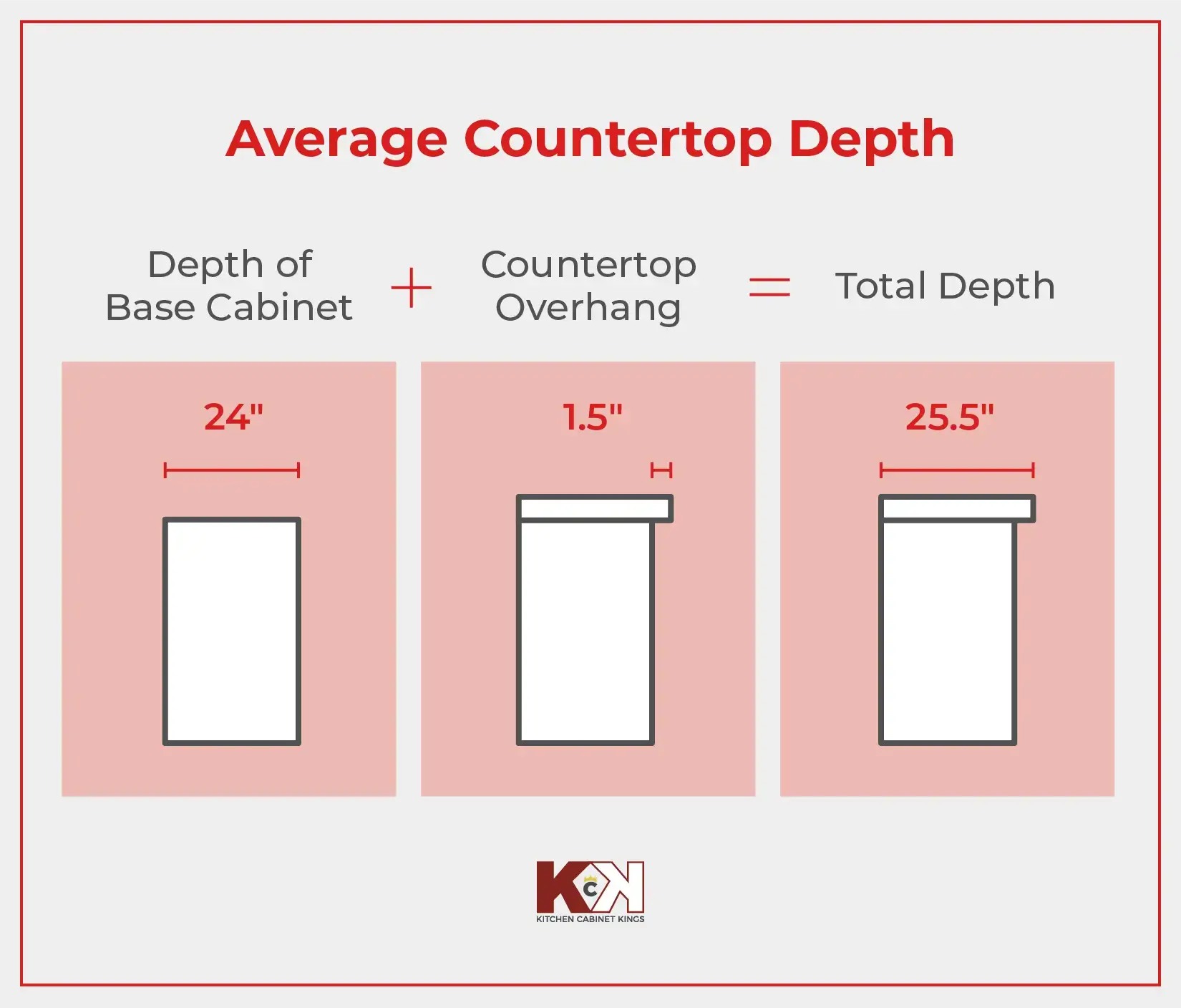
Image Source: cdn.kitchencabinetkings.com
Standard Kitchen Counter Dimensions: The Foundation of Functionality
The standard kitchen counter depth of 25 inches is not arbitrary. It’s a carefully considered dimension that balances ample workspace with efficient use of space within the kitchen. This depth is primarily determined by the cabinet depth, which is typically 24 inches. The additional inch accounts for the counter overhang depth, a crucial feature that extends beyond the cabinet face.
Deciphering Common Kitchen Counter Dimensions
Let’s break down the typical measurements you’ll encounter when discussing kitchen countertops:
- Countertop Depth: As mentioned, the most common kitchen counter depth is 25 inches. This provides a generous surface area for food preparation, appliance placement, and various kitchen tasks.
- Standard Counter Height: The standard counter height in most kitchens is 36 inches from the finished floor. This height is ergonomically designed for comfortable standing work, a standard comfortable kitchen work surface height for most adults.
- Cabinet Depth: The standard base cabinet depth is 24 inches. This is the internal depth of the cabinet box.
- Counter Overhang Depth: The standard counter overhang depth is typically 1 to 1.5 inches. This overhang allows for comfortable knee room when seated at the counter or island and provides a pleasing aesthetic finish that extends beyond the cabinet.
The Relationship Between Cabinet and Countertop Depth
The 25-inch countertop depth is directly related to the 24-inch cabinet depth. The countertop extends past the cabinet box to provide the overhang. This relationship is fundamental to how kitchen cabinets and countertops integrate to create a functional workspace.
- Base Cabinets: These are the workhorses of your kitchen. Their standard depth of 24 inches provides substantial storage capacity. The 25-inch countertop depth effectively covers these cabinets, offering a smooth, extended work surface.
- The Overhang’s Purpose: The counter overhang depth serves multiple purposes. It allows users to get closer to the counter space, providing comfortable knee room when working or eating. It also adds a visual element, preventing the countertop from appearing abruptly cut off at the cabinet edge.
Factors Influencing Kitchen Counter Depth Choices
While 25 inches is the standard kitchen counter depth, there are situations where deviations are not only permissible but beneficial. Several factors influence the decision to opt for a different depth:
Kitchen Layout and Space Constraints
In smaller kitchens or those with unique layouts, a 25-inch depth might feel overwhelming or reduce essential walkway space. Conversely, in expansive kitchens, deeper countertops can enhance functionality and provide more usable kitchen workspace depth.
- Narrow Kitchens: For galley kitchens or very compact spaces, reducing the countertop depth to 24 inches might be considered to maximize aisle width. However, this can significantly reduce the usable kitchen workspace depth and impact functionality.
- Large Kitchens: In spacious kitchens, opting for a deeper countertop (e.g., 27 or even 30 inches) can be advantageous. This provides a more substantial prep area, allowing for more appliances and ingredients to be laid out simultaneously.
Ergonomics and User Preferences
Personal comfort and the physical characteristics of those who will use the kitchen most frequently are important considerations.
- Height of Users: While 36 inches is the standard counter height, individuals who are significantly taller or shorter may find slightly adjusted heights or depths more comfortable for extended periods of work.
- Type of Work: If the kitchen is primarily used for extensive baking or intricate food preparation, a larger kitchen workspace depth can be a significant advantage.
Appliance Considerations
Certain appliances have specific depth requirements that can influence countertop choices.
- Standard Appliances: Most standard ranges, dishwashers, and refrigerators are designed to fit within or slightly protrude from a 24-inch deep cabinet with a standard countertop.
- Counter-Depth Refrigerators: These refrigerators are designed to be flush with the front of standard 24-inch deep cabinets, creating a streamlined look. A standard 25-inch kitchen counter depth will typically provide a slight overhang past these refrigerators.
- Specialty Appliances: Some built-in appliances might require custom cabinetry and, consequently, custom countertop depths to ensure a flush or integrated appearance.
Aesthetic Goals
The depth of your countertop can subtly influence the overall aesthetic of your kitchen.
- Streamlined Look: A standard 25-inch depth contributes to a clean, cohesive look with standard cabinetry.
- Luxury and Depth: Deeper countertops can lend a sense of luxury and substantiality to a kitchen design. They can also create a more prominent visual presence for the countertop material.
Exploring Deeper and Shallower Countertop Depths
While the 25-inch standard is prevalent, exploring variations can offer unique benefits.
Deeper Countertops: Maximizing Workspace
Choosing countertops that are deeper than the standard 25 inches can significantly enhance the kitchen workspace depth. This is particularly beneficial for serious cooks or those who entertain frequently.
- Increased Prep Area: Deeper counters (e.g., 27, 30, or even 36 inches) offer substantially more space for chopping, mixing, and plating.
- Appliance Accommodation: They can accommodate larger or deeper appliances more comfortably, allowing them to sit flush or recede slightly into the counter.
- Kitchen Island Depth: Kitchen island depth is often a consideration for deeper designs. Islands can accommodate thicker countertop materials or even incorporate specialized features like built-in cutting boards that require extra depth.
Table: Benefits of Deeper Countertops
| Benefit | Description |
|---|---|
| Enhanced Workspace | Provides more room for food preparation, appliance placement, and multiple tasks simultaneously. |
| Appliance Integration | Allows for seamless integration of deeper appliances, creating a cleaner, more built-in look. |
| Storage Solutions | Can accommodate deeper drawers or specialized storage solutions within the cabinetry. |
| Visual Impact | Creates a sense of luxury and adds a substantial visual element to the kitchen design. |
| Flexibility in Design | Offers more options for incorporating features like prep sinks or pastry centers that require more depth. |
Shallower Countertops: Optimizing Space
In very tight spaces, reducing the countertop depth might be necessary to improve circulation and overall usability.
- Improved Walkability: Reducing depth to 24 inches (flush with the cabinets) can slightly increase aisle width in narrow kitchens.
- Aesthetic Integration: This can create a very clean, flush look with the cabinetry, especially with shallower appliance models.
- Functional Trade-offs: It’s crucial to acknowledge that reducing kitchen counter depth will inevitably reduce the usable kitchen workspace depth. This might limit the number of appliances you can have out at once or make intricate prep work more challenging.
Table: Considerations for Shallower Countertops
| Consideration | Impact |
|---|---|
| Reduced Workspace | Less room for prep, appliance placement, and spreading out during cooking. |
| Limited Appliance Options | May not accommodate standard-depth appliances comfortably, potentially leading to protrusion. |
| Overhang Limitations | A shallower countertop offers less opportunity for a comfortable counter overhang depth for seating. |
| Ergonomic Impact | May feel cramped for taller individuals or those accustomed to more generous workspace. |
The Role of Countertop Materials in Depth Considerations
The material you choose for your countertops can also play a role in how depth is perceived and implemented.
- Stone (Granite, Quartz, Marble): These materials are typically available in slabs that are 3 cm (approximately 1.18 inches) thick. When combined with a supportive sub-base, they achieve the standard countertop depth. They are durable and can be cut to custom depths, though exceeding standard depths may incur additional fabrication costs.
- Laminate: Laminate countertops are often made in standard thicknesses and can be more limited in custom depth options compared to stone. However, they are a budget-friendly choice and are readily available in standard dimensions.
- Wood (Butcher Block): Wood countertops can be ordered in various thicknesses and depths. This offers excellent flexibility for custom designs, allowing for deeper kitchen island depth or unique workspace configurations.
- Solid Surface (Corian): Solid surface materials are non-porous and can be thermoformed and seamlessly joined, offering great flexibility in depth and shape.
Kitchen Island Depth: A Special Case
Kitchen islands often present unique opportunities for customized depths. Because they are freestanding elements, they don’t have the same constraints as perimeter countertops.
- Enhanced Functionality: Kitchen island depth can be increased to accommodate features like a prep sink, a built-in cutting board, or specialized appliance drawers.
- Seating Integration: A deeper island can provide ample counter overhang depth for comfortable seating, allowing it to double as a dining or casual eating area. An overhang of 12-15 inches is generally recommended for comfortable legroom when seating at a counter.
- Aesthetic Statement: A significantly deeper island can become a striking focal point in the kitchen, adding both visual interest and practical utility.
Table: Factors Influencing Kitchen Island Depth
| Factor | Impact on Depth Decision |
|---|---|
| Intended Use | Prep-heavy island vs. seating-focused island will dictate required depth. |
| Integrated Features | Sinks, cooktops, or specialized drawers often necessitate increased depth. |
| Seating Requirements | Sufficient counter overhang depth is crucial for comfortable dining or lounging. |
| Overall Kitchen Size | A larger kitchen can accommodate a more substantial, deeper island. |
| Material Thickness | Thicker countertop materials will inherently contribute to the island’s overall depth. |
The Impact of Counter Overhang Depth
The counter overhang depth is an integral part of the overall kitchen counter depth. It’s not just about aesthetics; it has practical implications for comfort and usability.
- Ergonomics for Seating: A sufficient overhang is essential for comfortable seating at a kitchen island or peninsula. Without enough overhang, knees will hit the cabinet base, making sitting at the counter uncomfortable.
- Visual Balance: The overhang helps to visually balance the countertop with the cabinetry below, preventing a squat or top-heavy appearance.
- Protection: A slight overhang can offer some protection to the cabinet fronts from spills and splashes.
- Standard Overhang: As mentioned, 1 to 1.5 inches is standard for perimeter countertops. For seating, 10-15 inches is typically recommended.
Standard Kitchen Cabinet Height and Its Relation to Counter Depth
While we’re focusing on depth, it’s worth briefly mentioning the standard kitchen cabinet height, which is typically 34.5 inches for base cabinets. When you add the standard 1.5-inch countertop thickness, you arrive at the standard counter height of 36 inches. This standard height is crucial for ensuring that the 25-inch countertop depth works seamlessly with the cabinetry, creating a balanced and ergonomic kitchen.
Making the Right Depth Decision for Your Kitchen
Choosing the right kitchen counter depth involves a careful consideration of your needs, your kitchen’s layout, and your aesthetic preferences.
- Assess Your Needs: How do you primarily use your kitchen? Are you an avid baker who needs ample prep space, or do you prefer a simpler setup?
- Measure Your Space: Accurately measure your kitchen to understand the constraints and opportunities. Pay attention to walkway clearances.
- Consider Appliances: Factor in the dimensions of any built-in or freestanding appliances.
- Evaluate Ergonomics: Think about the height and build of the primary users of the kitchen.
- Envision Your Style: How do different depths contribute to the overall look and feel you want to achieve?
Collaborating with Professionals
When in doubt, consulting with kitchen designers or cabinet makers is highly recommended. They can provide expert advice based on your specific circumstances and help you navigate the complexities of common kitchen counter dimensions, cabinet depth, and kitchen island depth to achieve a perfectly functional and beautiful kitchen. They can help ensure that your chosen countertop depth integrates harmoniously with your cabinetry and supports your desired kitchen workspace depth.
Frequently Asked Questions (FAQ)
Q1: What is the standard kitchen counter depth?
A1: The standard kitchen counter depth is 25 inches. This measurement includes the typical 24-inch cabinet depth plus a 1-inch overhang.
Q2: Why is the standard counter depth 25 inches?
A2: This depth provides a good balance between ample kitchen workspace depth for prep and appliance placement and efficient use of space within the kitchen. It also works harmoniously with standard 24-inch deep cabinets.
Q3: Can I have a shallower countertop?
A3: Yes, you can opt for shallower countertops, such as 24 inches deep (flush with the cabinets). However, this will reduce your usable kitchen workspace depth and limit the counter overhang depth for seating.
Q4: What is the recommended depth for a kitchen island?
A4: Kitchen island depth can vary greatly depending on its purpose. For basic prep, 25 inches is common. For seating, an additional overhang of 10-15 inches is needed, leading to a total depth of 35-40 inches for the island countertop.
Q5: How much overhang should a countertop have?
A5: For perimeter countertops, a standard counter overhang depth is 1 to 1.5 inches. For seating at an island or peninsula, an overhang of 10-15 inches is recommended for comfortable legroom.
Q6: Does the material affect countertop depth options?
A6: Yes, some materials like stone and wood offer more flexibility for custom depths than others like laminate. Fabrication costs may also increase with custom depths.
Q7: What is the standard counter height?
A7: The standard counter height is 36 inches from the finished floor. This is achieved by combining standard 34.5-inch high base cabinets with a standard 1.5-inch thick countertop.
Q8: How does cabinet depth affect countertop depth?
A8: The cabinet depth is the base for the countertop. Standard cabinets are 24 inches deep, and the countertop extends past this with an overhang, typically making the total kitchen counter depth 25 inches.