
Image Source: cdn.kitchencabinetkings.com
How Deep Is A Standard Kitchen Countertop? Your Guide to Usability
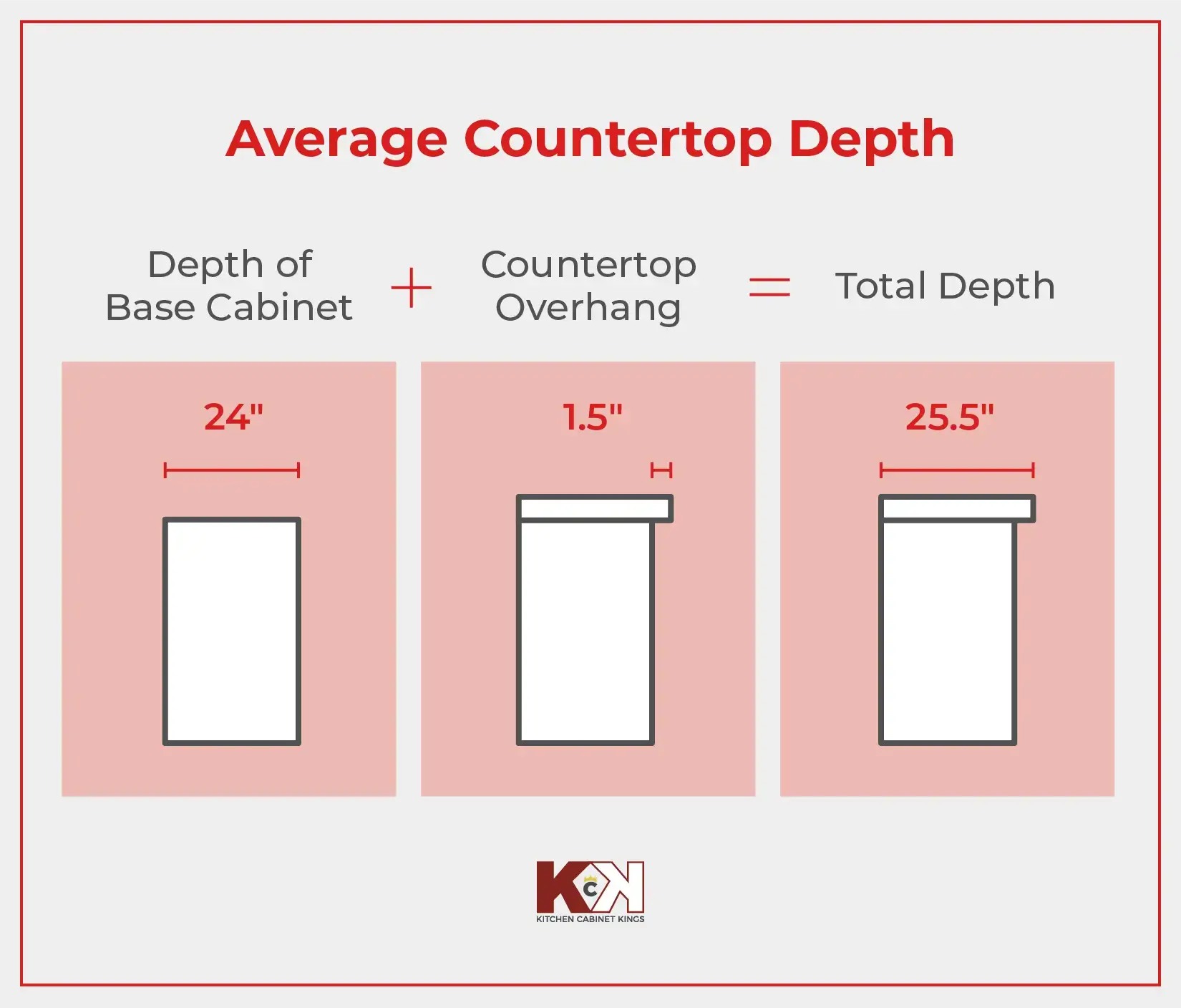
A standard kitchen countertop is typically 24 inches deep. This depth is a crucial element in determining the overall usability of your kitchen workspace.
Deciphering Standard Kitchen Countertop Dimensions
The depth of a kitchen countertop is a fundamental aspect that significantly impacts how you use your kitchen. It’s not just about aesthetics; it’s about functionality, workflow, and how comfortably you can perform everyday tasks. Let’s delve into what makes a standard kitchen countertop, and how its depth plays a vital role.
The Crucial Depth: 24 Inches and Why It Matters
The most common kitchen counter depth is 24 inches. This measurement is the standard for base cabinets, and the countertop typically extends slightly beyond them. This extension, known as the countertop overhang, is usually 1 to 1.5 inches at the front, bringing the total usable depth to around 25 to 25.5 inches.
Why 24 inches? This dimension has been established over decades for several practical reasons:
- Cabinet Compatibility: The vast majority of standard kitchen cabinet dimensions are designed to accommodate a 24-inch countertop. This ensures seamless integration and reduces custom fabrication costs.
- Appliance Fit: Standard appliances like dishwashers, base cabinets with drawers, and even some smaller refrigerators are built to fit within a 24-inch cabinet depth. A deeper countertop would require deeper cabinets or create awkward gaps.
- Ergonomics: For most people, a 24-inch depth provides a comfortable working surface. It allows enough space to chop vegetables, prepare meals, and have appliances like stand mixers or toasters readily accessible without feeling cramped.
Beyond the Standard: Exploring Variations in Depth
While 24 inches is the standard, there are situations where countertop depth can vary.
When More Depth is Needed: Countertop Overhang and Workspace Depth
Sometimes, a deeper kitchen workspace depth is desirable. This is often achieved through an increased countertop overhang or by using deeper base cabinets.
-
Extended Overhang: An overhang beyond the standard 1.5 inches can add precious inches to your usable counter space. This is particularly useful for:
- Breakfast Bars: Creating an overhang for seating allows people to sit comfortably with their legs underneath.
- Appliance Clearance: Providing more space for appliances like a deep microwave or a coffee maker without them encroaching on your primary prep area.
- Aesthetic Appeal: A more substantial overhang can sometimes contribute to a more luxurious or custom look.
-
Deeper Base Cabinets: In custom kitchens or for specific functional needs, you might opt for deeper base cabinets. These typically come in 25-inch or even 30-inch depths.
- Increased Storage: Deeper cabinets offer significantly more storage space, allowing you to store larger pots, pans, or small appliances.
- Enhanced Workspace: A deeper countertop (e.g., 30 inches) provides an even larger kitchen workspace depth, ideal for those who enjoy extensive baking or cooking. However, it’s crucial to consider the counter depth clearance this might create in narrower kitchens.
The Interplay: Counter Depth Clearance and Usability
The counter depth clearance refers to the space between your countertop and any opposing obstacles, such as another countertop, a wall, or a kitchen island. This is a critical factor in kitchen design and directly affects usability.
- Standard Clearance: The generally accepted minimum counter depth clearance for walkways and main traffic areas is 36 inches. This allows for comfortable movement and passage, even when someone is working at the counter.
- Optimizing for Workflow: In high-traffic areas, aiming for 48 inches of clearance is ideal. This provides ample room for two people to pass each other or for someone to stand and work at the counter without impeding flow.
- Impact of Deeper Countertops: If you opt for a deeper countertop, especially on an island, you must be mindful of the resulting counter depth clearance. A significantly deeper island could make a kitchen feel cramped if the surrounding walkways are too narrow.
Fathoming the Standard Counter Height
While we’re focusing on depth, it’s impossible to discuss countertop usability without mentioning standard counter height.
- The 36-Inch Standard: The most common standard counter height in kitchens is 36 inches from the floor to the top of the countertop. This height is ergonomic for most adults when standing and preparing food.
- Adjustments for Accessibility: For kitchens designed with accessibility in mind, lower counter heights (e.g., 30-34 inches) might be incorporated, especially for wheelchair users.
- Island Considerations: Kitchen islands often incorporate different height zones. You might have a standard 36-inch work surface and a higher section (e.g., 42 inches) for bar seating.
Interpreting Counter Thickness and Its Role
Counter thickness is another dimension that contributes to the overall feel and functionality of your countertop.
- Standard Thickness: Most laminate and solid surface countertops are typically 1.5 inches thick. Stone countertops like granite and quartz are commonly 2 cm (¾ inch) or 3 cm (1 ¼ inch) thick.
- Impact on Appearance: Thicker countertops often convey a sense of luxury and durability. A thicker edge can also provide a more substantial feel.
- Structural Considerations: While aesthetics are important, the thickness also needs to be structurally sound, especially for cantilevered sections like breakfast bars.
The Usability of Kitchen Counter Depth: Practical Applications
The usability of kitchen counter depth is best understood through real-world scenarios.
Prep Work and Workspace Depth
The 24-inch standard kitchen counter depth offers a good balance for most prep tasks.
- Chopping and Slicing: You have enough room to comfortably place a cutting board and ingredients, with space to move your knife.
- Mixing and Kneading: Larger bowls and ingredients can be spread out, allowing for easier mixing and kneading.
- Appliance Use: Common appliances like toasters, coffee makers, and even some mixers fit well on a standard depth counter.
However, for passionate bakers or those who frequently entertain, the 24-inch depth might feel limiting. This is where a deeper kitchen workspace depth becomes attractive.
Storage and Cabinet Dimensions
The kitchen cabinet dimensions are directly tied to the countertop depth.
- Standard Base Cabinets: These are typically 24 inches deep, meaning the countertop sits flush or with a slight overhang.
- Deeper Cabinets: If you opt for 25-inch or 30-inch deep base cabinets, this directly translates to a deeper countertop. This is a significant decision that impacts both storage capacity and the overall feel of the kitchen.
Table 1: Impact of Cabinet Depth on Countertop Depth
| Base Cabinet Depth | Typical Countertop Depth (including overhang) | Usable Workspace Depth (approx.) | Storage Capacity Impact |
|---|---|---|---|
| 24 inches | 25-25.5 inches | Standard | Standard |
| 25 inches | 26-26.5 inches | Slightly Increased | Increased |
| 30 inches | 31-31.5 inches | Significantly Increased | Significantly Increased |
Kitchen Islands: Depth and Design Choices
Kitchen island depth is a critical design element that can dramatically influence your kitchen’s functionality and flow.
- Standard Island Depth: Many islands are designed with depths that mirror the perimeter cabinets, around 24 inches for the cabinet base, with a countertop overhang.
- Seating Integration: If you plan to incorporate seating at your island, you’ll need to consider the depth required for comfortable legroom. A minimum of 15 inches of countertop overhang is generally recommended for bar seating. This means the island base cabinet might need to be deeper, or the countertop itself will be significantly deeper to accommodate this.
- Dual-Level Islands: Some islands feature a lower workspace section and a higher seating section. The depth of each section will be determined by its intended use.
- Traffic Flow: As mentioned with counter depth clearance, a deeper island requires more space around it. A 36-inch clearance is often the minimum, but 42-48 inches is preferred for better counter depth clearance and ease of movement.
Optimizing Your Kitchen for Usability: Beyond the Depth
While the standard kitchen depth of 24 inches is a solid starting point, optimizing your kitchen for usability involves considering these factors in conjunction with your lifestyle.
Considering Your Culinary Habits
- Frequent Bakers: If you spend a lot of time rolling dough or decorating cakes, a greater kitchen workspace depth can be incredibly beneficial.
- Meal Preppers: For those who chop, dice, and slice large quantities of ingredients regularly, more counter space is always a plus.
- Entertainers: If you often host gatherings, having ample counter space for serving dishes and buffet-style meals is important.
The Importance of Counter Depth Clearance in Small Kitchens
In smaller kitchens, managing counter depth clearance is paramount.
- Maximizing Walkways: A standard 24-inch deep countertop with a 1.5-inch overhang (25.5 inches total) is often the most practical choice. This allows for adequate clearance (e.g., 36-42 inches) between the counter and the opposite wall or appliance.
- Avoiding Obstructions: Opting for deeper cabinets or a significantly deeper island in a small kitchen can make the space feel claustrophobic and impede movement.
- Corner Solutions: Deep corner cabinets can sometimes be challenging to access, so consider specialized pull-out solutions if you’re opting for deeper corner base units.
The Role of Counter Thickness in Perceived Depth
While not the primary determinant of usable depth, counter thickness can influence how substantial a countertop feels.
- Visual Weight: A thicker countertop can make a shallow depth feel more robust.
- Edge Profiles: Edge profiles can also affect the perceived depth and overall aesthetic.
Making the Right Choice for Your Kitchen
The decision on whether to stick with the standard kitchen depth or opt for something different hinges on your specific needs and the layout of your kitchen.
- Standard is Often Best: For most homeowners, the 24-inch kitchen counter depth is perfectly adequate and allows for efficient use of space and budget. It ensures compatibility with standard kitchen cabinet dimensions and appliances.
- Customization for Function: If your culinary habits demand more space, or if you have a larger kitchen layout, consider increasing the countertop overhang or opting for deeper cabinets. Always factor in the necessary counter depth clearance to maintain good traffic flow.
- Island Planning: Kitchen island depth is a key consideration. If you want seating, ensure sufficient countertop overhang and adequate clearance on all sides.
Frequently Asked Questions (FAQs)
Q1: What is the standard depth of a kitchen countertop?
A1: The standard depth of a kitchen countertop is 24 inches.
Q2: How much overhang should a kitchen countertop have?
A2: Typically, a kitchen countertop has a 1 to 1.5-inch overhang at the front.
Q3: Can I have a deeper kitchen countertop than the standard 24 inches?
A3: Yes, you can have deeper countertops, often achieved by using deeper base cabinets or increasing the countertop overhang. However, ensure adequate counter depth clearance is maintained.
Q4: What is the ideal counter depth clearance?
A4: The ideal counter depth clearance for walkways is at least 36 inches, with 42-48 inches being preferable for better traffic flow.
Q5: How does countertop thickness affect usability?
A5: While not directly impacting the usable depth, counter thickness can affect the perceived sturdiness and aesthetic of the countertop.
Q6: What are standard kitchen cabinet dimensions?
A6: Standard base kitchen cabinets are typically 24 inches deep.
Q7: What is the usability of kitchen counter depth?
A7: The usability of kitchen counter depth relates to how comfortable and efficient it is to perform tasks on the surface, considering prep space, appliance placement, and clearance for movement.
Q8: What is a standard kitchen depth?
A8: When referring to a “standard kitchen depth,” it often implies the depth of the base cabinets and the resulting usable countertop space, which is typically around 24 inches for the cabinets.
Q9: What is a good kitchen island depth?
A9: A good kitchen island depth varies based on its purpose. For a workspace, 24-30 inches is common. If incorporating seating, you’ll need an additional 15-inch overhang, making the total depth around 39-45 inches for that section.
Q10: How thick is a standard countertop?
A10: Standard laminate and solid surface countertops are typically 1.5 inches thick. Stone countertops are commonly ¾ inch (2 cm) or 1 ¼ inch (3 cm).