
What is the standard kitchen counter height? The standard kitchen counter height is typically 36 inches from the floor to the top of the countertop. This measurement serves as the most common and widely adopted height for kitchen work surfaces, catering to a broad range of individuals.
When designing or renovating a kitchen, the height of your countertops is a crucial consideration. It’s not just about aesthetics; it directly impacts your comfort, efficiency, and even your safety while working in the kitchen. The standard kitchen counter height is the most common starting point, but personalizing this dimension can make a significant difference in how you experience your kitchen.
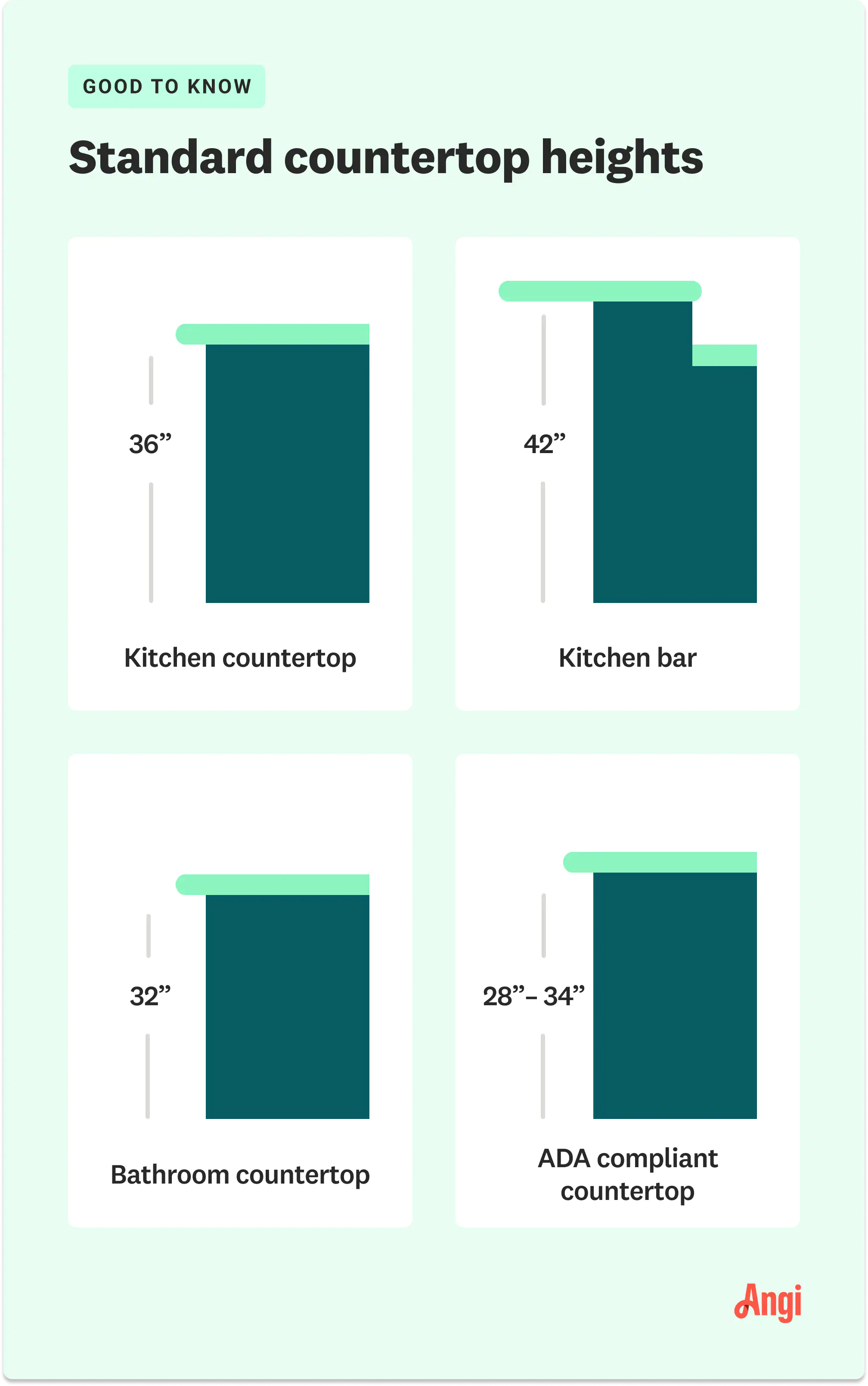
Image Source: media.angi.com
Deciphering the Standard Kitchen Counter Height
The standard kitchen counter height of 36 inches has become the industry norm for several compelling reasons, rooted in ergonomics, accessibility, and historical precedent. This measurement is designed to accommodate the average adult, providing a comfortable working surface for a variety of tasks, from chopping vegetables to rolling out dough.
Historical Context of Countertop Height Dimensions
The evolution of kitchen design has seen various approaches to counter height. Early kitchens often featured higher work surfaces, reflecting the needs of a time when many tasks were performed standing and by individuals of varying heights. However, as kitchens became more integrated into the home and designed for greater efficiency and comfort, a consensus began to emerge. The 36-inch height gained popularity throughout the 20th century, becoming a widely accepted countertop height dimension that most homeowners find suitable. This standardization also simplifies the manufacturing and installation of cabinetry and appliances, making it easier for consumers to find readily available solutions.
Why 36 Inches is the Common Measure
The 36-inch benchmark is a carefully considered average kitchen counter height. This height allows for:
- Ergonomic Advantage: For the majority of adults, a 36-inch counter provides a comfortable position for standing tasks. It minimizes bending and reaching, reducing strain on the back and shoulders.
- Appliance Integration: Most standard base cabinets, which form the foundation for countertops, are designed to fit beneath standard-sized appliances like dishwashers and ranges. When a typical countertop (usually 1.5 inches thick) is added to a 34.5-inch base cabinet, it naturally reaches the 36-inch mark.
- Universal Accessibility: While not perfectly suited for everyone, the 36-inch height offers a reasonable compromise for a wide range of people, including those of different heights.
Factors Influencing Your Ideal Kitchen Counter Height
While the standard is a great starting point, your personal needs and preferences might dictate a different kitchen work surface height. Several factors should influence your decision:
Your Height and the Height of Other Primary Users
The most significant factor is the height of the people who will be using the kitchen most frequently.
Counter Height for Adults
For the average adult, the 36-inch standard is generally appropriate. However, consider these nuances:
- Taller Individuals: If the primary users are significantly taller than average (e.g., over 6 feet), they might find a slightly higher counter more comfortable. Raising the counter by 2-3 inches can make a noticeable difference in reducing back strain.
- Shorter Individuals: Conversely, those who are shorter might benefit from a slightly lower counter. A few inches less can prevent the need to hunch over, making tasks like chopping far more pleasant.
Considering Children and Wheelchair Users
- Children: While children typically don’t do the majority of the cooking, if they are frequent participants, a lower section or a dedicated children’s counter can be a great addition. Alternatively, a sturdy step stool can suffice for occasional use.
- Wheelchair Users: For individuals who use wheelchairs, accessibility is paramount. ADA (Americans with Disabilities Act) guidelines suggest a maximum counter height of 34 inches, with a clear knee space underneath. The clear space under the counter should be at least 27 inches high, 30 inches wide, and 19 inches deep. This ensures comfortable access for wheelchair users.
Types of Kitchen Activities
The specific tasks you perform in your kitchen can also influence the ideal counter height.
- Chopping and Prep Work: Most people find a counter that allows their elbows to be at about a 90-degree angle when standing is ideal for chopping. For many, this aligns with the 36-inch standard. If you do a lot of intense chopping or prefer a more relaxed posture, you might adjust this.
- Baking: Some bakers prefer a slightly lower surface for kneading dough or rolling out pastry. Conversely, others prefer a slightly higher surface to avoid bending over for extended periods.
- Appliance Use: Consider the height of frequently used small appliances. For instance, if you often use a stand mixer, ensure the counter height allows for comfortable access and operation.
Ergonomics and Comfort
Ultimately, your kitchen should be a place of comfort and efficiency.
- Minimize Strain: The goal is to find a height that minimizes bending, reaching, and awkward postures. This not only makes cooking more enjoyable but also prevents long-term musculoskeletal issues.
- Trial and Error: If possible, test out different counter heights. You can do this by placing sturdy boxes or temporary platforms at various heights and mimicking common kitchen tasks to see what feels most natural.
Exploring Different Counter Heights and Their Applications
Beyond the standard, various countertop height dimensions exist, often tailored for specific functions or zones within a kitchen.
Island Counter Height and Bar Height Counter
Kitchen islands and peninsulas often incorporate different height levels to define spaces and offer varied functionality.
Island Counter Height
Island counter height can vary significantly. While many islands mirror the standard 36-inch height for a cohesive work surface, others incorporate different levels:
- Raised Bar/Dining Area: A common design element is to have a portion of the island raised to a bar height counter. This creates a distinct dining or social area, separating it from the main prep space.
- Lowered Sections: Some islands feature a lowered section, perhaps at 30 inches, similar to a dining table height. This is excellent for more relaxed seating or for children to work at.
Bar Height Counter
A bar height counter typically measures 42 inches from the floor. This height is designed to be comfortable for bar stools and provides a casual dining or socializing spot. It’s important to ensure adequate clearance around bar-height seating for comfortable movement.
Multi-Level Countertops
Some kitchens benefit from multi-level countertops to optimize different tasks:
- Prep Zone: Often set at the standard 36 inches for general chopping and preparation.
- Baking Zone: May be lowered slightly (e.g., 30-32 inches) for easier kneading and dough work.
- Serving or Dining Zone: Raised to bar height (42 inches) or table height (30 inches) for meals or gathering.
Kitchen Counter Depth and Other Dimensions
Beyond height, other dimensions play a role in kitchen functionality.
Standard Countertop Depth
The standard countertop depth is typically 25 inches for base cabinets. This depth provides ample workspace in front of the backsplash and allows for standard-depth appliances like ranges and dishwashers to be installed flush with the counter.
Island Counter Depth
Island counter depth can be more flexible. Standard depths often range from 36 to 42 inches, with deeper islands (up to 48 inches or more) offering more significant workspace and storage potential. When planning an island, ensure adequate clearance around it for comfortable traffic flow. A minimum of 36 inches of clearance is recommended on all sides where people will be walking.
Work Surface Height Variations
When considering your personal kitchen work surface height, it’s also beneficial to think about the dimensions of the work triangle (sink, refrigerator, and stove) and how your chosen counter heights will impact the flow and efficiency of your kitchen layout.
Calculating Your Ideal Counter Height
Here’s a simple method to determine a comfortable working height:
- Stand Naturally: Stand upright with your shoulders relaxed.
- Elbows at 90 Degrees: Bend your elbows to a 90-degree angle.
- Measure: Have someone measure the distance from the floor to your bent elbow. This measurement, minus about 3-6 inches, is a good starting point for your ideal chopping or prep surface height.
Example Calculation:
- If your elbow height is 45 inches, subtracting 5 inches gives you a target prep counter height of 40 inches. This would be a custom height, 4 inches above the standard.
Table: Recommended Counter Heights Based on User Height
| User Height (Approximate) | Recommended Counter Height (Approximate) | Notes |
|---|---|---|
| Under 5’0″ | 30-33 inches | May require custom cabinetry or specialized solutions. |
| 5’0″ – 5’6″ | 33-35 inches | Closer to the lower end of the standard range can be more comfortable. |
| 5’6″ – 6’0″ | 35-37 inches | Standard 36 inches is usually ideal. |
| Over 6’0″ | 37-39 inches | Consider raising the counter height by 1-3 inches. |
| Wheelchair User | 30-34 inches (ADA compliant) | Requires specific under-counter clearance for knee space. |
Note: These are general guidelines. Personal preference and specific task needs should always be prioritized.
Implementing Custom Counter Heights
If the standard 36-inch height isn’t ideal for you, several options exist for implementing custom counter heights.
Cabinet Modifications
- Custom Cabinetry: The most straightforward way to achieve a specific height is by ordering custom-sized base cabinets. This allows for precise adjustments.
- Cabinet Risers/Legs: For minor adjustments, custom risers or adjustable legs can be added to standard base cabinets.
- Thicker or Thinner Countertops: While less common, using countertops thicker or thinner than the standard 1.5 inches can slightly alter the final height. However, ensure the material choice is suitable for the intended thickness.
Non-Standard Appliances
If you opt for non-standard cabinet heights, you might need to consider non-standard appliance heights as well, or use appliance filler kits and custom panels to integrate them seamlessly.
Frequently Asked Questions About Kitchen Counter Height
Q1: Can I install different height counters in my kitchen?
Yes, you absolutely can! Many kitchens benefit from multi-level countertops to cater to different tasks and users. For example, you might have a standard 36-inch prep area and a 30-inch baking zone or a 42-inch bar height area.
Q2: What is the standard counter depth for islands?
The standard counter depth for kitchen islands varies, but 36 inches is common. However, many opt for 42-inch depths or more to provide a larger workspace or to accommodate seating with adequate legroom.
Q3: What is the best counter height for adults?
For the average adult, 36 inches is considered the standard and is often comfortable. However, the best height is one that allows you to stand with your elbows at about a 90-degree angle while performing common kitchen tasks like chopping. Measure your own comfortable elbow height and adjust accordingly.
Q4: How do I choose the right island counter height?
Consider the primary use of the island. If it’s mainly for prep work, a standard 36-inch height is good. If it will serve as a dining or socializing area, a bar height counter of 42 inches is a popular choice. Ensure adequate clearance for seating and movement.
Q5: What is a typical kitchen work surface height for baking?
Many people find a slightly lower surface, around 30-32 inches, more comfortable for tasks like kneading dough or rolling out pastry. This allows for better leverage and reduced bending.
Q6: What is the standard countertop depth for base cabinets?
The standard countertop depth for base cabinets is typically 25 inches. This allows for standard appliance installation and provides a good amount of workspace.
Q7: How do I calculate my ideal counter height?
Stand naturally, bend your elbows to a 90-degree angle, and measure the distance from the floor to your bent elbow. Subtract 3-6 inches from this measurement for your ideal prep counter height.
Q8: Is the average kitchen counter height always 36 inches?
While 36 inches is the most common kitchen counter height, it’s important to remember it’s an average. Personal needs and comfort should guide your final decision.
By carefully considering these factors, you can ensure your kitchen countertops are not just functional but also a comfortable and efficient extension of your culinary endeavors.