
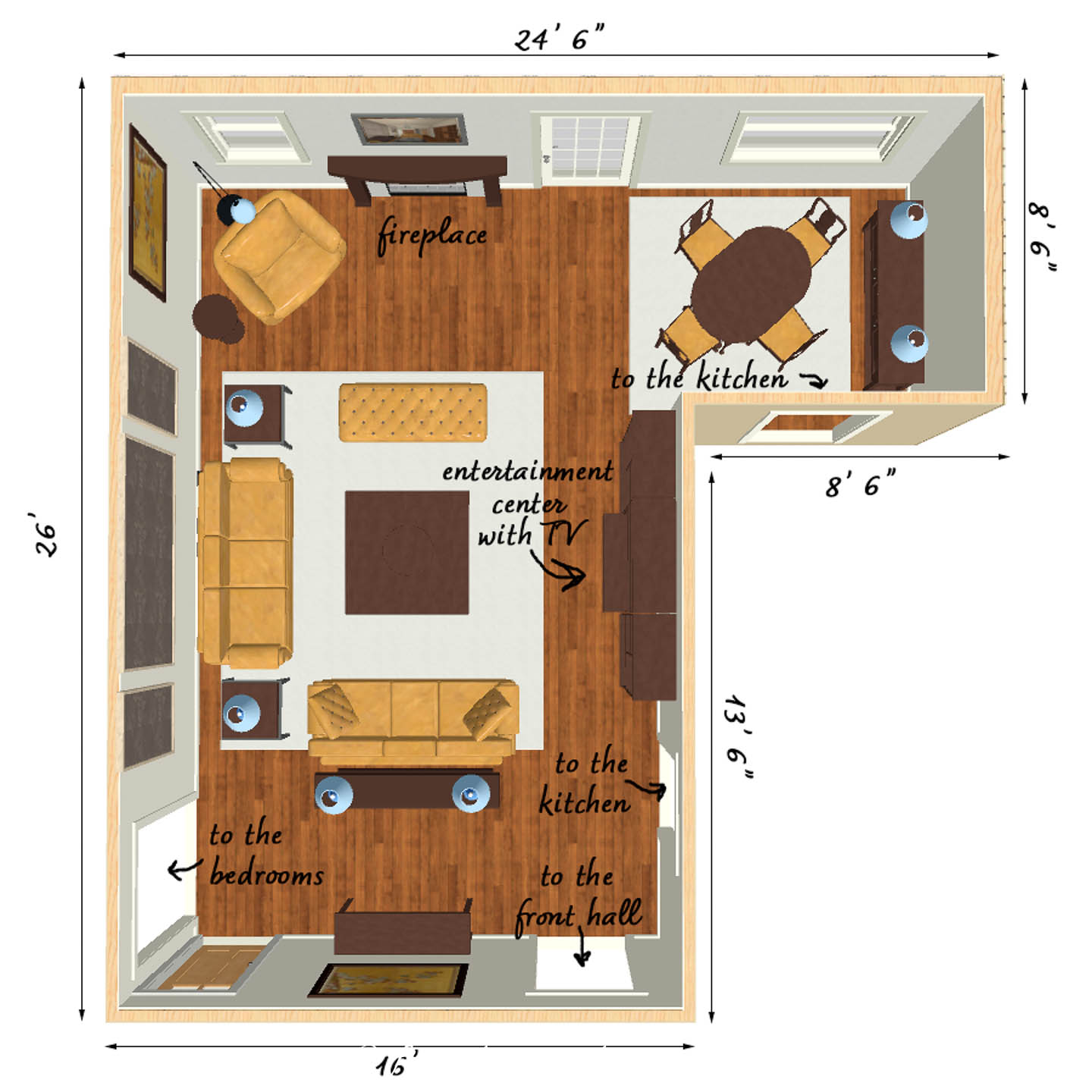
Image Source: www.fromhousetohome.com
How To Furnish An L Shaped Living Room Perfectly
Furnishing an L-shaped living room can feel a bit like solving a puzzle. But can you make this unique space feel cozy and functional? Absolutely! The key is smart planning and the right furniture choices.
Defining Zones in Your L-Shaped Space
L-shaped living rooms naturally lend themselves to being divided into distinct areas. This shape is fantastic for creating separate zones, whether for conversation, entertainment, or even a small home office nook. The goal here is to make each section feel intentional and cohesive with the overall design.
The “Main” Living Area
This is typically the larger, more prominent section of your L. It’s where you’ll likely place your primary seating arrangement. Think about the focal point of this area. Is it a fireplace, a large window with a view, or perhaps a media console? Arrange your main seating around this focal point to create a natural gathering spot.
The Secondary Zone
The “arm” of your L creates an opportunity for a secondary zone. This could be a quiet reading corner, a dining area if your living room is also a hub for meals, or even a play space for children. This area should feel distinct but still connected to the main living space.
Creating Flow and Connection
- Traffic Paths: Ensure there are clear pathways between zones. People should be able to move easily from the entrance to different seating areas without bumping into furniture.
- Visual Continuity: Use color, materials, or a consistent design style to tie the zones together. This prevents the room from feeling choppy or disjointed.
- Rugs: Area rugs are powerful tools for defining zones. A large rug can anchor the main seating area, while a smaller rug can delineate a reading nook or dining space.
L-Shaped Living Room Layout Ideas
When tackling an L-shaped living room, several layout strategies can work wonders. The best approach often depends on the room’s specific dimensions, window and door placements, and your personal lifestyle.
The Classic Conversational Setup
This is a popular choice for L-shaped rooms because it naturally embraces the shape.
- Placement: Arrange your sofa along one wall of the “L” and use accent chairs or smaller sofas to form the other side of a conversational grouping.
- Benefit: This creates an inviting and intimate space, perfect for chatting and socializing.
- Focal Point: A coffee table in the center of the seating arrangement ties everything together.
The Two-Zone Approach
This layout emphasizes the distinct areas that an L-shape allows.
- Placement: Dedicate the larger part of the “L” to your primary seating and entertainment area. Use the “arm” for a secondary function, like a reading nook, a small desk area, or even a compact dining space.
- Benefit: This maximizes the room’s utility by giving it multiple purposes without feeling cramped.
- Furniture: A comfortable armchair and a floor lamp can define the reading corner, while a small bistro table and chairs can serve a dining purpose.
The Media-Centric Layout
If your living room is primarily for watching TV and movies, this layout prioritizes that function.
- Placement: Position your sofa and main seating to face the media console or television. Often, the sofa will run along one wall of the “L,” with additional seating angled towards the screen.
- Benefit: Ensures everyone has a good view of the entertainment.
- Considerations: Ensure adequate lighting for screen viewing. Avoid placing furniture directly opposite windows that can cause glare.
The Open Flow Layout
This approach aims to keep the space feeling as open and airy as possible.
- Placement: Float furniture away from the walls to create distinct zones without visually blocking off areas. A sofa might be placed perpendicular to a wall, with its back facing into the secondary zone.
- Benefit: This is excellent for creating a sense of spaciousness, especially in smaller L-shaped rooms.
- Challenge: Requires careful consideration of traffic flow so you don’t create dead ends.
Sectional Sofa Placement for L-Shaped Rooms
Sectional sofas are often the go-to for L-shaped living rooms because they can beautifully embrace the corner. However, placement is crucial to avoid making the room feel boxy or crowded.
The Corner Hugger
This is the most intuitive placement for a sectional.
- Positioning: Place the sectional so that one arm extends along one wall of the “L” and the other arm tucks neatly into the corner.
- Benefits: This creates a defined seating area that feels integrated with the room’s architecture. It’s excellent for maximizing seating in the main living area.
- Considerations: Ensure the sectional doesn’t block doorways or natural traffic paths. Measure carefully to ensure a good fit.
The Room Divider
A sectional can also act as a divider between two zones.
- Positioning: Position the longer part of the sectional along a wall, and use the shorter return (the chaise or the other arm) to create a visual separation between the main seating area and another part of the room.
- Benefits: This is a sophisticated way to define zones without using physical barriers. It can help create a more intimate seating arrangement.
- Tips: Ensure there’s enough space for a walkway behind the sectional if it’s acting as a divider.
The Open-Ended Embrace
Sometimes, the best placement isn’t a strict “L” hug.
- Positioning: You might place one part of the sectional along a wall, and then have the other part extend into the room, not necessarily forming a tight corner.
- Benefits: This can open up the space and create a more dynamic seating arrangement. It’s useful if you want to create a conversational grouping that’s not entirely closed off.
- Considerations: This requires more space and careful planning of surrounding furniture to ensure it doesn’t feel adrift.
Key Considerations for Sectional Placement:
- Arm Orientation: Pay attention to the armrest orientation (left-arm or right-arm facing) to ensure it works with your desired layout.
- Size Matters: Don’t cram a massive sectional into a small L-shaped room. Opt for a more compact design if space is a concern.
- Visibility: Ensure the sectional doesn’t obstruct key views or focal points in the room.
Living Room Furniture Arrangement Tips
Beyond the anchor of your sofa, arranging other furniture elements is key to a functional and stylish L-shaped living room.
Anchoring with Area Rugs
- Purpose: Rugs define spaces and add warmth and texture.
- Placement: In the main seating area, ensure at least the front legs of your sofa and chairs rest on the rug. This visually ties the furniture together. In a secondary zone, a smaller rug can anchor a reading chair and side table.
- Size: Don’t be afraid of larger rugs. For an L-shaped room, a generous rug can make the entire main seating area feel unified.
The Coffee Table as a Hub
- Placement: Position your coffee table within easy reach of the primary seating. It should be roughly the same height as your sofa seats.
- Shape: Consider an oval or round coffee table to soften the lines of the L-shape and improve traffic flow. Rectangular tables can also work, especially if they are proportioned well to the seating.
- Function: Think about what you need from a coffee table. Storage? Display space? A surface for drinks?
Side Tables for Convenience
- Purpose: Side tables offer a place to set drinks, lamps, and decorative items.
- Placement: Place them next to sofas and chairs for easy access. In an L-shaped room, you might need side tables on both sides of your sectional or between chairs.
- Variety: Mix and match side tables in different heights and styles to add visual interest.
Lighting for Ambiance and Functionality
- Layered Lighting: Use a combination of ambient (overhead), task (reading lamps), and accent lighting (picture lights) to create depth and mood.
- Floor Lamps: Excellent for illuminating reading nooks or adding light to darker corners of the L-shape.
- Table Lamps: Provide task lighting on side tables and contribute to the overall ambiance.
Utilizing Vertical Space
- Shelving: Tall bookshelves or floating shelves can draw the eye upward, making the room feel larger and providing storage.
- Art: Hang artwork at eye level to add personality and color to your walls.
Maximizing Space in an L-Shaped Living Room
One of the primary challenges with L-shaped rooms can be making them feel spacious and uncluttered, especially if the “L” is a bit tight or the room is generally small.
Choose Furniture Wisely
- Scale: Select furniture that is proportionate to the size of the room. Oversized pieces will overwhelm an L-shaped space.
- Multi-functional Furniture: Opt for pieces that serve more than one purpose. Ottomans with storage, nesting tables, or a sofa bed can be incredibly useful.
- Leggy Furniture: Furniture with exposed legs creates an illusion of more space by allowing light and air to flow underneath. This makes the room feel less heavy and cramped.
Smart Storage Solutions
- Vertical Storage: Utilize wall space with shelves, wall-mounted cabinets, or tall bookcases to keep the floor clear.
- Built-in Storage: If possible, consider built-in shelving or cabinetry that fits seamlessly into the corner of the “L.”
- Baskets and Bins: Use stylish baskets and bins to corral clutter on shelves or in corners.
Color Palette and Light
- Light Colors: Lighter paint colors on the walls can make the room feel more expansive and airy.
- Mirrors: Strategically placed mirrors can reflect light and create the illusion of more space. A mirror placed opposite a window is particularly effective.
- Natural Light: Maximize natural light by using sheer curtains or blinds that can be easily opened. Avoid heavy, dark drapes.
Furniture Placement for Openness
- Avoid Blocking Pathways: Ensure furniture is arranged so that traffic can flow freely through the room, especially between the two “legs” of the “L.”
- Floating Furniture: As mentioned before, floating furniture away from walls can open up the space, even in an L-shaped room. This requires careful planning of the entire layout.
Furnishing a Corner Living Room: Specific Considerations
A corner living room, particularly one with an L-shape, presents unique opportunities and challenges. The corner itself is a key feature to work with.
Emphasizing the Corner
- Seating: A sectional sofa is a natural fit for embracing the corner.
- Focal Point: Consider placing a feature like a fireplace, a large plant, or a statement piece of art in the corner itself, or arranging seating to create a cozy nook within that corner.
- Lighting: A floor lamp or a small accent chair can make the corner a deliberate and inviting spot.
Balancing the “L” Shape
- Visual Weight: Ensure the furniture arrangement feels balanced. If one side of the “L” is heavily weighted with furniture, the other side might feel sparse. Distribute visual weight evenly.
- Traffic Flow: Pay close attention to how the furniture arrangement directs movement. Ensure there’s a clear path from entry points to different seating areas.
Furniture for Awkward Living Rooms
L-shaped rooms can sometimes feel awkward due to their non-standard shape. The trick is to use furniture to create a sense of order and purpose.
- Modular Furniture: Modular sofas or seating systems offer flexibility. You can reconfigure them to suit the specific angles of your L-shaped room.
- Accent Pieces: Use smaller, versatile accent pieces like ottomans, benches, or consoles to fill in gaps or add functionality without overwhelming the space.
- Round Furniture: As noted, round coffee tables, side tables, or even a round rug can soften the angularity of an L-shaped room.
L-Shaped Lounge Design: Style and Comfort
Once the layout and functionality are addressed, it’s time to think about the aesthetic – making your L-shaped lounge both stylish and comfortable.
Color Palette
- Cohesion: Choose a color palette that flows between the different zones. You can use variations of the same color or complementary colors to create visual interest.
- Accent Colors: Use accent colors in cushions, throws, or artwork to inject personality and draw the eye.
Material and Texture
- Variety: Mix different textures to add depth and warmth. Think soft throws, plush rugs, smooth wood, and perhaps metallic accents.
- Durability: For high-traffic areas, choose durable and easy-to-clean fabrics for your upholstery.
Personal Touches
- Artwork and Decor: Display personal photos, artwork, and decorative items that reflect your style.
- Plants: Greenery can breathe life into any space, and strategically placed plants can soften corners and add a natural element.
Small L-Shaped Living Room Ideas
When space is at a premium, furnishing an L-shaped living room requires even more strategic thinking.
Compact and Scaled Furniture
- Loveseats and Smaller Sofas: Opt for furniture that is scaled down. A loveseat or a smaller three-seater sofa might be more appropriate than a large sectional.
- Armless Chairs: Consider armless accent chairs to create a sense of openness.
- Slim Profiles: Choose furniture with slimmer profiles and less bulk.
Multi-Purpose Furniture is Key
- Storage Ottomans: As mentioned, these are invaluable for storing blankets, remotes, or magazines.
- Nesting Tables: These can be pulled out when needed and tucked away neatly to save space.
- Wall-Mounted Furniture: Wall-mounted TV consoles or shelves can free up floor space.
Visual Tricks to Enlarge the Space
- Mirrors: A large mirror can work wonders in a small L-shaped room, making it feel much larger.
- Light Colors: Stick to a light and airy color palette for walls and larger furniture pieces.
- Leggy Furniture: Furniture with visible legs allows light to pass through, making the space feel less enclosed.
Defining Zones Without Walls
- Rugs: Use rugs to visually separate seating areas from other parts of the room.
- Strategic Furniture Placement: Position a sofa or a console table to subtly divide the space without blocking sightlines.
Frequently Asked Questions (FAQ)
Q1: Can I put a sectional in an L-shaped living room?
Yes, sectionals are often ideal for L-shaped living rooms as they can fit perfectly into the corner and create a defined seating area.
Q2: How do I make an L-shaped living room feel less awkward?
Define distinct zones within the L-shape using furniture, rugs, and lighting. Ensure clear traffic paths and use furniture with legs to create an illusion of space.
Q3: What is the best way to arrange furniture in an L-shaped living room?
Consider arranging your main seating around a focal point, using the “arm” of the “L” for a secondary function like a reading nook. Sectionals are great for hugging the corner.
Q4: How can I maximize space in a small L-shaped living room?
Use multi-functional furniture, choose pieces with slim profiles and legs, employ light colors, and utilize vertical space with shelving.
Q5: Should I use one large rug or multiple rugs in an L-shaped living room?
It depends on how you’ve divided your space. A large rug can anchor the main seating area, while smaller rugs can define secondary zones. Using rugs is a great way to define zones in an L-shaped room.
Q6: How do I create flow in an L-shaped living space?
Ensure clear pathways between seating areas and entrances. Avoid placing furniture in a way that obstructs movement. Floating furniture can also help create better flow.
By thoughtfully considering these tips and ideas, you can transform your L-shaped living room into a functional, stylish, and inviting space that perfectly suits your needs.