
The standard kitchen countertop height in the United States is 36 inches (91.44 cm) from the floor to the top of the counter surface. This height is considered the optimal counter height for a wide range of kitchen tasks and user heights, providing a comfortable and efficient kitchen workspace height for most individuals.
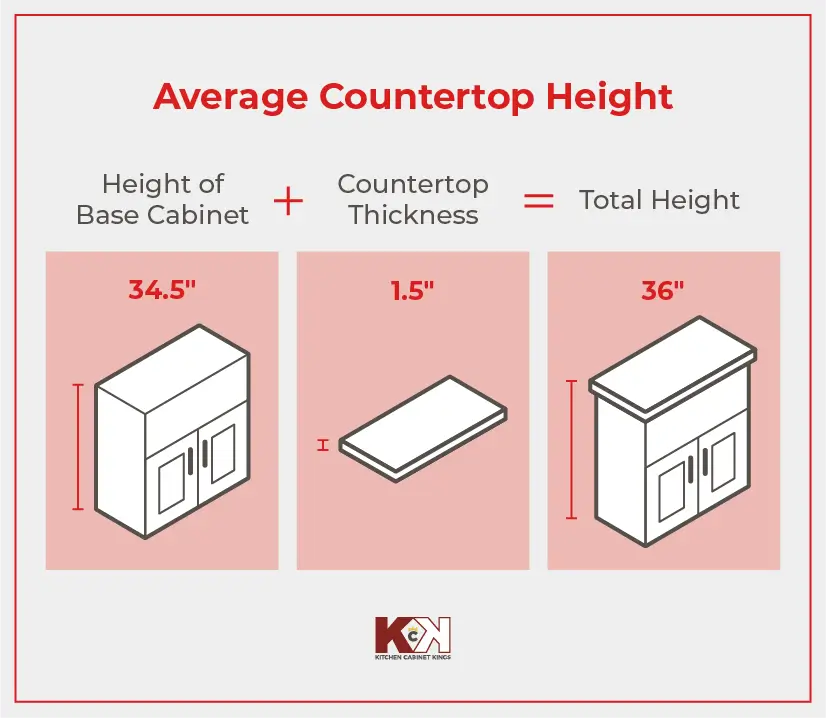
Image Source: cdn.kitchencabinetkings.com
The Foundation of Your Kitchen: Countertop Heights
Your kitchen countertops are more than just a surface to prepare food; they are the primary work surface height in your home, dictating comfort, efficiency, and even the overall feel of your kitchen. Understanding the standard dimensions and the reasons behind them is crucial for anyone planning a kitchen renovation or building a new home. This guide delves into the typical heights, why they exist, and how variations can impact your culinary experience.
Standard Kitchen Counter Height: The 36-Inch Benchmark
The 36-inch standard kitchen counter height is a well-established norm in the cabinetry and kitchen design industry. This height has been adopted for several practical reasons, primarily rooted in ergonomics and functionality.
- Ergonomics and Comfort: This height is generally considered ideal for the average adult performing common kitchen tasks like chopping vegetables, kneading dough, or washing dishes. It allows for a natural posture, minimizing strain on the back, shoulders, and wrists. When your countertop is at the correct height, you can stand upright with your elbows bent at roughly a 90-degree angle while working, which is the most comfortable and efficient position.
- Cabinetry Compatibility: Standard base cabinets, which typically sit at 34.5 inches tall, are designed to be topped with a 1.5-inch countertop (often laminate, quartz, granite, or butcher block). This combination results in the universally recognized 36-inch finished height. This standardization simplifies the manufacturing and installation process for kitchen cabinets and countertops, making it easier for consumers to select matching components.
- Accessibility: While not specifically designed for accessibility, the 36-inch height offers a reasonable balance for many individuals. However, for those with specific mobility needs, alternative heights are often considered.
Deciphering the Nuances: Factors Influencing Countertop Height
While 36 inches is the standard, several factors can lead to variations:
1. User Height and Reach
The ideal kitchen workspace height is subjective and largely dependent on the primary users of the kitchen.
- Shorter Individuals: People who are shorter than average might find a 36-inch counter slightly too high. Working at a counter that is too tall can lead to shoulder and neck strain as they have to reach up, hunching their shoulders.
- Taller Individuals: Conversely, taller individuals might find a 36-inch counter a bit low, requiring them to bend excessively. This can lead to back discomfort and fatigue.
2. Type of Kitchen Task
Different kitchen activities may benefit from slightly different work surface heights.
- Chopping and Prep Work: The standard 36-inch height is generally excellent for chopping, dicing, and other prep tasks.
- Baking and Dough Kneading: Some bakers prefer a slightly lower counter (perhaps an inch or two) for tasks like kneading dough, as it allows them to use their body weight more effectively.
- Appliance Use: The height of specific appliances, like a built-in oven or a raised dishwasher, can also influence the perceived ideal counter height in their immediate vicinity.
3. Design and Aesthetic Choices
Sometimes, countertop height is adjusted for purely aesthetic reasons or to create specific zones within the kitchen.
- Raised Work Areas: In some custom kitchen designs, sections of the countertop might be raised to create a more prominent or visually distinct workspace.
- Lowered Sections: Similarly, lower sections might be incorporated for specific tasks or to improve accessibility for certain users.
Exploring Variations: Beyond the Standard 36 Inches
While the 36-inch benchmark is prevalent, it’s not the only option available. Exploring these variations can help you achieve the perfect kitchen ergonomics.
Kitchen Island Height: A Separate Conversation
Kitchen island height often mirrors the standard counter height, typically 36 inches. However, islands can also incorporate varied heights for different functions.
- Multi-Level Islands: Many modern kitchen islands feature multiple levels, often with a lower section for prep work (36 inches) and a higher section for seating or serving (typically 42 inches).
- Bar Height Countertop: A popular variation for islands is a bar height countertop. These are usually around 42 inches tall, designed to accommodate standard bar stools. This creates a casual dining or socializing area.
- Counter Height vs. Bar Height: It’s important to distinguish between counter height (36 inches) and bar height (around 42 inches). The choice depends on the intended use of the island – whether it’s primarily for workspace or for seating.
ADA Compliant Counter Height: Prioritizing Accessibility
For kitchens designed with accessibility in mind, ADA (Americans with Disabilities Act) guidelines offer specific recommendations for counter heights.
- Maximum Height: ADA compliant counter height for wheelchair users is typically 34 inches (86.36 cm), measured from the finished floor to the top of the counter. This allows ample knee clearance underneath.
- Clearance: A minimum of 27 inches (68.58 cm) of clear knee space is required from the floor to the underside of the counter.
- Forward Reach: The ADA also specifies forward reach ranges. The optimal height for unobstructed access is around 36 inches from the floor, while the maximum is 48 inches.
For a kitchen that serves a diverse range of users, incorporating a section with an ADA compliant counter height can be a thoughtful and inclusive design choice.
Counter Depth: Another Key Dimension
Beyond height, counter depth is another crucial dimension to consider for both aesthetics and functionality.
- Standard Counter Depth: The standard counter depth for base cabinets is 24 inches. This depth allows for adequate workspace in front of the cabinets and efficient placement of appliances like dishwashers and ovens.
- Overhang: Countertops typically extend beyond the base cabinets to provide an overhang. A standard overhang is usually 1 to 1.5 inches on the working side (front) of the counter. This overhang allows you to open cabinet doors and drawers more easily and provides comfortable seating for knees when sitting at an island or peninsula.
- Island Depth: Island counter depths can vary, often being deeper than standard counters to accommodate seating on one side. Depths of 30 inches or more are common for islands with seating.
Kitchen Cabinet Height: The Supporting Structure
The height of your kitchen cabinets directly influences the countertop height.
- Base Cabinets: As mentioned, standard base cabinets are typically 34.5 inches tall. These cabinets sit directly on the floor and support the countertop.
- Wall Cabinets: Wall cabinet heights vary greatly, commonly ranging from 30 to 42 inches, and their placement is determined by the desired backsplash height and clearance from the countertop. The space between the base cabinets and the wall cabinets is where the backsplash is installed.
Optimizing Your Kitchen Workspace Height for Ergonomics
Achieving optimal ergonomics in your kitchen is about creating a space that feels comfortable and efficient for your body.
The Elbow-to-Countertop Rule
A simple rule of thumb for determining your ideal counter height is to stand naturally with your feet flat on the floor and your arms relaxed at your sides. Bend your elbows to a 90-degree angle. The distance from the floor to your bent elbow is a good indicator of your ideal work surface height.
- Stand Naturally: Avoid slouching or reaching up.
- Elbows at 90 Degrees: Keep your elbows bent as if you were about to start chopping.
- Measure: Have someone measure the distance from the floor to your elbow. This measurement is a strong starting point for your ideal counter height.
Considering Multiple Users
If multiple people with significantly different heights will be using the kitchen regularly, consider these strategies:
- Compromise Height: Find a height that is a comfortable compromise for everyone.
- Adjustable Solutions: While less common for countertops, consider adjustable-height stools for island seating.
- Dedicated Work Zones: If space allows, you could design different zones with slightly varied countertop heights. For instance, a lower section for a baker who prefers a lower surface for kneading, and a standard height for general prep.
Materials and Thickness
It’s also worth noting that the thickness of your countertop material can slightly affect the final height.
- Laminate: Typically 1.5 inches thick.
- Solid Surface (e.g., Corian): Can be 0.5 to 1.5 inches thick.
- Stone (Granite, Quartz): Usually 1.25 to 2 inches thick.
- Butcher Block: Varies widely, from 1.5 inches to several inches thick.
When calculating your desired finished height, factor in the thickness of the material you plan to use.
Customization vs. Standardization
While standard dimensions offer convenience and cost-effectiveness, custom heights can significantly improve your kitchen’s ergonomics if the standard doesn’t suit you.
- Benefits of Custom Heights:
- Perfectly tailored to the primary users.
- Enhanced comfort and reduced physical strain.
- Improved efficiency during cooking and prep.
- Considerations for Custom Heights:
- Cost: Custom cabinetry and countertops can be more expensive.
- Resale Value: While a well-executed custom height can be a selling point, extreme deviations from the norm might be a deterrent for some buyers.
- Appliance Compatibility: Ensure any custom heights work seamlessly with standard appliance dimensions.
Common Kitchen Layouts and Their Height Considerations
Different kitchen layouts can present unique height challenges or opportunities.
L-Shaped Kitchens
- These kitchens often have fewer breaks in the counter run, allowing for a consistent and comfortable work surface height. The 36-inch standard is generally ideal here.
U-Shaped Kitchens
- Similar to L-shaped kitchens, U-shaped layouts benefit from a uniform countertop height for efficient workflow. Consider how the corners are utilized – a slightly lower section near a frequently used baking area might be beneficial.
Galley Kitchens
- Often tighter spaces, galley kitchens demand efficient use of every inch. A standard 36-inch height is crucial for maximizing usability and preventing a cramped feeling.
Island Kitchens
- As discussed, islands offer the most flexibility. You can easily incorporate a standard 36-inch prep area alongside a 42-inch bar height seating area. This multi-functional approach is a major advantage of kitchen islands.
Materials and Their Impact on Perceived Height
While the physical height remains the same, different countertop materials can create a visual perception of height or depth.
- Light-colored materials: Can make a space feel more open and the countertops appear less imposing.
- Dark-colored or heavily veined materials: Can create a more grounded and substantial feel.
- Thicker slabs: (e.g., 2-inch or 3-inch thick quartz or granite) will inherently raise the finished countertop height, and this needs to be accounted for when selecting base cabinets if you want to maintain a specific overall height.
The Role of Backsplash and Wall Cabinets
The space between the countertop and the wall cabinets, known as the backsplash area, is also an important consideration.
- Standard Backsplash Height: The typical backsplash height is around 18 inches. This provides ample space for most cooking activities without feeling too low or too high.
- Clearance: This 18-inch clearance is measured from the countertop surface to the underside of the wall cabinets. If your countertop height is customized, you’ll need to adjust the placement of your wall cabinets accordingly to maintain a comfortable backsplash height.
Summary of Key Heights
To consolidate the information, here’s a quick reference of common kitchen heights:
| Feature | Standard Height | Notes |
|---|---|---|
| Standard Countertop | 36 inches (91.44 cm) | Optimal for most tasks and users. |
| Base Cabinets | 34.5 inches (87.63 cm) | Height before adding countertop. |
| Countertop Thickness | 1.5 inches (3.81 cm) | Common thickness for laminate and standard stone. |
| Kitchen Island | 36 inches (91.44 cm) | Can vary for multi-level or bar seating. |
| Bar Height Countertop | 42 inches (106.68 cm) | For bar stools, typically on islands. |
| ADA Compliant Counter | 34 inches (86.36 cm) max | Designed for wheelchair accessibility, with specific knee clearance. |
| Backsplash Clearance | 18 inches (45.72 cm) | Space between countertop and wall cabinets. |
Frequently Asked Questions (FAQ)
Q1: What is the standard kitchen counter height?
A1: The standard kitchen counter height is 36 inches from the floor to the top of the counter.
Q2: Can I have my countertops made to a custom height?
A2: Yes, custom cabinetry and countertops can be manufactured to almost any height. This allows you to tailor your kitchen to your specific ergonomic needs.
Q3: How tall should my kitchen island be?
A3: A kitchen island can be the standard 36-inch counter height for prep work, or it can be a bar height of 42 inches if it’s intended for seating. Multi-level islands are also popular.
Q4: Is 36 inches the only practical kitchen workspace height?
A4: While 36 inches is the most common and generally practical height, custom heights between 32 and 40 inches are often considered for individuals who are significantly shorter or taller than average.
Q5: What is the recommended ergonomics kitchen counter height for baking?
A5: Many bakers find a slightly lower counter, perhaps 1-3 inches below the standard 36 inches, more comfortable for tasks like kneading dough, as it allows them to use their body weight more effectively.
Q6: What is ADA compliant counter height?
A6: ADA compliant counter height for wheelchair users is a maximum of 34 inches, with at least 27 inches of clear knee space underneath.
Q7: What is bar height countertop?
A7: A bar height countertop is typically around 42 inches tall, designed to be used with standard bar stools for seating.
Q8: What is a typical counter depth?
A8: The standard counter depth, referring to the depth of the cabinet and countertop, is 25 inches (24-inch cabinet + 1-inch overhang). Sometimes, a “counter depth” measurement might refer only to the countertop slab itself, which is usually 25-26 inches to allow for the overhang.
Q9: What is the standard kitchen cabinet height?
A9: Standard base kitchen cabinets are typically 34.5 inches tall, designed to be topped with a 1.5-inch countertop to reach the standard 36-inch finished height.
Q10: How do I determine my ideal work surface height?
A10: A good starting point is to stand with your feet flat, arms relaxed, and bend your elbows to a 90-degree angle. Measure from the floor to your bent elbow. This measurement is a good indicator of your ideal work surface height.