
How many lights over a kitchen island? Generally, the number of lights you need depends on the island’s size, shape, and the type of lighting fixtures you choose, but a common guideline is two or three. For instance, a rectangular island often benefits from two evenly spaced pendants, while a longer island might need three.
Your kitchen island is more than just a workspace; it’s often the heart of the home. It’s where meals are prepped, homework is done, and casual conversations happen. Because it serves so many purposes, the kitchen island lighting quantity is crucial for both functionality and ambiance. Getting this right means creating a space that is well-lit for tasks, inviting for gatherings, and visually appealing as a central design element. This guide will help you navigate the decisions, from understanding the basics of kitchen island lighting layout to choosing the perfect fixtures.
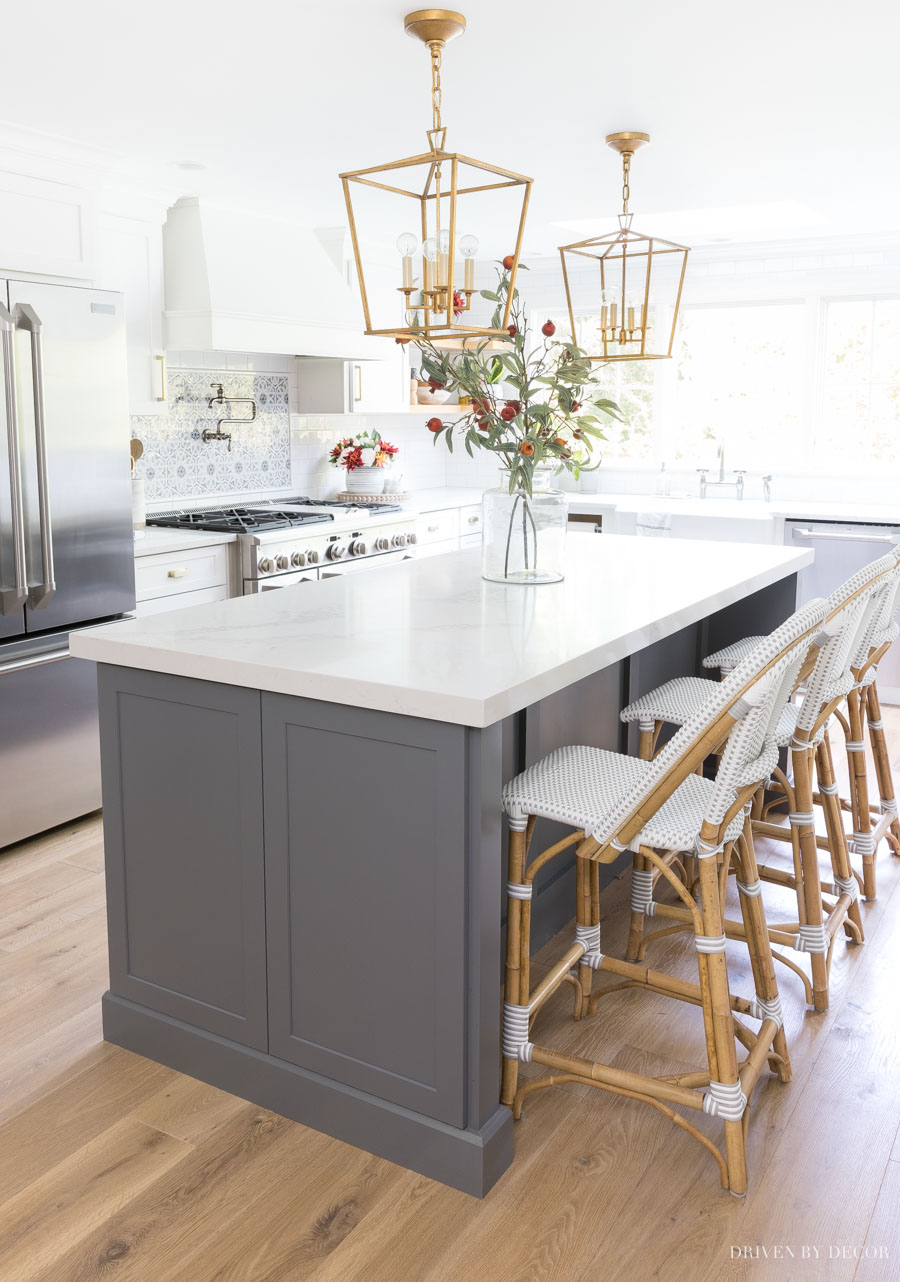
Image Source: www.drivenbydecor.com
Deciphering the Number: How Many Lights?
The question of how many lights over kitchen island isn’t a one-size-fits-all answer. Several factors come into play, and we’ll break them down to help you make an informed decision.
Island Size and Shape
The dimensions of your kitchen island are the primary determinant of lighting quantity.
- Small Islands (Under 4 feet): Often, one central pendant light is sufficient. This provides focused light without overwhelming the space.
- Medium Islands (4-7 feet): Two pendant lights, spaced evenly, are a popular and effective choice. This offers good coverage and a balanced look.
- Large Islands (Over 7 feet): Three or even four pendant lights might be necessary to ensure adequate illumination across the entire surface. Alternatively, you could use two larger statement pendants with additional task lighting elsewhere.
Type of Fixtures
The style and size of your chosen fixtures significantly impact the kitchen island lighting quantity.
- Pendant Lights: These are the most common choice. The spacing between pendant lights for kitchen island is key. A general rule of thumb is to space them 2.5 to 3 feet apart from the center of each fixture.
- Chandeliers: For a grand statement, a chandelier can be used. Typically, one well-sized chandelier is enough for most islands, but for very long islands, two smaller chandeliers might be an option. The kitchen island chandelier size should be proportionate to the island itself.
- Recessed Lights: If your goal is a cleaner, more minimalist look, or if you have a very large island, a series of recessed lights might be ideal. The recessed lights kitchen island spacing needs careful planning to avoid glare and ensure even light distribution.
Lighting Needs and Style
Consider what you’ll primarily use the island for.
- Task Lighting: If you do a lot of chopping, baking, or other detailed work on your island, you’ll need bright, focused light. This might mean more fixtures or brighter bulbs.
- Ambient Lighting: For a softer, more relaxed atmosphere, you might opt for fewer, dimmer fixtures or lights with diffusers.
- Decorative Lighting: Sometimes, the lights are as much about aesthetics as they are about illumination. In this case, the visual impact of the kitchen island light fixtures plays a bigger role.
Fathoming the Layout: Achieving Optimal Illumination
A well-thought-out kitchen island lighting layout ensures that your island is not only beautifully lit but also highly functional.
The Golden Rules of Spacing
When hanging lights, especially how many pendants over island, spacing is paramount.
- Edge to Fixture: Start by measuring the width of your island. A good starting point for pendant spacing is to leave about 6 to 12 inches of space between the edge of the island and the outer edge of the pendant’s shade.
- Fixture to Fixture: The distance between the centers of two adjacent fixtures is typically 30 inches (2.5 feet). This ensures overlap in the light pools, creating a more uniform and inviting glow.
- Centered Fixtures: If you have two pendants, ensure they are centered over the island’s workspace or seating area. If you have three, one might be centered over the middle of the island, with the other two spaced evenly on either side.
Calculating the Number of Lights
Let’s put these rules into practice with some examples of number of lights kitchen counter illumination.
Table 1: Guideline for Number of Lights Based on Island Length
| Island Length | Common Fixture Type | Number of Fixtures | Recommended Spacing (Center to Center) | Notes |
|---|---|---|---|---|
| 3-4 feet | Single Pendant | 1 | N/A | Centered over the island. |
| 4-6 feet | Two Pendants | 2 | 30 inches | Evenly spaced, with roughly 12 inches from each end to the center of the pendant. |
| 6-8 feet | Three Pendants | 3 | 30-36 inches | One in the center, with two others spaced evenly. |
| 8+ feet | Three or Four Pendants | 3 or 4 | 30-40 inches | For very long islands, consider four pendants or two larger statement fixtures. |
Important Note: These are guidelines, not strict rules. Always consider the actual size of your fixtures and the desired aesthetic.
Recessed Lighting Spacing
For recessed lights kitchen island spacing, the goal is to create a smooth, even wash of light.
- Task Areas: Place recessed lights directly over the primary work surfaces.
- Seating Areas: Ensure good light over any seating zones to prevent shadows.
- Spacing Formula: A common approach is to place recessed lights 2-3 feet apart. To calculate the precise spacing, you can use a formula:
- (Island Width – (2 x desired edge clearance)) / (Number of lights – 1)
- For example, for a 6-foot (72-inch) wide island with two rows of lights spaced 12 inches from each edge, and you want 3 lights per row:
- Spacing = (72 inches – (2 x 12 inches)) / (3 – 1) = 48 inches / 2 = 24 inches.
- This means you’d place lights 24 inches apart, with the first and last light being 12 inches from the edge.
Selecting the Perfect Kitchen Island Light Fixtures
Choosing the right kitchen island light fixtures is where your personal style meets practical needs. The best light placement kitchen island will showcase these fixtures beautifully.
Pendant Lights for Kitchen Island
Pendants offer a vast range of styles, from minimalist to industrial, modern to traditional.
- Size Matters: The scale of your pendants should be in proportion to your island and the ceiling height. A common mistake is hanging pendants that are too large or too small.
- Width Rule: For a single pendant, aim for a width that is about one-third to one-half the width of the island. For multiple pendants, consider the combined width.
- Height: The bottom of the pendant should typically hang 30-36 inches above the countertop. This provides ample light without being in your direct line of sight.
How Many Pendants Over Island
As discussed, the number of pendants depends heavily on the island’s length. For a standard 6-foot island, two pendants are often ideal. For longer islands, three can provide better coverage. Consider the visual weight of the pendants; if they are visually heavy, two might be enough even on a longer island.
Other Lighting Options
- Track Lighting: While less common for a primary island feature, adjustable track lights can offer flexibility for task lighting if positioned carefully.
- Flush Mount or Semi-Flush Mount Lights: These are good for lower ceilings or if you prefer a less intrusive light source. They provide general illumination but might not offer the same focused task lighting as pendants.
- Wall Sconces: If your island is against a wall, wall sconces can supplement the overhead lighting and add a decorative touch.
Creating the Optimal Kitchen Island Lighting
The optimal kitchen island lighting combines task, ambient, and accent lighting to create a layered and inviting atmosphere.
Layering Your Lights
- Task Lighting: This is your primary illumination for working on the island. Pendant lights or well-placed recessed lights are excellent for this. Ensure the light is bright enough and directed where you need it.
- Ambient Lighting: This provides a softer, overall glow. It can come from your task lights on a dimmer, or from other sources in the kitchen that spill onto the island.
- Accent Lighting: This is for visual interest. Consider strip lighting under the island overhang or small spotlights highlighting decorative items on the island.
Dimmer Switches are Your Friend
Installing dimmer switches on your kitchen island lights is a game-changer. They allow you to adjust the brightness to suit the activity, from bright task lighting for cooking to a soft glow for evening relaxation. This flexibility is key to achieving optimal kitchen island lighting.
Considering the Ceiling Height
Ceiling height significantly impacts the appearance and effectiveness of your lighting.
- Low Ceilings (Under 8 feet): Opt for flush-mount or semi-flush-mount fixtures. If using pendants, choose smaller, more streamlined designs and hang them higher (around 28-30 inches from the countertop).
- Standard Ceilings (8-10 feet): This is the ideal height for most pendant lights. The 30-36 inch rule from the countertop generally works well.
- High Ceilings (Over 10 feet): You can use larger, more dramatic fixtures like chandeliers or longer pendant cords. Consider grouping multiple pendants for visual impact. The kitchen island chandelier size becomes even more important to avoid looking lost in the vast space.
Practical Considerations for Choosing Kitchen Island Light Fixtures
Beyond aesthetics and the kitchen island lighting quantity, several practical aspects deserve attention.
Electrical Planning
- Existing Wiring: If you’re renovating, check your existing electrical plan. Adding new lights or moving existing ones will require professional electrical work.
- Circuit Load: Ensure your electrical circuit can handle the combined wattage of your new fixtures.
Maintenance and Cleaning
- Accessibility: Think about how easy it will be to change bulbs or clean the fixtures. Bulbs that are hard to reach can be a hassle.
- Material and Finish: Choose materials that are durable and easy to clean, especially in a busy kitchen environment.
Style Consistency
Your choosing kitchen island light fixtures should complement the overall style of your kitchen.
- Modern Kitchens: Clean lines, geometric shapes, and metallic finishes often work well.
- Farmhouse Kitchens: Consider rustic materials like wood, wrought iron, or glass.
- Traditional Kitchens: Elaborate designs, crystal accents, or classic metallic finishes might be suitable.
Frequently Asked Questions (FAQ)
Q1: Can I use different types of lights over my kitchen island?
Yes, you can mix and match. For example, you might use two pendants for task lighting and add recessed lights for overall ambient light. The key is to ensure the styles and finishes complement each other and the overall kitchen design.
Q2: How do I know if my pendant lights are the right size for my island?
A good rule of thumb is that the width of your pendant(s) should be roughly one-third to one-half the width of your island. Visually, they should not overpower the island, nor should they look too small and insignificant.
Q3: What is the best light placement kitchen island for prep work?
For prep work, you want direct, bright light over the surface. Position your task lighting (like pendants or recessed lights) to illuminate the entire prep area without creating harsh shadows. Placing them closer to the center of the island often works best.
Q4: How far apart should recessed lights be over a kitchen island?
For even illumination, spacing recessed lights 2 to 3 feet apart is a common recommendation. Always consider the beam spread of your chosen bulbs and the overall width of the island to avoid dark spots or excessive overlap.
Q5: Who should install kitchen island lights?
It’s highly recommended to have a qualified electrician install your kitchen island lights, especially if you are adding new wiring or modifying existing circuits. Safety and proper installation are crucial.
By carefully considering the kitchen island lighting quantity, layout, and fixture selection, you can transform your island into a functional, stylish, and inviting centerpiece for your home.