
The question of how wide a kitchen should be for an island is a common one, and the simple answer is that the ideal width depends on several factors, primarily the desired functionality, the size of the kitchen itself, and the amount of kitchen island clearance you need. Generally, for comfortable movement and optimal usability, you’ll want at least 42 to 48 inches of minimum walkway around island on all sides, with more space being better if your kitchen layout allows.
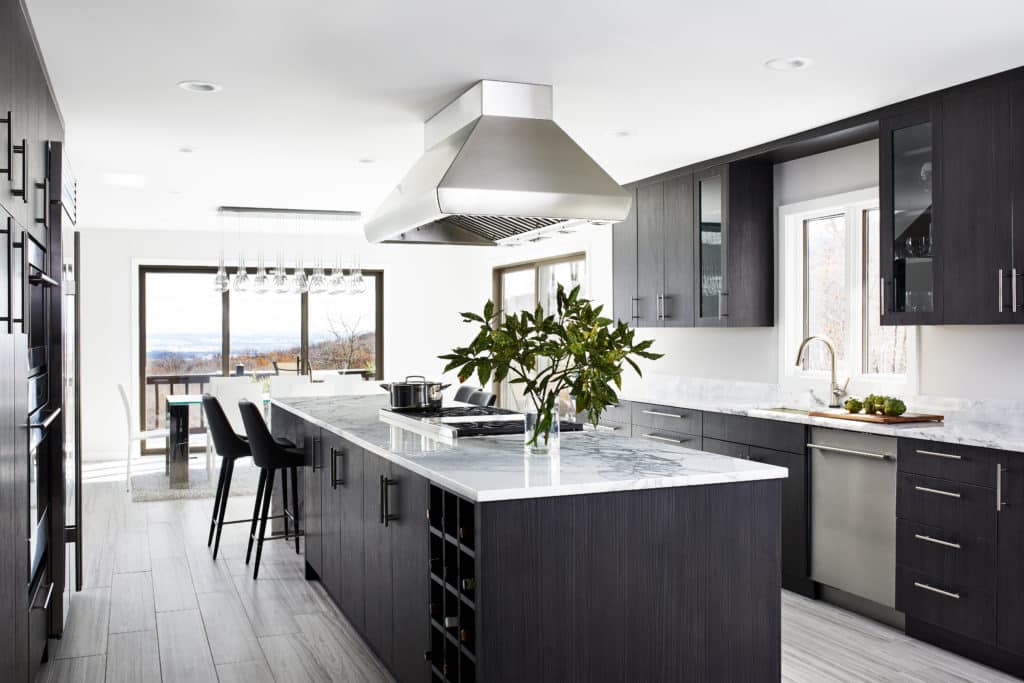
Image Source: jackrosen.com
The Crucial Role of Kitchen Width in Island Design
Adding a kitchen island can transform a kitchen from a purely functional space to a hub for cooking, dining, and socializing. However, the success of this transformation hinges on having adequate space. A poorly planned island, too large or too close to other elements, can make a kitchen feel cramped and inefficient. Conversely, a well-sized island in a suitably wide kitchen enhances workflow, provides valuable prep space kitchen island, and acts as a focal point. This guide will delve into the specifics of kitchen width requirements for islands, helping you make informed decisions for your home.
Determining Your Kitchen’s Ideal Width
Before even thinking about an island’s kitchen island dimensions, it’s essential to assess your existing kitchen width. This measurement is the foundation upon which your island design will be built.
Measuring Your Kitchen Space
To get a precise understanding, you need to measure the usable width of your kitchen. Start from one wall and measure to the opposing wall, excluding any permanent fixtures like refrigerators or ovens that might be built into the wall. If you have a galley kitchen, this measurement is straightforward. For L-shaped or U-shaped kitchens, consider the main working area where the island would be placed.
Key Considerations for Width
- Traffic Flow: The primary determinant of how wide your kitchen needs to be is the necessary kitchen island clearance. This clearance ensures that people can move around the island easily without bumping into cabinets, appliances, or other people.
- Island Functionality: What do you want your island to do? Will it house a cooktop, sink, or just provide prep space kitchen island and seating? More features generally mean a larger island, requiring more surrounding space.
- Kitchen Size and Shape: A narrow, long kitchen will have different requirements than a wide, square one. The overall kitchen layout island dictates how much width can be practically allocated to an island and its surrounding pathways.
Essential Spacing: The Heart of a Functional Island Kitchen
The space around your island is just as important as the island itself. Proper spacing kitchen island is what separates a cluttered, awkward kitchen from an efficient, enjoyable one.
Minimum Walkway Around Island
The general consensus for a comfortable and safe minimum walkway around island is between 42 and 48 inches. This allows one person to comfortably pass behind someone working at the island or for two people to pass each other with moderate ease.
- 42 inches: This is the absolute minimum. It works best in smaller kitchens or if the island is primarily for secondary prep or serving.
- 48 inches: This provides more generous space and is ideal if you have a lot of traffic in your kitchen, want to include seating at the island, or have a more active cooking environment.
- 60 inches or more: In larger kitchens, wider walkways can create a more open feel and allow for multiple people to work around the island simultaneously without feeling crowded.
Cabinet Clearance Kitchen Island
When placing an island in a kitchen with surrounding cabinets or appliances, you need to factor in cabinet clearance kitchen island. This refers to the space between the island and the cabinets or appliances.
- On the working side (where you might have seating or appliances): You’ll need at least 48 inches of clearance to comfortably use appliances like ovens or to allow people to sit at the island without obstructing the main walkway.
- On the non-working side (often the side facing the main kitchen work zone): A minimum of 42 inches is generally sufficient, but 48 inches is preferred for better flow.
The Kitchen Work Triangle Island
Integrating an island into the kitchen work triangle island (the imaginary lines connecting the sink, refrigerator, and cooktop) is crucial for efficiency. An island can disrupt or enhance this triangle depending on its placement and size.
- Placement: If the island becomes part of the work triangle, ensure it doesn’t create a barrier. For example, if your sink is on the island, make sure there’s easy access to the refrigerator and cooktop without long, obstructed paths.
- Island as a Work Zone: An island can effectively become one of the “points” of the work triangle, particularly if it houses a sink or cooktop, or serves as the primary prep space kitchen island. This often means the remaining space needs to be carefully considered to maintain efficient movement between the island and other zones.
Ideal Kitchen Island Size: More Than Just Width
While width is critical, the ideal kitchen island size also encompasses length and depth, all of which are influenced by your kitchen’s overall dimensions and your intended use.
Standard Kitchen Island Width
A standard kitchen island width typically ranges from 25 inches to 42 inches. However, this refers to the island’s depth from front to back. When we talk about the width of the kitchen needed for an island, we’re talking about the dimension parallel to the island’s length.
- Island Depth: Most kitchen islands are around 24-30 inches deep, matching standard cabinet depths. If you’re adding seating overhang, this can add another 10-15 inches to the depth.
- Island Length: This is where the kitchen’s width plays a significant role. A longer island will require a wider kitchen to maintain adequate clearance.
Let’s reframe the “width” of the kitchen in relation to the island:
| Kitchen Configuration | Minimum Kitchen Width (to accommodate island + walkways) | Recommended Kitchen Width (for comfortable flow) |
|---|---|---|
| Island with walkways on two sides | 7 feet (e.g., 3ft island + 2 x 2ft walkways) | 8 feet (e.g., 3ft island + 2 x 2.5ft walkways) |
| Island with walkways on three sides | 10 feet (e.g., 4ft island + 3 x 2ft walkways) | 11 feet (e.g., 4ft island + 3 x 2.5ft walkways) |
| Island with seating on one side, walkways on others | 10 feet (e.g., 4ft island + seating overhang + 2 walkways) | 11.5 feet (e.g., 4ft island + seating overhang + 2 generous walkways) |
Note: These are simplified examples. Actual measurements depend on island depth and desired clearance.
Factors Influencing Island Size
- Seating: If you plan to have stools at the island, you’ll need to account for the depth of the island plus an overhang (usually 10-15 inches) and then the necessary clearance behind the stools for people to get in and out. This typically adds 36-48 inches of space behind the island.
- Appliances: Built-in appliances like cooktops, sinks, or dishwashers will affect the island’s dimensions and how you use the space around it.
Kitchen Layout Island: Different Scenarios, Different Widths
The kitchen layout island significantly impacts how much width your kitchen needs. Let’s explore common layouts.
Galley Kitchens
Galley kitchens are typically long and narrow. Adding an island here requires careful planning.
- Challenge: The primary constraint is the limited width. You need to balance the island’s size with sufficient kitchen island clearance on both sides.
- Solution: Opt for a narrower island (around 24-30 inches deep) and ensure at least 42-48 inches of clearance on the working side (e.g., if there are cabinets opposite) and the traffic side. A mobile island on casters can also be a flexible option. The overall kitchen width would ideally be at least 7 feet to accommodate a functional island.
L-Shaped Kitchens
L-shaped kitchens offer more flexibility. The island can be placed in the open area.
- Advantage: The open space allows for more generous island dimensions and clearances.
- Consideration: The placement of the island can create two main circulation paths. Ensure that these paths are wide enough. A common setup might have the island parallel to one of the legs of the L, with walkways on either side. This would typically require a kitchen width of at least 9-10 feet in the area where the island is placed.
U-Shaped Kitchens
U-shaped kitchens already provide a defined working area. Adding an island here can sometimes feel restrictive if not done carefully.
- Placement: The island usually sits in the open space of the “U.”
- Critical Clearance: The distance between the island and the countertops of the “U” is paramount. Aim for a minimum of 48 inches, ideally 54-60 inches, to allow for comfortable movement and to prevent the space from feeling closed in. This means the width of the open area of your “U” needs to be substantial, likely 10-12 feet or more.
Open-Concept Kitchens
In open-concept homes, the kitchen island often serves as a visual divider and a central gathering point.
- Flexibility: These layouts often have the most room to play with island size and clearance.
- Aesthetic and Functional Balance: You can afford to have wider walkways (54+ inches) for a more luxurious feel and to accommodate high traffic. This allows for larger islands, including those with substantial seating or integrated appliances. The kitchen width here can easily accommodate islands of 3-4 feet deep and 8-10 feet long, requiring an overall kitchen space of 12 feet or more in width.
Achieving the Ideal Kitchen Island Size
The ideal kitchen island size is a balance between maximizing utility and ensuring comfortable movement.
Sizing Your Island Based on Kitchen Width
- For a 7-foot wide kitchen: You might be able to fit a 30-inch deep island with 24-inch walkways on either side. This is tight, but doable for basic functionality.
- For an 8-foot wide kitchen: You can comfortably fit a 36-inch deep island with 24-inch walkways, or a 30-inch deep island with 30-inch walkways. This is a much more practical setup.
- For a 10-foot wide kitchen: You can consider a 36-inch deep island with 36-inch walkways, or a larger island with seating overhang.
- For kitchens 12 feet wide or more: The possibilities expand significantly, allowing for larger islands with ample clearance and specialized features.
Customizing Your Island
Don’t be afraid to customize your island to fit your specific needs and kitchen dimensions.
- Depth: While standard cabinets are 24 inches deep, islands can be shallower (e.g., 18 inches) if they are primarily for storage or display, or deeper (e.g., 36-42 inches) if they are meant to house appliances or have extensive seating.
- Length: This will largely be dictated by the available width of your kitchen and the desired clearance.
- Shape: Islands don’t have to be rectangular. Consider L-shaped, curved, or tiered designs to optimize space and flow.
Practical Application: Bringing It All Together
Let’s consider a practical scenario to illustrate how these principles apply.
Scenario: The 10-Foot Wide Kitchen
Imagine a kitchen that is exactly 10 feet wide. You want to add an island with seating for two people.
- Island Depth: A standard island might be 3 feet deep (36 inches). If you want seating with a 12-inch overhang, the island’s total depth becomes 4 feet (48 inches).
-
Walkways: You need clearance on both sides of the island.
- Side 1 (e.g., facing the main kitchen work zone): You’ll want at least 48 inches for good workflow.
- Side 2 (e.g., the seating side with clearance behind the stools): You need at least 36 inches for people to get in and out of their seats.
-
Calculation:
- Island Depth: 48 inches
- Walkway 1: 48 inches
- Walkway 2: 36 inches
- Total required width: 48 + 48 + 36 = 132 inches, which is 11 feet.
In this scenario, a 10-foot wide kitchen is slightly too narrow for a 3-foot deep island with a 1-foot seating overhang and comfortable clearances. You would need to either:
- Reduce island depth: Use a shallower island (e.g., 30 inches deep with a 12-inch overhang, making it 42 inches total depth) and potentially slightly reduce the clearance to 42 inches on one side and 36 inches on the other. This would bring the total to 42 + 42 + 36 = 120 inches, or 10 feet, which is exactly the width of your kitchen – meaning the island would run wall-to-wall with no buffer, not ideal.
- Reduce seating: If seating is less critical, you could opt for a 30-inch deep island and maintain 48 inches of clearance on both sides. This would require 30 + 48 + 48 = 126 inches, or 10.5 feet.
- Consider a mobile island: A smaller, mobile island that can be moved out of the way might be a better solution.
- Re-evaluate placement: Perhaps the island would be better oriented differently or not placed in this specific area.
This example highlights the importance of precise measurements and realistic expectations based on your kitchen’s actual width.
Maximizing Prep Space Kitchen Island
The island is often the primary workstation for meal preparation. Ensuring it’s the right size is key.
- Adequate Surface Area: The length and width of your island directly correlate to the amount of prep space kitchen island you have. A longer island provides more contiguous space for chopping, mixing, and plating.
- Ergonomics: Consider the height of your island. Standard counter height is 36 inches, but some prefer a slightly lower or higher surface for specific tasks.
- Functionality Integration: If you plan to integrate a sink or cooktop, factor in the space needed for these appliances and their surrounding work areas. This might mean a larger overall island.
Frequently Asked Questions (FAQ)
Q1: What is the minimum kitchen width for a standard island?
A1: The minimum kitchen width for a standard island, allowing for comfortable circulation, is generally considered to be around 7 to 8 feet. This typically accommodates a 3-foot deep island and 24-inch walkways on either side. However, larger walkways or islands with seating will require more width.
Q2: Can I have an island in a narrow kitchen?
A2: Yes, you can have an island in a narrow kitchen, but it requires careful planning. Opt for a narrower island (around 24-30 inches deep) and ensure you maintain at least 42 inches of clearance on all sides. A mobile island on wheels is also a great option for flexibility in narrow spaces.
Q3: How much space do I need behind island seating?
A3: You need at least 36 inches of space behind island seating for people to get in and out of their chairs comfortably. Ideally, 42-48 inches is better if traffic will be passing behind the seated individuals.
Q4: What is the standard depth of a kitchen island?
A4: The standard depth of a kitchen island is typically between 25 to 36 inches. This often matches standard cabinet depths. If you are incorporating appliances like a sink or dishwasher, the depth might increase.
Q5: How does an island affect the kitchen work triangle?
A5: An island can become a functional part of the kitchen work triangle. If it houses a sink or cooktop, it acts as one of the main points. However, its placement and size are crucial to ensure it doesn’t create a barrier or significantly lengthen the distances between the sink, refrigerator, and cooktop, thereby improving workflow.
Q6: What is the ideal kitchen island size for a family of four?
A6: For a family of four with active cooking and potential for casual dining at the island, an island that is at least 3 feet deep and 6-8 feet long would provide ample prep space and seating. This would require a kitchen width of at least 10-12 feet to ensure adequate circulation.
Q7: How much clearance is needed between an island and a countertop?
A7: The minimum clearance between an island and a countertop is 42 inches. However, 48 inches or more is highly recommended for better traffic flow and usability, especially in busy kitchens or if the island has seating.
In conclusion, the width of your kitchen is a foundational element that dictates the feasibility and optimal size of a kitchen island. By carefully measuring your space, considering your needs for traffic flow and functionality, and adhering to recommended clearances, you can design an island that enhances your kitchen’s beauty and efficiency. Remember, a well-planned island contributes significantly to a cohesive and practical kitchen layout island.