
What is the ideal kitchen island overhang? The ideal kitchen island overhang typically ranges from 10 to 15 inches, providing comfortable seating and adequate legroom. This guide will delve into the nuances of determining the perfect overhang for your kitchen island, ensuring both functionality and aesthetic appeal.
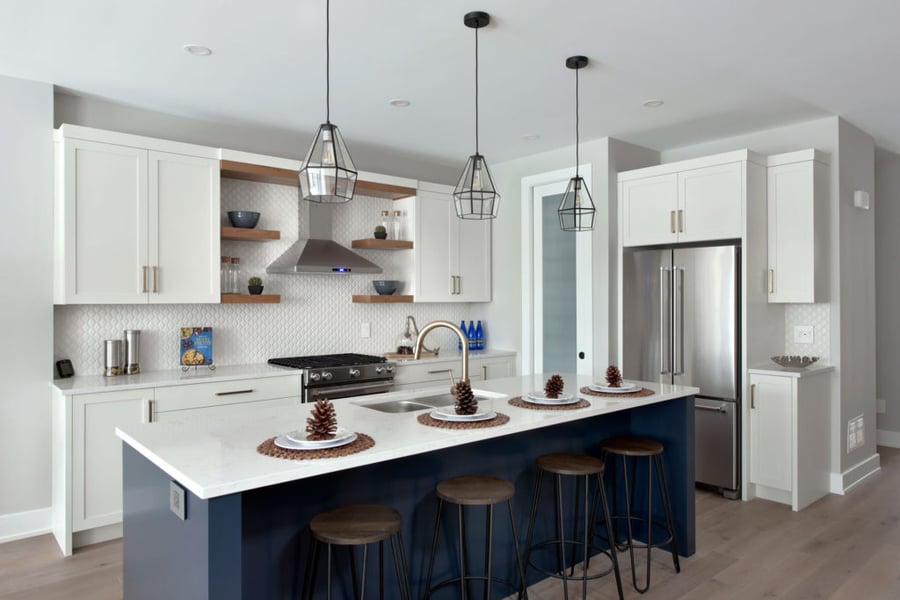
Image Source: www.deslaurier.com
Deciphering the Ideal Kitchen Island Overhang
The kitchen island has evolved from a mere workspace to the heart of the modern home. It serves as a culinary hub, a casual dining spot, and a gathering place for family and friends. A crucial element that dictates its utility and comfort is the kitchen island overhang depth. Getting this right can transform a functional island into a truly inviting space.
What is a Kitchen Island Overhang?
Simply put, a kitchen island overhang is the portion of the countertop that extends beyond the base of the island cabinetry. This extension is what allows for seating, providing a place for people to gather, eat, or simply converse with the cook.
The Importance of Proper Overhang Depth
The right countertop overhang for kitchen island is essential for several reasons:
- Comfortable Seating: It dictates how much seating space for island overhang is available. Too little overhang, and guests will be cramped, their knees bumping against the island’s base.
- Aesthetics: A well-proportioned overhang contributes to the overall visual balance of the kitchen.
- Functionality: Beyond seating, an overhang can provide a surface for placing serving dishes or drinks.
- Safety: While an overhang adds utility, it also needs to be supported appropriately to prevent accidents.
Factors Influencing Your Kitchen Island Overhang
The perfect overhang isn’t a one-size-fits-all answer. Several factors come into play when deciding how much overhang for kitchen island:
Countertop Material and Thickness
The material of your countertop plays a significant role.
- Stone (Granite, Quartz, Marble): These materials are strong and can support substantial overhangs, often up to 12 inches or even more without additional support for standard depths.
- Laminate: Laminate countertops are less structurally sound and typically require more robust support for anything beyond a minimal overhang.
- Wood/Butcher Block: Wood can handle decent overhangs, but its flexibility might require strategic support, especially for deeper extensions.
The thickness of the countertop also matters. Thicker slabs are inherently stronger. A 3cm (1.2 inches) thick slab will support more weight and overhang than a 2cm (0.75 inches) thick slab.
Seating Style and Purpose
Consider how you intend to use the island for seating.
- Casual Dining: If you envision sit-down meals, you’ll need more substantial overhang for comfortable dining.
- Quick Snacks and Drinks: A shallower overhang might suffice for casual perching.
- Work Surface: If the island is primarily a workspace, you might prioritize depth for appliances or prep areas over seating.
Island Size and Shape
The overall dimensions of your island will influence the proportional overhang. A larger island can often accommodate a deeper overhang more gracefully than a smaller one.
Base Cabinet Structure
The design of the island’s base cabinets is critical. An open design with supporting legs or a waterfall edge can accommodate different overhang strategies compared to a fully enclosed cabinet base.
Standard Overhangs for Different Island Heights
Kitchen islands come in various heights, each catering to different uses and seating preferences. The kitchen island overhang depth should align with these heights.
Counter Height Islands (36 inches)
Counter height islands are the most common and versatile. They are at the same level as your main kitchen counters, making them ideal for food preparation and casual dining.
- Minimum Overhang: A minimum overhang for kitchen island at counter height is generally considered to be 4 to 6 inches. This provides a small lip for serving or for someone to rest their arms.
- Standard Overhang: A standard kitchen island overhang for counter height seating is 12 inches. This offers a comfortable space for a standard bar stool, allowing ample room for legs and a plate.
- Maximum Overhang: You can go up to 15 inches for extra comfort, but beyond this, you’ll likely need to consider additional support.
Table 1: Counter Height Island Overhang Recommendations
| Use | Recommended Overhang Depth | Seating Type |
|---|---|---|
| Minimal Extension | 4-6 inches | Serving, armrest |
| Standard Seating | 10-12 inches | Counter stools, casual dining |
| Enhanced Comfort | 15 inches | Comfortable dining, more legroom |
Bar Height Islands (42 inches)
Bar height islands mimic the height of a standard bar. They are ideal for a more formal dining or social setting.
- Minimum Overhang: For bar height islands, a 10-inch overhang is a good minimum overhang for kitchen island for comfortable seating.
- Standard Overhang: A common countertop overhang for kitchen island at bar height is 12 to 15 inches. This accommodates bar stools with more legroom.
- Maximum Overhang: You can push this to 18 inches for maximum comfort, but ensure adequate support.
Table 2: Bar Height Island Overhang Recommendations
| Use | Recommended Overhang Depth | Seating Type |
|---|---|---|
| Comfortable Seating | 10-12 inches | Bar stools |
| Enhanced Comfort | 15 inches | More legroom |
| Generous Space | 18 inches | Deeper seating comfort |
Table Height Islands (30 inches)
While less common for islands, some opt for table height for a more integrated dining experience.
- Minimum Overhang: For table height, aim for at least 12 inches of overhang to allow for comfortable seating with chairs.
- Standard Overhang: 15 inches is a good standard for ample legroom.
- Maximum Overhang: Depending on the base and material, you could go up to 18-20 inches, but support becomes paramount.
Table 3: Table Height Island Overhang Recommendations
| Use | Recommended Overhang Depth | Seating Type |
|---|---|---|
| Comfortable Seating | 12-15 inches | Dining chairs |
| Enhanced Comfort | 18-20 inches | More legroom |
Seating Space and Knee Clearance: The Comfort Factor
When planning your kitchen island overhang, the primary driver is comfort for those who will be seated there. This means considering both the overhang depth and the necessary how much knee space kitchen island requires.
Seating Space for Island Overhang Calculations
A good rule of thumb for comfortable seating is to allow at least 15 inches of depth for each person. This means a 15-inch overhang provides a single person with adequate space. If you plan to seat two people side-by-side, you’ll need to consider the width of the island in addition to the overhang depth.
How Much Knee Space Kitchen Island Needs
Beyond the overhang itself, the base of your island can impede comfort.
- Cabinetry: If your island has standard cabinet bases, the overhang needs to be deep enough to clear the front of the cabinets.
- Aprons or Decorative Panels: Some island designs incorporate decorative aprons or panels that can also reduce knee space.
- Support Structures: Any overhang support for kitchen island must be strategically placed so it doesn’t interfere with seated guests.
Key Consideration: Aim for a minimum of 12 inches of clearance between the edge of the overhang and any obstruction (like cabinetry or supports) for comfortable legroom. For longer sitting periods, 15 inches is even better.
Overhang Support: When and How to Reinforce
Not all overhangs require additional support, but as you increase the depth, proper support becomes crucial for structural integrity and safety.
When is Support Needed?
- Overhangs Exceeding 6 Inches: For stone countertops, an overhang of more than 6 inches typically requires some form of support.
- Laminate Countertops: Even smaller overhangs (over 4-6 inches) on laminate might benefit from support.
- Deeper Overhangs (10+ inches): Any overhang exceeding 10 inches, especially on heavier materials or for seating, will almost certainly require reinforcement.
Types of Overhang Support for Kitchen Island
- Knee Braces: These are angled supports that run from the island’s base up to the underside of the countertop. They are effective but can sometimes interfere with legroom.
- Countertop Support Brackets: These are often L-shaped metal brackets that attach to the island’s base and extend under the countertop. They are a popular choice as they are less obtrusive than knee braces.
- Hidden Brackets: For a cleaner look, consider specialized hidden brackets that mount to the island’s internal framing or plywood sub-top.
- Gussets: These are triangular supports that can be integrated into the island’s construction.
- Waterfall Edges: If your island has a waterfall edge where the countertop material continues down the sides, this can provide inherent support for a certain depth of overhang.
- Plywood Sub-Top: A thick plywood sub-top (3/4 inch or thicker) can add rigidity to the countertop itself and provide a solid surface for attaching brackets.
- Structural Supports Within the Cabinetry: For very deep overhangs, integrating structural posts or beams within the island’s frame might be necessary.
Choosing the right support depends on:
- Countertop Material and Thickness: Heavier materials and thinner slabs need stronger support.
- Depth of Overhang: The deeper the overhang, the more robust the support needed.
- Intended Use: An overhang used for dining will experience more weight than one used for occasional display.
- Aesthetic Preferences: Some supports are more visible than others.
Practical Considerations and Best Practices
Beyond the numbers, a few practical tips can ensure your kitchen island overhang is a success.
Planning for Seating Arrangements
- Stool Clearance: Ensure there’s enough width for each stool. Generally, allow 24 to 30 inches of width per person seated at the island.
- Traffic Flow: Don’t let the overhang or seating arrangement obstruct essential pathways in your kitchen.
Bar Height Island Overhang vs. Counter Height Island Overhang Recap
It’s worth reiterating the distinction:
- Counter Height (36″): Best for casual dining and a seamless extension of your kitchen workspace. Typically 10-15 inches of overhang is ideal for comfortable seating.
- Bar Height (42″): More akin to a traditional bar, often with higher stools. This height benefits from a slightly deeper overhang, generally 12-18 inches for optimal comfort.
Minimum Overhang for Kitchen Island for General Use
If seating isn’t the primary concern, a minimal overhang of 1.5 to 2 inches is often all that’s needed for a clean edge and to protect the cabinet fronts from spills. However, for any practical seating, you’ll need to go significantly deeper.
The 10-15 Inch Rule of Thumb
For most residential kitchens, especially those incorporating seating, the 10- to 15-inch kitchen island overhang depth strikes the best balance between comfort, practicality, and aesthetic appeal.
- 10 Inches: Functional for most counter stools, offering basic legroom.
- 12 Inches: The sweet spot for comfortable seating at counter height.
- 15 Inches: Provides generous legroom and enhances dining comfort.
Working with Your Designer or Fabricator
Always consult with your kitchen designer or countertop fabricator. They have the expertise to:
- Advise on the appropriate support for your chosen countertop material and overhang depth.
- Ensure the overhang integrates seamlessly with the island’s cabinetry design.
- Confirm local building codes or recommendations regarding overhangs and supports.
Visualizing Your Kitchen Island Overhang
Sometimes, seeing is believing. Consider these methods to visualize your chosen overhang:
- Cardboard Mock-ups: Cut out cardboard to the proposed overhang dimensions and place it on your island’s base. This gives a tangible feel for the space.
- Online Design Tools: Many kitchen planning software and websites allow you to experiment with different island dimensions and overhangs.
- Showrooms: Visit kitchen showrooms to see examples of islands with various overhangs and seating arrangements.
Frequently Asked Questions (FAQ)
Q1: What is the standard kitchen island overhang for seating?
The standard kitchen island overhang for comfortable seating is typically between 10 and 15 inches.
Q2: How much knee space do I need for island seating?
You should aim for at least 12 inches of knee space between the edge of the overhang and the island’s base cabinetry for comfortable seating. 15 inches is even better for longer periods.
Q3: Can I have an overhang without visible supports?
Yes, with careful planning and the right materials, you can achieve a “floating” overhang using hidden brackets or by ensuring the countertop material extends to the floor in a waterfall design. The feasibility depends on the material and the depth of the overhang.
Q4: What’s the maximum overhang I can have without supports?
This varies greatly by material. For granite or quartz, a 6-inch overhang is often acceptable without additional support. For laminate, this is much less, typically around 4-6 inches maximum. Always check with your fabricator.
Q5: How much overhang is needed for dining versus just sitting?
For dining, where people will be seated for longer durations and likely have plates, a deeper overhang (12-15 inches) is recommended for comfort. For casual perching, 10 inches might suffice.
Q6: Does the thickness of the countertop affect the overhang support needed?
Yes, thicker countertops are inherently stronger and can support a greater overhang without additional support. A 3cm slab will support more than a 2cm slab.
Q7: What if my island is L-shaped or has an irregular shape?
The same principles apply, but the support strategy might need to be tailored. Corners and curves can present unique challenges for even weight distribution and require specialized bracketry or internal framing.
Conclusion
Choosing the right kitchen island overhang is a vital step in creating a functional, comfortable, and beautiful kitchen. By considering your countertop material, intended use, seating preferences, and the overall design of your island, you can determine the perfect kitchen island overhang depth. Prioritize comfortable seating space for island overhang and adequate how much knee space kitchen island requires, and don’t hesitate to invest in appropriate overhang support for kitchen island. A well-planned overhang will make your kitchen island the cherished gathering spot it’s meant to be.