
What is the perfect kitchen countertop height? The standard kitchen counter height is 36 inches from the floor to the top of the countertop. This is the most common measurement and works well for most people.
Designing a kitchen is about more than just choosing pretty cabinets and shiny appliances. It’s about creating a space that is functional, comfortable, and a joy to use. A crucial element in this functionality is the height of your kitchen countertops. Get it wrong, and you could find yourself bending awkwardly to chop vegetables or straining to reach items. Get it right, and your kitchen becomes a seamless extension of your culinary endeavors. This guide delves into the nuances of kitchen counter height, exploring what makes a countertop “perfect.”
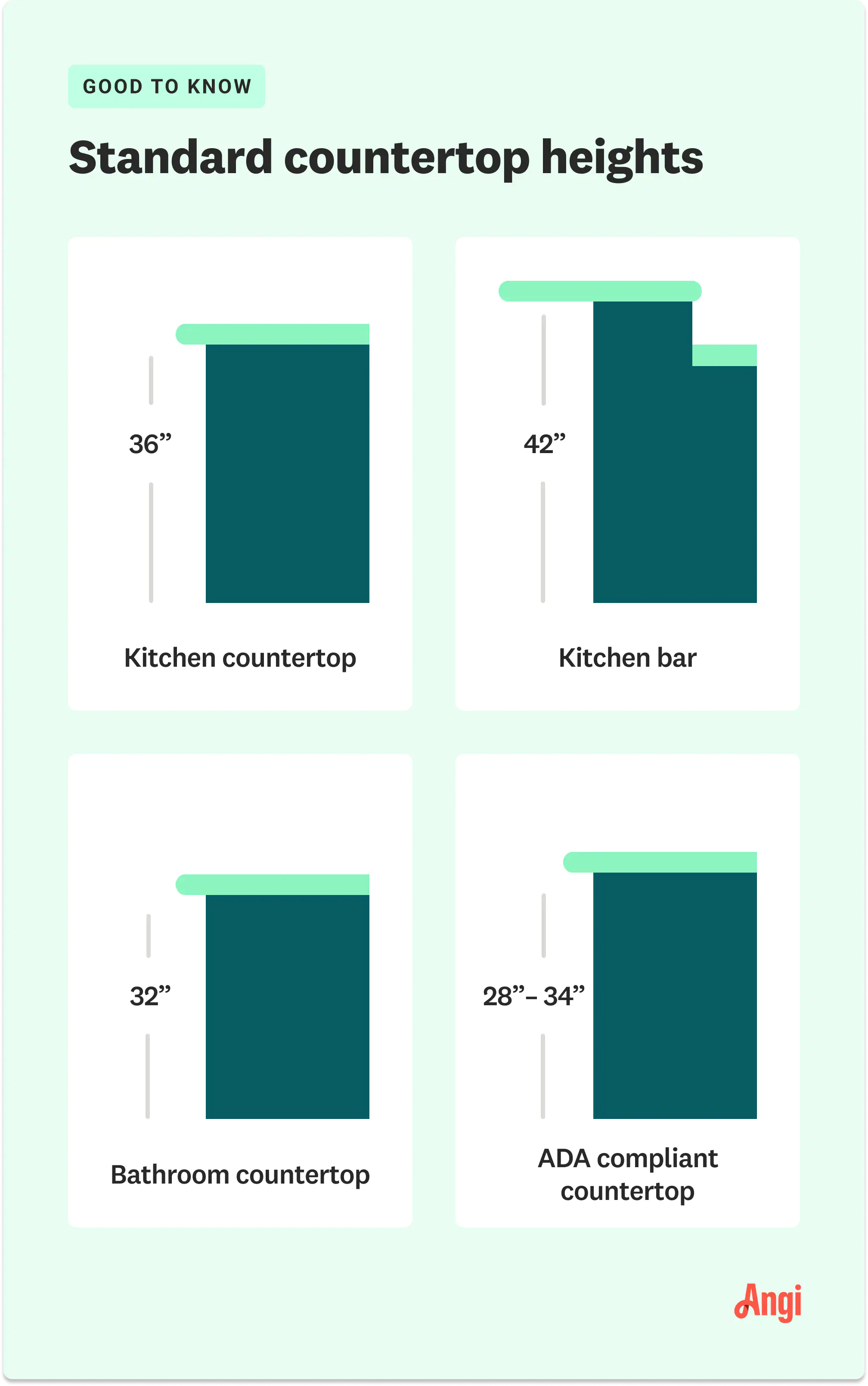
Image Source: media.angi.com
The Foundation: Standard Kitchen Counter Height
For decades, a standard counter height has been established, primarily driven by cabinet manufacturers and ergonomic considerations. This standard ensures a baseline of usability across a wide range of kitchens.
- The 36-Inch Standard: As mentioned, 36 inches (91.44 cm) is the widely accepted standard kitchen counter height. This measurement is taken from the finished floor to the top surface of the countertop. This height is generally comfortable for a majority of adults for everyday tasks like food preparation, washing dishes, and general use. It also aligns with the typical height of standard base cabinets, which are usually 34.5 inches tall, with the countertop adding the remaining 1.5 inches.
This work surface height is not arbitrary. It’s based on a compromise that aims to accommodate the average human stature. However, as we will explore, personal needs and preferences can lead to deviations from this norm.
Deciphering Cabinet Height and Its Role
The cabinet height is intrinsically linked to the final countertop height. Base cabinets form the structural foundation upon which countertops rest.
- Standard Base Cabinet Dimensions: Typically, base cabinets stand 34.5 inches tall. This height, when combined with a standard 1.5-inch thick countertop, results in the familiar 36-inch kitchen counter height.
- Adjusting for Customization: While 34.5 inches is standard, custom cabinetry can be ordered in different heights to achieve specific work surface height requirements. This flexibility is key for individuals who find the standard height uncomfortable.
Beyond the Standard: Factors Influencing Your Perfect Height
While 36 inches is the benchmark, the “perfect” height is a highly personal equation. Several factors come into play when determining what works best for your kitchen.
Individual Height and Ergonomics
The most significant factor is the height of the people who will primarily use the kitchen.
- The Average Adult: The 36-inch height is designed for the average adult, often calculated using ergonomic data from the mid-20th century.
- Shorter Individuals: If the primary user of the kitchen is significantly shorter than average, a lower countertop height can greatly improve comfort and reduce strain. A height of 32-34 inches might be more suitable.
- Taller Individuals: Conversely, taller individuals may find a 36-inch counter too low, leading to back strain. Countertops elevated to 38-40 inches can provide a more comfortable work surface height.
- Multiple Users: In households with a significant height difference between primary users, a compromise height or even varied heights for different zones within the kitchen might be considered. For instance, a baking station could be at a slightly different height than the main prep area.
Types of Kitchen Tasks
Different activities in the kitchen benefit from different work surface heights.
- General Prep: The standard 36 inches is generally good for most general chopping, slicing, and mixing.
- Baking: Many bakers prefer a slightly lower surface for kneading dough. A height that allows them to stand upright with their elbows at a 90-degree angle while their hands are on the surface is often ideal. This could translate to a counter around 30-33 inches for some.
- Washing Dishes: If you spend a lot of time at the sink, the sink height can become a critical factor. A sink that is too deep or too shallow relative to the countertop can cause discomfort. Many integrated sinks are designed to be flush with the countertop, maintaining the overall height. Undermount sinks can slightly reduce the effective countertop height depending on their depth.
- Appliance Use: Consider the height of appliances that integrate into or sit on the counter. For example, a built-in microwave or a stand mixer’s working height.
Accessibility and ADA Compliance
For individuals with disabilities or mobility issues, accessibility standards are paramount. The Americans with Disabilities Act (ADA) provides guidelines for accessible kitchens.
- ADA Counter Height: The ADA specifies a minimum clear floor space for wheelchair maneuverability. For countertops, ADA recommends a maximum height of 34 inches for accessible sections, with a minimum of 27 inches of clear knee space. This allows a wheelchair user to comfortably approach and use the counter.
- Consideration for All: Even if full ADA compliance isn’t a requirement, incorporating elements of accessible design can create a more universally usable kitchen.
Countertop Depth and Counter Overhang
While height is crucial, countertop depth and the counter overhang also play a role in the overall usability and feel of the workspace.
- Standard Countertop Depth: The standard countertop depth is typically 25 inches for base cabinets, providing a substantial workspace. This measurement is from the front edge of the cabinet to the back.
- Counter Overhang: The counter overhang is the portion of the countertop that extends beyond the face of the cabinets. A standard overhang is usually 1.5 inches. This overhang is important for:
- Seating: Allowing knees to fit comfortably under the counter when used as a breakfast bar.
- Aesthetics: Providing a finished and substantial look.
- User Comfort: Preventing users from bumping their shins against the cabinet face.
- Considerations: A larger overhang may require stronger cabinet support, especially for heavier countertop materials.
Varied Heights for Varied Needs: Zones in the Kitchen
Many modern kitchens are designed with different functional zones, and this concept can extend to varying countertop heights.
The Main Prep Area
This is typically the largest and most frequently used section of the countertop.
- The 36-Inch Standard: For most, the 36-inch height will serve as the primary prep area.
- Ergonomic Adjustment: As discussed, adjust this height based on the primary user’s stature. A simple test: stand at your current counter, and if your elbows are significantly bent when chopping, it might be too high. If you have to hunch over, it might be too low.
The Baking Station
Kneading dough, rolling out pastry, and working with batter often feel more natural at a lower surface.
- Custom Height: Consider a dedicated baking area with a countertop height of 30-33 inches. This can be achieved with custom base cabinets or by using a sturdy, lower piece of furniture as a dedicated baking station.
- Integrated Features: Some baker’s kitchens include pull-out rolling pins or built-in cutting boards that can be at specific heights.
The Island or Bar Area
Kitchen islands often serve multiple purposes, including casual dining and entertaining.
- Standard Kitchen Island Height: A standard kitchen island height usually mirrors the main countertops, at 36 inches. This creates a cohesive look and feel.
- Bar Height Counter: If the island is intended for more formal seating, it might be raised to bar height counter (typically 42 inches). This allows for standard bar stools. However, a 42-inch height may not be ideal for food preparation.
- Peninsula and Breakfast Bars: These can be at the standard 36-inch height, a comfortable dining height of 30 inches (table height), or a counter height of 36 inches with an extended counter overhang for seating.
The Potting Bench or Utility Sink Area
For areas with a utility sink or where you might be potting plants, a lower, more durable surface can be beneficial.
- Practicality Over Perfection: A slightly lower height, perhaps 32-34 inches, can make it easier to lean over a sink or work with larger items.
Practical Steps to Determine Your Ideal Countertop Height
Before committing to a specific height, it’s wise to test and measure.
Testing Heights in Your Current Space
- Measure Existing Surfaces: Pay attention to surfaces in your home or elsewhere that feel comfortable to work at. Is it your dining table? A sturdy workbench? Measure their work surface height.
- Mock-up Stations: If possible, create temporary mock-up stations in your kitchen with boxes or furniture at different heights to simulate the feel of working at them.
Considering Cabinet Options
- Standard vs. Custom: Decide if standard height cabinets will suffice or if custom cabinetry is needed to achieve a specific height. Custom cabinets offer greater flexibility but come at a higher cost.
- Stock Cabinet Modifications: Sometimes, stock cabinets can be modified by adding or removing leg levelers or adjusting their base to achieve a slightly different height.
Material Matters
The thickness of your chosen countertop material will influence the final height.
- Thicker Materials: Granite, quartz, and marble slabs are typically 3 cm (approximately 1.2 inches) or 2 cm (approximately 0.75 inches) thick. A thicker slab will naturally raise the kitchen counter height.
- Laminate: Laminate countertops are often built on a particleboard core and can be 1.5 inches thick, contributing to the standard height.
- Butcher Block: Butcher block can vary in thickness, offering another way to fine-tune the work surface height.
- Tile: Tiled countertops often have a thicker substrate and grout lines, which can also affect the final height.
The Counter Overhang Calculation
Remember that the counter overhang impacts the usable depth and the aesthetic.
- Seating Requirements: If you plan to have seating at an island or peninsula, ensure the overhang is sufficient (at least 10-15 inches) for comfortable legroom.
- Structural Support: Longer overhangs may require additional support, such as corbels or a thicker countertop material, to prevent sagging.
Common Heights and Their Applications
Here’s a quick reference table for common countertop heights:
| Height | Application | Notes |
|---|---|---|
| 30 inches | Dining Table Height | Comfortable for seated dining, sometimes used for a specific baking station. |
| 32-34 inches | Lowered Work Surface / Accessible Countertop | Ideal for shorter individuals, children, or individuals requiring ADA compliance. |
| 36 inches | Standard Kitchen Counter Height / Prep Area / Island | The most common height, suitable for the majority of users and tasks. |
| 38-40 inches | Taller Work Surface | Beneficial for taller individuals to reduce back strain. |
| 42 inches | Bar Height Counter | Used for casual dining or entertaining, requires bar stools. Not ideal for primary food preparation. |
Frequently Asked Questions (FAQ)
Q1: Can I have different countertop heights in my kitchen?
A1: Absolutely! Many modern kitchens incorporate varied countertop heights to optimize functionality for different tasks and users. This could include a lower baking station or a higher bar-height island.
Q2: What is the standard countertop depth?
A2: The standard countertop depth is typically 25 inches for base cabinets, providing a generous workspace in front of the cabinets.
Q3: How much counter overhang is standard?
A3: The typical counter overhang is 1.5 inches. This allows for comfortable use and a finished look. For seating, a larger overhang (10-15 inches) is recommended.
Q4: How does sink height affect the kitchen counter height?
A4: The sink is usually integrated into the countertop. If you have a very deep sink or a sink with a significant lip, it can affect the perceived and actual work surface height around the sink area. Flush-mounted or undermount sinks tend to maintain the primary countertop height more consistently.
Q5: What is the best kitchen counter height for someone who is very tall?
A5: For taller individuals, a kitchen counter height of 38-40 inches is often more comfortable. This reduces the need to bend over, minimizing back strain during food preparation.
Q6: Is there a difference between a standard kitchen island height and a bar height counter?
A6: Yes. A standard kitchen island height is typically 36 inches, matching main countertops. A bar height counter is usually 42 inches, designed for bar stools and casual seating rather than direct food preparation.
Q7: What is the ADA counter height requirement?
A7: The ADA recommends a maximum counter height of 34 inches for accessible sections, with at least 27 inches of clear knee space underneath.
Q8: How do I choose the right counter overhang?
A8: The counter overhang depends on the intended use. For seating, a 10-15 inch overhang is comfortable. For purely aesthetic purposes or minimal use, a standard 1.5-inch overhang is common. Always consider the structural integrity of your countertop and cabinet supports for larger overhangs.
By carefully considering these elements, you can move beyond the standard counter height and create a kitchen that is perfectly tailored to your needs, ensuring comfort, efficiency, and enjoyment for years to come.