
Thinking about how to become a chef on Hell’s Kitchen? It’s a dream for many culinary enthusiasts! Can you actually make it onto the show? Yes, you can, but it takes a lot of preparation and the right approach. This guide will walk you through the entire Hell’s Kitchen application process, from understanding the requirements to nailing your audition. If you’re serious about competing in this high-stakes reality cooking show, this is your roadmap to submitting a successful Hell’s Kitchen application.
For aspiring chefs, the allure of Hell’s Kitchen is undeniable. The chance to train under the legendary Gordon Ramsay, push your culinary limits, and prove your skills on a national stage is a powerful motivator. However, getting there is a challenge in itself. The Hell’s Kitchen casting requirements are stringent, and the competition is fierce. This comprehensive guide will demystify the process, offering insights into what the producers are looking for and how you can stand out from thousands of applicants.
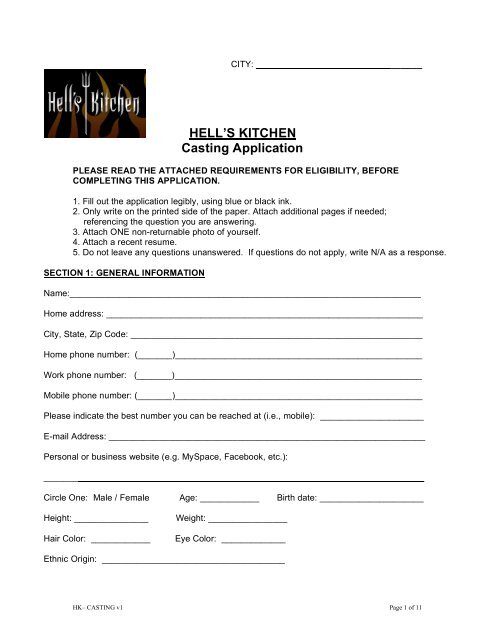
Image Source: img.yumpu.com
Deciphering the Hell’s Kitchen Application Process
Applying for Hell’s Kitchen isn’t just about sending in a resume. It’s a multi-stage journey designed to identify individuals with the talent, personality, and resilience needed for a demanding reality TV environment. The producers are looking for more than just great cooks; they want compelling characters who can handle pressure, thrive under criticism, and create engaging television.
Step 1: Initial Eligibility Criteria
Before you even think about filling out an application, it’s crucial to know if you meet the basic Hell’s Kitchen eligibility criteria. These are the non-negotiables that can disqualify you from the outset.
- Age: You must be 18 years of age or older at the time of application.
- Citizenship/Residency: Typically, you need to be a legal resident of the United States or have the legal right to work in the US. Specific visa requirements may apply for non-US citizens.
- Professional Culinary Experience: While not strictly requiring a formal culinary degree, you must have significant professional cooking experience. This means working in a professional kitchen, whether as a sous chef, line cook, private chef, or similar role. Home cooks or those with only hobbyist experience are generally not considered.
- No Prior Major Reality TV Appearances: While past minor TV appearances might be okay, significant roles on other reality competition shows can be a disqualifier.
- Availability: You must be able to commit to the entire filming schedule, which can be several weeks and may require you to be away from your current job and location.
Step 2: Finding the Application
The primary way to start your journey to become a chef on Hell’s Kitchen is by keeping an eye on official casting calls.
- Official Websites: The most reliable source is the official website of the production company or the network that airs Hell’s Kitchen (often FOX in the US). They will announce when casting is open.
- Casting Agencies: Production companies often work with casting agencies. Searching for “reality TV casting calls” or “Hell’s Kitchen casting” online can lead you to these agencies.
- Social Media: Follow official Hell’s Kitchen social media accounts and reputable casting news sites.
Step 3: Crafting Your Application
This is where you make your first impression. A well-crafted application is essential for moving forward in the competitive cooking show auditions.
The Online Application Form
When casting is open, you’ll typically find an online application. This will involve:
- Personal Information: Name, age, contact details, current location.
- Culinary Background: Detailed information about your professional experience, including restaurants worked at, positions held, and length of employment. Be honest and accurate.
- Culinary Philosophy: A brief description of your cooking style, signature dishes, and what makes you unique as a chef.
- Why Hell’s Kitchen?: Your motivation for wanting to be on the show. This is a crucial section to showcase your passion and drive.
- References: You may need to provide references from former employers or colleagues.
The Application Video (Crucial!)
Most reality cooking show applications require a video submission. This is your chance to shine and show your personality.
- Showcase Your Skills: Prepare a dish and film yourself cooking it. Talk through the process, explain your choices, and present the final dish beautifully.
- Highlight Your Personality: Be energetic, engaging, and authentic. Let your personality come through. producers are looking for individuals who are dynamic and will make good television.
- Tell Your Story: Why do you want to be on Hell’s Kitchen? What are your culinary dreams? What makes you a compelling contestant? Share your passion and any interesting personal anecdotes that relate to your culinary journey.
- Keep it Concise: While detailed, your video should be engaging and not overly long. Aim for 3-5 minutes.
- Good Quality: Ensure good lighting, clear audio, and a stable camera. You don’t need a professional studio, but it should be watchable.
Table: Key Elements for Your Application Video
| Element | What to Focus On | Why It’s Important |
|---|---|---|
| Introduction | Your name, where you’re from, and your current role/title. | Establishes your identity immediately. |
| Culinary Passion | What drives your cooking? What are your culinary heroes? | Shows your genuine love for food and the craft. |
| Signature Dish | Prepare and present a dish that represents your style. | Demonstrates your cooking ability and creativity. |
| Cooking Process | Explain what you’re doing and why. | Shows your knowledge and ability to articulate your culinary decisions. |
| Personality/Energy | Be yourself! Be enthusiastic, funny, or passionate. | Producers need engaging personalities for television. |
| Why Hell’s Kitchen? | Clearly state your motivation and what you hope to gain from the experience. | Shows your commitment and understanding of the show’s demands. |
| Call to Action | A brief closing that reiterates your interest and eagerness. | Leaves a lasting impression. |
Preparing for Your Audition: Going Beyond the Application
If your initial Hell’s Kitchen application gets noticed, you might be invited to an audition. This is where the real pressure starts, and you need to be prepared to showcase your skills and personality in person.
Stage 1: The Initial Interview/Audition
This is often a group or individual interview with a casting director or producer.
- Be Prepared for Questions: They will likely ask about your experience, your cooking style, your strengths and weaknesses, and how you handle stress.
- Showcase Your Personality: This is your chance to be charismatic and memorable. Be confident, articulate, and show your passion for cooking.
- Be Honest: Authenticity is key. Don’t try to be someone you’re not.
Stage 2: The Cooking Challenge (If Applicable)
Sometimes, initial auditions involve a practical cooking challenge. This could be:
- Cooking a Signature Dish: You might be asked to prepare a dish you’ve described in your application.
- Mystery Basket Challenge: You could be given a basket of ingredients and asked to create a dish on the spot.
- Technical Skills Test: You might be asked to perform specific culinary techniques.
Tips for the Cooking Challenge:
- Stay Calm: This is crucial. Hell’s Kitchen is known for its intensity. Practicing in stressful environments can help.
- Taste Your Food: Constantly taste and adjust seasoning.
- Presentation Matters: Make your dish look as good as it tastes.
- Cleanliness: Maintain a clean workspace throughout the challenge.
- Follow Instructions: Pay close attention to any instructions given.
Stage 3: The Callback and Final Stages
If you impress in the initial stages, you might be invited for further interviews or cooking challenges. These can become increasingly rigorous.
- Psychological Evaluation: Some shows may conduct assessments to gauge your mental fortitude and ability to handle pressure.
- Medical Check-ups: Health and fitness are important for the demanding schedule.
- Final Interviews: More in-depth discussions with producers and potentially network executives.
What the Casting Directors Are Looking For: Beyond the Plate
When you try to apply for reality TV, especially a show like Hell’s Kitchen, it’s essential to grasp that producers are curating a narrative. They are looking for specific traits that will make for compelling television.
Culinary Prowess
This is the baseline. You need to be a competent chef.
- Technical Skills: Can you execute classic and modern cooking techniques?
- Flavor Profiles: Do you have a good palate? Can you balance flavors?
- Creativity: Can you innovate and create unique dishes?
- Consistency: Can you replicate dishes and maintain quality under pressure?
Personality and Charisma
This is where many applicants fall short. Being a great cook is only part of the equation.
- Strong Personality: Are you opinionated, passionate, or have a unique point of view?
- Ability to Handle Criticism: Gordon Ramsay’s feedback is notoriously harsh. Can you take it and learn from it, or will you crumble?
- Drama and Conflict: While not advisable to seek out conflict, a willingness to engage in passionate discussions about food, or stand up for yourself, can be what producers look for.
- Coachability: Are you open to learning and adapting?
- Storytelling Ability: Can you articulate your journey, your passion, and your aspirations in a compelling way?
Resilience and Tenacity
The Hell’s Kitchen environment is a pressure cooker.
- Stress Management: How do you perform when things go wrong? Do you panic, or do you problem-solve?
- Work Ethic: Are you willing to put in the long hours and hard work required?
- Teamwork (and Conflict): Can you work with a team, but also stand out as an individual?
The “X-Factor”
This is hard to define but is often what sets contestants apart.
- Uniqueness: Do you have a distinct style, background, or story that makes you memorable?
- Passion: Is your love for food palpable?
- Potential for Growth: Do you show promise and the ability to learn and improve throughout the competition?
Common Pitfalls to Avoid When Applying
Submitting a Hell’s Kitchen application is competitive, and many aspiring chefs make common mistakes that can hinder their chances.
Mistake 1: Not Being Authentic
- Problem: Trying to be someone you’re not, or exaggerating your experience.
- Solution: Be genuine. Let your real personality and passion shine through. Honesty about your background is crucial.
Mistake 2: Poor Video Quality
- Problem: Blurry footage, bad audio, or a boring presentation.
- Solution: Invest time in making your video clear, engaging, and visually appealing. Good lighting and clear sound are essential.
Mistake 3: Lack of Professional Experience
- Problem: Applying without sufficient professional culinary background.
- Solution: Ensure you meet the minimum experience requirements. Focus on showcasing your professional achievements.
Mistake 4: Not Showing Personality
- Problem: A video or application that is purely technical and lacks charisma.
- Solution: Inject your personality. Be enthusiastic, energetic, and let your passion for cooking be evident.
Mistake 5: Not Researching the Show
- Problem: Not knowing the format, the challenges, or the intensity of Hell’s Kitchen.
- Solution: Watch past seasons. Understand the types of challenges, the critiques, and the overall atmosphere. This will help you tailor your application and prepare for auditions.
Frequently Asked Questions About Applying for Hell’s Kitchen
Q1: Do I need a culinary degree to apply for Hell’s Kitchen?
A1: No, a formal culinary degree is not strictly required. However, extensive professional experience working in a professional kitchen is essential.
Q2: How often does Hell’s Kitchen cast for new seasons?
A2: Casting calls are typically announced when a new season is being planned. Keep an eye on official casting websites and networks.
Q3: What if I have experience in a non-traditional culinary role, like catering or private cheffing?
A3: Yes, these experiences can be valuable. As long as they demonstrate professional skill, consistency, and the ability to perform under pressure, they can be considered. Be sure to highlight the professional aspects of your roles.
Q4: Can I apply if I have worked in kitchens internationally?
A4: Yes, international professional experience is often valued. You may need to provide documentation to verify your experience and legal right to work in the US if cast.
Q5: What is the age limit for Hell’s Kitchen?
A5: You must be at least 18 years old at the time of application to be eligible.
Q6: How important is personality in the Hell’s Kitchen application process?
A6: Personality is incredibly important. Producers look for individuals who can create engaging television. While culinary skill is paramount, charisma, resilience, and the ability to handle criticism are equally vital.
Q7: What kind of dishes should I showcase in my application video?
A7: Showcase a dish that represents your unique culinary style and skills. It should be well-executed, flavorful, and visually appealing. Explain your choices and passion for the dish.
Q8: Can I apply if I’ve appeared on other TV shows?
A8: It depends on the nature of the prior appearance. Significant roles on other reality competition shows might disqualify you. Minor, non-competitive appearances may be permissible, but it’s best to be upfront in your application.
Q9: How can I make my Hell’s Kitchen application stand out?
A9: Be authentic, showcase your unique culinary voice, demonstrate strong personality and passion, ensure high-quality video submission, and highlight any unique or compelling aspects of your culinary journey and background.
Q10: What happens after I submit my application?
A10: If your application is successful, you will likely be contacted by a casting producer for an initial interview or audition. This is followed by further stages of evaluation if you progress.
Becoming a chef on Hell’s Kitchen is a challenging but achievable goal for talented and driven individuals. By thoroughly preparing, showcasing your skills and personality, and understanding what the casting directors are truly looking for, you can significantly increase your chances of success. Good luck with your Hell’s Kitchen application!