
Figuring out the perfect height for your television in the living room is a common question. The general rule for optimal TV height is to mount the center of the screen at eye level when you’re seated in your primary viewing position. This ensures the most comfortable and immersive TV viewing distance, preventing neck strain and allowing you to enjoy your favorite shows and movies without discomfort.
Mounting your TV on the wall can transform your living room, creating a sleek, modern look and freeing up valuable space. However, the height at which you mount it is crucial for both aesthetics and viewing comfort. Too high, and you’ll be craning your neck. Too low, and it might feel awkward or be easily obstructed. This guide will walk you through everything you need to know to achieve the best height for TV in your home.
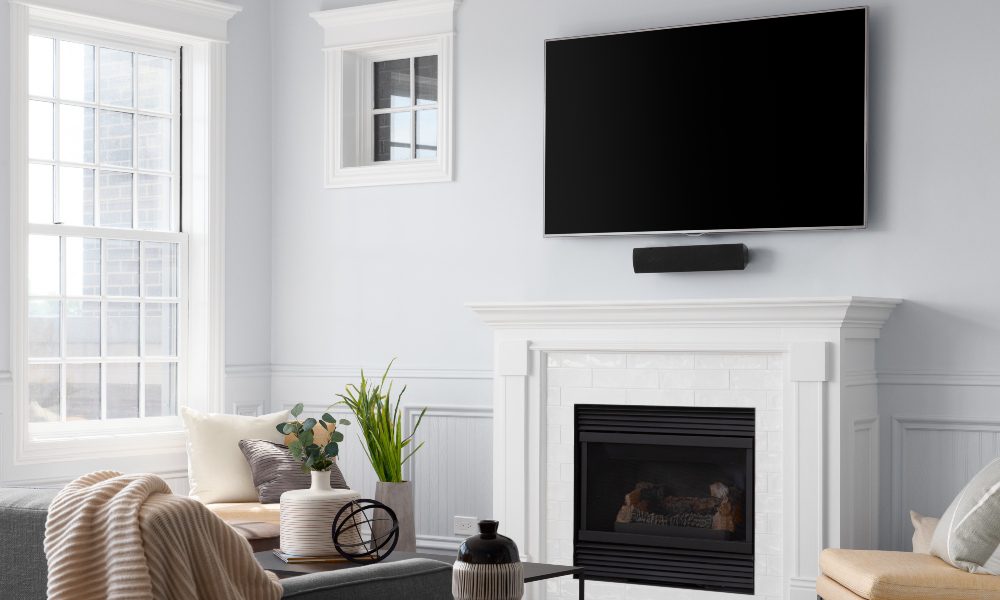
Image Source: www.cepro.com
Deciphering the Ideal TV Mounting Height
The core principle behind the best height for TV is ensuring the center of the screen aligns with your seated eye level. This isn’t a one-size-fits-all measurement because it depends heavily on your personal preferences and the furniture you use. Let’s break down the factors that influence this decision.
Key Considerations for TV Placement
When deciding on living room TV placement, several elements come into play. Think about where you’ll be sitting, what kind of seating you have, and the overall layout of your room.
- Seating Height: The height of your sofa or chairs is a primary determinant. If you have a low-profile couch, your eye level will be lower than if you’re sitting in a tall, plush armchair.
- Viewing Angle: You want to avoid looking up or down at the screen for extended periods. An ideal setup minimizes neck strain by keeping your gaze relatively straight ahead.
- Room Dimensions: The size of your living room and the distance between your seating and the TV are important. This relates directly to TV viewing distance, which impacts how large a screen you can comfortably enjoy.
- Screen Size: Larger screens might feel overwhelming if mounted too high, as they will dominate the visual field.
- Other Furniture: Consider how the TV placement interacts with bookshelves, fireplaces, or other wall features. You don’t want the TV to look out of place or be overshadowed.
The Eye Level Rule: A Closer Look
The concept of eye level TV mounting is the cornerstone of comfortable viewing. Here’s how to determine your specific eye level:
- Sit in Your Usual Spot: Get comfortable on your sofa or favorite chair in the living room.
- Have Someone Measure: Ask another person to measure the distance from the floor to your eyes.
- Add a Buffer: Once you have your eye level measurement, you’ll use this as a reference point for the bottom third or middle of your TV screen.
For example, if your seated eye level is 42 inches from the floor, you’ll want the bottom of your TV to be around 40-42 inches from the floor, or the center of the screen to be roughly at that height.
Average TV Height: What the Experts Say
While personal preference is key, there are general guidelines based on common furniture heights and viewing habits. The average TV height for wall mounting often places the bottom of the screen between 24 and 42 inches from the floor.
However, remember that the “average” might not be your “ideal.” This range is a good starting point, but it’s always best to measure your own eye level.
Calculating Your Optimal TV Mounting Height
Let’s get down to the specifics of how high to mount TV in living room for your unique setup. This involves a bit of simple math and careful measurement.
Step-by-Step Measurement Guide
Here’s a practical method to determine the best height for TV mounting:
- Identify Your Primary Viewing Spot: Choose the seat from which you’ll most often watch television.
- Measure Your Eye Level: Sit comfortably and have someone measure from the floor to your eyes. Let’s call this measurement ‘E’.
- Determine the Screen’s Center Point: You need to know the exact height of your TV’s center. Measure the total height of your TV and divide it by two. Let’s call this ‘S/2’.
-
Calculate the Mounting Height: The ideal mounting height (H) for the center of the TV is your eye level (E). So, the mounting point on the wall should be at a height where, when the TV is hung, its center aligns with ‘E’.
-
Formula: Mounting Height (H) = Eye Level (E)
-
Practical Application: If your eye level (E) is 42 inches, you want to mount the bracket so the center of your TV screen is at 42 inches from the floor.
-
Important Note: Most wall mounts have a way to adjust the TV’s position slightly up or down from the mounting bracket itself. Factor this into your final measurement. You’ll typically measure from the floor to the desired center height, then mark where your wall mount’s fixing points should go, accounting for the TV’s position on the mount.
-
Visualizing the Process
Imagine you have a 55-inch TV. The physical height of the TV might be around 28 inches. If your eye level is 42 inches, you’d mount the TV so that its center is at 42 inches. This means the bottom of your TV would be approximately 42 inches (center height) – (28 inches / 2) = 42 – 14 = 28 inches from the floor.
Table 1: Example Calculation for Optimal TV Mounting Height
| Factor | Measurement |
|---|---|
| Seated Eye Level (E) | 42 inches |
| TV Screen Height | 28 inches |
| Half Screen Height (S/2) | 14 inches |
| Target Center Height (E) | 42 inches |
| Estimated Bottom Height | 28 inches |
This example illustrates how to use your personal measurements to find the best height for TV.
Considering TV Screen Height and Viewing Distance
The size of your screen, often referred to as TV screen height, plays a role in how high you mount it. A larger screen requires a greater TV viewing distance to maintain comfort and immersion.
- Smaller Screens (Under 40 inches): Often feel comfortable when the bottom is around 30-36 inches from the floor.
- Medium Screens (40-55 inches): A common range places the bottom of the screen between 30-40 inches from the floor, aligning the center with eye level.
- Larger Screens (55+ inches): These can sometimes benefit from being mounted slightly lower, or you might need to ensure your seating is further back to maintain a comfortable viewing angle. The center-to-eye-level rule still applies, but the overall impression of the screen in the room becomes more significant.
The recommended TV viewing distance can be roughly calculated by multiplying the diagonal screen size by 1.2 to 2.5. For a 55-inch TV, this would be between 66 and 137.5 inches (5.5 to 11.5 feet). Ensure your chosen mounting height complements this distance.
Factors Influencing Your Living Room TV Placement
Beyond the basic eye-level rule, several other elements can sway your decision on living room TV placement.
Seating Arrangements and Furniture
The type and arrangement of your furniture are critical.
- Sofa vs. Chairs: If you have a sectional sofa, your primary viewing spot might be the longest part. If you primarily use accent chairs, consider the average height of those.
- Recliners: If your recliners recline significantly, your eye level might change. It’s best to find a height that works when the chairs are in their most common upright position.
- Coffee Tables: The height of your coffee table can also influence how high the TV looks. You don’t want the TV to be so high that it feels disconnected from the living area.
Room Layout and Aesthetics
The overall design and flow of your living room are important considerations.
- Fireplaces: Mounting a TV above a fireplace is popular but often leads to the TV being mounted too high. If this is your only option, ensure the fireplace is not excessively tall and consider a mount that can tilt down. Even then, prioritize eye-level viewing from your main seating.
- Wall Features: If you have artwork or shelving, you’ll need to integrate the TV placement harmoniously.
- Natural Light: Consider glare from windows. Sometimes tilting the TV down slightly can help, but the ideal mounting height is still paramount.
Mount Type: Fixed, Tilting, or Full-Motion
The type of TV mount you choose can impact the final height and adjustability.
- Fixed Mounts: These hold the TV flat against the wall. The mounting height is critical as there’s no adjustability.
- Tilting Mounts: Allow the TV to tilt downwards, which can be beneficial if the TV is mounted slightly higher than ideal. This is a good compromise for rooms with fireplaces or high ceilings.
- Full-Motion (Articulating) Mounts: Offer the most flexibility, allowing the TV to be pulled out, tilted, and swiveled. This is excellent for large rooms or spaces with multiple viewing angles, but the base mounting height still needs to be correct.
Common Pitfalls to Avoid When Wall Mounting TV
Even with the best intentions, miscalculating the TV mounting height can lead to an uncomfortable viewing experience.
The “Too High” Trap
This is the most common mistake. Many people mount their TVs based on the top of the screen or the sheer desire to make it a focal point, forgetting the ergonomic aspect. This results in neck pain and a less enjoyable viewing experience. Always measure from your seated eye level to the center of the screen.
Ignoring Viewing Distance
Mounting a large TV too close to the seating area, regardless of height, can be overwhelming and cause eye strain. Adhering to the recommended TV viewing distance is just as important as eye level TV mounting.
Glare from Windows or Lights
Failure to consider light sources can lead to reflections on the screen, making it difficult to see. While a tilting mount can help, the ideal placement should minimize direct light hitting the screen.
Mount Stability and Wall Type
Ensuring your mount is securely attached to the wall is paramount for safety. Different wall types (drywall, brick, concrete) require different mounting hardware and techniques. Always use the appropriate anchors and studs for secure wall mounting TV.
Tips for Achieving the Perfect TV Height
Here are some practical tips to ensure you nail your TV mounting height:
Test Before You Drill
- Use a Template: Many TV mounts come with cardboard templates. Tape these to your wall at your proposed height and step back to visualize.
- Hold the TV (Carefully): If possible, have two people hold the TV at the intended height against the wall to get a real feel for the comfortable viewing height.
Consider Future Furniture Changes
While you can’t predict everything, think about whether you might get a different sofa or change your seating arrangement in the future. Try to aim for a height that offers some flexibility.
The 1/3 Rule as a Guideline
For a more relaxed viewing experience, some suggest positioning the center of the TV screen about one-third of the way down from the top of the screen to your eye level. This means the bottom of the screen would be slightly below your eye level. This can feel more natural for longer viewing sessions.
Professional Installation
If you’re unsure or dealing with complex wall types, consider hiring a professional installer. They have the experience and tools to ensure your TV is mounted safely and at the correct height.
FAQs About TV Mounting Height
Here are some common questions people ask about how high to mount TV in living room:
Q1: What is the general rule for TV mounting height?
A1: The general rule is to mount the center of the TV screen at your seated eye level.
Q2: Can I mount my TV above my fireplace?
A2: You can, but it’s often not ideal as it usually leads to mounting the TV too high, causing neck strain. If you do, use a tilting mount and measure your eye level from your primary seating position.
Q3: My TV is very large. Does that change the mounting height?
A3: The principle of mounting to eye level remains the same. However, with larger TVs, you’ll also need to ensure an adequate TV viewing distance to avoid the screen feeling overwhelming.
Q4: What is the best height for TV if I have a sectional sofa?
A4: Identify the main seating position on the sectional and measure your eye level from that spot. Mount the TV so the center aligns with that eye level.
Q5: How do I account for the thickness of my TV and mount when calculating height?
A5: Measure the total height of your TV. Divide that by two to find the center point relative to the TV’s physical dimensions. Then, factor in the distance from the TV’s center mounting holes to the physical center of the TV itself (this varies by model and mount). It’s often easiest to measure from the floor to your eye level, mark that spot on the wall, and then figure out where the mount’s bracket needs to attach so the TV’s center lands on that mark.
Q6: Is there an average TV height that works for most people?
A6: While personal preference varies, the bottom of the TV is often mounted between 24 and 42 inches from the floor, with the center ideally at seated eye level.
Q7: How does TV screen height affect mounting?
A7: The larger the TV screen height, the more important it is to maintain the correct TV viewing distance and ensure the center is at eye level to prevent the screen from dominating the room uncomfortably.
By following these guidelines, you can ensure your wall mounting TV project results in a comfortable, enjoyable, and aesthetically pleasing viewing experience in your living room. Remember, personalization is key, so always measure for your specific setup to find that truly comfortable viewing height.