
What is the ideal kitchen island clearance? The ideal kitchen island clearance is generally considered to be 36 inches (91.4 cm) on all sides where traffic will flow, but 42-48 inches (107-122 cm) is even better for comfortable movement, especially in high-traffic areas or where multiple people will be working.
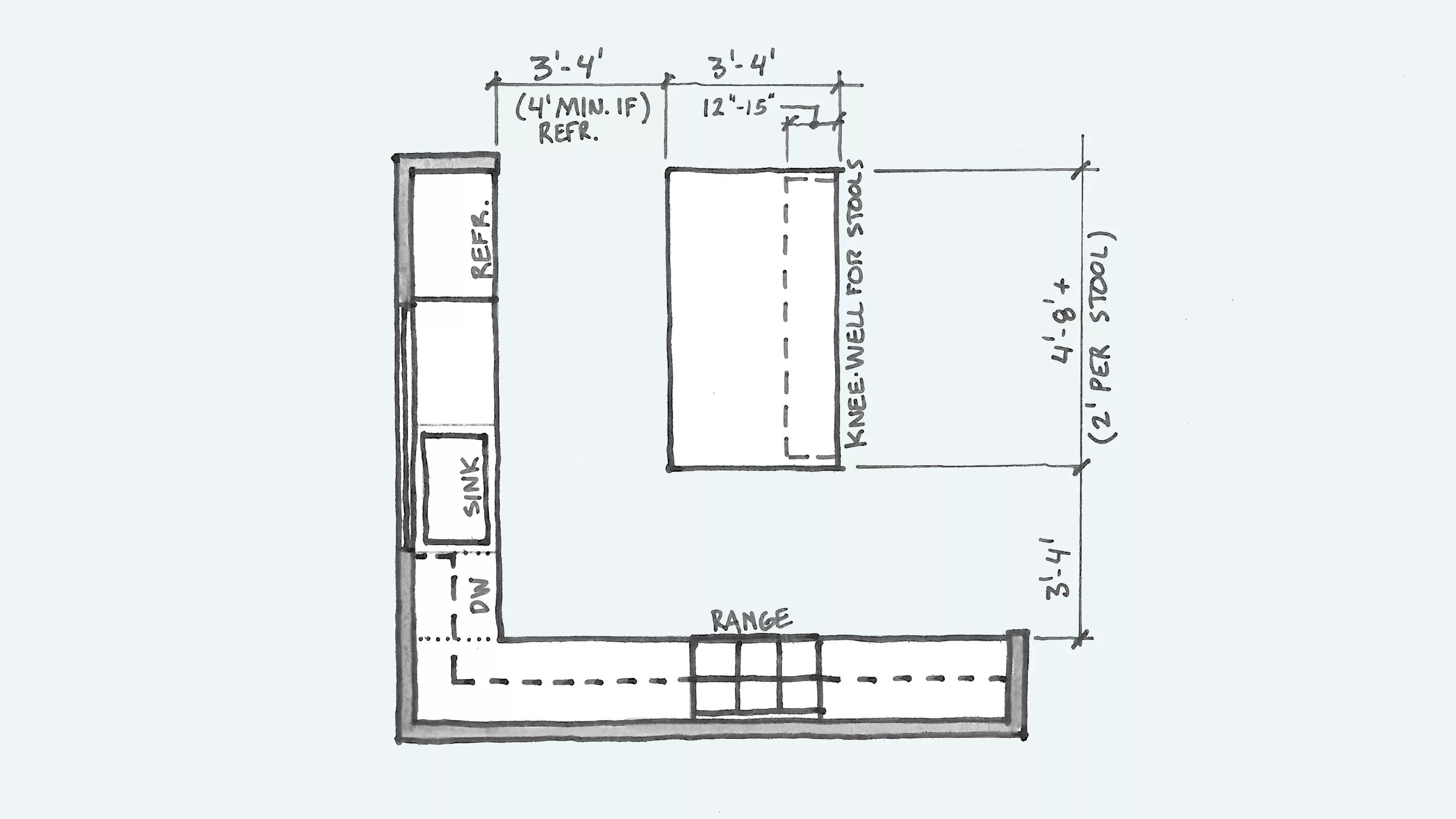
Image Source: www.boardandvellum.com
Deciphering Ideal Kitchen Island Spacing
Creating a functional and beautiful kitchen often hinges on the proper placement and spacing of its centerpiece – the kitchen island. Too small, and it feels lost; too big, and it chokes the flow. The amount of room around a kitchen island is critical for both usability and safety. This isn’t just about aesthetics; it’s about creating an efficient “island work triangle” and ensuring everyone can move around comfortably. Let’s delve into the specifics of kitchen island clearance.
The Core Principle: Navigating Your Kitchen
Imagine cooking or preparing food. You need to open cabinets, pull out drawers, move between appliances, and perhaps have someone else in the kitchen with you. Without adequate walkway around kitchen island space, these simple actions become frustrating obstacles. This is where kitchen island spacing guidelines come into play. They are designed to create a smooth, intuitive flow of movement within your kitchen.
Why Is Kitchen Island Clearance So Important?
Adequate space around your island serves several vital purposes:
- Safety: Prevents bumps and trips, especially when carrying hot items or sharp utensils.
- Functionality: Allows for easy access to all kitchen zones – the sink, refrigerator, and stovetop – forming a cohesive island work triangle.
- Comfort: Provides room for people to stand, sit, and move without feeling crowded.
- Accessibility: Ensures that everyone, including those with mobility aids, can navigate the kitchen with ease.
- Cabinet and Appliance Access: Lets you fully open appliance doors (like ovens and dishwashers) and cabinet doors without obstruction.
Standard Kitchen Island Clearance: The Minimum Requirements
When planning your kitchen layout, adhering to minimum clearance recommendations is the first step. These are the universally accepted guidelines that ensure basic functionality.
The 36-Inch Rule (91.4 cm)
A 36-inch (91.4 cm) walkway around a kitchen island is often cited as the minimum acceptable clearance. This allows one person to comfortably walk past the island. It’s sufficient for basic passage and helps in keeping the main thoroughfares clear.
- When 36 inches works:
- In smaller kitchens where space is at a premium.
- On sides where there are no major work zones or high-traffic paths.
- Where the island is primarily for serving or occasional use.
The 42-48 Inch Sweet Spot (107-122 cm)
For most kitchens, aiming for 42-48 inches (107-122 cm) of clearance is highly recommended. This offers a more generous and comfortable space for movement.
- Why 42-48 inches is better:
- Allows two people to pass each other comfortably.
- Provides enough room for someone to stand at the island while another person works in the adjacent zone.
- Facilitates easier opening of appliances like ovens and dishwashers located on the sides of the island.
- Creates a more relaxed and less congested feel in the kitchen.
The 48-Inch (122 cm) Ideal for Heavy Traffic
If your kitchen is a central hub for your household, or if you frequently have multiple people cooking or entertaining, then 48 inches (122 cm) or even slightly more is ideal. This provides ample space for active use and prevents bottlenecks.
Kitchen Island Placement: Where You Position Matters
The kitchen island placement isn’t just about finding empty space; it’s about integrating it seamlessly into your kitchen’s workflow. Consider the existing layout of your appliances and cabinetry.
Working with the Island Work Triangle
The classic kitchen work triangle connects the sink, refrigerator, and stovetop. Your island should be positioned so it doesn’t disrupt this essential flow.
- Avoid blocking: The island should not create a barrier between these key work zones.
- Enhance flow: An island can actually enhance the work triangle by providing additional prep space between the sink and stove.
Clearance Considerations for Specific Island Features
Different features around your island necessitate varying clearances.
Counter Seating Clearance
If your island includes counter seating clearance, you’ll need more space.
- Seating Depth: Allow at least 15 inches (38 cm) for comfortable legroom when seated at the island. If the seating is all on one side, this is usually sufficient. If seating is on multiple sides, ensure there’s enough room for people to get in and out.
- Passage Behind Seating: When people are seated, you need space for others to walk behind them. This is where the 42-48 inch guideline becomes particularly important. You need enough room for someone to stand comfortably behind a seated person, and for others to pass by.
Cabinet and Appliance Clearance
Don’t forget to account for the space needed to operate cabinets and appliances.
- Cabinet Doors: Ensure cabinet doors on the island and surrounding countertops can open fully without hitting each other or the island.
- Appliance Doors: Ovens, dishwashers, and even refrigerator doors need ample clearance. If a dishwasher is next to the island, you’ll need at least 48 inches (122 cm) from the island to the dishwasher to allow the door to open fully. The same applies to oven doors.
Kitchen Island Size Guide: Matching Size to Space
The size of your island is directly linked to the available space and the clearances you can maintain. A kitchen island size guide helps ensure you don’t choose an island that’s too dominant or too insignificant for your kitchen.
Calculating Your Kitchen’s Footprint
Before choosing an island, measure your kitchen’s available space accurately.
- Measure the total length and width of the room.
- Identify existing cabinetry and appliance locations.
- Sketch out potential island placements.
Island Dimensions and Proportions
The kitchen island dimensions should be proportionate to the overall kitchen size.
Minimum Kitchen Island Depth
The minimum kitchen island depth is typically 24 inches (61 cm) for standard countertops, but this can vary based on design and function.
- Standard Counter Depth: Most kitchen countertops are 24 inches deep.
- Island Depth for Seating: If you’re incorporating seating, you might need a deeper island to accommodate comfortable legroom, potentially 36 inches (91.4 cm) or more, including the overhang.
Standard Island Lengths
Island lengths can vary dramatically, from small, mobile carts to large, multi-functional structures.
- Small Islands: 3 feet (91 cm) to 4 feet (122 cm)
- Medium Islands: 5 feet (152 cm) to 6 feet (183 cm)
- Large Islands: 7 feet (213 cm) and up
Common Layouts and Their Spacing Needs
Let’s look at how spacing applies to different kitchen layouts.
Galley Kitchens
In a galley kitchen, the island is placed between two parallel runs of cabinets.
- Clearance: You need at least 48 inches (122 cm) between the island and each countertop to allow for comfortable passage and access. This is a critical kitchen island guideline for galley layouts.
- Consideration: Ensure cabinet doors and appliance doors can open without hitting the island or the opposite wall.
L-Shaped and U-Shaped Kitchens
These layouts often provide more flexibility for island placement.
- Placement: Islands can be placed parallel to one of the arms of the L or U, or centered in the open space.
- Clearance: Maintain at least 36-48 inches (91.4-122 cm) around the island, paying special attention to the “work zones” of the kitchen. If the island is in a main traffic path, more clearance is essential.
Open Concept Kitchens
In open-plan living spaces, the island often serves as a visual divider and a central gathering point.
- Generous Spacing: More space is generally available here, so you can opt for larger islands and more generous clearances (48 inches or more).
- Traffic Flow: Consider how people will move from the kitchen into the dining or living areas. The island should not create a bottleneck.
Factors Influencing Your Kitchen Island Clearance
Beyond the general rules, several specific factors might influence your kitchen island clearance needs.
Kitchen Size and Shape
- Small Kitchens: Require precise measurements and adherence to minimums. Consider islands with wheels or pull-out extensions.
- Large Kitchens: Allow for more flexibility, potentially larger islands, and more expansive walkways.
Island Functionality
- Prep Stations: Islands used heavily for food preparation need ample space around them for multiple cooks.
- Seating Areas: Islands with seating require more clearance behind the seats.
- Appliance Integration: Islands with sinks, stovetops, or ovens need careful consideration for door and drawer clearance.
Number of Users
- Single User: Minimum clearances might suffice.
- Family Kitchen: More space is crucial for accommodating multiple people moving about.
- Entertaining Hub: When hosting, you’ll want as much open space as possible.
Designing Your Island for Optimal Flow
Let’s think about the design elements that impact space.
Island Shape
- Rectangular Islands: The most common, they require consistent clearance on all sides.
- Curved or Kidney-Shaped Islands: Can offer more fluidity and may require slightly adjusted clearances to avoid sharp corners.
Overhangs for Seating
- Counter Seating: If you plan for seating, ensure an adequate overhang. Typically, 10-12 inches (25-30 cm) is sufficient for seated diners. This depth is added to the minimum kitchen island depth of the cabinetry.
- Clearance Impact: Remember that the overhang adds to the island’s overall footprint, so you need to factor that into your walkway calculations.
Practical Tips for Planning Your Island Space
Here are some actionable tips to help you get your spacing just right.
Use Painter’s Tape
- Mark it Out: Before committing to an island size or placement, use painter’s tape on your floor to outline the island’s dimensions and its proposed location.
- Test the Flow: Walk around the taped area. Open imaginary cabinet doors, imagine sitting at it, and simulate cooking activities. This helps you feel the space.
Consider Visual Weight
- Perceived Size: Even if the dimensions are correct, a visually bulky island might make the space feel smaller. Lighter designs, open shelving, or a more slender profile can help.
Prioritize Main Pathways
- High-Traffic Zones: Ensure that the primary routes through your kitchen (e.g., from the refrigerator to the sink, or from the entrance to the main work area) have the most generous clearances.
Don’t Forget Utility Lines
- Plumbing and Electrical: If your island will have a sink or electrical outlets, ensure there’s enough space for the necessary installations without compromising structural integrity or clearance.
Frequently Asked Questions About Kitchen Island Clearance
Here are some common questions people have about kitchen island spacing.
-
Q1: What is the absolute minimum clearance I can get away with?
A1: While 36 inches is the generally accepted minimum for walkways, in very tight spaces, some might go down to 30-32 inches on one side if it’s not a primary traffic path. However, this can feel cramped and is not ideal for functionality or safety. Always aim for 36 inches or more. -
Q2: Can I put an island in a small kitchen?
A2: Yes, you can, but you must be very strategic. Consider smaller, mobile islands, or islands with built-in storage that can serve multiple purposes. Ensure you maintain at least 36 inches of clearance on all sides where movement is expected. -
Q3: How much space do I need behind island seating?
A3: You need at least 42 inches (107 cm) of clearance from the edge of the island (including the overhang) to the nearest obstruction (like a wall or other cabinet) to allow people to sit and for others to pass behind them comfortably. Ideally, aim for 48 inches. -
Q4: What if I have a dishwasher next to my island?
A4: This is a critical point. You need enough space for the dishwasher door to open fully, which is typically around 24-27 inches (61-69 cm). Therefore, you need at least 48 inches (122 cm) of clearance between the island and the dishwasher. -
Q5: Does the type of cabinets or appliances affect clearance?
A5: Yes, significantly. Appliance doors (like refrigerators, ovens, and dishwashers) require the most clearance. Standard cabinet doors require less, but you still need enough space to open them fully without obstruction. Islands with pull-out drawers also need clearance for the drawers to extend completely.
By carefully considering these kitchen island guidelines and tailoring them to your specific kitchen, you can ensure your island is a functional, beautiful, and safe addition to your home. Remember, the goal is to create a kitchen that flows seamlessly, making every task from cooking to entertaining a pleasure.