
Can you replace a kitchen drawer yourself? Yes, you absolutely can! Replacing a kitchen drawer is a manageable DIY project for most homeowners. Whether your existing drawer is damaged, you’re upgrading your kitchen, or you simply need to replace worn-out parts, this guide will walk you through the process step-by-step. We’ll cover everything from identifying the problem to installing a brand-new drawer, ensuring a smooth and successful outcome.
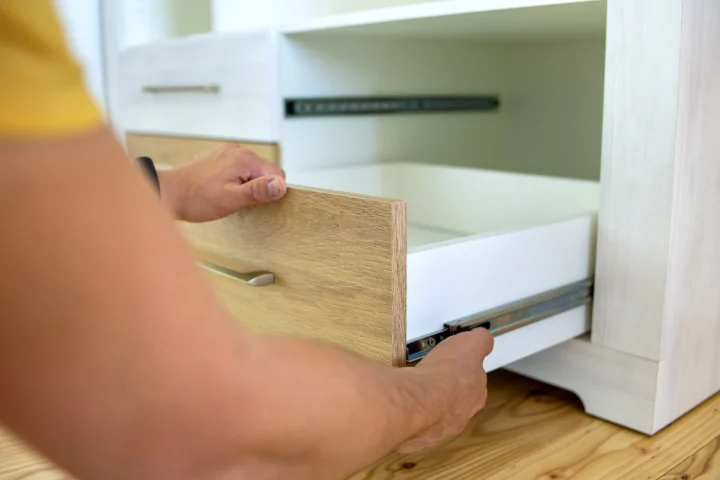
Image Source: www.shelfgenie.com
Why Replace a Kitchen Drawer?
Kitchen drawers take a lot of daily use, leading to wear and tear. Common reasons for needing to replace a kitchen drawer include:
- Damage: Warped wood, broken drawer fronts, or damaged drawer boxes are frequent issues.
- Worn-out Slides: Sticky drawers, drawers that fall off their tracks, or ones that don’t close properly often indicate worn-out drawer slides.
- Hardware Failure: Hinges, handles, or other drawer hardware might break or become loose.
- Aesthetic Upgrade: You might simply want to update the look of your kitchen by replacing old or plain drawer fronts.
- Increased Functionality: Installing new, heavy-duty slides can improve the performance of even intact drawers.
Deciphering Your Drawer Issue: What to Look For
Before you rush out to buy new parts, it’s important to pinpoint exactly what needs replacing. Let’s look at the common components of a kitchen cabinet drawer and what can go wrong.
Key Kitchen Drawer Parts:
- Drawer Front: The visible face of the drawer, often with a handle or knob.
- Drawer Box: The main body of the drawer, typically made of wood or particleboard, holding the contents.
- Drawer Slides/Runners: Metal tracks attached to the cabinet and the drawer box, allowing it to open and close smoothly.
- Drawer Hardware: Handles, knobs, hinges (for some types of drawers), and sometimes internal dividers.
- Drawer Bottom: The base of the drawer box.
Common Problems and Their Causes:
| Problem | Likely Cause | Solution Focus |
|---|---|---|
| Drawer won’t open/close | Damaged or misaligned drawer slides; obstructions. | Replace drawer slides, check for obstructions. |
| Drawer sticks or is wobbly | Worn drawer slides; drawer box is warped or damaged. | Drawer runner repair, drawer box replacement. |
| Drawer front is loose/broken | Loose screws; damaged wood on the drawer box or front. | Tighten screws, kitchen drawer repair, drawer hardware replacement. |
| Drawer falls off tracks | Worn or damaged drawer slides; incorrect installation. | Replace drawer slides, ensure proper alignment. |
| Bottom falls out | Damaged or detached drawer bottom; weak glue. | Drawer box replacement, reinforce the bottom. |
Getting Started: Tools and Materials You’ll Need
Having the right tools makes any DIY job easier and safer. Here’s a list of common items you’ll likely need for replacing a kitchen drawer:
Essential Tools:
- Screwdriver Set: Both Phillips and flathead are crucial. A cordless drill/driver with appropriate bits will speed things up.
- Measuring Tape: For accurate measurements of your cabinet opening and the drawer itself.
- Pry Bar or Putty Knife: For gently separating components if needed.
- Level: To ensure your new drawer is installed straight.
- Safety Glasses: To protect your eyes from dust and debris.
- Gloves: To protect your hands.
- Work Gloves: For better grip and protection.
- Utility Knife: For scoring paint or caulk if necessary.
- Wood Glue: For reattaching any wooden components if you’re repairing rather than replacing.
- Clamps: If gluing is involved.
Potential Materials:
- New Drawer Box: If the original box is beyond repair.
- New Drawer Slides: Crucial if your current ones are worn or broken. Consider the type of slides you need (e.g., ball-bearing, epoxy-coated).
- New Drawer Front: If the original is damaged or you want a new look.
- New Drawer Hardware: Handles, knobs, or pulls.
- Wood Screws: Various sizes, depending on the components you’re reattaching or replacing.
- Sandpaper: For smoothing any rough edges.
- Primer and Paint/Stain: If you’re refinishing the drawer front.
Step 1: How to Remove a Kitchen Drawer
The first step is to safely remove the kitchen drawer from its cabinet. The exact method depends on the type of drawer slides installed.
For Older Style Wood or Metal Runners:
- Empty the Drawer: Remove all items from the drawer.
- Pull the Drawer Out: Gently pull the drawer out as far as it will go.
- Locate Stoppers or Clips: Look for metal clips, pins, or wooden blocks that stop the drawer from sliding out completely. These are usually located on the sides of the drawer or the runners.
- Release the Stoppers: You may need to push a clip upwards or sideways, lift a pin, or dislodge a wooden block. Sometimes, you need to lift the drawer slightly while pulling it forward to clear a stopper.
- Remove the Drawer: Once the stoppers are disengaged, the drawer should slide out completely.
For Modern Ball-Bearing or Epoxy-Coated Slides:
- Empty the Drawer: Remove all contents.
- Extend the Drawer Fully: Pull the drawer out as far as it will extend.
- Locate the Release Lever: On the side of each slide mechanism (attached to the drawer box), you’ll find a small plastic or metal lever. This is the release mechanism.
- Disengage the Lever: Push down on one lever and pull up on the other (or vice-versa, depending on the slide design). This unlocks the slide from the cabinet member.
- Remove the Drawer: With the levers disengaged, you should be able to lift the drawer slightly and pull it away from the cabinet.
Tip: If the drawer is particularly stubborn, a small amount of silicone spray lubricant on the slides might help. Be sure to wipe away any excess.
Step 2: Assessing the Existing Drawer and Slides
Once the drawer is out, take a good look at the components. This is where you’ll determine if you need a full drawer box replacement, drawer hardware replacement, or just a drawer runner repair.
Inspecting the Drawer Box:
- Integrity: Check for cracks, loose joints, warped wood, or water damage.
- Bottom: Ensure the drawer bottom is securely attached and not sagging or coming apart.
- Front/Back: Examine the points where the drawer slides attach. Are they stripped or damaged?
Examining the Drawer Slides:
- Wear and Tear: Look for bent tracks, worn-out rollers, or damaged ball bearings.
- Lubrication: Are they dry or dirty? This can cause fixing sticky drawers.
- Alignment: Are they installed straight and securely screwed to the cabinet and the drawer box?
Step 3: Replacing Drawer Slides
If your slides are damaged, worn, or you’re upgrading, this is a crucial step. You’ll need to replace drawer slides that are compatible with your existing cabinet and drawer box.
Measuring for New Slides:
- Length: Measure the length of the old slides. New slides should generally be the same length or slightly shorter than the drawer box depth to allow for clearance.
- Type: Note the type of slide (ball-bearing, epoxy-coated) and the weight capacity you need.
- Mounting: Check how the old slides were mounted – side-mount, undermount, or center-mount. Side-mount is the most common for kitchen drawers.
Removing Old Slides:
- Locate Screws: Identify all the screws holding the old slides to the drawer box and the cabinet.
- Carefully Unscrew: Using your screwdriver or drill, remove all screws.
- Detach Slides: Gently pull the slide components away from the drawer box and cabinet. If they are stuck with paint or adhesive, use a utility knife to carefully score around the edges.
Installing New Slides:
This is where precision is key.
- Separate Slide Components: Most modern slides come in two parts: the cabinet member (which attaches to the cabinet) and the drawer member (which attaches to the drawer box). You’ll need to separate them, usually by operating the release lever.
- Attach Cabinet Members:
- Positioning: Place the cabinet member inside the cabinet opening, aligning it with the pre-drilled holes where the old slides were. If you don’t have pre-drilled holes or you’re installing into a new cabinet, use a level to ensure it’s perfectly vertical and parallel to the opposite side.
- Mark Holes: Use a pencil to mark the screw hole locations.
- Pre-Drill (Optional but Recommended): Drill pilot holes slightly smaller than your screws to prevent wood splitting.
- Secure: Screw the cabinet member firmly into place. Repeat for the other side.
- Attach Drawer Members:
- Positioning: Align the drawer member with the side of the drawer box, ensuring it’s parallel to the drawer bottom and at the correct height (refer to the slide manufacturer’s instructions).
- Mark Holes: Mark screw locations.
- Pre-Drill: Drill pilot holes.
- Secure: Screw the drawer member firmly to the drawer box. Repeat for the other side.
Important Note: Ensure that the slides on both sides are at the exact same height and angle. This is crucial for a smooth-operating drawer.
Step 4: Drawer Box Replacement or Repair
If your drawer box is damaged, you have a few options.
Option A: Full Drawer Box Replacement
This is often the most straightforward solution for severely damaged boxes.
- Measure Carefully: Measure the dimensions of your old drawer box: height, width, and depth. Also, measure the thickness of the drawer front and back where the sides attach, and the groove for the drawer bottom.
- Purchase or Build a New Box: You can buy pre-made drawer boxes from home improvement stores or cabinet shops, or you can build your own if you have woodworking skills.
- Material: Common materials include pine, birch plywood, or oak.
- Construction: Traditional construction involves dovetail joints for strength, but simpler methods like rabbet joints or dado joints with screws and glue are also effective.
- Transfer Hardware: If your old drawer box has pre-drilled holes for the drawer slides or handle, measure and mark their positions on the new box to ensure correct alignment.
- Assemble the New Box: If you’re building it, assemble the sides, front, and back, ensuring the corners are square. Slide the bottom into the grooves before attaching the final side. Use wood glue and screws for strength.
- Attach Drawer Slides to New Box: Follow the instructions from Step 3 to attach the drawer members of your new slides to the new drawer box.
Option B: Drawer Box Repair
For minor damage, you might be able to repair the existing drawer box. This is a form of kitchen drawer repair.
- Loose Joints: If the joints are loose, carefully disassemble them if possible. Clean off old glue, apply new wood glue, clamp the joint tightly, and re-screw if necessary.
- Cracked Wood: Small cracks can be filled with wood glue and sawdust or a wood filler. Once dry, sand smooth.
- Warped Wood: Warping can be tricky to fix. Sometimes, wetting the wood and clamping it flat can work, but it’s not always successful.
- Damaged Bottom: If the bottom has come loose, re-glue it into the grooves. If it’s cracked or split, you might be able to cut a new piece of thin plywood and glue it into place, possibly reinforcing the original bottom.
Step 5: Reattaching the Drawer Front (If Separated)
Often, the drawer front stays intact while the box or slides fail. If you’ve replaced the drawer box, you’ll need to reattach the original drawer front.
- Align the Front: Position the drawer front against the new drawer box. Ensure it’s centered and level.
- Secure from Inside: Most drawer fronts are attached from the inside of the drawer box using screws.
- Pilot Holes: Locate the old screw holes on the inside of the drawer box, or carefully measure and mark where the front attaches. Drill pilot holes into the drawer front from the inside of the box.
- Screw Together: Drive screws through the inside of the drawer box into the back of the drawer front. Make sure the screws are not too long, as they could go through the front.
Tip: If the drawer front has a decorative overlay, be extra careful to align it perfectly.
Step 6: Installing the New Drawer
Now comes the moment of truth – putting the newly assembled or repaired drawer back into the cabinet.
- Align Drawer Slides: Carefully align the drawer members (on the drawer) with the cabinet members (inside the cabinet).
- Engage Slides: Gently push the drawer in. You should feel and hear the slides engage. You might need to slightly lift or angle the drawer to get the runners to connect properly.
- Test Operation: Once the drawer is back in, test it by opening and closing it several times.
- Does it slide smoothly?
- Does it close completely?
- Is it level?
- Make Adjustments: If it’s not operating correctly, remove the drawer and check the slide alignment. Minor adjustments to the screw positions might be necessary. Sometimes, the cabinet members need to be shimmed slightly to achieve perfect alignment.
Step 7: Drawer Hardware Replacement and Finishing Touches
If you’re updating the look or replacing broken hardware, this is the time.
Replacing Handles or Knobs:
- Remove Old Hardware: Unscrew the old handles or knobs from the drawer front.
- Measure for New Hardware: If the hole spacing (for pulls) is different, you may need to fill the old holes and drill new ones, or choose hardware that uses the existing holes.
- Install New Hardware: Screw the new handles or knobs into place from the inside of the drawer front.
Refinishing the Drawer Front:
If you’ve replaced the drawer front or want to match it to new cabinet doors, you might need to sand, prime, and paint or stain it.
- Prepare the Surface: Lightly sand the drawer front with fine-grit sandpaper. Clean off all dust.
- Prime: Apply a coat of primer, especially if you’re painting. Let it dry completely.
- Paint or Stain: Apply your chosen paint or stain according to the manufacturer’s instructions. You may need multiple thin coats for the best finish.
- Seal: Apply a protective topcoat (like polyurethane or a clear varnish) for durability.
Frequently Asked Questions (FAQ)
Q: How do I fix a kitchen drawer that keeps falling off its slides?
A: This usually means the drawer slides are worn out, damaged, or misaligned. You’ll need to remove the drawer and inspect the slides. Often, the best solution is to replace drawer slides entirely. Ensure the new slides are properly aligned and securely screwed into both the drawer box and the cabinet.
Q: My kitchen drawer is sticky. What’s the easiest fix?
A: First, try cleaning and lubricating the existing drawer runner repair components. Remove the drawer and wipe down the slides with a damp cloth to remove any dirt or debris. Apply a silicone-based lubricant spray or a dry wax lubricant to the runners. If the stickiness persists, the slides may be bent, worn, or the drawer box itself might be warped, requiring more significant kitchen drawer repair.
Q: What’s the difference between drawer slides and drawer runners?
A: The terms are often used interchangeably. “Drawer slides” typically refers to the more modern, often ball-bearing or epoxy-coated metal mechanisms that allow for smooth, guided movement. “Drawer runners” can refer to these as well, or it might also include older, simpler wooden or metal strips that the drawer glides along, often with wheels.
Q: Can I upgrade my old kitchen drawer slides to a smoother type?
A: Yes, absolutely! This is a popular upgrade. You’ll need to remove the old runners/slides, measure your cabinet opening and drawer box, and then purchase new kitchen cabinet drawer slides that are compatible in size and mounting type. Ball-bearing slides are a great upgrade for smoother, quieter operation and higher weight capacity.
Q: How do I know if I need a new drawer box or just new slides?
A: Inspect the entire kitchen cabinet drawer. If the drawer box itself is damaged – it’s warped, has broken joints, or the bottom is falling out – you’ll likely need a drawer box replacement. If the drawer box is structurally sound, but the drawer is sticky, falls out, or the existing slides are bent or broken, then replace drawer slides is the solution.
Q: What are the common materials for drawer boxes?
A: Drawer boxes are commonly made from solid wood like pine or oak, or from sturdy plywood (often birch). Particleboard is also used, especially in less expensive cabinetry, but it’s less durable. The choice of material depends on budget, desired durability, and the aesthetic.
Replacing a kitchen drawer, whether it’s a full drawer box replacement or just drawer hardware replacement, is a rewarding DIY project. By following these steps carefully, you can restore the functionality and appearance of your kitchen cabinets, ensuring your drawers glide smoothly for years to come.