
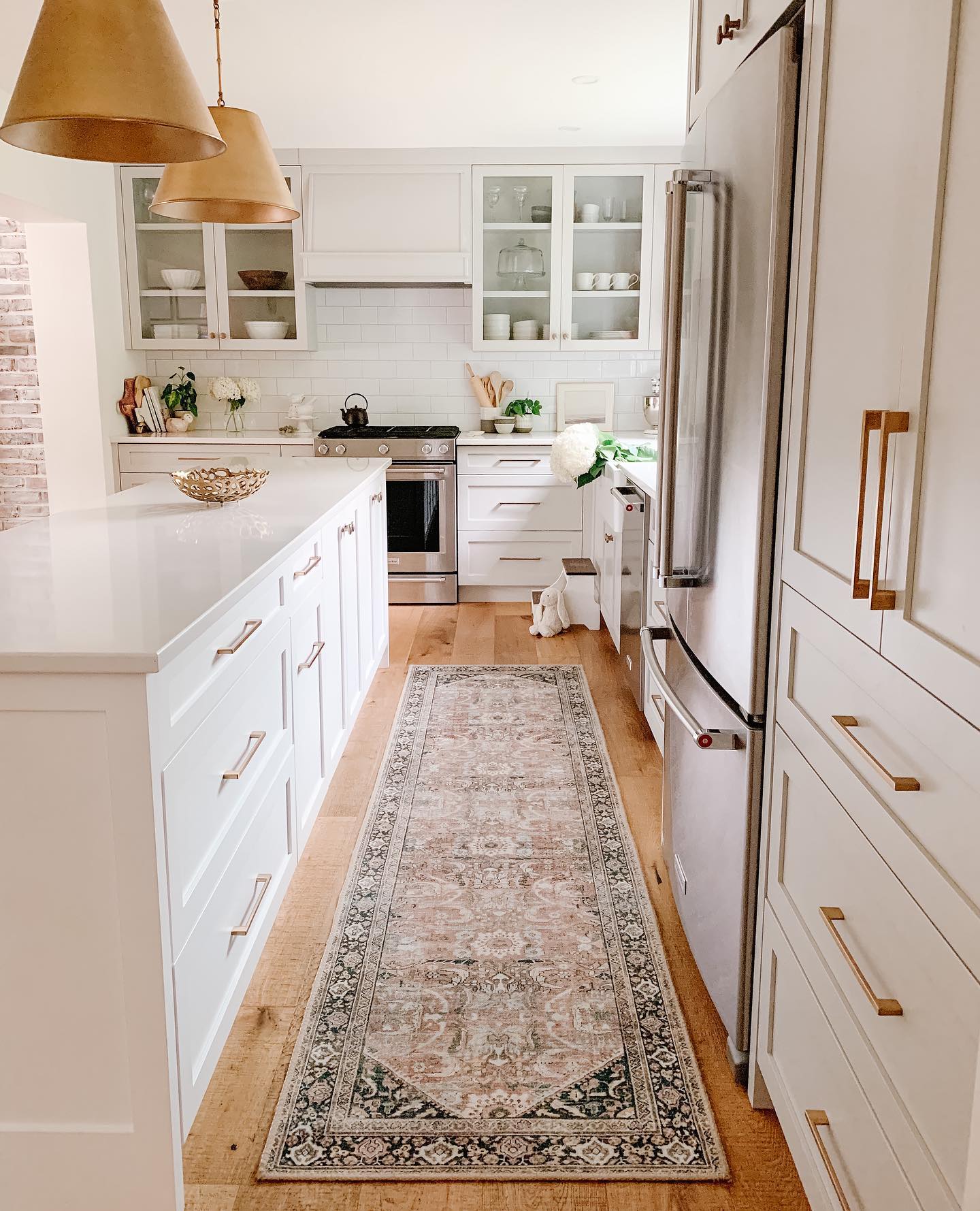
Image Source: image1.rugs-direct.com
How Long Should A Kitchen Runner Be? The Perfect Fit Guide
So, how long should a kitchen runner be? Generally, a kitchen runner should extend at least six inches past the edge of your primary work area, such as a sink or stove, but shouldn’t extend so far that it becomes a tripping hazard or impedes door swings. Finding the appropriate kitchen runner size involves considering your kitchen’s layout, the placement of your appliances, and the overall flow of your space.
Deciphering the Ideal Kitchen Runner Length
Choosing the right kitchen runner isn’t just about aesthetics; it’s about function and safety. A well-placed runner can add comfort underfoot, protect your floors from spills and wear, and tie your kitchen’s design together. But the question that often leaves homeowners scratching their heads is: “How long should my kitchen runner be?” This guide will help you navigate the world of kitchen runner length recommendations and ensure you find the perfect fit for your culinary domain.
Fathoming the Factors Influencing Runner Size
Several key elements come into play when determining the optimal kitchen runner width and length. Think of it as a puzzle where each piece contributes to the final, cohesive picture of your kitchen.
Your Kitchen’s Layout: The Blueprint for Measurement
The shape and size of your kitchen are the primary drivers for selecting a runner. Is your kitchen a galley style, an L-shape, a U-shape, or an open-plan concept? Each layout presents unique considerations for runner placement.
- Galley Kitchens: These long, narrow spaces often benefit from runners that run the full length of the main walkway. This creates a continuous visual line, making the space feel longer and more cohesive. However, ensure the runner doesn’t make the walkway too narrow, which can feel cramped.
- L-Shaped and U-Shaped Kitchens: In these layouts, runners often follow the primary work zones. You might place a runner along the main counter space, or in front of the sink and stove. Consider if you want one long runner or two shorter ones to delineate different areas.
- Open-Plan Kitchens: Here, runners can act as a visual separator between the kitchen and adjoining living or dining areas. They can define the kitchen space without creating physical barriers. The length will often be dictated by the length of the cabinet run or island.
Appliance Placement: Defining the Zones
Your appliances are the anchors of your kitchen’s functionality. The placement of your sink, stove, dishwasher, and refrigerator will heavily influence where a runner is most effective.
- Sink Area: Most people spend a lot of time standing at the sink. A runner here provides much-needed cushioning and helps to absorb water splashes. The runner should be wide enough to comfortably stand on and long enough to extend a bit beyond the sink’s edges.
- Stove/Cooktop Area: This is another high-traffic zone. A runner here can catch dropped food items and provide comfort while cooking. Ensure the runner is made of a heat-resistant material if it’s placed directly in front of the stove.
- Dishwasher: If your dishwasher is located next to the sink, the runner might extend to cover both.
- Island or Peninsula: If you have a kitchen island or peninsula with seating or a prep area, a runner placed in front of it can define the space and add warmth. The length should be enough to cover the primary standing area in front of the island.
Traffic Flow: Ensuring Safe Passage
This is perhaps the most critical factor. A kitchen runner, especially a long kitchen runner placement, needs to allow for unimpeded movement.
- Doorways: Never place a runner so it obstructs the swing of any doors, especially the refrigerator or pantry doors. Measure the swing arc of these doors and ensure your runner stays clear.
- Walkways: Ensure there’s enough space for people to walk comfortably around the runner, especially if it’s in a central pathway. You don’t want to feel like you’re navigating an obstacle course.
- Edge Clearance: A good rule of thumb is to leave at least 18-24 inches of clear floor space on either side of a runner in a walkway.
Measuring for a Kitchen Runner: A Step-by-Step Approach
Getting precise measurements is key to selecting the perfect kitchen runner. Don’t guess; measure!
Step 1: Identify Your Primary Zone
Decide which area or areas you want to cover with a runner. Is it the entire stretch in front of your cabinets, or just the zone around the sink and stove?
Step 2: Measure the Width of the Zone
- For a continuous run of cabinets: Measure the entire length of the cabinet run you wish to cover.
- For a specific appliance area (e.g., sink): Measure the width of the appliance or the counter space immediately surrounding it.
Step 3: Determine the Desired Length
This is where the “how long” question gets answered.
- General Rule of Thumb: For a runner placed in front of cabinets or appliances, aim for it to extend at least six inches past the primary working area (like the sink or stove). For instance, if your sink is 30 inches wide, a 36-inch runner would cover the sink and extend 3 inches on each side. However, many prefer a longer runner for a more substantial look and feel.
- Coverage vs. Proportionality: Consider the overall proportions of your kitchen. A very long kitchen might accommodate a very long runner, while a smaller kitchen will require a more modest length.
- Visual Appeal: Sometimes, you want the runner to fill a specific visual space. If you have a long stretch of flooring you want to break up, measure that entire length, keeping in mind the clearance needed.
Step 4: Consider Runner Width
While this guide focuses on length, optimal kitchen runner width is also important. Standard kitchen runner dimensions often range from 2 to 3 feet wide.
- Too Narrow: A runner that is too narrow might not provide enough coverage for comfortable standing and can look disproportionate.
- Too Wide: A runner that is too wide might impede cabinet doors, appliance doors, or create a cramped walkway. Ensure at least 18-24 inches of bare floor on either side if it’s in a walkway.
Step 5: Mark and Visualize
Use painter’s tape to mark out potential runner lengths on your floor. This allows you to visualize how different sizes will look and interact with your cabinetry and appliances before committing. Walk on the taped areas to check for comfort and ease of movement.
Standard Kitchen Runner Dimensions and Common Sizes
While custom sizes are always an option, most retailers offer runners in standard lengths. Knowing these can help you narrow down your choices.
Common Kitchen Runner Lengths:
- 2 feet (24 inches)
- 3 feet (36 inches)
- 4 feet (48 inches)
- 5 feet (60 inches)
- 6 feet (72 inches)
- 8 feet (96 inches)
- 10 feet (120 inches)
- 12 feet (144 inches)
- 14 feet (168 inches)
- 16 feet (192 inches)
Common Kitchen Runner Widths:
- 20 inches
- 24 inches
- 30 inches
- 36 inches
Table: Matching Runner Length to Kitchen Area Examples
| Kitchen Area Type | Recommended Runner Length (Approximate) | Key Considerations |
|---|---|---|
| In front of Sink | 3-5 feet | Extend 6-12 inches past sink edges; consider water splash area. |
| In front of Stove/Oven | 3-5 feet | Extend 6-12 inches past stove edges; consider heat resistance. |
| Along a Galley Walkway | 6-12 feet (or longer) | Ensure it doesn’t narrow the walkway too much (aim for 36-48 inches of walkway space on each side). |
| In front of Island | 5-8 feet | Should extend past the primary standing/prep area in front of the island. |
| Under a Window | Varies based on window size | Should complement the window’s width without blocking light or being too short to be functional. |
| Connecting Zones | 8-16 feet (or longer) | For larger kitchens or open-plan layouts, a longer runner can visually link different areas. Maintain walkway clearance. |
Runner Rug Length in Kitchen: Visual Harmony
Beyond pure measurement, consider how the runner’s length contributes to the visual appeal of your kitchen.
Proportionality is Key
A runner that is too short can look lost and out of place, while one that is excessively long might overwhelm the space.
- Rule of Thirds (Visual Guideline): Imagine dividing your kitchen space into thirds horizontally. A runner that covers roughly one-third to two-thirds of a particular zone can often achieve a pleasing visual balance. For example, if you have a 10-foot stretch of cabinet, a 4- to 6-foot runner might be visually ideal.
- Symmetry: If you have symmetrical elements, like two identical sinks or two ovens, consider using two equally sized runners for balance.
Creating Zones and Defining Spaces
In open-plan kitchens, a runner can act as a subtle divider.
- Defining the Prep Area: A runner in front of the island or main prep counter visually anchors this functional space.
- Guiding the Eye: A long runner can lead the eye through the kitchen, creating a sense of flow and continuity, particularly in galley-style kitchens.
Long Kitchen Runner Placement: Maximizing Impact and Safety
Longer runners, those exceeding 8 feet, require careful consideration for their placement to maximize their aesthetic and functional benefits while minimizing safety risks.
The Galley Kitchen Advantage
In a galley kitchen, a long runner can make the space feel more cohesive and luxurious. It provides continuous comfort and protection underfoot throughout the main traffic path. The key here is to ensure the runner doesn’t make the walkway feel too narrow. If the total width of your kitchen plus runner exceeds the comfortable walkway width, consider a narrower runner or a shorter one.
Open-Plan Flow Enhancement
For open-plan living spaces, a long kitchen runner can beautifully define the kitchen zone from the living or dining area. It can:
- Anchor the Kitchen: It visually separates the kitchen without the need for walls or dividers.
- Create a Pathway: It can serve as a visual pathway from the kitchen to the living area, tying the two spaces together.
- Add Warmth and Texture: It introduces a soft element to a space that might otherwise be dominated by hard surfaces like tile or wood.
Critical Safety Checks for Long Runners
- Tripping Hazards: The ends of long runners are notorious tripping hazards. Ensure the ends are tucked securely under cabinets or furniture, or use anti-slip rug pads.
- Door Obstruction: Double-check that the runner does not interfere with the opening of any cabinet doors, oven doors, or refrigerator doors.
- Moisture Trapping: If placed near a sink, ensure the runner has a non-slip backing and that it can dry properly to prevent mold and mildew.
Kitchen Mat Length Recommendations: Practicality Meets Style
When thinking about kitchen mats, practicality often leads the way, but style should not be forgotten.
- Comfort: Mats are often chosen for their cushioning properties. Longer mats offer more coverage and therefore more comfort for standing for extended periods.
- Protection: They protect your floors from scratches, spills, and heavy foot traffic. A longer mat provides broader protection.
- Cleaning: Consider how easy the mat is to clean. Longer runners can be more cumbersome to launder or spot clean.
Best Length for Kitchen Runners: Synthesizing the Advice
The best length for your kitchen runner is a personalized decision based on the factors we’ve discussed. Here’s a summary to help you make the final choice:
- Measure Your Space: Always start with accurate measurements of the area you want to cover and the surrounding space.
- Prioritize Function: Ensure the runner doesn’t impede movement or door swings. Safety comes first.
- Consider Proportion: How does the runner’s length relate to the overall size of your kitchen and the elements within it?
- Think Visually: How will the runner contribute to the aesthetic harmony of your kitchen?
- Don’t Be Afraid to Tape It Out: Visualizing is a powerful tool.
Frequently Asked Questions (FAQ)
Q1: How much floor should a kitchen runner cover?
A kitchen runner should ideally cover the primary standing area in front of your appliances or cabinets. A common recommendation is to have it extend at least 6 inches past the edge of your main work zone, such as a sink or stove. However, the overall length should be balanced with your kitchen’s proportions and ensure it doesn’t create a tripping hazard.
Q2: Can a kitchen runner be too long?
Yes, a kitchen runner can be too long. If it impedes the swing of cabinet or appliance doors, creates a narrow walkway, or becomes a tripping hazard, it is too long for the space. Always ensure adequate clearance for movement and functionality.
Q3: What is the standard size for a kitchen runner?
While there isn’t one single standard size, common lengths for kitchen runners range from 2 feet to 16 feet, with 4, 6, 8, and 10 feet being very popular. Widths typically range from 20 inches to 36 inches. The best size depends entirely on your kitchen’s layout and your specific needs.
Q4: How do I choose the length of a runner for my galley kitchen?
For a galley kitchen, a long runner that runs the length of the main walkway can be very effective. Measure the entire length of your primary work area (e.g., cabinets in front of the sink and stove). Ensure the runner doesn’t make the walkway too narrow; aim to leave at least 36-48 inches of clear walkway space on either side of the runner.
Q5: Should a kitchen runner go under an island?
Typically, a runner is placed in front of a kitchen island to define the prep or seating area. It should extend far enough to comfortably cover the space where someone would stand to work or sit. Placing a runner underneath an island can make it harder to clean and might cause the runner to shift.
Q6: What is the best length for a runner in front of the sink?
For a sink area, a runner that is about 12-18 inches longer than the sink itself is often ideal. This means if your sink is 30 inches wide, a 42- to 48-inch runner would be a good choice, providing ample standing room and catching splashes.
Q7: How do I ensure my kitchen runner doesn’t slip?
Most runners come with a non-slip backing. If yours doesn’t, or if it’s an older runner that has lost its grip, use a good quality anti-slip rug pad underneath. Ensure the floor is clean and dry before placing the runner and pad.
By carefully considering these measurements, factors, and guidelines, you can confidently select a kitchen runner that perfectly fits your space, enhances your comfort, and adds a stylish touch to your home.