
Ever looked up at the stars and wondered how they work? Or maybe you’ve seen a cool science experiment and wanted to know the “why” behind it? Physics is the answer to all those amazing questions about how our universe operates, from the tiniest atom to the biggest galaxy. But when you want to learn more, a big wall can appear: choosing the right physics book!
Picking a physics book can feel overwhelming. So many titles, so many different levels! You might feel lost, unsure if a book is too simple or too complicated for what you want to learn. This can stop you from exploring the wonders of physics. But don’t worry, we’re here to help you find the perfect guide to unlock the secrets of the cosmos.
In this post, we’ll guide you through the exciting world of physics books. We’ll show you how to find books that make learning fun and easy. Get ready to discover amazing facts, understand cool concepts, and maybe even spark a lifelong passion for physics. Let’s dive in and find your next great physics adventure!
Our Top 5 Physics Books Recommendations at a Glance
| Image | Product | Rating | Links |
|---|---|---|---|
 |
The Feynman Lectures on Physics | 9.1/10 | Check Price |
 |
Basic Physics: A Self-Teaching Guide | 9.1/10 | Check Price |
 |
Physics I For Dummies | 8.9/10 | Check Price |
 |
Astrophysics for People in a Hurry | 8.9/10 | Check Price |
 |
Six Easy Pieces: Essentials of Physics Explained by Its Most Brilliant Teacher | 8.6/10 | Check Price |
Top 5 Physics Books Detailed Reviews
1. The Feynman Lectures on Physics
Rating: 9.0/10
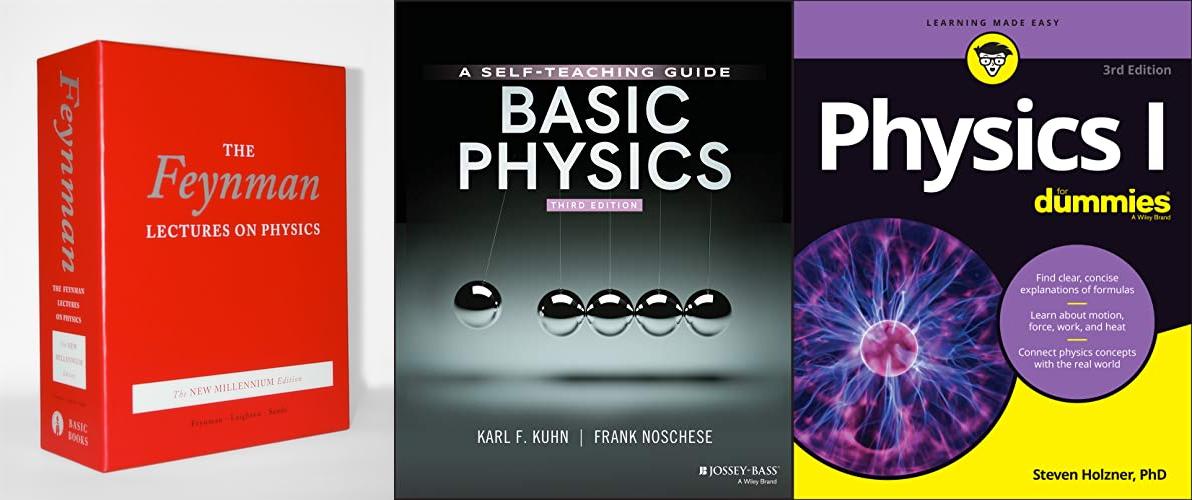
Get ready to dive into the amazing world of physics with The Feynman Lectures on Physics, boxed set: The New Millennium Edition! This is a brand-new, updated version of a classic. It’s packed with all the brilliant ideas of Richard Feynman, a super smart scientist. You’ll explore everything from how things move to the tiny building blocks of the universe. It’s like having a friendly expert guide explaining complex ideas in a way that makes sense.
What We Like:
- The explanations are super clear and easy to understand.
- This edition is fresh and new, with updated features.
- It covers a huge range of physics topics.
- The boxed set looks really nice and makes a great gift.
- Feynman’s passion for science really shines through.
What Could Be Improved:
- It’s a big set, so it takes up a good amount of space.
- Some of the advanced math might be a little tricky for beginners.
This boxed set is a fantastic way to learn physics. It’s an investment in understanding the universe around you.
2. Basic Physics: A Self-Teaching Guide
Rating: 9.3/10
This Basic Physics: A Self-Teaching Guide, 3rd Edition (Wiley Self-Teaching Guides) is a fantastic resource for anyone wanting to learn physics on their own. It breaks down complex ideas into easy-to-understand chunks. You don’t need a teacher to get started with this book. It’s designed for you to learn at your own pace. The book covers many important physics topics. It helps you build a strong foundation in the subject. This guide makes learning physics feel less intimidating. It’s a great way to explore the world of science.
What We Like:
- Clearly explains difficult physics concepts.
- Provides step-by-step examples.
- Helps you test your understanding with practice problems.
- Covers a wide range of basic physics topics.
- Empowers you to learn independently.
What Could Be Improved:
- Some advanced topics might be simplified.
- The layout could be more visually engaging in places.
This guide is an excellent starting point for self-study in physics. It makes the subject accessible and manageable for beginners.
3. Physics I For Dummies
Rating: 9.4/10
Struggling with the basics of physics? Physics I For Dummies is here to help! This book breaks down complex physics concepts into easy-to-understand language. It’s designed for anyone who needs a clear and simple introduction to the subject, whether you’re a student in a high school or introductory college course, or just curious about how the world works. The book covers fundamental topics like motion, forces, energy, and more. You’ll find helpful explanations and examples that make learning physics less intimidating.
What We Like:
- It explains difficult ideas in a way that makes sense.
- The examples are easy to follow and connect to real life.
- It helps build a strong foundation for understanding physics.
- The book is organized logically, making it easy to find information.
What Could Be Improved:
- More practice problems with detailed solutions would be beneficial.
- Some advanced topics could be explored with slightly more depth.
- The layout could be more visually engaging with more diagrams.
Physics I For Dummies provides a solid starting point for anyone facing introductory physics. It makes a challenging subject accessible and understandable for a wide audience.
4. Astrophysics for People in a Hurry
Rating: 9.2/10
Neil deGrasse Tyson’s “Astrophysics for People in a Hurry” is a brilliant book that makes the vastness of space understandable. It tackles big cosmic ideas without making your head spin. You’ll learn about black holes, dark matter, and the universe’s beginning in a way that feels exciting. This book is for anyone curious about the stars, even if you don’t have a lot of time. Tyson’s writing is clear and engaging. He explains complex topics in simple terms. It’s a fantastic way to explore the universe from your couch or on the go.
What We Like:
- Easy To Read: The language is simple and straightforward. You won’t get lost in complicated jargon.
- Ideal for a bookworm: Even experienced readers will find new insights and a fresh perspective on astrophysics.
- Compact for travelling: The book’s size makes it easy to slip into a backpack or carry-on. Take your cosmic journey anywhere!
- Engaging Explanations: Tyson makes learning fun. He uses relatable examples to explain tricky concepts.
What Could Be Improved:
- Depth for Experts: While great for beginners, seasoned astrophysicists might want more in-depth analysis.
- No Visual Aids: Some readers might benefit from more diagrams or images to illustrate the concepts.
This book is an excellent introduction to the cosmos for busy minds. It’s a quick read that leaves you with a sense of wonder.
5. Six Easy Pieces: Essentials of Physics Explained by Its Most Brilliant Teacher
Rating: 8.6/10
Six Easy Pieces: Essentials of Physics Explained by Its Most Brilliant Teacher is a fantastic book for anyone curious about the universe. It breaks down complex physics ideas into simple, understandable parts. This makes learning about science fun and easy for everyone.
What We Like:
- A good option for a Book Lover who wants to explore science.
- Great one for reading, making physics feel accessible and engaging.
- Comes with Proper Binding, so the book stays in great shape.
- The explanations are clear and easy to follow, even for beginners.
- It sparks curiosity and encourages further learning about physics.
What Could Be Improved:
- Some readers might wish for more advanced topics in later editions.
- More visual aids or diagrams could further enhance understanding for certain concepts.
This book truly makes physics feel within reach. It’s an excellent starting point for anyone eager to grasp the fundamental principles of the physical world.
Your Guide to Awesome Physics Books
Physics is all about understanding how the world works. From why apples fall to how stars shine, physics explains it all. Picking the right physics book can make learning fun and easy. This guide helps you find the perfect book for your needs.
Key Features to Look For
When you’re shopping for a physics book, keep these important features in mind.
- Clear Explanations: The book should explain tough ideas in a way you can easily understand. Look for simple language and step-by-step examples.
- Helpful Diagrams and Pictures: Good visuals make a big difference. Diagrams, charts, and photos help you see how physics works.
- Practice Problems: Physics is learned by doing. The book needs lots of practice problems with answers so you can test yourself.
- Real-World Examples: When a book shows you how physics applies to everyday life, it makes learning more interesting. Think about examples like how a car engine works or why a roller coaster is fun.
- Organized Chapters: The book should be structured logically. Chapters should build on each other, making it easy to follow the topics.
Important Materials
What makes a good physics book stand out? It’s the quality of its content and presentation.
- Accurate Information: The physics concepts must be correct. You don’t want to learn wrong information!
- Well-Written Text: The writing should be engaging and easy to read. Avoid books with confusing sentences or jargon.
- High-Quality Illustrations: Pictures and diagrams should be clear and helpful, not blurry or confusing.
- Durable Binding: A book that falls apart easily is frustrating. Look for sturdy binding that can withstand frequent use.
Factors That Improve or Reduce Quality
Several things can make a physics book great or not so great.
What Makes a Book Better?
- Authors who are experienced teachers or scientists often write clearer books.
- Books that use modern examples and relate physics to current technology are more engaging.
- A good index and table of contents help you find information quickly.
What Can Make a Book Worse?
- Books with too much complex math early on can be overwhelming for beginners.
- Outdated information or examples can make the book feel irrelevant.
- Poorly designed layouts or tiny text can make reading difficult.
User Experience and Use Cases
Who uses physics books and how do they use them?
- Students: This is the most common use. Students use physics books for homework, studying for tests, and understanding classroom lessons.
- Hobbyists: People interested in science for fun might use these books to learn about topics like astronomy, electronics, or mechanics.
- Teachers: Educators use physics books as a resource to plan lessons and find new ways to explain concepts.
The best user experience comes from a book that makes you feel smart and curious. When you can easily understand the explanations and solve the problems, you’ll enjoy learning physics more.
Frequently Asked Questions (FAQ)
Q: What is the best physics book for beginners?
A: For beginners, look for books that focus on conceptual understanding rather than heavy math. Books with lots of diagrams and real-world examples are usually best.
Q: Do I need to be good at math to read a physics book?
A: While math is important in physics, many introductory books start with basic concepts and build up. You don’t need to be a math whiz to start learning physics.
Q: How do I know if a physics book is up-to-date?
A: Check the publication date. Books published in the last 5-10 years are generally more up-to-date, especially for topics related to modern science and technology.
Q: Should I buy a textbook or a general physics book?
A: Textbooks are often used for specific courses and can be very detailed. General physics books are great for a broader understanding and for self-study.
Q: What’s the difference between classical and modern physics?
A: Classical physics deals with things like motion, forces, and energy that we see every day. Modern physics covers topics like relativity and quantum mechanics, which deal with very small or very fast things.
Q: How many practice problems should a good physics book have?
A: A good physics book offers a variety of practice problems, from easy to challenging. More problems allow you to practice more and improve your understanding.
Q: Can I learn physics just by reading a book?
A: Reading is a great start! But physics is best learned by doing. Solving problems and doing experiments (even simple ones at home) will help you truly understand the concepts.
Q: What if I don’t understand a concept in the book?
A: Don’t worry! Most good books have solutions or hints for problems. You can also look for online resources or ask a teacher or friend for help.
Q: Are there physics books for kids?
A: Yes! Many books are designed specifically for younger learners, using simple language, fun experiments, and engaging illustrations.
Q: How can I choose a physics book that fits my learning style?
A: Think about how you learn best. Do you prefer lots of pictures, detailed explanations, or hands-on activities? Look for books that match your preferred learning style.
In conclusion, every product has unique features and benefits. We hope this review helps you decide if it meets your needs. An informed choice ensures the best experience.
If you have any questions or feedback, please share them in the comments. Your input helps everyone. Thank you for reading.