
Have you ever looked at a scratched window or a cloudy car windshield and wished you could just wave a magic wand and make the imperfections disappear? Scratches, hazing, and water spots can really dim the shine of glass, making everything look dull and old. It’s frustrating when you want your glass to look its best, but finding the right tool to fix it can feel like a puzzle.
There are so many different glass polishing compounds out there, and it’s tough to know which one will actually work. Do you need a coarse grit for deep scratches or a fine polish for a gentle buff? The wrong choice can waste your time and money, and might not even fix the problem. You want to restore that crystal-clear view, but the sheer number of choices can be overwhelming.
But don’t worry! This guide is here to help. We’ll break down what glass polishing compounds are, how they work, and what to look for. By the end, you’ll feel confident choosing the best compound for your needs, whether you’re tackling a small scratch on your favorite vase or a large area on your car. Get ready to bring back the sparkle and clarity to your glass!
Our Top 5 Glass Polishing Compound Recommendations at a Glance
Top 5 Glass Polishing Compound Detailed Reviews
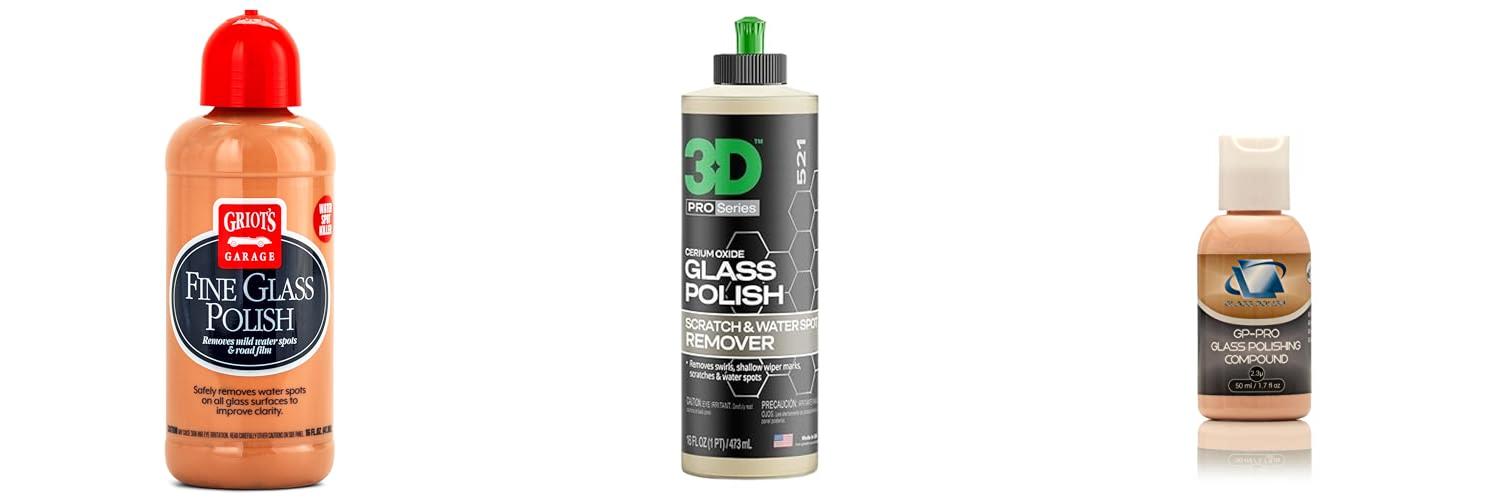
1. Griot’s Garage Fine Glass Polish

Rating: 8.7/10
The Griot’s Garage Fine Glass Polish is a powerful cleaner for your car’s windows and even your home’s glass surfaces. It tackles mild water spots and tough stains, making your glass crystal clear. This polish helps your windshield wipers work better and last longer by keeping the glass smooth. It’s easy to use, especially with a Griot’s Garage polishing pad and orbital polisher. You can even use it on shower doors and patio doors to get rid of buildup and make them shine.
What We Like:
- Effectively removes mild water spots and stains, restoring clarity to automotive and home glass.
- Helps extend wiper life and improve their performance for a streak-free view.
- Easy to use liquid formula, especially when paired with Griot’s Garage polishing pads and tools.
- Versatile for both car windows and household glass like shower doors.
- Gentle enough for regular use on all glass types, yet strong enough for light cleaning tasks.
What Could Be Improved:
- Does not work on scratches, so it’s not a fix for damaged glass.
This glass polish is a fantastic solution for achieving sparkling, clear glass. It offers a simple way to maintain both your vehicle and your home’s windows.
2. 3D Glass Polish – Cerium Oxide Glass Scratch Remover for Car Windows – Restores Clarity & Removes Wiper Marks

Rating: 8.7/10
Tired of hazy car windows and annoying wiper marks? The 3D Glass Polish – Cerium Oxide Glass Scratch Remover is here to help. This powerful cleaner tackles tough glass problems, making your car’s windows look crystal clear again. It’s designed for car lovers who want amazing results without all the hard work.
What We Like:
- Precision Glass Polishing: It effectively removes wiper marks, water spots, and fine scratches, making your glass look like new.
- Crystal Clear Vision: It restores dull glass, improving your view and making driving safer.
- Minimal Effort Maximum Results: You won’t need to scrub hard. It’s easy to apply and leaves glass spotless.
- Pro Level Application: It stays wet longer, so you have plenty of time to work. It works great with a polisher for professional results.
- Perfect Prep Step: Use it before applying coatings to make them stick better and last longer.
What Could Be Improved:
- Requires a rotary polisher and felt pad for best results, which is an extra purchase.
- Some very deep scratches might still be visible after use.
This 3D Glass Polish is a fantastic tool for anyone who wants pristine car windows. It delivers impressive clarity with surprising ease.
3. Glass Polish 1.7oz (50ml) GP-PRO Glass Polishing Compound for Professional Polishing of All Glass Surfaces – 2.3 microns

Rating: 9.0/10
Achieve a crystal-clear finish with the GP-PRO Glass Polishing Compound. This 1.7oz (50ml) bottle contains a professional-grade cerium oxide formula ready to tackle imperfections on all your glass surfaces. Its fine 2.3-micron particle size is designed for the final polishing stage, making it ideal for removing sanding marks, hairline scratches, and stubborn surface stains.
What We Like:
- It’s professional-grade and ready to use right out of the bottle.
- The formula is optimized to give you the best possible polishing results.
- It effectively removes sanding marks, hairline scratches, and surface stains.
- This compound is perfect for the final step in a multi-stage glass scratch removal process.
- You can use it on almost any glass surface, including mirrors, laminated, and tempered glass.
- It also works on stones, minerals, marble, ceramics, and metal surfaces.
- The average particle size of 2.3 microns ensures a smooth finish.
What Could Be Improved:
- Requires a polisher tool running at 1500-2500rpm for best results, which may be an additional investment for some users.
- While effective on many surfaces, very deep scratches might still require more aggressive methods before using this compound.
This GP-PRO compound is an excellent tool for restoring the clarity of your glass. It delivers professional results and is versatile enough for various polishing needs.
4. 1 Lb (453 G) 99% Cerium Oxide Glass Polishing Powder (9-15 Um) Can Remove All Glass Scratches

Rating: 9.1/10
This 1 Lb (453 G) 99% Cerium Oxide Glass Polishing Powder is a powerful tool for making your glass items look like new. It’s great for fixing scratches, cleaning tough marks, and bringing back the shine to many different types of glass. You can use it on your car, around your house, and even on some other materials.
What We Like:
- It fixes scratches on car windows and headlights.
- It cleans off stubborn oil films and wiper marks.
- It makes shower doors, aquariums, and architectural glass look clear again.
- It removes limescale deposits from glass surfaces.
- It restores the shine to glass panels on appliances like ovens and refrigerators.
- It works on optical lenses, telescopes, and microscopes to make them clear.
- It quickly makes crystal crafts, lighting globes, and rhinestones shiny.
- It repairs scratches on glass furniture, display cases, and picture frames.
- It can also polish minor scratches on stones, marble, plastic, metal, and jewelry.
What Could Be Improved:
- It can damage resin-based eyeglasses and should not be used on them.
This cerium oxide powder is a versatile solution for many glass restoration needs. It’s a great way to refresh and repair a variety of glass items.
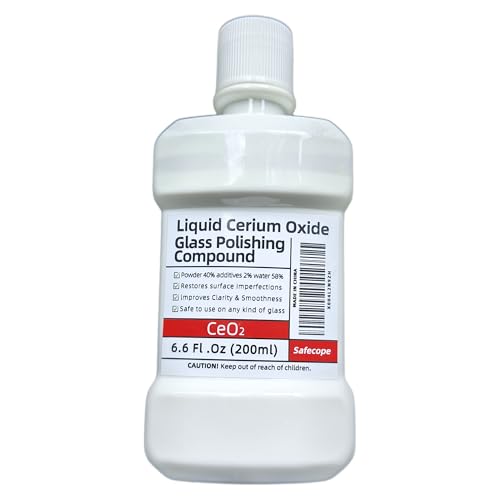
5. 6.6 fl oz (200 ml) Cerium Oxide Glass Polishing Solution – for Removing: Oil Films
Rating: 8.7/10
Say goodbye to cloudy glass and annoying marks with this 6.6 fl oz (200 ml) Cerium Oxide Glass Polishing Solution. It’s designed to tackle all sorts of glass problems, from stubborn water spots to tiny scratches. This solution makes your glass look crystal clear again.
What We Like:
- It has a strong 40% Cerium Oxide formula. This means it works fast to remove scratches, tough water stains, and oily films.
- The solution is water-based and eco-friendly. It doesn’t leave behind any waxy or silicone residue, making cleanup a breeze.
- It uses special technology with super-fine 0.3μm particles. These particles create a mirror-like shine without leaving swirl marks on glass, acrylic, stainless steel, or ceramic surfaces.
- It’s great for car windshields and windows. You can fix scratches, remove oil films, and get rid of those annoying wiper marks.
- It also works wonders on home glass. Use it on shower doors to remove limescale and on aquariums to fix scratches.
What Could Be Improved:
- The effectiveness can vary depending on the depth of the scratch. Deeper scratches might need more effort or multiple applications.
- It requires a polishing cloth or sponge disk for best results, which isn’t always included.
This cerium oxide solution is a powerful tool for restoring glass clarity. It offers an effective and eco-friendly way to deal with common glass imperfections.
Glass Polishing Compound: Your Guide to a Crystal Clear Shine
Got a scratched window? Smudged car windshield? Or maybe some cloudy glass decorations? Glass polishing compound is your secret weapon to make them look like new again! This handy stuff can buff out tiny scratches and bring back the sparkle to dull glass. Let’s dive into how to pick the best one for your needs.
Key Features to Look For
When you’re shopping for glass polishing compound, keep these important features in mind:
- Abrasiveness Level: This is super important. Some compounds are gentle, good for light smudges. Others are stronger, for deeper scratches. Think about what you need to fix before you buy.
- Ease of Use: You want a compound that’s easy to spread and buff. Some are creamy and smooth, while others can be a bit gritty. A good compound should work well with a soft cloth or a polishing machine.
- Residue: Nobody likes sticky, hard-to-clean gunk left behind. Look for compounds that wipe away cleanly, leaving no streaks or haze.
- Speed of Work: Some compounds work faster than others. If you have a lot of glass to polish, a quicker compound saves you time.
- Safety: Check if the compound is safe for the type of glass you’re working with. Some can be too harsh for tinted or coated glass.
Important Materials
What’s actually in these magic potions? Most glass polishing compounds use fine abrasive particles. These are like tiny bits of sandpaper that gently rub away the damaged top layer of the glass.
- Cerium Oxide: This is a very common and effective abrasive. It’s great for removing scratches and restoring clarity.
- Aluminum Oxide: Another popular choice, often used in milder compounds for light polishing.
- Other Abrasives: Some products might use other fine grit materials. The smaller and more uniform the particles, the smoother the finish you’ll get.
Factors That Improve or Reduce Quality
The quality of a glass polishing compound can really make a difference. Here’s what makes some better than others:
What Makes it Great:
- Fine, Consistent Abrasives: When the abrasive particles are all the same size and shape, they polish more evenly. This means fewer new marks and a smoother finish.
- Good Lubrication: Some compounds have added ingredients that help them glide smoothly. This reduces friction and heat, protecting the glass.
- Clear Instructions: A high-quality product comes with easy-to-understand directions. This helps you use it correctly and get the best results.
- Positive Reviews: Real users often share their experiences. Good feedback means the product likely works well.
What Can Make it Worse:
- Large, Uneven Abrasives: Big, jagged particles can actually create more scratches. This is the opposite of what you want!
- Poorly Formulated: If the compound is too dry or too watery, it’s hard to work with. It might dry out too quickly or not spread evenly.
- Harsh Chemicals: Some compounds might contain strong chemicals that could damage certain types of glass, like those with special coatings.
- No Clear Instructions: If you’re unsure how to use it, you might damage your glass.
User Experience and Use Cases
Glass polishing compound isn’t just for professionals. Anyone can use it!
- Home Use:
- Windows: Get rid of water spots or light scratches from cleaning.
- Mirrors: Make old mirrors look shiny and new again.
- Glass Tables: Buff out scuffs and smudges.
- Decorations: Shine up glass vases or figurines.
- Automotive Use:
- Windshields: Remove wiper blade marks or minor chips.
- Car Windows: Clear up haze or light scratches.
- Headlights: Restore foggy headlights to improve visibility.
- Hobbyists:
- Aquariums: Clean up any scratches on glass tanks.
- DIY Projects: Polish glass components for crafts.
The user experience is usually straightforward. You apply a small amount to the affected area, then rub it in with a clean, soft cloth using a circular motion. For tougher jobs, you might use a power polisher. Always test on a small, hidden area first to make sure it works well without causing damage.
Frequently Asked Questions (FAQ) about Glass Polishing Compound
Q: What is glass polishing compound?
A: Glass polishing compound is a special paste or liquid used to remove minor scratches, scuffs, and haziness from glass surfaces.
Q: What kind of scratches can it fix?
A: It works best on light surface scratches, like those from cleaning or everyday wear. It’s not usually strong enough for deep gouges.
Q: What materials are typically in glass polishing compound?
A: Common materials include abrasives like cerium oxide or aluminum oxide, which gently rub away the damaged glass.
Q: How do I use glass polishing compound?
A: You usually apply a small amount to the glass and rub it in with a soft cloth in a circular motion. For harder jobs, a power polisher can be used.
Q: Can I use it on my car windshield?
A: Yes, many compounds are safe for car windshields to remove wiper marks or light scratches.
Q: Will it work on tinted windows?
A: Some compounds are safe for tinted windows, but others might be too harsh. Always check the product label or test in a small area first.
Q: How can I tell if a compound is good quality?
A: Good quality compounds have fine, consistent abrasive particles and are easy to use without leaving streaks.
Q: What happens if I use too much pressure?
A: Using too much pressure can create more scratches or heat the glass, potentially causing damage.
Q: How long does it take to polish glass?
A: The time depends on the size of the area and the severity of the scratches. Light polishing might take a few minutes, while tougher jobs can take longer.
Q: Where can I buy glass polishing compound?
A: You can find it at hardware stores, auto parts stores, online retailers, and some specialty craft or home improvement shops.
In conclusion, every product has unique features and benefits. We hope this review helps you decide if it meets your needs. An informed choice ensures the best experience.
If you have any questions or feedback, please share them in the comments. Your input helps everyone. Thank you for reading.