
When buying a new kitchen sink, knowing how to measure is super important. Kitchen sink dimensions are key to finding one that fits your cabinet, countertop, and overall kitchen style perfectly. This guide will help you figure out exactly what you need to know about measuring a kitchen sink.
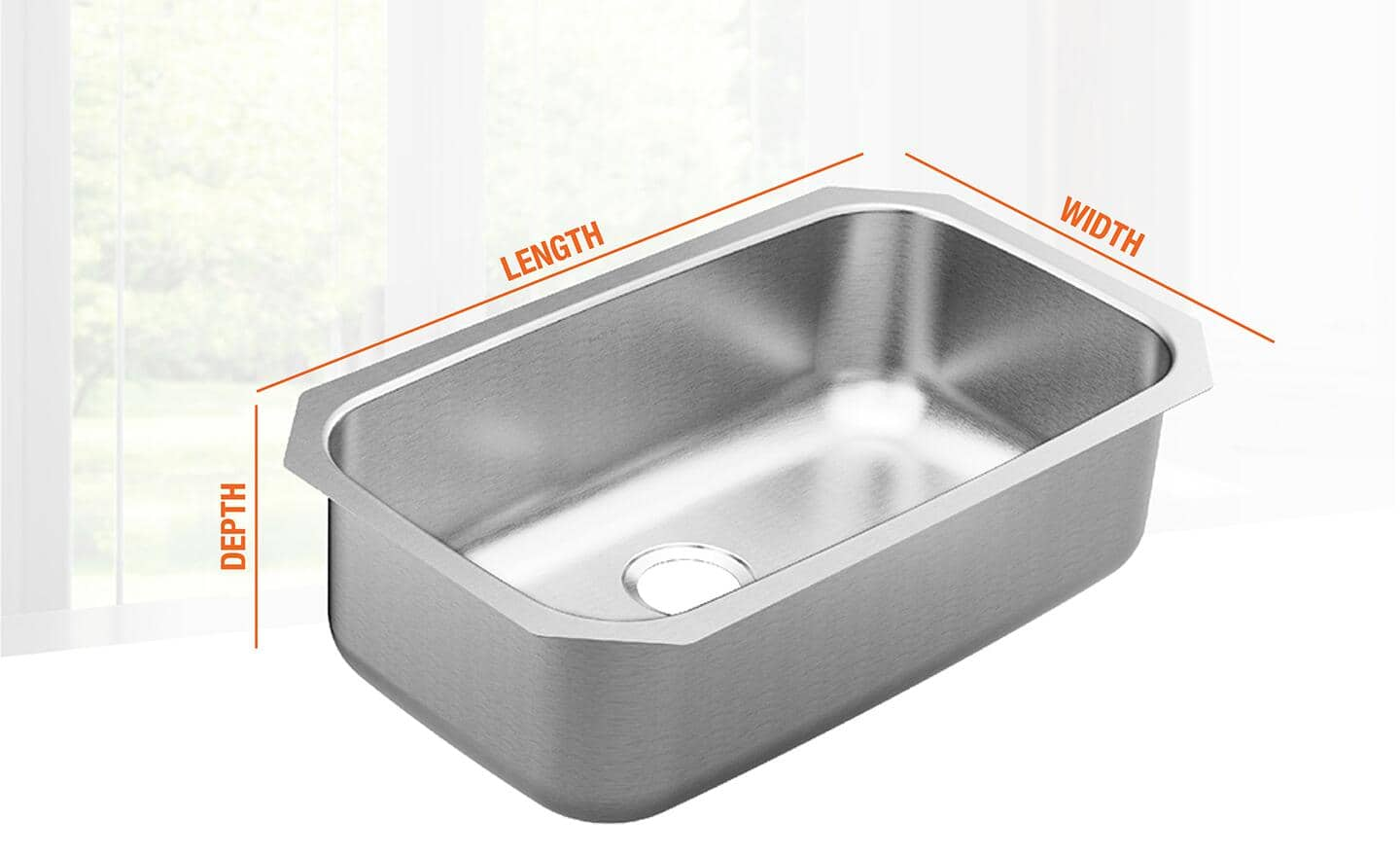
Image Source: dam.thdstatic.com
Why Precise Sink Measurements Matter
Getting the kitchen sink dimensions right from the start prevents a lot of headaches later. A sink that’s too big won’t fit in your existing cabinet cutout, and one that’s too small might look odd or leave gaps. This guide will cover sink measurements explained in detail, ensuring you have all the information for a smooth purchase and sink installation measurements.
The Crucial Measurements for Any Sink
Every kitchen sink has a few key measurements you need to take. These will guide you when looking at options, from standard kitchen sink sizes to custom sink sizing.
Length
This is the measurement from one side of the sink to the other, across the longest part.
Width
This is the measurement from the front of the sink to the back.
Depth
This is how deep the sink basin is. It’s important to know how to measure sink depth accurately. Many sinks have multiple bowls, so you might need to measure the depth of each.
Cabinet and Countertop Considerations
Your sink doesn’t just exist on its own; it has to work with your cabinet and countertop. This is where sink installation measurements become vital.
Cabinet Interior Width
This is the most critical measurement for ensuring your sink fits within your cabinetry. You need to measure the inside width of the base cabinet where the sink will be installed. This measurement dictates the maximum width of the sink you can buy.
Countertop Space
You also need to consider the available countertop space around the sink area. This includes both the width and depth of your countertop.
Existing Cutout (If Applicable)
If you’re replacing an old sink, you’ll need to measure the existing cutout in your countertop. This is especially important for drop-in sink measurements where the sink lip will cover this cutout.
Types of Sink Installation and How Measurements Differ
The way a sink is installed greatly impacts which measurements are most important. We’ll explore undermount sink measurements and drop-in sink measurements separately.
Drop-In Sinks: The User-Friendly Option
Drop-in sink measurements are generally simpler. These sinks have a rim or lip that rests on top of the countertop.
Key Measurements for Drop-In Sinks
- Overall Sink Dimensions (Length, Width, Depth): You’ll still need these to ensure the sink itself looks good and fits your aesthetic.
- Cutout Dimensions: This is the size of the hole in your countertop that the sink will drop into. Crucially, the sink’s rim must be larger than the cutout to create a seal and support. You’ll typically find the required cutout size listed by the sink manufacturer.
- Rim Width: The width of the lip that sits on the countertop. This should be wide enough to cover the cutout and provide a good seal.
How to Measure for a Drop-In Sink:
- Measure the Existing Cutout: If you have an existing cutout, measure its length and width precisely.
- Measure the Cabinet Interior: Measure the internal width of the base cabinet.
- Check Sink Specifications: Look at the manufacturer’s specifications for the new sink. They will provide the sink’s overall dimensions and the recommended cutout size.
- Compare: Ensure the new sink’s overall length and width are at least 1 inch larger than the existing cutout. The sink’s bowl dimensions should also fit comfortably within the cabinet.
Table: Drop-In Sink Measurement Comparison
| Measurement Type | What to Measure | Why It’s Important |
|---|---|---|
| Sink Length & Width | The longest and widest points of the sink itself. | Aesthetics and general fit. |
| Sink Depth | How deep the sink basin is. | Water capacity and clearance for pipes underneath. |
| Countertop Cutout | The hole in your countertop for the sink. | The sink rim must overlap this to stay in place. |
| Cabinet Interior Width | The inside width of the base cabinet. | The sink needs to fit within the cabinet’s footprint. |
| Sink Rim | The border of the sink that rests on the countertop. | Needs to be wider than the cutout to create a seal. |
Undermount Sinks: A Sleek, Modern Look
Undermount sink measurements require a bit more precision because the sink attaches from below the countertop. This creates a seamless look, but it means the cabinet and countertop must be sturdy and well-prepared.
Key Measurements for Undermount Sinks
- Overall Sink Dimensions (Length, Width, Depth): Essential for determining if the sink will fit within the cabinet and provide adequate workspace.
- Bowl Dimensions: For sinks with multiple bowls, you’ll need the length, width, and depth of each individual bowl.
- Edge Clearance: This is the space between the edge of the sink and the edge of the countertop cutout. This is crucial for structural integrity.
- Cabinet Interior Width: As with drop-in sinks, the interior width of your base cabinet is paramount.
How to Measure for an Undermount Sink:
- Measure the Cabinet Interior: Measure the internal width of the base cabinet. This is the primary constraint.
- Measure the Countertop Space: Measure the total width and depth of the countertop area allocated for the sink.
- Determine the Cutout Size: The manufacturer will provide a recommended cutout size. This size is usually very close to the sink’s outer dimensions, but you need to allow for mounting clips and sealant.
- Consider Edge Clearance: Most undermount sinks require a minimum of 2-3 inches of countertop edge around the sink basin for secure mounting. Check the manufacturer’s recommendations.
- Calculate Fit: Ensure the sink’s outer dimensions, plus any required edge clearance, fit within your countertop space, and that the sink’s width fits comfortably within your cabinet’s interior width.
Table: Undermount Sink Measurement Considerations
| Measurement Type | What to Measure | Why It’s Important |
|---|---|---|
| Sink Length & Width | The longest and widest points of the sink itself. | Ensures the sink bowls fit within the cabinet and countertop. |
| Sink Depth | How deep the sink basin is. | For water capacity and checking clearance for plumbing beneath the sink. |
| Bowl Dimensions | Length, width, and depth of each individual sink bowl. | Helps in planning workflow and fitting dishes or pots. |
| Countertop Cutout | The precise opening in the countertop for the sink. | This is the most critical measurement; it determines the sink’s fit and how it’s supported by the countertop. |
| Edge Clearance | The distance from the sink edge to the countertop edge. | Vital for the structural integrity of the countertop and for mounting the sink securely. |
| Cabinet Interior Width | The inside width of the base cabinet. | Dictates the maximum sink width that can be installed. |
Standard Kitchen Sink Sizes vs. Custom Sink Sizing
Most homeowners opt for standard kitchen sink sizes, which offer a balance of functionality and affordability. However, for unique kitchen designs or specific needs, custom sink sizing is an option.
Common Standard Sink Sizes
Kitchen sinks come in a range of common sizes to fit standard cabinetry. These are often based on cabinet widths.
- 24-inch cabinets: Typically accommodate sinks around 20-22 inches wide.
- 30-inch cabinets: Can fit sinks around 26-28 inches wide.
- 36-inch cabinets: Often accommodate larger sinks, from 30-33 inches wide, including double-bowl configurations.
Table: Common Sink Widths by Cabinet Size
| Cabinet Interior Width | Typical Sink Width Range | Common Sink Styles |
|---|---|---|
| 20-23 inches | 18-21 inches | Single bowl, compact |
| 24-27 inches | 22-26 inches | Single bowl, small double bowl |
| 30-33 inches | 27-30 inches | Standard single bowl, popular double bowl |
| 36-39 inches | 30-33 inches | Large single bowl, large double bowl, farmhouse |
| 48+ inches | 36+ inches | Extra-large double bowl, triple bowl, workstation |
These are general guidelines. Always check the specific sink’s kitchen sink dimensions and the interior width of your cabinet for the best fit.
When Custom Sink Sizing is Necessary
Custom sink sizing offers the ultimate flexibility. This might be needed if:
- You have non-standard cabinet sizes.
- You want a specific layout or number of bowls that isn’t readily available.
- You desire unique materials or features.
- You are undertaking a complete kitchen renovation where the sink is a central design element.
When considering custom sizing, you’ll work with a fabricator who will create a sink to your exact specifications. You’ll provide all the necessary sink measurements explained, including precise lengths, widths, depths, bowl configurations, and drain placements.
How to Measure Sink Depth Accurately
How to measure sink depth is straightforward, but crucial for usability.
- Empty the Sink: Ensure there are no dishes or standing water in the sink.
- Use a Straight Edge: Place a ruler or a flat, straight piece of wood across the top rim of the sink.
- Measure to the Bottom: Measure from the straight edge down to the lowest point of the sink basin. If the sink has a drainboard or sloped bottom, measure to the deepest part.
- Account for Strainers/Drains: The stated depth typically refers to the interior basin.
Why Sink Depth Matters:
- Capacity: Deeper sinks can hold more water and larger items, like stockpots.
- Splashback: Very shallow sinks can lead to more splashing.
- Plumbing Clearance: Ensure the depth, combined with your countertop thickness and cabinet depth, allows enough room for your plumbing and P-trap.
Tools You’ll Need for Measuring
Having the right tools makes measuring a kitchen sink much easier and more accurate.
- Tape Measure: A standard retractable tape measure is essential for all length and width measurements.
- Ruler or Straight Edge: For accurately measuring sink depth.
- Pen and Paper or Digital Notes: To record all your measurements clearly.
- A Helper (Optional but Recommended): Especially for measuring existing installations or maneuvering around tight spaces.
Putting It All Together: Creating Your Sink Measurement Worksheet
To make your shopping or ordering process efficient, create a simple worksheet with all the key measurements.
Sample Sink Measurement Worksheet:
| Measurement Category | Measured Value (inches/cm) | Notes / Considerations |
|---|---|---|
| Cabinet Measurements | ||
| Cabinet Interior Width | This is the most critical dimension for fit. | |
| Cabinet Depth (Interior) | Ensure sink will fit without hitting pipes/backsplash. | |
| Countertop Measurements | ||
| Countertop Width (Overall) | ||
| Countertop Depth (Overall) | ||
| Existing Cutout Length | If replacing a sink. | |
| Existing Cutout Width | If replacing a sink. | |
| Sink Specifications | (To be filled in while shopping/ordering) | |
| Sink Model/Name | ||
| Sink Overall Length | ||
| Sink Overall Width | ||
| Sink Depth (Main Bowl) | ||
| Sink Depth (Second Bowl) | If applicable. | |
| Sink Material | Can affect mounting and durability. | |
| Mounting Type | Drop-in, Undermount, Top Mount, Farmhouse, etc. | |
| Manufacturer Recommended Cutout Length | For drop-in and some top-mount. | |
| Manufacturer Recommended Cutout Width | For drop-in and some top-mount. |
Frequently Asked Questions (FAQ)
Q1: What is the most important measurement for a kitchen sink?
A1: The most critical measurement is the interior width of your base cabinet. This dictates the maximum width of the sink you can install, preventing costly mistakes.
Q2: Can I install a sink wider than my cabinet?
A2: No, a sink wider than your cabinet’s interior width cannot be properly installed. The sink needs to be supported by the cabinet structure.
Q3: How do I measure a sink that is already installed?
A3: For an already installed sink, measure its overall length and width from the top. For depth, use a straight edge across the rim and measure down to the bottom of the basin. If you’re replacing it, measuring the existing countertop cutout is also vital.
Q4: Do I need special measurements for a farmhouse sink?
A4: Farmhouse sinks (or apron-front sinks) often have specific installation requirements and might require modifications to your cabinet. Measure the apron front’s height and width, and confirm it fits within your cabinet’s front panel and countertop overhang.
Q5: What does “bowl configuration” mean?
A5: Bowl configuration refers to how the sink is divided. Common types include:
* Single Bowl: One large basin.
* Double Bowl: Divided into two basins, which can be equal or unequal in size.
* Triple Bowl: Features three basins, often with a smaller central one for garbage disposal or accessories.
Q6: How do I choose the right sink size for my kitchen?
A6: Consider your cabinet size, countertop space, and how you use your kitchen. For heavy use or large families, a larger or deeper sink might be better. For smaller kitchens, a more compact sink might be necessary. Always refer to sink size guide recommendations from manufacturers and your own measurements.
By carefully taking these measurements and considering your kitchen’s specific needs, you can confidently select the perfect kitchen sink for your home. Happy renovating!