
The kitchen counter depth you commonly see is 25 inches, and the standard kitchen counter height is 36 inches. This guide will explore all the essential kitchen design measurements, focusing on countertop depth dimensions and how they impact your kitchen’s functionality and aesthetics. We’ll delve into why these depths are chosen, explore variations, and discuss how they contribute to creating a practical and beautiful workspace.
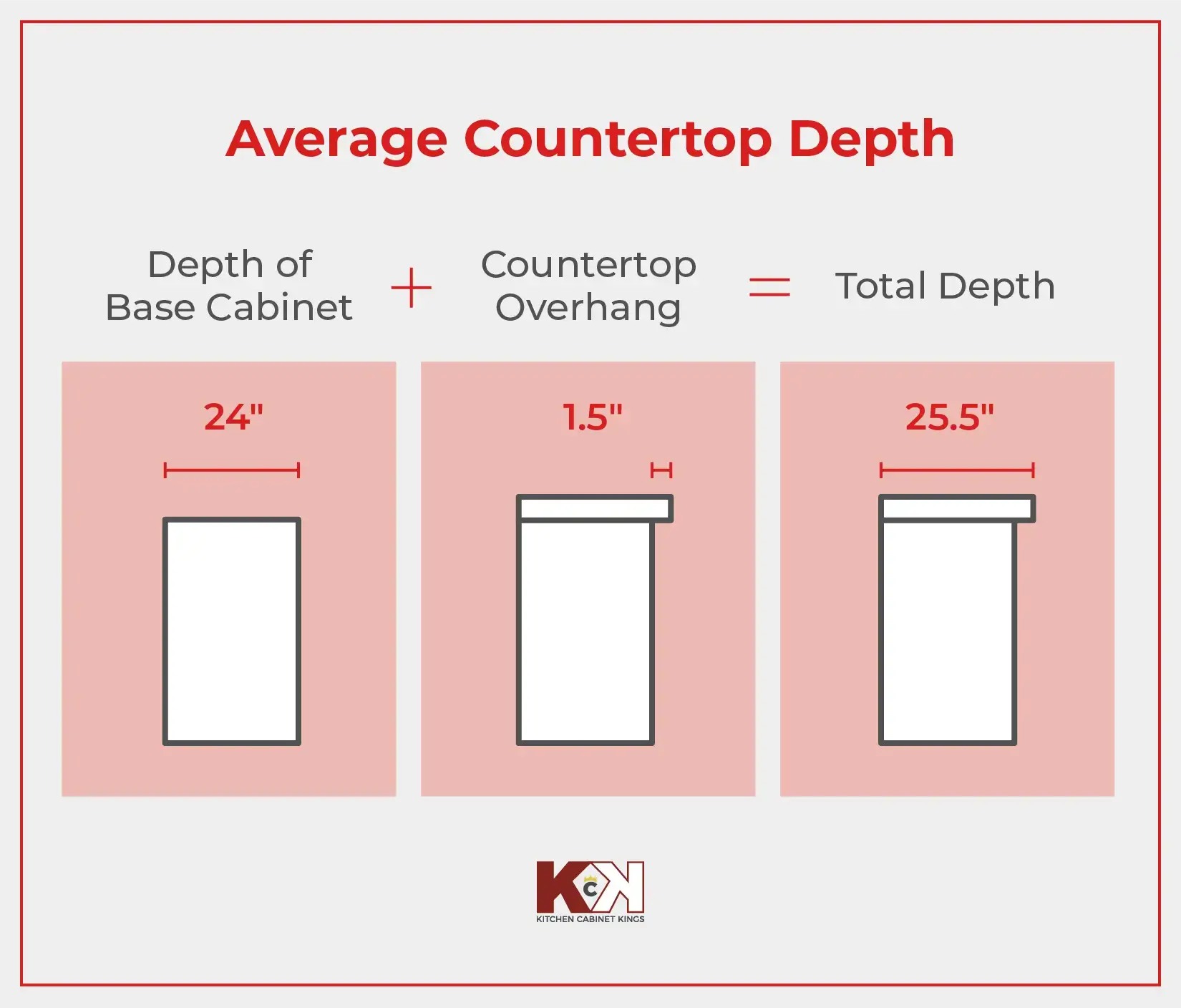
Image Source: cdn.kitchencabinetkings.com
The Magic Number: Why 25 Inches for Countertop Depth?
The prevalence of a 25-inch kitchen counter depth isn’t an accident; it’s a carefully considered measurement rooted in ergonomics and functionality. This depth provides a generous workspace depth for a multitude of kitchen tasks, from chopping vegetables to plating meals. Let’s break down why this measurement has become the industry standard.
Balancing Functionality and Cabinet Access
The 25-inch depth strikes a crucial balance. It allows for standard base cabinets, which typically have a cabinet depth of 24 inches, to fit snugly against the wall. This leaves a crucial 1-inch counter overhang at the front. This overhang is not just a stylistic choice; it serves several vital purposes:
- Ergonomics: It allows users to lean comfortably over the counter while working, providing adequate knee and legroom without bumping into the cabinets. Imagine trying to chop onions if the counter came flush with the cabinet doors – it would be awkward and uncomfortable.
- Accessibility: The overhang provides a comfortable grip for opening cabinet doors and drawers. Without it, you’d be fumbling around the edge of the countertop to access your storage.
- Aesthetics: It adds a finished look, softening the hard edge of the cabinets and creating a more inviting visual line.
- Drip Protection: The overhang helps prevent spills and drips from running down the front of your cabinets, keeping them cleaner for longer.
Maximizing Usable Counter Space
While 25 inches is the standard, it’s important to consider how much of this is truly usable counter space. The back of the counter will often house appliances like toasters, coffee makers, or spice racks. The usable area is the space between these items and the edge where you perform tasks. A deeper counter can sometimes mean more usable space, but only if it’s balanced with accessibility and the overall kitchen layout depth.
Accommodating Appliances
Many standard kitchen appliances are designed with this 25-inch depth in mind. Refrigerators, dishwashers, and even under-cabinet microwaves are often built to fit within this footprint. Going significantly deeper without proper planning can lead to issues with appliance installation and door swing clearances.
Exploring Variations in Countertop Depth Dimensions
While 25 inches is the dominant countertop depth dimensions, there are situations where you might encounter or opt for different depths. These variations are usually driven by specific needs, design choices, or spatial constraints.
Deeper Counters for Specific Needs
In some cases, particularly in professional kitchens or for avid home cooks who require extensive prep areas, deeper countertops might be desirable.
30-Inch Deep Counters
A 30-inch deep counter offers an additional 5 inches of workspace depth. This can be incredibly beneficial for:
- Large Prep Areas: Spreading out ingredients, using multiple cutting boards, or accommodating larger appliances like stand mixers.
- Appliance Garages: Providing space to house appliances like toasters or blenders with enough room to use them without constantly moving them.
- Deep Sinks: Some large or farmhouse-style sinks require a deeper countertop to accommodate their depth.
- Specialty Appliances: Certain built-in appliances, like commercial-grade ranges or warming drawers, might necessitate deeper cabinetry and, consequently, deeper countertops.
However, choosing 30-inch deep counters comes with considerations:
- Cabinetry: Standard base cabinets are 24 inches deep. To achieve a 30-inch countertop, you would need custom cabinetry that is 30 inches deep or a combination of a 24-inch cabinet with a thicker countertop material or a specialized filler piece. This increases cost.
- Reachability: Reaching items stored at the back of a 30-inch counter can be more challenging for individuals of average height or shorter stature.
- Knee Space: Ensure sufficient knee space if you plan to use the counter for seating.
Shallow Counters for Tight Spaces
In smaller kitchens or for specific functional areas, shallower countertops might be a practical solution.
20-24 Inch Deep Counters
These shallower depths are often seen in:
- Apartment Kitchens: Where space is at a premium.
- Galley Kitchens: To maximize walkway space.
- Secondary Prep Areas: A small counter area purely for a coffee maker or as a landing spot.
- Beverage Stations or Wet Bars: Where extensive prep isn’t the primary function.
When opting for shallower depths, consider:
- Reduced Usable Space: You’ll have significantly less usable counter space for prepping or holding appliances.
- Cabinet Limitations: Standard 24-inch deep cabinets will still fit, but the overhang will be reduced or eliminated, impacting ergonomics. Alternatively, shallower cabinets (e.g., 20 inches) can be used, but this might limit storage capacity.
- Appliance Compatibility: Ensure your chosen appliances are designed for shallower depths.
The Role of the Average Kitchen Island Depth
Kitchen islands are often central to the kitchen design measurements, and their depth plays a critical role in their functionality and flow within the kitchen layout depth. The average kitchen island depth can vary significantly based on its purpose.
Standard Island Depth: 36 to 42 Inches
A typical kitchen island often has a depth of 36 to 42 inches. This range allows for:
- Ample Workspace: Similar to perimeter countertops, this provides a good workspace depth for food preparation.
- Seating: Many islands incorporate seating, and this depth allows for comfortable legroom for diners or casual conversation. Standard seating requires at least 15 inches of counter overhang for knee space.
- Storage: It accommodates deeper drawers or cabinets for substantial storage without impeding the kitchen’s circulation.
- Appliance Integration: Larger appliances like cooktops or sinks can be integrated into islands with this depth.
Deeper Islands for Enhanced Functionality
Islands can be made deeper, often reaching 48 inches or more, to accommodate more elaborate features:
- Double-Depth Cabinets: Allowing for deeper storage or specialized pull-out systems.
- Built-in Appliances: Accommodating appliances that require significant depth, such as full-size ovens or wine refrigerators, while still leaving room for a work surface.
- Enhanced Seating: Providing more generous seating space or a deeper dining surface.
When considering deeper islands, always factor in the kitchen layout depth to ensure adequate circulation space around the island. A common guideline is at least 36 inches of clearance on all sides, but 42-48 inches is preferred for high-traffic areas or when multiple people are working in the kitchen simultaneously.
Shallower Islands for Compact Spaces
In smaller kitchens, an island might be designed with a shallower depth, perhaps 30 inches, to maintain walkability. These islands often serve as a secondary prep area, a buffet surface, or a visual divider between kitchen zones.
Cabinet Depth and its Influence on Countertop Depth
The cabinet depth is intrinsically linked to your kitchen counter depth. As mentioned, the standard base cabinet depth is 24 inches. This is a critical factor for a few reasons:
Manufacturing Standards and Costs
24-inch deep cabinets are the most common and cost-effective to manufacture. Opting for custom deeper cabinets (e.g., 30 inches) will significantly increase costs.
Appliance Fit
Many major kitchen appliances, such as dishwashers and standard ranges, are designed to fit within a 24-inch cabinet depth. If you opt for deeper countertops (e.g., 30 inches), you’ll need to ensure your appliances can accommodate the extra depth or plan for filler panels.
Wall Clearance
The 24-inch cabinet depth, combined with the 25-inch countertop depth and 1-inch overhang, ensures that the countertop does not protrude excessively into the room, maintaining comfortable passage and avoiding clashes with other elements in your kitchen layout depth.
Workspace Depth: Maximizing Your Prep Zone
The term workspace depth refers to the practical area you have to work on your countertop. While the total countertop depth dimensions are important, the effective usable counter space is what truly matters for functionality.
Factors Affecting Workspace Depth
Several elements can influence how much usable workspace depth you have:
- Appliance Placement: The permanent placement of appliances like toasters, coffee makers, microwaves, or knife blocks will reduce the available prep area.
- Countertop Thickness: Thicker countertop materials (e.g., granite or quartz, typically 2-3 cm thick) reduce the actual workspace depth by a small but measurable amount.
- Backsplashes and Wall Elements: A thick backsplash or unusual wall treatments can reduce the usable depth.
- Sink and Cooktop Recesses: If your sink or cooktop is undermounted or integrated into the countertop, it can take up a portion of the workspace depth when in use.
Optimizing Your Workspace Depth
To maximize your usable counter space:
- Consider Appliance Needs: Group frequently used appliances together or store them when not in use.
- Choose Appropriate Countertop Thickness: While thicker countertops look luxurious, consider slightly thinner materials if maximizing workspace depth is a priority.
- Plan for Workflow: Arrange your kitchen layout to ensure that the most-used prep areas are clear and accessible.
The Counter Overhang: More Than Just an Edge
The counter overhang is that portion of the countertop that extends beyond the face of the cabinets. While often a standard 1.5 inches for base cabinets, it can vary and plays a crucial role in ergonomics and design.
Standard Overhang for Base Cabinets
A 1.5-inch overhang on a 25-inch deep countertop (with 24-inch cabinets) is the most common. This provides the optimal balance for leaning, opening drawers, and general usability.
Increased Overhang for Seating
When incorporating seating at a kitchen island or peninsula, a more generous overhang is required:
- Casual Seating (Bar Stools): Typically requires at least a 10-12 inch overhang to provide sufficient knee room. This means your island depth needs to be greater than the standard 36-42 inches to accommodate both the cabinets and the seating overhang.
- Formal Dining: For dining at a counter, a 15-inch overhang is often recommended for comfort.
Overhang for Appliances
Some appliances, like dishwashers, require a slight overhang to allow their doors to open fully without hitting the cabinet face. This is usually factored into the overall kitchen counter depth.
Aesthetic Considerations for Overhang
The overhang also contributes to the visual appeal of your countertops. A consistent overhang creates a clean, finished look. The material of your countertop can also influence how much overhang is recommended due to its structural integrity. For example, unsupported granite or quartz overhangs typically shouldn’t exceed 10-12 inches for safety and to prevent breakage.
Kitchen Design Measurements: A Holistic View
When discussing kitchen counter depth, it’s essential to view it within the broader context of all kitchen design measurements. These interconnected dimensions dictate the flow, functionality, and overall success of your kitchen.
Standard Kitchen Dimensions to Consider
- Standard Kitchen Counter Height: 36 inches from the floor.
- Standard Cabinet Depth: 24 inches.
- Standard Cabinet Height: Varies, but upper cabinets are typically 30-42 inches, and base cabinets are typically 34.5 inches (before countertop addition).
- Walkway Clearance: Minimum 36 inches, ideally 42-48 inches between countertops or islands.
- Appliance Clearances: Ensure doors can open fully and units have proper ventilation.
How Counter Depth Impacts the Overall Kitchen Layout Depth
Your choice of kitchen counter depth directly influences the overall kitchen layout depth.
- Perimeter Counters: A 25-inch depth means the cabinets plus countertop will project 25 inches from the wall. This needs to be accounted for when planning walkways and the placement of other furniture or features in adjacent rooms.
- Islands: The depth of an island, combined with its placement, significantly impacts the kitchen layout depth. A deeper island will require more surrounding clearance to maintain comfortable movement.
Creating Functional Zones with Depth
The variation in countertop depths can also be used to define different functional zones within the kitchen:
- Primary Work Zone: The standard 25-inch depth is ideal here for prep and cooking.
- Baking Station: A slightly deeper section might be beneficial for rolling out dough.
- Appliance Zone: A shallower, dedicated area for a coffee station or toaster.
- Seating Area: A deeper island or peninsula for comfortable dining.
Frequently Asked Questions (FAQ)
What is the standard kitchen counter depth?
The standard kitchen counter depth is 25 inches. This allows for standard 24-inch deep base cabinets and provides a 1-inch overhang for ergonomics and ease of access.
Can I have a kitchen counter depth shallower than 25 inches?
Yes, you can opt for shallower depths, such as 20-24 inches, especially in smaller kitchens or for specific functional areas. However, this will reduce your usable counter space and may affect cabinet and appliance compatibility.
Can I have a kitchen counter depth deeper than 25 inches?
Yes, you can choose deeper countertops, such as 30 inches or more, to gain more workspace. However, this typically requires custom cabinetry, may increase costs, and necessitates careful planning for appliance fit and reachability.
How does cabinet depth affect countertop depth?
Standard base cabinets are 24 inches deep. To achieve a 25-inch countertop depth, a 1-inch overhang is typically created. If you choose a deeper countertop (e.g., 30 inches), you will likely need custom 30-inch deep cabinets or a combination of standard cabinets with added fillers or thicker countertop material.
What is a typical counter overhang?
For base cabinets, a standard counter overhang is typically 1.5 inches. For island seating, a greater overhang of 10-15 inches is common for knee clearance.
What is the average kitchen island depth?
The average kitchen island depth ranges from 36 to 42 inches, accommodating workspace, storage, and often seating. Deeper or shallower islands are also possible depending on the kitchen’s size and intended use.
How much usable counter space do I get with a standard 25-inch deep counter?
While the total depth is 25 inches, the usable space will be less depending on appliance placement, backsplash thickness, and the edge you work from. Generally, you can expect a good amount of clear prep space in the central area of the counter.