
What is a cloud kitchen? A cloud kitchen is a professional food preparation and cooking facility that is set up for the preparation of delivery-only meals. Can I run a cloud kitchen from home? Generally, no. Cloud kitchens operate from commercial kitchens, often in industrial areas or shared kitchen spaces, not from residential homes. Who is a cloud kitchen for? They are ideal for food entrepreneurs, existing restaurants looking to expand their delivery reach, or brands wanting to test new concepts without the overhead of a traditional dining space.
The world of food delivery has exploded, and at its heart lies the fascinating operation of cloud kitchens. These innovative establishments are transforming how we get our favorite meals delivered straight to our doors. But how exactly do they function? Let’s dive into the mechanics of this growing industry.
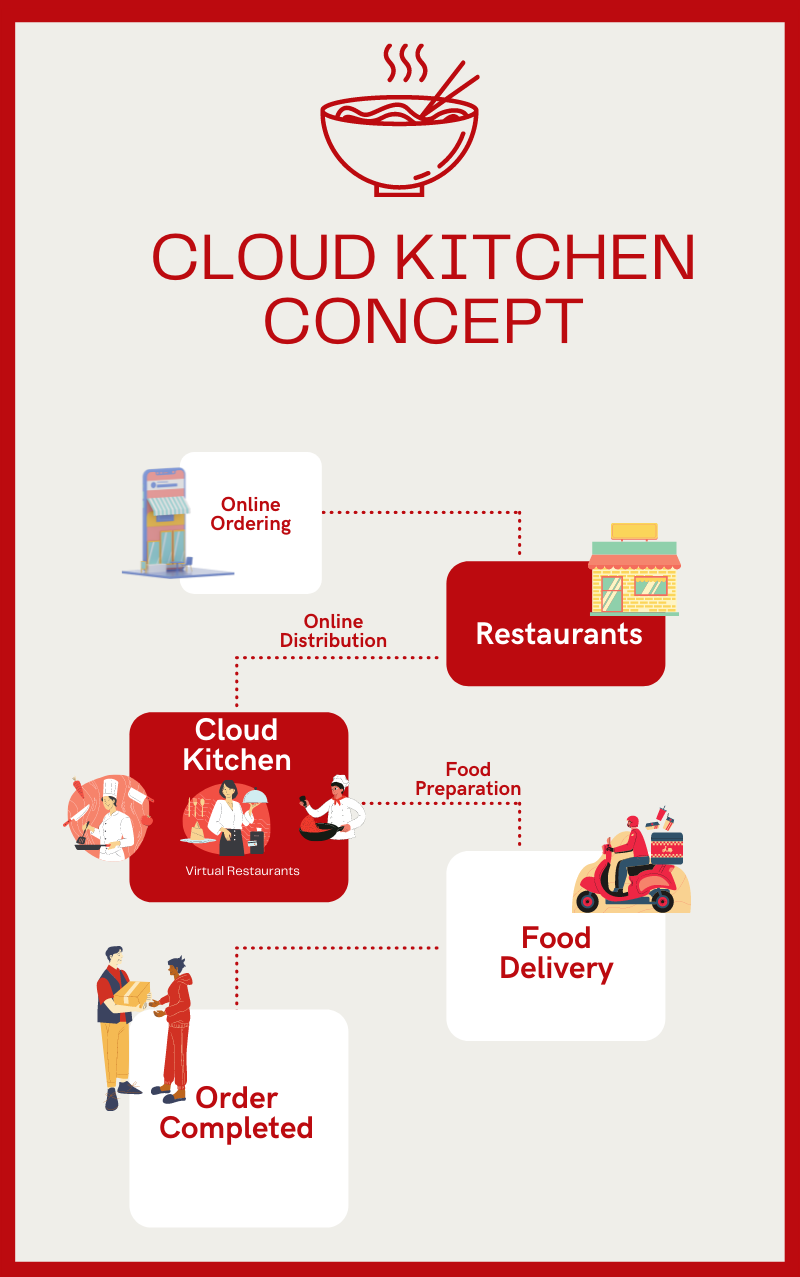
Image Source: www.code-brew.com
Deciphering the Cloud Kitchen Concept
At its core, a cloud kitchen is all about efficiency and focus. Unlike traditional restaurants with dining rooms and customer-facing staff, cloud kitchens exist solely to prepare food for delivery. This fundamental difference allows them to streamline their operations and significantly reduce costs associated with real estate, front-of-house staff, and decor.
Think of it as a restaurant without the restaurant. Instead of tables and chairs, you’ll find rows of gleaming stainless-steel workstations, industrial-grade ovens, and dedicated areas for packaging orders. The entire space is optimized for food preparation workflow, ensuring that every step, from receiving ingredients to handing off a packed meal to a delivery driver, is as smooth and quick as possible.
The Rise of Virtual Restaurants
A key component often associated with cloud kitchens is the concept of virtual restaurants. These are essentially brands that exist only online, appearing on food delivery apps. A single cloud kitchen facility can house multiple virtual restaurants, each with its own unique menu, branding, and target audience. For example, one kitchen might prepare burgers under one brand, a variety of pizzas under another, and healthy salads under a third. This multi-brand approach maximizes the kitchen’s capacity and appeal to a wider customer base.
Ghost Kitchens, Dark Kitchens, Delivery-Only Kitchens: What’s the Difference?
You might hear various terms used interchangeably when discussing these operations:
- Ghost Kitchens: This term often refers to kitchens that are not associated with any physical restaurant location. They are “ghosts” in the sense that customers cannot visit them.
- Dark Kitchens: Similar to ghost kitchens, these are often used to describe kitchens that are not open to the public. The “dark” implies they are closed off from public view.
- Delivery-Only Kitchens: This is a straightforward description, emphasizing that the sole purpose of these kitchens is to fulfill delivery orders.
While there can be subtle distinctions, for the most part, these terms describe the same fundamental business model: a kitchen designed purely for food delivery operations.
The Mechanics of a Cloud Kitchen Business Model
The cloud kitchen business model is designed for scalability and profitability in the digital age. It hinges on a few key principles:
- Lower Overhead: Eliminating the need for a physical storefront significantly cuts down on rent, utilities, decor, and customer service staff. This allows for more competitive pricing or higher profit margins.
- Focus on Delivery: The entire operational structure is geared towards efficient order taking, preparation, and dispatch.
- Data-Driven Decisions: By relying heavily on online orders and delivery platform data, cloud kitchens can quickly identify popular menu items, peak ordering times, and customer preferences to adapt their offerings.
- Flexibility and Agility: Brands can be launched, tested, and modified with relative ease, allowing for rapid adaptation to market trends.
Types of Cloud Kitchen Setups
Cloud kitchens aren’t a one-size-fits-all solution. There are several common operational setups:
Dedicated Cloud Kitchens
In this model, a single brand or restaurant leases or owns its own dedicated kitchen space. This offers maximum control over branding, operations, and the food preparation workflow. It’s a good option for established businesses looking to expand their delivery reach without diluting their existing brand experience.
Shared Cloud Kitchens (Commissary Kitchens)
These facilities offer individual, fully equipped kitchen stations or bays to multiple food businesses. Think of it like renting an office space, but for cooking. Businesses share common areas like storage, dishwashing, and sometimes even reception. This is a popular choice for startups and smaller businesses that need a professional kitchen but want to minimize initial investment. These shared kitchen spaces provide a cost-effective entry point into the food delivery market.
Table 1: Pros and Cons of Shared Cloud Kitchens
| Pros | Cons |
|---|---|
| Lower upfront costs | Less control over branding and operations |
| Access to professional equipment | Potential competition for space and resources |
| Shared utilities and maintenance | Less flexibility in kitchen layout |
| Opportunities for networking with other food businesses | Dependence on shared facility management |
| Often include support services (e.g., cleaning) | Potential for noise or odor bleed between stations |
Outsourced Cloud Kitchens
Some companies specialize in managing cloud kitchens for other food brands. They provide the physical space, equipment, and often handle order management and delivery coordination. This allows brands to focus purely on food creation and marketing without needing to manage a physical kitchen operation.
The Role of Third-Party Delivery Platforms
Third-party delivery platforms are the lifeblood of most cloud kitchen operations. Services like Uber Eats, DoorDash, Grubhub, and Deliveroo act as the primary storefront and customer interface.
- Customer Acquisition: These platforms expose virtual restaurants to a vast customer base that might not otherwise discover them.
- Order Management: They provide a streamlined system for receiving customer orders and relaying them to the kitchen.
- Delivery Logistics: Crucially, they manage the entire food delivery operations by employing their own fleet of drivers.
This partnership is symbiotic: cloud kitchens provide diverse food options for the platforms, and the platforms provide the crucial link to the end consumer.
The Daily Grind: A Cloud Kitchen’s Workflow
Let’s walk through a typical day in a cloud kitchen to see how it all comes together.
Order Inflow and Kitchen Activation
The day begins with kitchens being prepped and ready. As soon as the first orders come in through the third-party delivery platforms, the food preparation workflow kicks into high gear.
- Digital Order Reception: Orders arrive electronically, often through a tablet or integrated software system. This displays details like the customer’s order, special instructions, and the estimated delivery time.
- Kitchen Ticket Generation: The order is converted into a printable kitchen ticket (or displayed on a digital screen) detailing each item, any customizations (e.g., “no onions,” “extra sauce”), and the designated table or station for preparation.
- Ingredient Preparation: Chefs and kitchen staff begin gathering pre-portioned ingredients, ensuring everything is ready for assembly. This often involves extensive prep work done in advance, such as chopping vegetables, marinating meats, and making sauces.
Food Preparation and Assembly
This is where the magic happens, focused entirely on speed and accuracy for order fulfillment.
- Station Assignment: Each chef or cook is typically assigned to a specific station or type of dish (e.g., grill station, fry station, salad assembly).
- Cooking and Assembly: Meals are prepared according to standardized recipes and quality checks. The emphasis is on consistent taste and presentation, even though customers won’t see the presentation directly – it’s about ensuring the food travels well.
- Quality Control: Before packaging, a quick visual check is often performed to ensure the dish meets standards.
Packaging and Dispatch
Once a meal is cooked, it needs to be perfectly packaged for its journey.
- Specialized Packaging: Cloud kitchens use packaging designed to maintain food temperature, prevent spillage, and ensure the food arrives in good condition. This might include insulated bags, secure containers, and separate compartments for different food items.
- Order Grouping: If a customer orders from multiple virtual restaurants housed in the same cloud kitchen, the orders are grouped for efficient dispatch.
- Labeling: Each package is clearly labeled with the customer’s name, order number, and often the virtual restaurant’s brand.
- Driver Handoff: Delivery drivers from the third-party delivery platforms arrive at designated pickup points. They scan the orders, and the kitchen staff hand over the prepared meals. The dispatch process is critical for meeting delivery time promises.
Technology as the Backbone
Technology is fundamental to the success of cloud kitchens.
Order Management Systems (OMS)
These systems are the central hub for all incoming orders from various third-party delivery platforms. An effective OMS consolidates orders, manages inventory, and can even help with staff scheduling and reporting.
Kitchen Display Systems (KDS)
Instead of paper tickets, many cloud kitchens use KDS screens. These digital displays show orders in real-time, track preparation progress, and can highlight rush orders. This improves accuracy and reduces waste.
Inventory Management Software
Keeping track of ingredients is crucial. This software helps monitor stock levels, predict demand, and automatically reorder supplies, preventing stockouts and minimizing spoilage.
Data Analytics and AI
Cloud kitchens leverage data to understand customer behavior, optimize menus, and improve efficiency. Machine learning can predict peak hours, suggest popular items, and even help route drivers more efficiently for food delivery operations.
Expanding Reach and Brands
One of the most powerful aspects of the cloud kitchen model is its ability to scale and diversify.
Menu Engineering and Optimization
With readily available data on what’s selling, cloud kitchens can quickly tweak their menus. They can introduce new dishes, remove underperforming items, and adjust pricing to maximize profitability. This agility is a significant advantage over traditional restaurants.
Testing New Concepts
Launching a new restaurant concept can be a huge financial risk. Cloud kitchens provide a low-risk environment to test a new cuisine, a niche market, or a different brand identity. If a concept doesn’t gain traction, it can be phased out or rebranded with minimal loss.
Geographic Expansion
For existing restaurants, opening a cloud kitchen in a new neighborhood or city allows them to tap into new customer bases without the substantial investment of a full-scale restaurant build-out. This effectively extends their delivery radius and brand presence.
Challenges Faced by Cloud Kitchens
While the model is advantageous, it’s not without its hurdles.
Intense Competition
The low barrier to entry means that the cloud kitchen space can become crowded quickly, leading to intense competition, especially on third-party delivery platforms.
Reliance on Platforms
Cloud kitchens are heavily dependent on third-party delivery platforms, which often charge significant commission fees. This can eat into profit margins. Furthermore, changes in platform algorithms or policies can directly impact a cloud kitchen’s visibility and sales.
Maintaining Food Quality During Transit
Ensuring that food arrives at the customer’s door as fresh and appealing as it was when it left the kitchen is a constant challenge. Factors like travel time, weather, and driver handling can all affect the final experience.
Building Brand Loyalty Without a Physical Presence
Creating a strong brand identity and fostering customer loyalty can be harder when customers never interact with staff face-to-face. Marketing and consistent quality are paramount.
Staffing and Operations
While front-of-house staff are eliminated, managing kitchen staff, ensuring food safety, and maintaining efficient food preparation workflow still require skilled management.
The Future of Cloud Kitchens
The cloud kitchen business model is more than just a trend; it’s a fundamental shift in how food is prepared and delivered. As technology advances and consumer habits continue to favor convenience, cloud kitchens are likely to play an even larger role in the culinary landscape.
We can expect to see:
- Increased Specialization: More cloud kitchens focusing on specific cuisines or dietary needs (e.g., vegan, gluten-free).
- Hybrid Models: Restaurants with a physical dining presence also operating delivery-only kitchens to serve wider areas.
- Technological Integration: Greater use of AI, robotics, and automation to further optimize food preparation workflow and delivery efficiency.
- Sustainability Focus: More emphasis on eco-friendly packaging and reduced food waste.
Cloud kitchens represent an agile, technology-driven approach to the food industry, perfectly suited for the demands of modern consumers. They are reshaping the way we eat, one delivery at a time.
Frequently Asked Questions (FAQ)
Q1: What makes a cloud kitchen different from a traditional restaurant?
A cloud kitchen prepares food exclusively for delivery, lacking a dine-in area. This reduces overhead costs related to space, decor, and front-of-house staff, allowing a focus on efficient food preparation workflow and delivery-only kitchens.
Q2: Can I use my home kitchen for a cloud kitchen business?
Generally, no. Cloud kitchens must operate from professional, licensed commercial kitchen spaces to meet health and safety regulations.
Q3: How do cloud kitchens handle customer orders?
Orders are typically received through third-party delivery platforms (like Uber Eats, DoorDash) via digital tablets or integrated software systems, which then translate them into kitchen tickets for order fulfillment.
Q4: What are the main cost savings associated with a cloud kitchen?
The primary savings come from not needing a physical storefront, which eliminates expenses for prime real estate, interior design, and customer-facing staff.
Q5: How do cloud kitchens manage deliveries?
Most cloud kitchens partner with third-party delivery platforms that provide the delivery drivers and manage the logistics of food delivery operations. Some larger cloud kitchen businesses might manage their own delivery fleet.
Q6: What is a virtual restaurant?
A virtual restaurant is a food brand that operates solely through online ordering and delivery. It exists on third-party delivery platforms but does not have a physical restaurant location for customers to visit. It’s a concept often powered by cloud kitchens.
Q7: Can one cloud kitchen facility host multiple brands?
Yes, this is a common practice. A single cloud kitchen can house multiple virtual restaurants, each with its own menu and branding, maximizing the use of the kitchen space and resources.
Q8: What are the biggest challenges for cloud kitchen businesses?
Key challenges include high competition, reliance on third-party delivery platforms with their commission fees, maintaining food quality during transit, and building brand loyalty without a physical customer presence.
Q9: What is the role of shared kitchen spaces in the cloud kitchen ecosystem?
Shared kitchen spaces (also known as commissary kitchens) provide equipped kitchen facilities that multiple food businesses can rent on a short-term or long-term basis. This lowers the initial investment for new businesses and offers flexibility.
Q10: How important is technology for a cloud kitchen?
Technology is crucial. Order management systems, kitchen display systems, inventory tracking, and data analytics are essential for efficient order fulfillment, managing food preparation workflow, and optimizing food delivery operations.