
A cloud kitchen, also known as a virtual restaurant, ghost kitchen, dark kitchen, or delivery-only kitchen, operates without a physical dining space for customers. Instead, it focuses solely on preparing food for delivery or takeout, often leveraging multiple digital brands from a single kitchen location.
The rise of food delivery apps has revolutionized the way we eat. Gone are the days when a restaurant needed a prime location with high foot traffic and a fancy dining room. Today, a successful food business can thrive from a much simpler setup. This is where the innovative cloud kitchen business model comes into play. This guide will break down exactly how these kitchens operate and why they are becoming so popular.
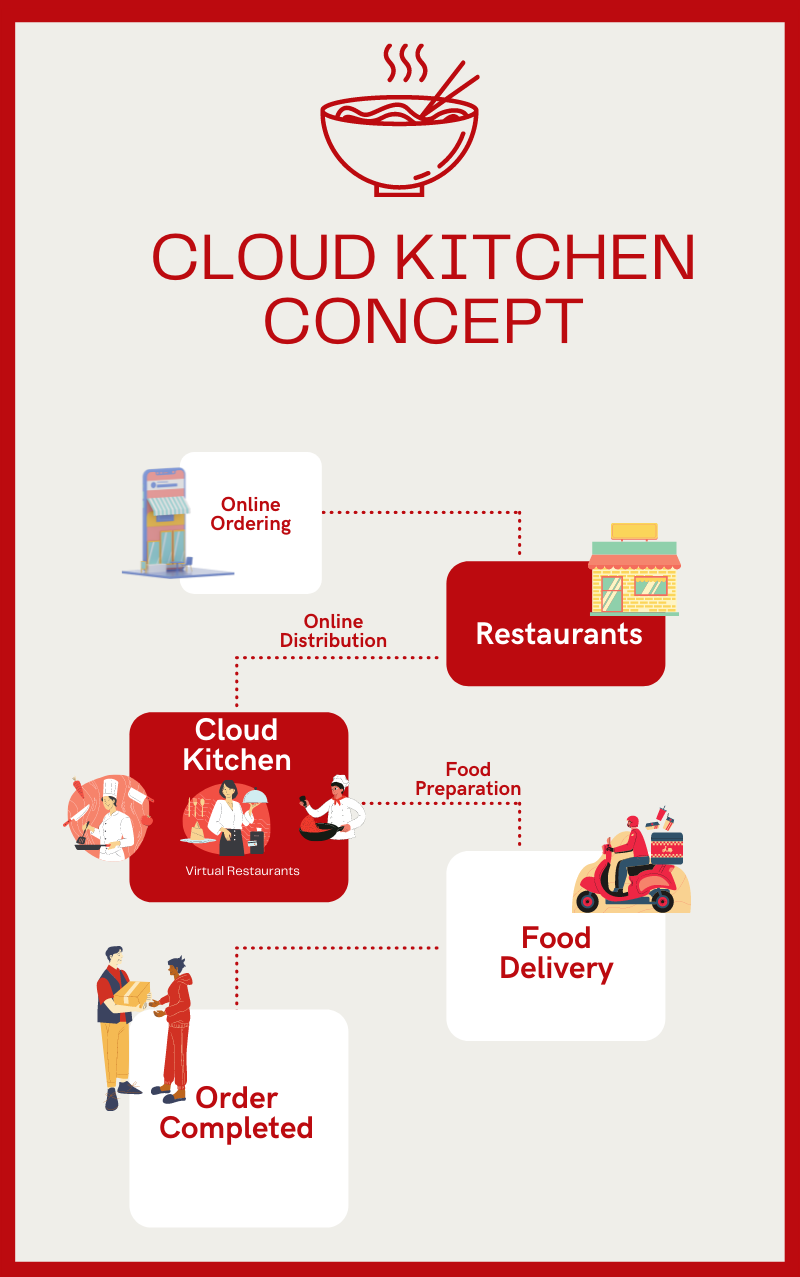
Image Source: www.code-brew.com
What Exactly is a Cloud Kitchen?
At its core, a cloud kitchen is a professional food preparation and cooking facility that is set up for the preparation of delivery-only meals. There are no dine-in facilities. Think of it as a restaurant’s kitchen without the front-of-house. They exist purely to serve customers through online ordering platforms and delivery services.
These kitchens can take several forms, from independent operations to facilities within larger, shared spaces. The key unifying factor is the absence of a customer-facing dining area. All orders are placed online, managed through apps like Uber Eats, DoorDash, Grubhub, or even the kitchen’s own website, and then delivered by riders.
The Evolution to Delivery-Only Kitchens
The concept isn’t entirely new, but its widespread adoption is fueled by recent technological advancements and changing consumer habits.
The Catalyst: Food Delivery Apps
The explosion of third-party delivery platforms has been the primary driver for cloud kitchens. These apps provide a ready-made customer base and handle the complex logistics of order taking, payment processing, and delivery. For a food business, this means:
- Wider Reach: Access to customers who might never physically visit their location.
- Reduced Overhead: No need for expensive real estate in high-traffic areas.
- Streamlined Operations: Focus on cooking and efficient food delivery operations.
Adapting to Consumer Demand
Modern consumers value convenience above all else. The ability to order a wide variety of cuisines from the comfort of their homes or workplaces has become a norm. Cloud kitchens are perfectly positioned to meet this demand by:
- Speed: Optimized for quick preparation and handover to delivery drivers.
- Variety: A single cloud kitchen location can often host multiple virtual restaurant brands, offering a diverse menu without the need for multiple physical stores.
- Cost-Effectiveness: Lower operational costs translate to potentially more competitive pricing for consumers.
Different Cloud Kitchen Models Explained
The term “cloud kitchen” is an umbrella term. Several specific models fall under this category, each with its own unique operational structure.
1. The Standalone Cloud Kitchen
This is the most straightforward model. A food business, whether an established restaurant or a new brand, sets up its own dedicated kitchen facility solely for delivery and takeout.
- Pros: Full control over branding, operations, and menu. Can be a cost-effective expansion strategy for existing restaurants.
- Cons: Requires significant upfront investment in equipment and facilities. Responsible for all marketing and customer acquisition.
2. The Shared Kitchen Space (Commissary Kitchen)
Here, multiple food businesses share a larger kitchen facility. This often involves individual, fully equipped kitchen stations or bays within a communal space. A commissary kitchen provides the infrastructure, allowing businesses to reduce their individual overhead.
- Pros: Lower startup costs by sharing resources like ovens, fryers, prep areas, and utilities. Access to professional kitchens without the full investment. Often includes shared support services like cleaning and waste management.
- Cons: Less control over the overall environment and shared facilities. Potential for scheduling conflicts. Need to adhere to shared kitchen rules.
3. The Aggregator-Owned Cloud Kitchen
Large food delivery platforms sometimes operate their own cloud kitchen facilities. They rent out kitchen spaces and equipment to existing restaurant brands or new virtual restaurant concepts looking to expand their delivery reach. This is often referred to as kitchen-as-a-service (KaaS).
- Pros: Leverages the platform’s existing infrastructure and customer base. Often offers bundled services and support.
- Cons: Higher rental costs. Dependence on the platform’s terms and conditions. Limited control over branding and operations.
4. The Multi-Brand Cloud Kitchen
This is a popular and efficient model. A single kitchen facility prepares food for multiple virtual restaurant brands, often under the same ownership. For example, one kitchen might prepare burgers for “Burger Bliss,” tacos for “Taco Fiesta,” and salads for “Green Goodness.”
- Pros: Maximizes kitchen utilization and reduces waste. Spreads marketing costs across multiple brands. Appeals to a broader customer base by offering diverse cuisines.
- Cons: Requires careful inventory management and operational efficiency to handle multiple menus and orders simultaneously.
How Does a Cloud Kitchen Actually Work? The Operational Flow
Let’s break down the step-by-step process of a typical cloud kitchen operation.
1. Order Placement
- Customers browse menus and place orders through third-party delivery apps or a brand’s direct online ordering system.
- The order is received by the cloud kitchen’s Point of Sale (POS) system, which is often integrated with the delivery platforms.
2. Order Management & Kitchen Display System (KDS)
- The POS system sends the order to a Kitchen Display System (KDS).
- The KDS displays incoming orders to the kitchen staff, showing item details, any customizations, and the time the order was received. This is crucial for efficient order fulfillment.
3. Food Preparation
- Kitchen staff prepare the food according to the order specifications.
- The kitchen is optimized for speed and efficiency, with ingredients often pre-portioned and stations set up for specific tasks.
- Because there’s no customer interaction, the kitchen can be designed purely for workflow and production.
4. Packaging for Delivery
- Once prepared, food is carefully packaged to maintain temperature and quality during transit.
- Packaging often includes branding specific to the virtual restaurant the order is for.
5. Dispatch and Delivery
- A delivery driver (either from a third-party platform or the kitchen’s own fleet) is assigned to pick up the order.
- The driver collects the packaged food from a designated pick-up area within the cloud kitchen.
- The food is then delivered to the customer’s location.
6. Customer Feedback and Iteration
- Customers provide ratings and reviews on the delivery platforms.
- This feedback is vital for the cloud kitchen to improve its menu, service, and food delivery operations.
Key Technology and Infrastructure
Cloud kitchens rely heavily on technology to function smoothly.
Digital Platforms and Apps
- Delivery Aggregators: Uber Eats, DoorDash, Grubhub, Deliveroo, Zomato, Swiggy, etc.
- Online Ordering Systems: Websites and apps developed by the cloud kitchen itself or through third-party providers.
Kitchen Technology
- Point of Sale (POS) Systems: Integrated systems that manage orders, payments, and inventory.
- Kitchen Display Systems (KDS): Digital screens that replace paper tickets, showing orders in real-time.
- Inventory Management Software: To track ingredients and prevent stockouts.
- Smart Ovens and Equipment: For consistent cooking and efficient energy use.
Operational Management Tools
- Order Aggregation Software: Consolidates orders from multiple platforms into a single interface.
- Delivery Management Software: For kitchens with their own delivery fleet, optimizing routes and driver allocation.
The Benefits of the Cloud Kitchen Model
The cloud kitchen model offers numerous advantages for entrepreneurs and existing businesses alike.
For Businesses:
- Lower Startup Costs: Significantly less capital is required compared to traditional restaurants. No need for expensive front-of-house decor, seating, or prime real estate.
- Reduced Overhead: Lower rent, fewer staff (no servers or hosts), and less utility consumption.
- Flexibility and Scalability: Easy to test new virtual restaurant concepts or expand to new locations without the commitment of a full brick-and-mortar setup.
- Data-Driven Decisions: Access to vast amounts of data from online orders and customer feedback allows for rapid menu adjustments and marketing strategies.
- Increased Efficiency: Focus solely on food preparation and order fulfillment, leading to faster turnaround times.
- Multi-Brand Opportunities: A single kitchen can support multiple revenue streams by operating several virtual restaurant brands.
For Consumers:
- Wider Variety of Choices: Access to a broader range of cuisines and specialized eateries delivered directly to their door.
- Convenience: Easy ordering and delivery without the need to go out.
- Potentially Better Value: Lower operational costs for the kitchen can sometimes translate to more affordable prices for consumers.
Challenges in the Cloud Kitchen Ecosystem
Despite the advantages, cloud kitchens face their own set of hurdles.
Intense Competition
The low barrier to entry means the market is crowded. Standing out requires excellent food, strong branding, and efficient operations.
Dependence on Delivery Platforms
- High Commission Fees: Delivery aggregators charge substantial commission percentages on each order, impacting profit margins.
- Algorithm Dependence: Visibility on delivery apps often depends on algorithms that can change, affecting order volume.
- Loss of Direct Customer Relationship: The delivery platform acts as an intermediary, making it harder to build direct customer loyalty and collect valuable data.
Maintaining Food Quality During Delivery
Ensuring food arrives at the customer’s door in optimal condition (temperature, texture, presentation) is a constant challenge.
Brand Building and Marketing
Without a physical presence, building brand recognition and trust relies heavily on digital marketing, customer reviews, and the quality of the delivered product.
Operational Complexity
Managing multiple brands, inventory, and ensuring timely order fulfillment from a single location requires robust systems and skilled management.
Staffing and Management
While fewer staff are needed than in traditional restaurants, finding and retaining reliable kitchen staff and managers is still critical.
The Future of Cloud Kitchens
The cloud kitchen model is not a fleeting trend but a fundamental shift in the food industry.
Integration of Technology
Expect further integration of AI for order forecasting, inventory management, and even recipe optimization. Drone delivery and advanced robotics may also play a role.
Rise of Hybrid Models
Some cloud kitchens might experiment with small pick-up windows or limited tasting events to build brand presence, creating hybrid models.
Focus on Sustainability
As the model grows, there will be an increasing focus on sustainable packaging and waste reduction practices.
Evolving Kitchen-as-a-Service
The kitchen-as-a-service model is likely to expand, offering more comprehensive support packages to businesses looking to enter the cloud kitchen space.
Hyper-Local Focus
Cloud kitchens may become even more specialized, focusing on very specific cuisines or dietary needs within localized delivery zones.
Frequently Asked Questions (FAQ)
Here are some common questions about how cloud kitchens operate:
Q1: Can I start a cloud kitchen with just one brand?
Yes, absolutely. Many cloud kitchens begin with a single virtual restaurant brand and expand to multiple brands as they grow.
Q2: What kind of food is best suited for a cloud kitchen?
Foods that travel well and can be prepared quickly are ideal. Think burgers, pizzas, tacos, salads, stir-fries, and certain types of noodles or pasta. Dishes that require immediate assembly or delicate presentation upon serving are more challenging.
Q3: How do cloud kitchens handle customer complaints?
Customer complaints are usually managed through the delivery platform’s customer service channels, although the cloud kitchen itself will often have internal processes for addressing issues. Good communication and proactive problem-solving are key.
Q4: What are the typical operating hours for a cloud kitchen?
This can vary greatly. Some operate during peak meal times (lunch and dinner), while others may offer extended hours, even 24/7, depending on the brands they host and the demand in their area.
Q5: How do cloud kitchens ensure food safety?
Cloud kitchens must adhere to the same stringent food safety regulations as any traditional restaurant. They require health permits, proper storage, temperature control, and trained staff. The professional environment of a commissary kitchen or a dedicated facility helps in maintaining these standards.
Q6: What is the role of a commissary kitchen in the cloud kitchen ecosystem?
A commissary kitchen provides the physical space, equipment, and sometimes utilities for multiple food businesses to operate their delivery-only kitchen operations. It’s a shared resource that lowers overhead for individual brands.
Q7: How does kitchen-as-a-service differ from a shared kitchen space?
Kitchen-as-a-service is a broader concept that might include not just the physical space but also integrated technology, marketing support, administrative services, and even menu development. A shared kitchen space is primarily about providing the infrastructure.
Q8: What are the main challenges in food delivery operations for a cloud kitchen?
Key challenges include maintaining food quality during transit, optimizing delivery routes, managing delivery driver availability, and dealing with the high commission fees charged by third-party platforms. Efficient order fulfillment is crucial.
In conclusion, the cloud kitchen model represents a dynamic and efficient approach to the modern food industry. By leveraging technology and focusing on delivery, these operations are reshaping how we access and enjoy meals, offering convenience and variety to consumers while providing a flexible and cost-effective avenue for food businesses to thrive.