
How many lumens for kitchen ceiling light? For general kitchen ambient lighting, aim for 20-30 lumens per square foot. For task lighting in work areas, you’ll need significantly more, around 70-80 lumens per square foot.
When it comes to illuminating your kitchen, the humble ceiling light plays a starring role. It’s the backbone of your kitchen’s lighting scheme, providing the foundational brightness that allows you to move around safely and comfortably. But how much light, measured in lumens, is actually enough? This comprehensive guide will help you decipher the world of kitchen ceiling light lumens and ensure your kitchen is perfectly lit for every activity, from prepping meals to casual dining.
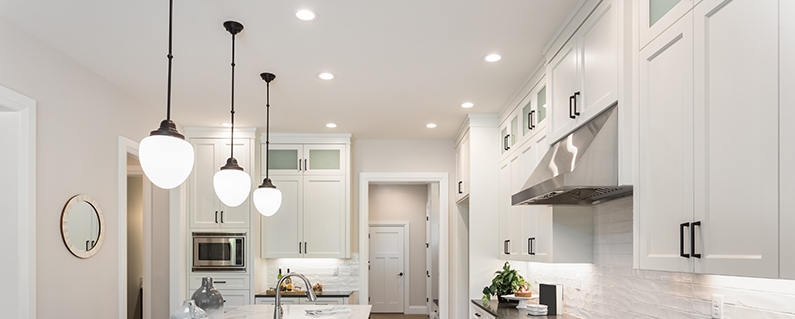
Image Source: cdn-ikpfnll.nitrocdn.com
Fathoming Kitchen Ceiling Light Brightness
The brightness of a light bulb is measured in lumens. More lumens mean a brighter light. Understanding the kitchen ceiling light brightness is crucial because kitchens are multi-functional spaces. They’re not just for cooking; they’re often gathering spots, homework stations, and even informal dining areas. Therefore, you need a lighting solution that can adapt to these various demands.
Why Lumens Matter in Your Kitchen
- Safety: Adequate lighting prevents accidents, especially when chopping vegetables or working with hot appliances.
- Functionality: Bright light is essential for performing tasks accurately and efficiently.
- Ambiance: The right amount of light creates a warm and inviting atmosphere.
- Visual Comfort: Too little light strains your eyes, while too much can be harsh and glaring.
Calculating Your Kitchen’s Lumen Needs
To figure out how much light for kitchen spaces you need, you first need to consider the size of your kitchen. Measure your kitchen’s square footage by multiplying its length by its width.
Formula for Square Footage:
Length (ft) x Width (ft) = Square Footage (sq ft)
Once you have your square footage, you can use the lumen recommendations for different types of kitchen lighting.
Kitchen Ambient Lighting Lumens
Ambient lighting is the general, overall illumination in a room. For your kitchen ceiling light, this is the primary layer of light that provides a comfortable and consistent level of brightness throughout the space.
Recommended Lumens for Ambient Kitchen Lighting
As a general rule, for kitchen ambient lighting, you should aim for 20 to 30 lumens per square foot. This range provides enough light for basic visibility and movement without being overly bright or dim.
Example Calculation:
Let’s say your kitchen is 10 feet by 12 feet.
-
Square Footage = 10 ft x 12 ft = 120 sq ft
-
For ambient lighting, you’d need:
- Minimum: 120 sq ft x 20 lumens/sq ft = 2400 lumens
- Maximum: 120 sq ft x 30 lumens/sq ft = 3600 lumens
This means you’ll want your kitchen ceiling fixture(s) to collectively produce between 2400 and 3600 lumens for comfortable general lighting.
Factors Affecting Ambient Light Levels
Several factors can influence the ideal lumen output for your kitchen’s ambient lighting:
- Ceiling Height: Higher ceilings might require slightly more lumens to achieve the same perceived brightness as lower ceilings.
- Wall Colors: Darker walls absorb more light, potentially requiring a higher lumen output to brighten the space effectively. Lighter walls reflect light, making the room appear brighter with fewer lumens.
- Natural Light: If your kitchen has large windows and receives ample natural light, you might need slightly fewer lumens from your ceiling lights during the day.
- Personal Preference: Some people simply prefer a brighter or dimmer environment.
Kitchen Task Lighting Lumens
Task lighting is focused light directed at specific work areas, such as countertops, the stovetop, or the sink. This type of lighting is crucial for detailed work and requires a higher kitchen light output.
Recommended Lumens for Task Lighting
For areas where you perform tasks like chopping, mixing, or reading recipes, you’ll need significantly more light. Aim for 70 to 80 lumens per square foot in these specific zones.
Example Calculation for a Task Area:
Consider a 3 ft x 6 ft (18 sq ft) countertop area.
- For task lighting, you’d need:
- Minimum: 18 sq ft x 70 lumens/sq ft = 1260 lumens
- Maximum: 18 sq ft x 80 lumens/sq ft = 1440 lumens
These lumens should ideally come from fixtures positioned directly above or in front of your work surfaces. This could include under-cabinet lights, pendant lights over an island, or recessed lights strategically placed over countertops.
Why Task Lighting is Essential
- Precision: Bright, focused light allows for detailed work without eye strain.
- Safety: It illuminates potential hazards like sharp knives or hot surfaces.
- Efficiency: Tasks are completed more quickly and accurately with good task lighting.
Deciphering Kitchen Ceiling Fixture Lumens
When selecting a kitchen ceiling fixture lumens output, you need to consider the type of fixture and how it distributes light. A single, large fixture might provide broad illumination, while multiple smaller fixtures can offer more targeted brightness.
Types of Kitchen Ceiling Fixtures and Their Lumen Considerations
- Flush Mounts and Semi-Flush Mounts: These fixtures sit close to the ceiling and are excellent for general ambient lighting. The diffuser or shade can affect light distribution, so check the fixture’s total lumen output.
- Recessed Lighting (Can Lights): These are installed directly into the ceiling. They are versatile and can be used for both ambient and task lighting depending on their placement and the beam angle of the bulb. For ambient lighting, space them evenly. For task lighting, cluster them over work areas.
- Pendant Lights: Often used over kitchen islands or dining areas, pendant lights provide focused downlight, making them ideal for task lighting or creating specific zones of brightness.
- Chandeliers: While often more decorative, chandeliers can also provide ambient light. Their lumen output can vary widely, so check the specifications.
Bulb Types and Their Lumen Output
The type of bulb you choose for your fixture significantly impacts the total lumen output.
- LEDs (Light Emitting Diodes): These are the most energy-efficient and longest-lasting option. They offer a wide range of lumen outputs and color temperatures. Most modern LED bulbs clearly state their lumen output on the packaging.
- Incandescent Bulbs: These are being phased out due to their inefficiency. They produce a warm light but consume much more energy for the same lumen output compared to LEDs.
- Halogen Bulbs: A more efficient version of incandescent bulbs, offering brighter light but still less efficient than LEDs.
- CFLs (Compact Fluorescent Lamps): These are more efficient than incandescent bulbs but can sometimes have a slower warm-up time and may not be dimmable as effectively as LEDs.
Table: Typical Lumen Output by Bulb Type (Per Bulb, Approximate)
| Bulb Type | Wattage (Approx.) | Lumens (Approx.) | Efficiency (Lumens/Watt) |
|---|---|---|---|
| Incandescent | 60W | 800 | 13-17 |
| Halogen | 43W | 800 | 17-20 |
| CFL | 13W | 800 | 60-70 |
| LED | 9W | 800 | 80-100+ |
Note: These are approximate values. Always check the specific packaging for exact lumen output.
Achieving the Best Lumens for Kitchen
The best lumens for kitchen lighting is a balance between sufficient brightness for tasks and a comfortable ambiance for relaxation. It’s about layering your lighting and ensuring each layer serves its purpose effectively.
Layering Your Kitchen Lighting
A well-lit kitchen utilizes a combination of lighting layers:
- Ambient Lighting: The overall illumination from your ceiling fixture(s).
- Task Lighting: Focused light for specific work areas (under-cabinet lights, pendants over an island).
- Accent Lighting: Used to highlight specific features, such as artwork or decorative elements. This is less critical for functional lighting but adds to the overall aesthetic.
Kitchen Ceiling Light Recommendations
When choosing kitchen ceiling light recommendations, consider these points:
- Fixture Design: Select a fixture that complements your kitchen’s style and provides adequate light diffusion.
- Number of Fixtures: For ambient lighting, you might need one central fixture or several smaller ones spread out, depending on the room size and layout. For task lighting, ensure fixtures are positioned directly over the areas that need illumination.
- Dimmability: Opting for dimmable bulbs and fixtures allows you to adjust the light levels for different activities and times of day, increasing versatility. This is a key feature for achieving optimal kitchen lighting lumens.
- Color Temperature (Kelvin): While lumens measure brightness, Kelvin (K) measures the color of the light.
- Warm White (2700K – 3000K): Creates a cozy, inviting atmosphere, good for dining areas or general living spaces.
- Cool White/Bright White (3500K – 4000K): Offers a neutral to slightly blueish tint, good for general kitchen lighting and task areas where clarity is important.
- Daylight (5000K – 6500K): Mimics natural daylight and is excellent for task lighting where color rendering is critical, but can feel too stark for general ambient lighting.
For the best lumens for kitchen use, a combination of warm white for general ambiance and cooler tones for task lighting is often ideal.
FAQ: Frequently Asked Questions About Kitchen Ceiling Light Lumens
Q1: How many lumens do I need for a 100 sq ft kitchen ceiling light?
For general ambient lighting in a 100 sq ft kitchen, you’ll need between 2000 lumens (100 sq ft x 20 lumens/sq ft) and 3000 lumens (100 sq ft x 30 lumens/sq ft).
Q2: Can I use one very bright ceiling light instead of multiple lights?
While one powerful light might provide sufficient lumens, it can lead to uneven lighting and glare. Multiple, well-placed fixtures are generally better for distributing light evenly and creating a more functional and comfortable environment.
Q3: What is the difference between lumens and watts?
Lumens measure the amount of light a bulb produces (brightness), while watts measure the energy it consumes. With LED technology, you get more lumens per watt, meaning brighter light with less energy use.
Q4: How do I check the lumen output of my current kitchen ceiling light?
Look for a sticker or print on the light bulb itself or its original packaging. If you don’t have the packaging, you can often find the bulb’s specifications by searching its model number online.
Q5: Is 800 lumens enough for a kitchen ceiling light?
800 lumens is generally suitable for a smaller area or as part of a layered lighting scheme. For a typical-sized kitchen that serves as a primary workspace, you will likely need more than 800 lumens for effective ambient lighting. For example, a 10×10 foot kitchen needs at least 2000 lumens for ambient light.
Q6: How many lumens should my under-cabinet lights have?
Under-cabinet lights are primarily for task lighting. Aim for a higher lumen output per linear foot or per fixture, focusing on directing that light onto your countertops. A common recommendation is 300-400 lumens per 2-foot under-cabinet fixture.
Q7: How many lumens for a kitchen island ceiling light?
If the island is used for food preparation, treat it as a task area. A pendant light over a kitchen island should provide focused light. Consider pendants that offer at least 500-800 lumens each, depending on the size of the island and how it’s used.
By carefully considering your kitchen’s size, layout, and intended use, you can confidently select kitchen ceiling light recommendations that provide the right kitchen lighting lumens for both a functional workspace and a welcoming atmosphere. Remember, good lighting enhances both the look and the usability of your kitchen.