
Figuring out the right number of recessed lights for your kitchen involves several factors, but a good starting point is to place them on a grid. For most kitchens, this means a spacing of about 4 to 6 feet apart, ensuring even illumination throughout the space.
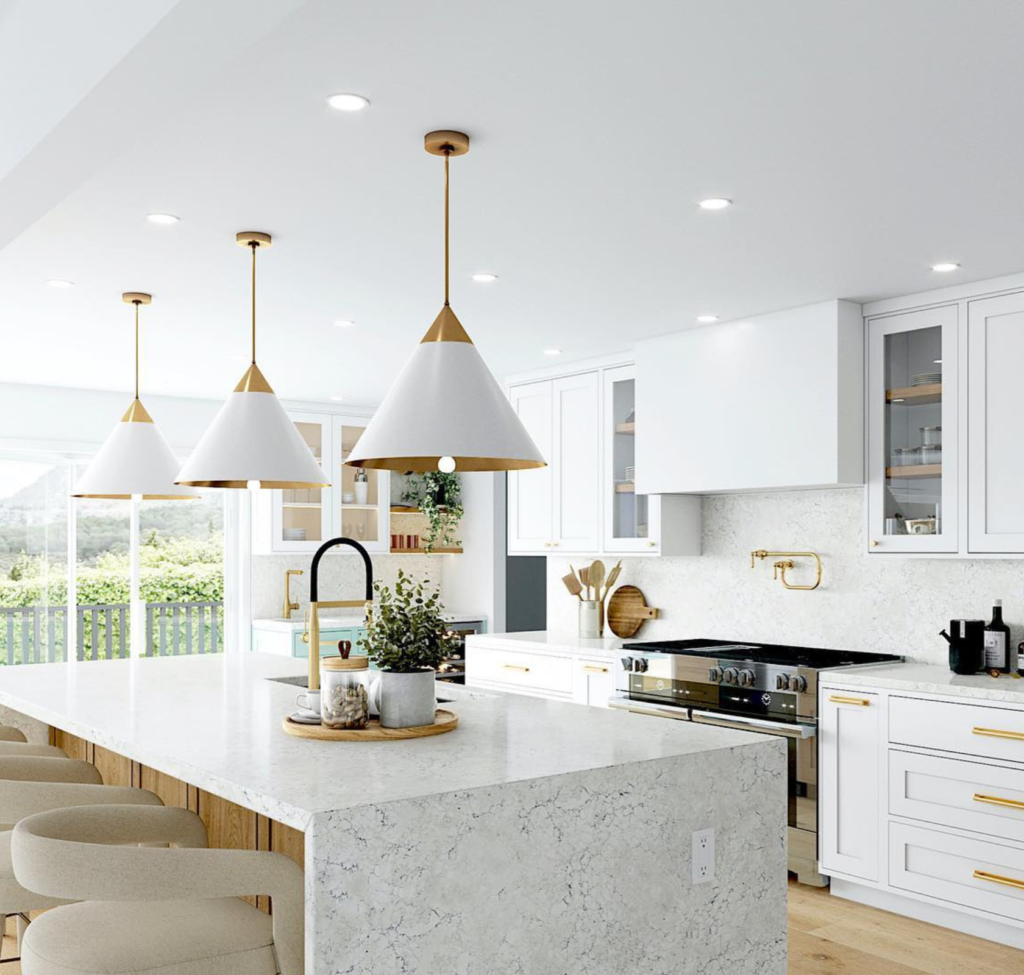
Image Source: blog.1800lighting.com
Achieving a Balanced Kitchen Lighting Layout
Your kitchen is the heart of your home, a place for cooking, gathering, and creating memories. Proper lighting is crucial for making this space functional and inviting. When it comes to kitchen lighting layout, recessed lighting plays a starring role, offering a clean, unobtrusive way to brighten your space. But how many recessed lights do you actually need? This guide will help you navigate the process, ensuring your kitchen is perfectly lit.
The Foundation: Spacing and Coverage
The fundamental principle behind recessed lighting is to provide consistent, ambient light. To achieve this, spacing is key. Think of your kitchen as a grid. The goal is to place lights so that the pools of light overlap, eliminating dark corners.
General Spacing Guidelines
A common recommendation for general ambient lighting with recessed lights is to space them every 4 to 6 feet. This range can vary based on the size of your room and the type of lights you choose.
- 4-foot spacing: This provides a denser light coverage, ideal for task-heavy areas or kitchens where bright, even light is paramount.
- 6-foot spacing: This can work for larger spaces or when you’re supplementing with other light sources like pendant lights or under-cabinet lighting.
Calculating Your Needs
To get a more precise idea, you can use a simple calculation:
- Measure your room: Get the length and width of your kitchen in feet.
- Divide by spacing: Divide the length by your chosen spacing (e.g., 5 feet). Do the same for the width.
- Multiply the results: Multiply the numbers from step 2. This gives you a rough estimate of the number of lights needed for general illumination.
Example:
For a 12 ft x 15 ft kitchen, using 5-foot spacing:
* Length: 12 ft / 5 ft = 2.4 (round up to 3 rows)
* Width: 15 ft / 5 ft = 3 (3 lights per row)
* Total lights: 3 rows x 3 lights/row = 9 lights
This calculation is a starting point. We’ll refine it further as we consider different areas and fixture types.
Considering the Recessed Lighting Kitchen Ceiling
The recessed lighting kitchen ceiling is your canvas. The height of your ceiling and the beam spread of your chosen recessed lights will significantly impact the number of fixtures you need.
Ceiling Height Matters
- Standard Ceilings (8-9 feet): In these spaces, 4- to 5-foot spacing is generally effective for even illumination.
- Higher Ceilings (10 feet and above): You might need to adjust your spacing slightly closer together, perhaps 4 to 5 feet, to ensure the light reaches the work surfaces effectively without feeling too dim. Alternatively, using wider beam spread trims can help distribute light more broadly.
Beam Spread of Recessed Lights
Recessed lights come with different beam spreads, which is the angle at which light is cast.
- Narrow Beam (e.g., 25-35 degrees): These are good for accentuating specific areas or for higher ceilings where you need to direct light downwards.
- Medium Beam (e.g., 40-60 degrees): This is the most common for general ambient lighting, offering a good balance of spread and intensity.
- Wide Beam (e.g., 70-90 degrees): These are excellent for lower ceilings or when you want maximum light coverage from fewer fixtures.
Table 1: Recessed Light Beam Spread and Ceiling Height Considerations
| Ceiling Height | Recommended Spacing | Beam Spread Type |
|---|---|---|
| 8-9 ft | 4-6 ft | Medium or Wide |
| 10-12 ft | 4-5 ft | Medium or Narrow |
| 12+ ft | 3-4 ft | Narrow |
When selecting your lights, check the manufacturer’s specifications for beam spread and how it performs at different ceiling heights.
Optimizing Your Kitchen Lighting Design
A successful kitchen lighting design goes beyond just ambient light. It incorporates layers of light to create a functional and aesthetically pleasing environment. Recessed lights are the foundation, but task lighting and accent lighting also play vital roles.
Task Lighting: Illuminating Your Work Zones
The kitchen is filled with work zones: countertops for prep, the stove for cooking, and the sink for washing. Recessed lights can contribute to task lighting, but often require supplementation for optimal clarity.
Countertop Illumination
When placing recessed lights over countertops, consider the “rule of thumb” for task lighting. You generally want a light source directly above or slightly in front of the task area.
- Placement: Aim to place recessed lights about 2-3 feet away from the wall above your countertops. This prevents shadows cast by your body as you work.
- Spacing: Spacing them 3-4 feet apart along the length of the cabinets is a good starting point.
Important Note: While recessed lights can help, dedicated task lighting like under-cabinet lights is often more effective at eliminating shadows directly on your work surface.
Stove and Sink Areas
These are high-activity areas.
- Stove: If your stove has a range hood with its own lighting, you may not need additional overhead recessed lights directly above it. However, if it’s a standalone cooktop or you want brighter general light, place a fixture or two nearby.
- Sink: A recessed light positioned directly over the sink area is beneficial for cleaning and food prep.
Accent Lighting: Highlighting Features
Recessed lights aren’t just for general illumination. They can also be used for accent lighting to draw attention to architectural features or decorative elements.
Showcasing Cabinets and Decor
- Wall Washing: Angled recessed lights placed close to a wall (about 2-3 feet) can create a “wall washing” effect, highlighting textured surfaces, tile backsplashes, or artwork.
- Cabinet Interiors: Small, recessed puck lights can be installed inside glass-front cabinets to illuminate dishes or decorative items.
General Ambient Lighting: The Overall Glow
This is where the grid layout of recessed lights shines. The goal is to provide a comfortable, even level of light throughout the entire kitchen.
The Grid System Revisited
For the main part of the kitchen ceiling, the grid system is your best friend.
- Perimeter Lighting: Many designers recommend running a line of recessed lights around the perimeter of the kitchen, about 2-3 feet from the walls. This helps to define the space and bounce light off the walls, creating a softer overall glow.
- Center of the Room: Then, fill in the center of the room with additional lights on your grid to ensure no dark spots remain.
Fathoming the Foot-Candle Requirement
Foot-candles measure the amount of light that falls on a surface. While this can get technical, a general guideline for kitchens is:
- General Ambient Light: 10-20 foot-candles
- Task Areas: 30-50 foot-candles
Choosing the right wattage and beam spread for your recessed lights will help you achieve these levels. Modern LED recessed lights offer excellent efficiency and a variety of brightness options.
Key Factors Influencing Recessed Light Quantity
Beyond simple spacing, several other factors influence how many recessed lights you’ll need.
Kitchen Size and Shape
- Large Kitchens: Obviously, larger kitchens will require more lights than smaller ones to maintain consistent coverage.
- Irregular Shapes: Kitchens with nooks, pantries, or L-shaped layouts might need additional fixtures in those areas to avoid shadows.
Light Fixture Types and Styles
The type of recessed light you choose matters.
Trim Types and Their Impact
Recessed lights have trims that are visible. The trim type can affect the light distribution.
- Standard Baffle Trim: These have concentric rings that reduce glare and are great for general lighting. They offer a good, diffused light.
- Gimbal/Adjustable Trim: These allow you to direct the light, making them useful for accenting artwork or specific areas. You might need fewer of these if you’re using them for directional lighting, but they are less effective for broad ambient coverage.
- Wall Wash Trim: These are specifically designed to distribute light evenly down a wall.
Lumen Output and Wattage
- Lumens: This is the actual measure of brightness. Higher lumen lights will provide more light, potentially allowing for slightly wider spacing.
- Wattage (for LEDs): While wattage traditionally indicated brightness, with LEDs, it’s more about energy efficiency. Focus on the lumen output. A typical 4-inch LED recessed light might produce 500-800 lumens.
Obstructions and Layout Features
- Cabinets: Cabinets can block light. Ensure lights are positioned to illuminate under cabinets effectively, or use dedicated under-cabinet lighting.
- Ceiling Beams or Vents: These will affect where you can place lights. You might need to adjust your grid to accommodate them.
- Islands and Peninsulas: These often benefit from pendant lights, but recessed lights can also be used around them to provide general illumination. If an island is large, consider placing recessed lights in a grid pattern above it, in addition to or instead of pendants.
Personal Preference and Dimmers
Ultimately, the “perfect” number of lights is also subjective.
- Dimmer Switches: Installing dimmer switches on all your recessed lights is a game-changer. It allows you to adjust the light level for different activities and moods, providing flexibility. With dimmers, you can afford to have slightly more light than you might think necessary, as you can always dim it down.
Step-by-Step Guide to Planning Your Recessed Lights
Let’s break down the process into manageable steps.
Step 1: Map Your Kitchen Layout
- Draw a Floor Plan: Sketch your kitchen, including the locations of cabinets, appliances, windows, doors, and any islands or peninsulas.
- Identify Work Zones: Mark out your primary work areas: sink, stove, prep counters, and pantry.
Step 2: Determine Lighting Layers
Think about the different types of light you need:
- Ambient: General illumination for the entire kitchen.
- Task: Focused light for specific activities (prep, cooking, cleaning).
- Accent: Light to highlight features.
Step 3: Plan Ambient Recessed Lighting
- Grid Your Room: On your floor plan, draw a grid for your ambient recessed lights.
- Spacing: Use the 4-6 foot rule as a starting point. Adjust based on ceiling height and desired brightness.
- Perimeter Lighting: Consider a row of lights 2-3 feet from the walls.
Step 4: Plan Task and Accent Lighting
- Over Work Areas: Add recessed lights directly above key task areas like the sink and prep counters, about 2-3 feet from the wall.
- Accent Features: If using recessed lights for accenting, plan their placement accordingly (e.g., closer to walls for washing).
- Consider Alternatives: For under-cabinet task lighting, think about LED strips or puck lights. For islands, pendants are often preferred.
Step 5: Calculate and Refine
- Count Your Fixtures: Sum up the lights planned for ambient, task, and accent purposes.
- Visualize: Imagine the light spread. Are there any obvious dark spots? Are task areas well-lit?
- Consult an Expert: If you’re unsure, a lighting designer or experienced electrician can help refine your plan.
Common Pitfalls to Avoid
Even with careful planning, mistakes can happen. Be aware of these common issues.
The “Too Few” Syndrome
It’s often better to have one or two more lights than you think you need, especially with dimmers. It’s difficult and expensive to add more recessed lights once the ceiling is finished.
The “Too Many” Clutter Effect
Conversely, an excessive number of lights can make a kitchen feel like an operating room, with too much light and a cluttered ceiling. Stick to your grid and zone planning.
Poorly Placed Task Lighting
Recessed lights placed too far back from the counter will cast shadows on your work surface. Ensure they are positioned correctly for optimal task illumination.
Ignoring Beam Spread
Using a narrow beam spread on a low ceiling for ambient lighting will result in spotty illumination and require more fixtures.
Forgetting About Glare
Choose trims with good glare control, especially if you have shiny surfaces like granite or stainless steel, which can reflect light uncomfortably.
Frequently Asked Questions (FAQ)
Q1: How far apart should recessed lights be in a kitchen?
A general rule of thumb is to space them 4 to 6 feet apart for even ambient lighting. This spacing can be adjusted based on ceiling height and the beam spread of your chosen fixtures.
Q2: Can recessed lights provide enough task lighting in a kitchen?
Recessed lights can contribute to task lighting, especially over prep areas. However, for the best results and to eliminate shadows, it’s highly recommended to supplement them with dedicated task lighting like under-cabinet lights.
Q3: What is the best type of recessed light for a kitchen?
For general ambient lighting, LED recessed lights with a medium to wide beam spread are popular. Consider integrated LED fixtures for longevity and efficiency. For task areas, you might use directional trims or ensure placement is directly over the work surface.
Q4: How many recessed lights do I need for a 10×10 kitchen?
For a 10×10 kitchen with 8-foot ceilings, a good starting point for ambient lighting would be 4 to 6 lights spaced 4-5 feet apart. You might add one or two more over specific task areas like the sink or prep counter.
Q5: Should recessed lights be in front of or behind the counter?
For task lighting over countertops, recessed lights should ideally be placed slightly in front of the counter (about 2-3 feet from the wall) to illuminate the work surface without your body casting shadows.
Q6: What size recessed lights are best for a kitchen?
Common sizes for kitchen recessed lights are 4-inch and 6-inch housings. 4-inch lights are often preferred for their lower profile and modern look, fitting well in most kitchen ceilings. 6-inch lights can provide more light output, which might be beneficial in larger kitchens or those with higher ceilings.
Q7: Do I need a different number of recessed lights for a vaulted ceiling?
Yes, vaulted or cathedral ceilings require a different approach. Due to the angles and often greater height, you’ll need to calculate spacing more carefully. Lights may need to be closer together, and directional or gimbal trims can be useful to aim light effectively. It’s often best to consult a lighting professional for vaulted ceilings.
By carefully considering these guidelines, you can create a kitchen lighting design that is not only functional but also enhances the beauty and atmosphere of your home.