
To determine the right CFM for your kitchen hood, consider the type and size of your cooking appliances, the size of your kitchen, and whether you have a gas or electric stove. A good starting point for residential kitchens is typically 100 CFM per linear foot of cooktop for electric stoves and 150 CFM per linear foot for gas stoves. However, this is just a basic guideline; a more precise calculation often involves using a kitchen exhaust CFM calculator or consulting a kitchen hood sizing guide.
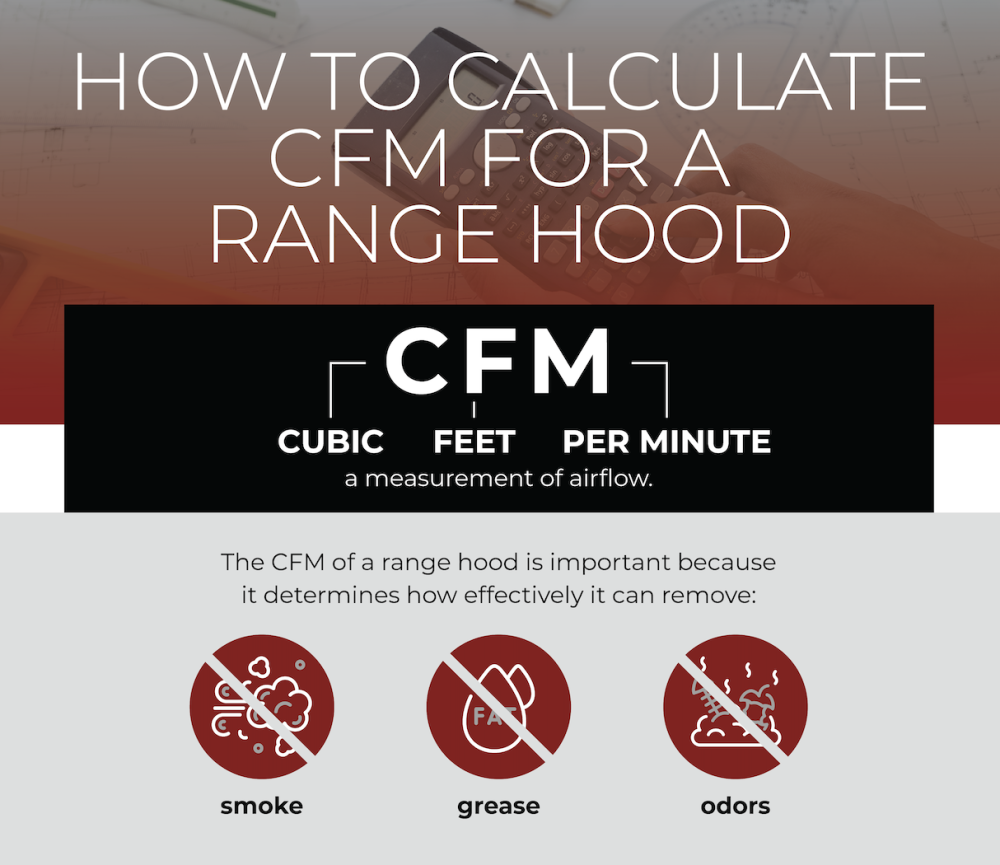
Image Source: www.worldcoppersmith.com
Fathoming Your Kitchen Ventilation Needs
A kitchen hood is more than just a decorative fixture; it’s a crucial component of a healthy and comfortable kitchen environment. Its primary role is to remove smoke, grease, steam, and odors generated during cooking, thereby improving air quality and preventing the buildup of unwanted residue on your cabinets and walls. But how do you pinpoint the right amount of airflow, measured in Cubic Feet per Minute (CFM), for your specific needs? This detailed guide will help you decipher the complexities of kitchen hood CFM requirements and make the best choice for your home.
The Science of Airflow: What is CFM?
CFM stands for Cubic Feet per Minute. In the context of kitchen hoods, it quantifies the volume of air the hood can move away from your cooking area each minute. A higher CFM generally means more powerful suction, which is essential for effectively removing airborne cooking contaminants.
Why CFM Matters: Beyond Comfort
While a well-ventilated kitchen is more pleasant, the importance of adequate CFM extends to:
- Health: Removing harmful particles and fumes from cooking, especially from gas stoves, is vital for respiratory health.
- Home Maintenance: Preventing grease and steam buildup protects your cabinets, walls, and appliances from damage and extends their lifespan.
- Odor Control: Effectively clearing out cooking smells prevents them from permeating your entire home.
- Fire Safety: While not a primary function, proper ventilation can help reduce the risk of grease fires by removing accumulated grease particles.
Decoding Your Cooking Habits and Appliance Type
The type of stove you have is a significant factor in determining your ventilation needs.
Best CFM for Gas Stove
Gas stoves produce more heat, moisture, and combustion byproducts (like nitrogen dioxide and carbon monoxide) compared to electric stoves. Therefore, they generally require a higher CFM. A common recommendation is to aim for 150 CFM per linear foot of cooktop for gas stoves. For example, a 30-inch gas cooktop (2.5 feet) would ideally need at least 375 CFM. However, if you frequently use high-BTU burners or cook with a lot of oil, you might need even more.
Best CFM for Electric Stove
Electric stoves, while producing less combustion byproducts, still generate steam and grease. For electric stoves, a good rule of thumb is 100 CFM per linear foot of cooktop. A 30-inch electric cooktop (2.5 feet) would thus require a minimum of 250 CFM.
Factors Influencing CFM Needs
Beyond the stove type, consider these:
- Cooking Style: Do you frequently stir-fry, sear, or deep-fry? These high-heat, high-grease cooking methods necessitate higher CFM.
- Kitchen Size: Larger kitchens require more powerful ventilation to effectively clear the air.
- Ceiling Height: Taller ceilings mean a larger volume of air to ventilate.
- Range Hood Type: Ducted hoods are generally more efficient than ductless ones.
Navigating the Range Hood CFM Chart
A range hood CFM chart can be a helpful visual aid, but it’s essential to understand the context behind the numbers. These charts often provide recommended CFM ranges based on cooktop width and type.
Here’s a simplified example of what a range hood CFM chart might look like:
| Cooktop Width (Inches) | Electric Stove (Min. CFM) | Gas Stove (Min. CFM) | High-Heat Cooking (Min. CFM) |
|---|---|---|---|
| 24 | 200 | 250 | 300 |
| 30 | 250 | 375 | 450 |
| 36 | 300 | 500 | 600 |
| 42 | 350 | 600 | 700 |
| 48 | 400 | 750 | 900 |
Note: These are general guidelines. Always consult manufacturer specifications and local building codes.
Interpreting the CFM Numbers
When looking at a range hood CFM chart, remember these points:
- Minimum vs. Recommended: The “minimum” CFM is often the bare requirement. For optimal performance, especially with demanding cooking, aim for the higher end of the spectrum or even slightly above.
- Cooktop Width: Measure the width of your cooktop, not necessarily the hood itself. The hood should ideally extend slightly beyond the cooktop’s edges.
- BTU Output (Gas Stoves): For gas stoves, the British Thermal Unit (BTU) output of your burners is a critical factor. Higher BTU output means more heat and fumes, demanding higher CFM.
Ductless vs. Vented Hood CFM: A Crucial Distinction
The type of ventilation system you choose significantly impacts the required CFM.
Vented Hoods (Ducted Systems)
Vented hoods, also known as ducted hoods, are the most effective. They capture cooking byproducts and exhaust them directly outside your home through a duct system.
- Pros: Highly efficient, remove all contaminants, quieter operation as air is expelled.
- Cons: Require professional installation and ductwork, which can be costly and complex, especially in existing homes.
- CFM Considerations: Vented hoods lose some airflow due to resistance in the ductwork and the hood itself. It’s often recommended to add 10-20% to your calculated CFM to compensate for this loss. For example, if your calculation suggests 400 CFM, opt for a hood rated at least 440 CFM.
Ductless Hoods (Recirculating Systems)
Ductless hoods capture air through filters (charcoal and mesh) and recirculate it back into the kitchen.
- Pros: Easier and cheaper to install, no need for ductwork.
- Cons: Significantly less effective at removing grease, steam, and odors. Filters need regular cleaning and replacement. Can recirculate some heat and moisture.
- CFM Considerations: Because they don’t expel air, the CFM rating for ductless hoods is often lower. However, their effectiveness is still limited by filter efficiency. While a higher CFM might seem better, the core limitation remains the filtration system. A ductless vs. vented hood CFM comparison clearly favors vented systems for air quality. For ductless hoods, the CFM rating primarily indicates how quickly the air is drawn through the filters.
The Role of Makeup Air
When a powerful kitchen hood exhausts air from your home, it creates a negative pressure. To maintain proper airflow and prevent issues like backdrafting of combustion appliances (furnaces, water heaters), you need makeup air requirements kitchen hood.
What is Makeup Air?
Makeup air is fresh air that is introduced into your home to replace the air being exhausted by the ventilation system.
When is Makeup Air Necessary?
In most residential settings, especially for hoods below 400 CFM, natural infiltration (air seeping through cracks and openings in the house) is often sufficient to provide makeup air. However, for more powerful hoods, particularly those exceeding 400 CFM, a dedicated makeup air system is often required by building codes.
Makeup Air Calculation
The need for and sizing of a makeup air system depend on:
- Hood CFM: Typically, if your hood’s CFM rating exceeds 400, you’ll need a makeup air system.
- Ductwork Length and Bends: Longer and more complex duct runs create more resistance, increasing the negative pressure.
- House Sealing: Tightly sealed homes have less natural air infiltration, making makeup air more critical.
A common calculation for makeup air is to provide 1 CFM of makeup air for every 100 CFM of exhaust air, but this can vary based on local codes and the specific system.
Types of Makeup Air Systems
- Passive Makeup Air: These systems rely on natural pressure differences to draw outside air in. They are simpler but less controlled.
- Active Makeup Air: These systems use a fan to actively draw in and often temper (heat or cool) makeup air, providing more consistent and controlled ventilation.
Consulting with a qualified HVAC professional or referring to local building codes is essential to ensure your makeup air system is correctly sized and installed.
Advanced Considerations: Commercial Kitchen Hood CFM
The ventilation requirements for commercial kitchen hood CFM are significantly higher and more complex than for residential kitchens. This is due to more powerful cooking equipment, longer operating hours, and stricter health and safety regulations.
Commercial Kitchen Ventilation Standards
Commercial kitchens are subject to stringent codes set by organizations like the International Mechanical Code (IMC) and local health departments. These codes dictate specific CFM requirements based on the type and size of cooking appliances, hood design (canopy, eyebrow, etc.), and kitchen layout.
Key Factors in Commercial CFM Calculation
- Appliance Type and Heat Output: Fryers, griddles, and charbroilers, for example, produce substantial heat and grease, requiring higher CFM.
- Hood Design: The shape and placement of the hood play a crucial role in its capture efficiency.
- Capture Velocity: This refers to the speed of air needed at the face of the hood to effectively draw in cooking fumes.
- Wellington Method: A common calculation method for commercial hoods that considers the linear footage of the cooktop and the type of appliances.
- Makeup Air: Essential in commercial settings to balance the massive exhaust volumes, often requiring dedicated systems.
Commercial Kitchen Hood CFM Examples
- Light-Duty Appliances (e.g., ovens, steamers): May require around 150 CFM per linear foot.
- Medium-Duty Appliances (e.g., fryers, ranges): Can demand 250-300 CFM per linear foot.
- Heavy-Duty Appliances (e.g., charbroilers, woks): Often require 400+ CFM per linear foot.
It is highly recommended to consult with a commercial kitchen ventilation specialist to ensure compliance and optimal performance.
Your Kitchen Hood Sizing Guide: A Step-by-Step Approach
Creating a kitchen hood sizing guide involves a systematic process to ensure you select a hood that effectively serves your kitchen.
Step 1: Measure Your Cooktop
Measure the exact width of your cooking surface in inches or feet.
Step 2: Identify Your Stove Type
Are you using a gas or electric stove? This is a critical determinant.
Step 3: Assess Your Cooking Habits
Be honest about your cooking style. Do you often use high heat, fry, or sear?
Step 4: Calculate Initial CFM Needs
Use the general rules of thumb:
* Electric Stove: 100 CFM per linear foot of cooktop.
* Gas Stove: 150 CFM per linear foot of cooktop.
* For High-Heat Cooking: Increase the CFM by 25-50% for either stove type.
Example Calculation:
Let’s say you have a 36-inch (3 feet) gas stove and frequently stir-fry.
- Base CFM: 3 feet * 150 CFM/foot = 450 CFM
- Add for High-Heat Cooking: 450 CFM * 1.25 (25% increase) = 562.5 CFM
You would aim for a hood with a CFM rating of at least 563 CFM.
Step 5: Factor in Hood Type and Ductwork (Vented Hoods)
If you are installing a ducted hood, you need to account for airflow resistance. Multiply your calculated CFM by 1.1 to 1.2 (for 10-20% increase).
- Continuing the Example: 563 CFM * 1.15 = 647.45 CFM
So, for this scenario, a hood rated around 650 CFM would be ideal.
Step 6: Consider Your Kitchen Size and Ceiling Height
While the cooktop is the primary driver, a very large kitchen or high ceilings might warrant a slightly higher CFM to ensure the entire space is effectively ventilated.
Step 7: Review Manufacturer Specifications and Local Codes
Always check the manufacturer’s recommended CFM for their hoods. They often provide specific guidelines based on their product’s performance. Additionally, research local building codes, as they might have specific requirements for residential ventilation.
Step 8: Use a Kitchen Exhaust CFM Calculator
Many online retailers and manufacturers offer a kitchen exhaust CFM calculator. These tools often ask for more specific details about your appliances, kitchen layout, and cooking habits to provide a more tailored recommendation.
Choosing the Best CFM for Your Kitchen Hood
The “best” CFM is not a one-size-fits-all answer. It’s the CFM that precisely matches your cooking needs and kitchen environment.
Residential Kitchen Ventilation CFM: Key Takeaways
- Minimum Requirements: Ensure you meet the basic CFM needs based on your stove type and width.
- Over-Ventilation vs. Under-Ventilation:
- Under-ventilation is the more common problem, leading to poor air quality and buildup.
- Over-ventilation (excessively high CFM for a small kitchen with minimal cooking) can be inefficient and create drafts, but it’s generally less detrimental than under-ventilation.
- Noise Levels: Higher CFM hoods often come with higher noise levels. Some hoods have multiple fan speeds, allowing you to use lower CFM settings for lighter cooking.
- Duct Size: The diameter of your ductwork should be appropriately sized for the hood’s CFM. Undersized ducts can restrict airflow and reduce efficiency.
The Importance of Capture Area
Beyond CFM, the physical size and design of the hood’s capture area are crucial. A wider and deeper hood will capture more smoke and grease than a smaller one, even if they have the same CFM rating. Ideally, your hood should extend 3 inches beyond each side of your cooktop and be mounted at the manufacturer’s recommended height.
Frequently Asked Questions (FAQ)
Q1: Can I use a hood with a CFM lower than recommended?
A1: While you can, it’s not advisable. A hood with insufficient CFM will not effectively remove smoke, grease, and odors, leading to poorer air quality and potential long-term damage to your kitchen.
Q2: How often should I clean or replace my range hood filters?
A2: For vented hoods, metal mesh filters should be cleaned regularly (monthly or bi-monthly depending on use). For ductless hoods, charcoal filters need replacement every 3-6 months, as they cannot be cleaned. Always follow the manufacturer’s recommendations.
Q3: Does the CFM rating include the fan’s efficiency?
A3: CFM ratings are typically measured at the motor. Actual CFM delivered to the outside can be lower due to duct resistance. Manufacturers often provide “static pressure” ratings to help estimate real-world performance.
Q4: What is the difference between CFM and Sones (noise level)?
A4: CFM measures airflow, while Sones measure sound. A hood with a high CFM might also have a high Sone rating (be louder). Look for hoods that balance high CFM with low Sones for a more pleasant cooking experience.
Q5: Is it possible to have too much CFM for a residential kitchen?
A5: Yes, it is possible. An excessively high CFM for a small kitchen with light cooking can lead to over-ventilation, creating drafts and unnecessary energy expenditure. However, it’s generally better to have a slightly higher CFM than too low.
By carefully considering these factors and utilizing the guidance provided, you can confidently select the perfect CFM for your kitchen hood, ensuring a cleaner, healthier, and more enjoyable cooking environment.