
The cost of a kitchen island can range from a few hundred dollars for a simple, portable option to tens of thousands for a large, custom-built centerpiece. Factors like size, materials, features, and installation all play a significant role in the final kitchen island prices.
A kitchen island is more than just a piece of furniture; it’s often the heart of the home, a versatile workspace, a casual dining spot, and a focal point for entertaining. When planning your kitchen renovation or redesign, budgeting for an island is crucial. This detailed guide will break down the average kitchen island cost, explore different types of islands, and help you make informed decisions to fit your budget and needs.
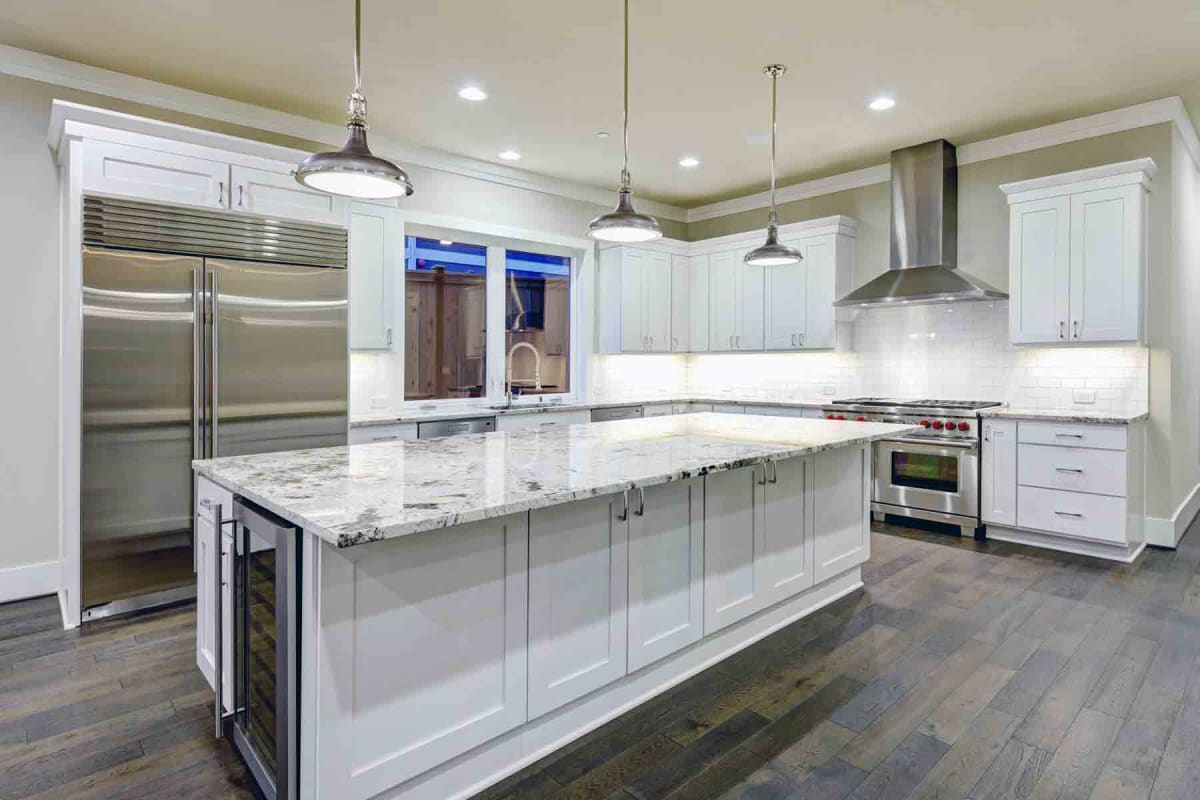
Image Source: res.cloudinary.com
Deciphering the Average Kitchen Island Cost
The average kitchen island cost can vary widely, but most homeowners can expect to spend between $1,000 and $4,000. This broad range reflects the vast array of options available, from basic, functional units to elaborate, custom designs with high-end finishes.
Several key elements contribute to the overall price tag:
- Island Type: Are you looking for a ready-made, off-the-shelf unit or a custom kitchen island price that’s tailored to your exact specifications?
- Materials: The choice of countertop, cabinet materials, and hardware can significantly impact the cost.
- Size and Complexity: Larger islands with intricate designs, multiple levels, or specialized features will naturally cost more.
- Features: Integrated appliances, plumbing, electrical work, and unique storage solutions add to the expense.
- Labor: Professional installation, including any necessary modifications to your kitchen’s layout or utilities, will also factor into the final cost.
Prefabricated vs. Custom Kitchen Islands
The first major decision you’ll face when budgeting for a kitchen island is whether to opt for a prefabricated kitchen island cost or a custom-built one. Each has its pros and cons:
Prefabricated Kitchen Islands
Prefabricated or ready-made kitchen islands are a popular choice for their affordability and availability. These are typically mass-produced in standard sizes and styles, often found at big-box retailers, furniture stores, or online.
Pros:
* Lower Cost: Generally much cheaper than custom options.
* Quick Availability: You can often take them home the same day or have them delivered relatively quickly.
* Variety of Styles: Available in a wide range of designs, from rustic to modern.
* Ease of Assembly: Many come pre-assembled or require minimal assembly.
Cons:
* Limited Customization: You’re restricted to existing sizes, shapes, and finishes.
* Potential for Lower Quality: Materials and construction might not be as robust as custom pieces.
* May Not Fit Perfectly: Standard sizes might not integrate seamlessly with your existing kitchen layout.
Typical Price Range for Prefabricated Islands:
* Budget/Basic Units: $200 – $800
* Mid-Range Options: $800 – $2,500
* Higher-End Prefabricated: $2,500 – $5,000
Custom Kitchen Islands
A custom kitchen island price reflects the personalization and craftsmanship involved. These islands are designed and built specifically for your kitchen, taking into account your exact dimensions, style preferences, and functional needs.
Pros:
* Perfect Fit: Tailored to your kitchen’s layout and your specific requirements.
* High-Quality Materials & Craftsmanship: You can choose the best materials and ensure superior construction.
* Unique Design: Create a truly one-of-a-kind piece that complements your kitchen’s aesthetic.
* Integrated Functionality: Easily incorporate specific features like specialized storage, appliances, or seating.
Cons:
* Higher Cost: Significantly more expensive than prefabricated options.
* Longer Lead Time: Design, fabrication, and installation can take several weeks or months.
* Requires More Planning: Involves detailed design consultations and decision-making.
Typical Price Range for Custom Islands:
* Simple Custom Designs: $2,000 – $5,000
* Moderately Complex Custom Islands: $5,000 – $15,000
* High-End, Luxury Custom Islands: $15,000+
Material Costs for Kitchen Island
The materials chosen for your island’s construction and countertop are major drivers of kitchen island pricing.
Cabinetry Materials
The base of your island, typically made from cabinetry, can be constructed from various materials:
- Plywood: A common and durable choice. Cost varies based on the type of wood veneer and grade. Expect $50-$150 per sheet.
- MDF (Medium-Density Fiberboard): A more budget-friendly option, but less durable and susceptible to moisture damage. Cost is around $30-$60 per sheet.
- Solid Wood: Hardwoods like maple, cherry, or oak offer premium durability and aesthetics but come at a higher price. Expect $100-$300+ per board foot.
Countertop Materials
The countertop is often the most visible and expensive component of a kitchen island.
- Laminate: The most budget-friendly option, mimicking the look of more expensive materials like stone.
- Cost: $30 – $70 per square foot.
- Pros: Affordable, wide variety of patterns, easy to clean.
- Cons: Less durable, susceptible to scratches and heat damage.
- Butcher Block (Wood): Adds warmth and a natural look. Requires regular maintenance.
- Cost: $40 – $100 per square foot.
- Pros: Natural beauty, can be sanded and refinished, great for food prep.
- Cons: Needs regular oiling/sealing, can scratch and stain.
- Solid Surface (e.g., Corian): Non-porous and seamless, offering a clean look.
- Cost: $50 – $100 per square foot.
- Pros: Seamless appearance, non-porous, stain-resistant, repairable.
- Cons: Can scratch, not as heat-resistant as stone.
- Granite: A popular natural stone known for its durability and unique patterns.
- Cost: $50 – $150+ per square foot (depending on rarity and origin).
- Pros: Durable, heat-resistant, beautiful natural variations, increases home value.
- Cons: Porous (requires sealing), can chip, heavy.
- Quartz: Engineered stone that is very durable, non-porous, and low-maintenance.
- Cost: $75 – $200+ per square foot.
- Pros: Extremely durable, stain-resistant, consistent color and pattern, low maintenance.
- Cons: Can be damaged by extreme heat, less natural variation than stone.
- Marble: Prized for its luxurious look and veining, but it’s softer and more prone to staining and etching.
- Cost: $75 – $250+ per square foot.
- Pros: Elegant and luxurious appearance.
- Cons: Softer, porous, easily stained and etched, requires frequent sealing.
- Concrete: Offers a modern, industrial look and can be customized with colors and finishes.
- Cost: $75 – $200 per square foot.
- Pros: Customizable, durable, modern aesthetic.
- Cons: Heavy, porous (requires sealing), can crack.
- Stainless Steel: Popular for a professional kitchen look, very hygienic and durable.
- Cost: $50 – $150 per square foot.
- Pros: Hygienic, durable, heat-resistant, modern look.
- Cons: Can scratch and dent, shows fingerprints.
Hardware and Finishes
Don’t forget the cost of hardware (knobs, pulls) and finishes (paint, stain, glaze) for your island’s cabinetry.
- Hardware: $5 – $50+ per piece.
- Paint/Stain: $30 – $100 per gallon.
Labor Costs Kitchen Island
The labor costs kitchen island installation can be a significant portion of the total expense, especially if you’re adding electrical or plumbing.
Professional Installation
If you’re purchasing a prefabricated island, installation might involve basic assembly and placement. However, if you’re getting a custom island, the installation is more involved.
- Assembly and Placement: For ready-made islands, this could range from $100 to $500 depending on complexity.
- Custom Island Installation: This can range from $500 to $3,000 or more, depending on the island’s size, complexity, and any required modifications to your kitchen.
Factors affecting labor costs:
* Cabinet Installation: If building a custom island from scratch, cabinet installers will be needed.
* Countertop Installation: Fabricators and installers charge for measuring, cutting, and fitting the countertop.
* Plumbing: If you want a sink in your island, you’ll need a plumber to connect water supply and drainage. This can add $500 – $2,000+.
* Electrical: For outlets, under-cabinet lighting, or appliance hookups, an electrician is required. This can add $200 – $1,000+.
* Structural Modifications: If the island requires changes to flooring, subflooring, or structural supports, costs will increase.
DIY Kitchen Island Cost
Opting for a DIY kitchen island cost can significantly reduce your overall expenses, but it requires time, skill, and the right tools.
- Material Costs: You’ll still need to purchase all the materials (cabinetry, countertop, hardware).
- Tool Rental/Purchase: If you don’t own the necessary tools, you’ll need to factor in rental or purchase costs.
- Time Investment: DIY projects require a considerable time commitment.
- Potential for Errors: Mistakes can be costly and may require professional help to fix.
A DIY approach could save you $500 to $2,500+ on labor, depending on the complexity of the island.
Adding Features and Appliances
The more features you integrate into your island, the higher the cost will be.
- Sinks and Faucets: A basic sink can add $100-$500, while high-end models can cost $1,000+. Faucets vary similarly.
- Appliances:
- Dishwasher: $600 – $1,500+
- Wine Fridge/Beverage Cooler: $400 – $1,200+
- Microwave Drawer: $800 – $1,500+
- Cooktop: $300 – $1,500+ (installation adds to this)
- Lighting: Under-cabinet lighting, pendant lights, or task lighting can add $100-$500+.
- Seating: Adding a breakfast bar or overhang for seating requires more countertop material and potentially specialized support, adding to the cost.
Understanding Kitchen Island Pricing Guide: Factors to Consider
When evaluating kitchen island pricing, consider these factors to get the most accurate estimate for your project:
- Size: The dimensions of your island are the primary cost driver. Larger islands require more materials and labor.
- Shape: Standard rectangular islands are usually the most cost-effective. More complex shapes like L-shaped or curved islands will increase costs.
- Cabinet Style: The complexity of cabinet doors and drawers (e.g., shaker style vs. ornate panels) impacts fabrication costs.
- Finish: Custom paint colors or intricate finishes can add to the price.
- Storage Solutions: Specialty drawers, pull-out shelves, or built-in organizers increase the cost.
- Legs or Base: Open-leg designs might be less expensive than a fully enclosed cabinet base.
- Location: If your kitchen is on an upper floor or in a difficult-to-access location, installation costs may be higher due to the logistical challenges.
Budget Kitchen Island Options
If your budget is a primary concern, you can still achieve a functional and attractive kitchen island without breaking the bank.
Portable Kitchen Islands
These are often the most affordable options, typically costing $100 to $500. They usually come on wheels, offering flexibility in placement and the ability to be moved out of the way. While they offer additional counter space and storage, they generally lack the integrated look and permanence of built-in islands. Many budget kitchen island solutions can be found in this category.
Small, Basic Islands
Look for smaller, simpler prefabricated islands. These might have a laminate or butcher block top and basic cabinet storage. You can often find decent options in the $500 to $1,500 range.
DIY with Inexpensive Materials
If you’re handy, a DIY approach using more affordable materials like plywood for the base and a laminate or DIY-poured concrete countertop can be a very economical choice. This can bring the DIY kitchen island cost down significantly, potentially to a few hundred dollars for materials.
Repurposed Furniture
Consider repurposing an old dresser, credenza, or workbench into a kitchen island. With some modifications and a new countertop, you can create a unique and budget-friendly island. This approach often falls into the budget kitchen island category, with costs only involving materials for the revamp.
Calculating Your Kitchen Island Cost: A Sample Breakdown
Let’s consider a hypothetical mid-range kitchen island to illustrate how costs can add up.
Scenario: A 3ft x 7ft island with a granite countertop, base cabinets, and professional installation.
| Item | Estimated Cost Range | Notes |
|---|---|---|
| Cabinet Base | $800 – $2,500 | Plywood construction, standard shaker doors, 2-3 drawers, 1 cabinet |
| Granite Countertop | $1,050 – $2,100 | Mid-range granite ($75-$150/sq ft for 21 sq ft) |
| Hardware (Pulls/Knobs) | $50 – $200 | For drawers and cabinet |
| Professional Installation | $500 – $2,000 | Includes cabinet assembly/placement, countertop fitting |
| Optional: Electrical | $300 – $800 | Adding an outlet for appliances |
| Optional: Sink/Faucet | $300 – $1,000 | Basic sink and faucet |
| Total Estimated Cost | $2,700 – $8,600+ | This is a broad estimate; actual costs will vary. |
This table demonstrates that even a moderately sized island can incur substantial costs when all components are considered.
Frequently Asked Questions (FAQ)
Q1: What is the most expensive part of a kitchen island?
A1: The countertop material is typically the most expensive component of a kitchen island, especially if you opt for high-end natural stone like marble or quartz.
Q2: Can I install a kitchen island myself?
A2: Yes, you can install a simple, prefabricated kitchen island yourself if you have basic DIY skills. However, if your island requires plumbing or electrical work, or if it’s a custom-built unit, professional installation is highly recommended.
Q3: How much does it cost to install a kitchen island?
A3: The cost to install kitchen island can range from $100-$500 for simple assembly of a prefabricated unit to $500-$3,000+ for custom installations, including any necessary electrical or plumbing work.
Q4: What is a good budget for a kitchen island?
A4: A good budget for a basic, prefabricated kitchen island can be anywhere from $300 to $1,500. For a mid-range island with decent materials and professional installation, budget $1,500 to $4,000. Custom islands can start at $2,000 and go upwards of $15,000+.
Q5: Are custom kitchen islands worth the extra cost?
A5: Custom kitchen islands are worth the extra cost if you have specific design requirements, need a precise fit for your kitchen layout, or desire unique features and high-quality materials that aren’t available in prefabricated options. They offer unparalleled personalization and can become a true focal point.
Q6: What are the cheapest kitchen island options?
A6: The cheapest kitchen island options are typically portable islands or small, basic prefabricated units. DIY options using less expensive materials can also be very budget-friendly.
By carefully considering these factors and exploring the various options available, you can confidently budget for and select a kitchen island that perfectly suits your kitchen’s style, functionality, and your financial plan.