
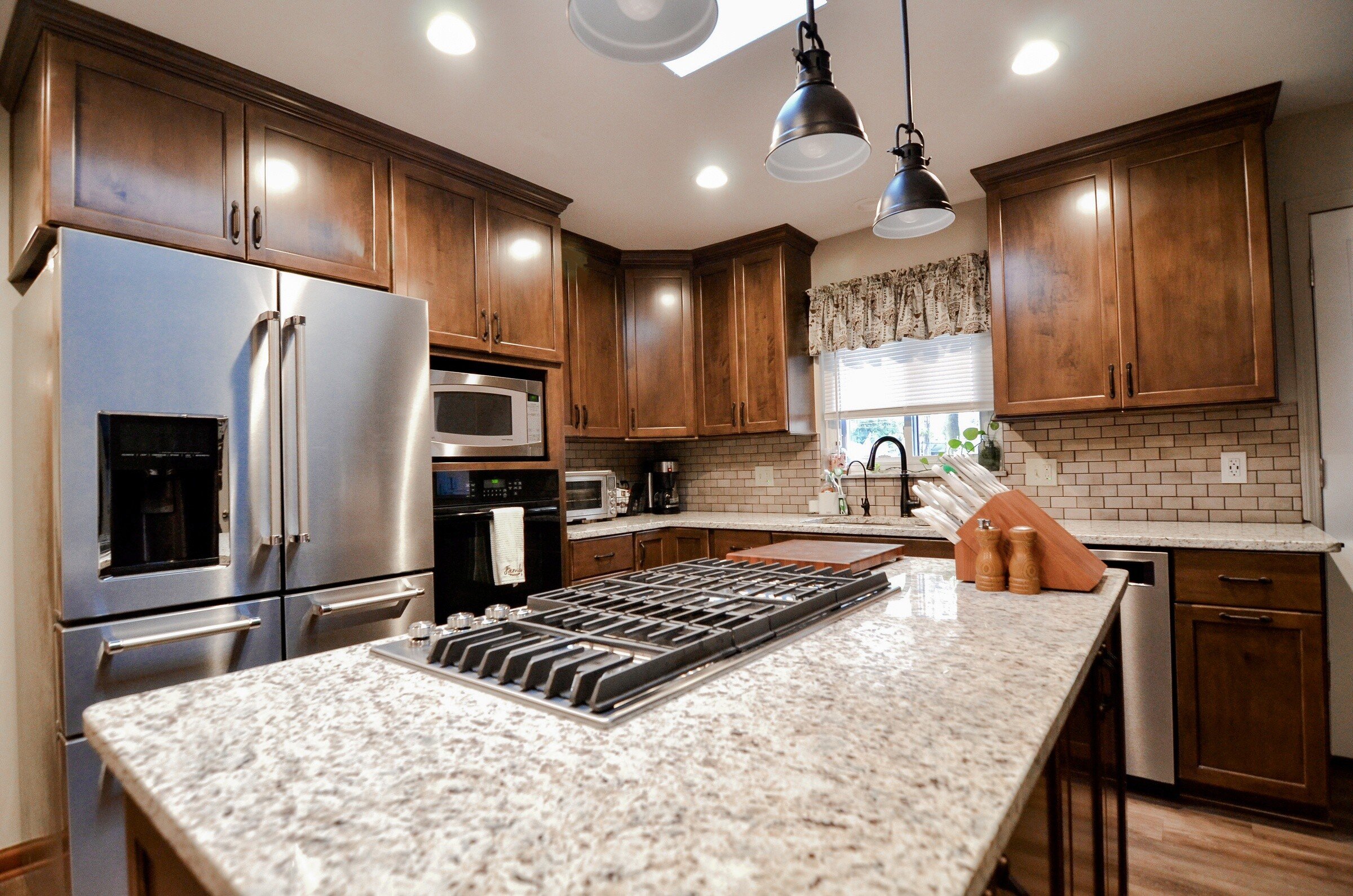
Image Source: www.jsbhomesolutions.com
How Much Does It Cost To Replace Kitchen Counters?
The cost of new kitchen counters can vary greatly, but typically ranges from $1,000 to $5,000, with the average cost to replace kitchen counters falling around $3,000. This price depends heavily on the material chosen, the size of your kitchen, and the complexity of the installation.
Replacing your kitchen counters is a significant home improvement project. It can dramatically change the look and feel of your kitchen, adding both style and value. But before you dive into choosing the perfect slab, it’s crucial to get a handle on the expenses involved. This comprehensive guide will walk you through everything you need to know about the kitchen countertop replacement cost.
Deciphering the Factors Influencing Your Countertop Budget
Several key elements contribute to the final price tag of your new kitchen counters. By understanding these factors, you can better estimate your project’s cost and make informed decisions.
Kitchen Counter Material Costs: The Biggest Piece of the Puzzle
The material you select for your countertops is the most significant driver of cost. Each material has its own unique price point, determined by its rarity, durability, aesthetic appeal, and how it’s processed.
Here’s a breakdown of common kitchen counter materials and their typical price ranges per square foot (installed):
- Laminate Countertop Replacement Cost:
- Price Range: $40 – $100 per square foot.
- Laminate is the most budget-friendly option. It’s made from layers of plastic fused to particleboard. While it’s affordable and comes in a vast array of colors and patterns, it’s less durable than other materials and can be prone to scratches, heat damage, and water absorption if the edges aren’t properly sealed.
- Butcher Block Countertop Replacement Cost:
- Price Range: $50 – $150 per square foot.
- Butcher block offers a warm, natural look. It’s typically made from hardwoods like maple, oak, or walnut. Its cost varies based on the type of wood and the grain pattern. Butcher block is durable and can be sanded and refinished if scratched or damaged. However, it requires regular sealing and maintenance to prevent staining, scratching, and water damage.
- Solid Surface Countertops (e.g., Corian):
- Price Range: $70 – $120 per square foot.
- These are made from acrylic or polyester resins. They are non-porous, easy to clean, and can be seamlessly molded into various shapes. Repairs for scratches and chips are also relatively easy.
- Granite Countertop Replacement Cost:
- Price Range: $75 – $200 per square foot.
- Granite is a natural stone known for its beauty, durability, and heat resistance. The price varies significantly based on the rarity of the color and pattern. It’s a porous material, so it needs to be sealed regularly to prevent staining.
- Quartz Countertop Replacement Cost:
- Price Range: $80 – $220 per square foot.
- Quartz countertops are engineered from natural quartz crystals mixed with resins and pigments. This makes them non-porous, highly resistant to stains, scratches, and heat. They offer a consistent look and come in a wide range of colors and patterns, including those mimicking natural stone.
- Marble Countertop Replacement Cost:
- Price Range: $100 – $300 per square foot.
- Marble is a luxurious natural stone prized for its elegant veining and classic beauty. However, it is softer and more porous than granite or quartz, making it susceptible to etching, staining, and scratching. It requires careful maintenance and sealing.
- Other Premium Materials:
- Soapstone: $75 – $150 per square foot.
- Concrete: $80 – $150 per square foot.
- Stainless Steel: $75 – $150 per square foot.
- Wood (Exotic hardwoods): $100 – $250+ per square foot.
- Recycled Glass: $100 – $200 per square foot.
Table: Average Material Costs per Square Foot (Installed)
| Material | Average Price Range (per sq ft) | Key Characteristics |
|---|---|---|
| Laminate | $40 – $100 | Affordable, wide variety of patterns, less durable, can be heat/scratch sensitive |
| Butcher Block | $50 – $150 | Warm natural look, requires regular sealing, can be refinished |
| Solid Surface | $70 – $120 | Non-porous, seamless, easy to repair, wide color range |
| Granite | $75 – $200 | Natural beauty, durable, heat resistant, requires sealing |
| Quartz | $80 – $220 | Engineered, non-porous, very durable, stain/scratch/heat resistant, consistent look |
| Marble | $100 – $300 | Luxurious, elegant veining, susceptible to etching/staining, requires sealing |
Size of Your Kitchen: More Square Footage, More Cost
It’s a simple equation: the larger your kitchen, the more countertop material you’ll need. Countertop pricing is almost always based on square footage. You’ll need to measure the length and width of all your countertop surfaces, including islands and peninsulas, to get an accurate estimate. Remember to factor in any cutouts for sinks or cooktops, as these can sometimes affect pricing due to the precision required.
Complexity of the Installation: Angles, Edges, and Cutouts
Beyond the raw material cost, the installation process itself can add to the overall cost to install kitchen counters.
- Edge Profiles: Standard edges (like a simple eased edge) are usually included in the base price. However, more elaborate edge profiles, such as a bullnose, ogee, or chiseled edge, will incur additional charges.
- Sink and Cooktop Cutouts: While most quotes will include basic cutouts for standard sinks and cooktops, complex shapes or multiple cutouts might add to the labor cost.
- Seams: Large kitchens or kitchens with complex layouts may require seams in the countertop material. The number and placement of seams can influence the installation cost, as fabricators need to ensure they are as invisible and well-joined as possible.
- Island Fabrication: Kitchen islands often involve more complex fabrication, especially if they have intricate edges, overhangs, or unique shapes.
- Demolition and Disposal: The kitchen countertop replacement cost may or may not include the removal and disposal of your old countertops. Be sure to clarify this with your installer. This service typically adds $100 to $500, depending on the material of the old counters and the ease of removal.
Fabrication and Installation Labor: The Skilled Hands
The skill and experience of the fabricators and installers play a crucial role in the final cost. High-quality workmanship ensures a precise fit, beautiful finish, and long-lasting durability.
- Fabrication: This involves measuring, cutting, shaping, and polishing the countertop material in a workshop.
- Installation: This is the process of bringing the fabricated countertop to your home and fitting it into place. It involves sealing seams, securing the countertops, and installing the sink and faucet.
The cost of new kitchen counters will reflect the expertise required for these tasks. Reputable companies with experienced teams will often charge more but provide superior results.
Location and Market Demand: Regional Pricing Differences
The cost of home improvement services, including countertop replacement, can vary significantly based on your geographic location. Labor rates and material availability in metropolitan areas might be higher than in more rural regions. Local market demand also plays a role; if countertop replacements are highly sought after in your area, prices may be higher.
Additional Costs to Consider: The Hidden Expenses
It’s wise to budget for potential additional costs that might arise during the project:
- Plumbing Disconnect/Reconnect: Your plumber will need to disconnect and reconnect your sink and dishwasher. This can add $100 to $300 to the overall cost.
- Electrical Work: If you need to move outlets or add under-cabinet lighting, you’ll need to factor in an electrician’s fees.
- Cabinet Reinforcement: For heavier materials like granite or marble, your existing cabinets might need reinforcement to support the weight. This could involve adding plywood bracing, which can add $50 to $150 per cabinet.
- Backsplash: If you plan to replace or install a new backsplash, this is a separate cost.
- Permits: In some areas, you may need a permit for significant kitchen renovations. Check with your local building department.
- Templating: Most professional installers will create a template of your countertops before fabrication. This service is usually included in the installation cost.
- Sealing (Ongoing Maintenance): For natural stones like granite and marble, you’ll need to factor in the cost of sealants for ongoing maintenance.
Fathoming the Cost of Specific Countertop Materials in Detail
Let’s delve deeper into the pricing of some of the most popular countertop materials.
Granite Countertop Replacement Cost: A Natural Investment
Granite countertop replacement cost typically falls between $75 and $200 per square foot, fully installed. The price range is so broad because granite is a natural product, meaning no two slabs are exactly alike.
-
Price Determinants for Granite:
- Color and Pattern: Common colors like black, white, and brown granite are generally more affordable. Exotic colors with unique veining, flecks, or patterns can command higher prices.
- Origin: Granite quarried from certain regions might be more expensive due to transport costs or rarity.
- Thickness: Standard granite slabs are usually 3cm thick (about 1.2 inches). Thicker slabs (e.g., 2cm with a laminated edge to appear thicker) might be less expensive but require more support.
- Edge Profile: As mentioned, intricate edge profiles add to the cost.
- Sealing: The initial sealing is usually included, but you’ll need to budget for sealants for future maintenance, typically every 1-3 years.
-
Example Cost for a 30 sq ft Kitchen:
- Low-end granite ($75/sq ft installed): $2,250
- Mid-range granite ($125/sq ft installed): $3,750
- High-end granite ($200/sq ft installed): $6,000
Quartz Countertop Replacement Cost: Engineered for Durability
Quartz countertop replacement cost generally ranges from $80 to $220 per square foot, installed. Quartz is an engineered stone, which means its pricing is often more consistent than natural stones, but it still varies based on several factors.
-
Price Determinants for Quartz:
- Brand: Different manufacturers have different pricing structures.
- Color and Pattern Complexity: Solid, single-color quartz tends to be more affordable. Quartz with intricate veining, subtle patterns, or unique finishes (like metallic flecks) will be more expensive. Quartz that mimics high-end natural stones like Calacatta marble can also be pricier.
- Thickness: Most quartz countertops are available in 2cm and 3cm thicknesses. 3cm is generally more expensive but provides a more substantial look and feel.
- Edge Profile: Similar to granite, custom edge profiles will increase the cost.
- Fabrication and Installation: The complexity of the kitchen layout and the installer’s rates will also affect the final price.
-
Example Cost for a 30 sq ft Kitchen:
- Low-end quartz ($80/sq ft installed): $2,400
- Mid-range quartz ($150/sq ft installed): $4,500
- High-end quartz ($220/sq ft installed): $6,600
Laminate Countertop Replacement Cost: The Budget-Friendly Champion
Laminate countertop replacement cost is the most accessible, typically ranging from $40 to $100 per square foot, installed. This makes it an excellent choice for those on a tighter budget.
-
Price Determinants for Laminate:
- Design and Finish: Basic laminate sheets with standard patterns and finishes are the most affordable. High-definition prints that mimic natural stone or wood, or those with textured finishes, will cost more.
- Edge Treatment: A simple square edge is standard. Upgraded edge profiles or post-formed edges can add to the cost.
- Construction: Different types of laminate construction (e.g., particleboard core vs. MDF core) can influence price and durability.
- Installation Complexity: The number of seams and cutouts will affect labor costs.
-
Example Cost for a 30 sq ft Kitchen:
- Low-end laminate ($40/sq ft installed): $1,200
- Mid-range laminate ($70/sq ft installed): $2,100
- High-end laminate ($100/sq ft installed): $3,000
Butcher Block Countertop Replacement Cost: Rustic Charm on a Budget
The butcher block countertop replacement cost can range from $50 to $150 per square foot, installed. The primary factor influencing the price is the type of wood used.
-
Price Determinants for Butcher Block:
- Wood Species:
- Maple and Oak: These are common and relatively affordable hardwood options.
- Walnut, Cherry, and Exotic Woods: These premium woods are more expensive due to their beauty, durability, and availability.
- Grain Pattern: Edge grain butcher block (strips of wood glued together lengthwise) is typically less expensive than face grain (wider planks) or end grain (short pieces glued together to create a checkerboard effect), which is more durable and favored for actual chopping.
- Thickness: Standard thickness is usually 1.5 inches, but thicker options are available and will cost more.
- Finish: While butcher block requires regular oiling or sealing, the initial application of a food-safe finish is usually included in the installation cost.
- Wood Species:
-
Example Cost for a 30 sq ft Kitchen:
- Low-end butcher block (e.g., oak, edge grain) ($50/sq ft installed): $1,500
- Mid-range butcher block (e.g., maple, face grain) ($100/sq ft installed): $3,000
- High-end butcher block (e.g., walnut, end grain) ($150/sq ft installed): $4,500
Marble Countertop Replacement Cost: Timeless Elegance
Marble countertop replacement cost is among the higher options, typically ranging from $100 to $300 per square foot, installed. Marble is a premium natural stone that offers unparalleled beauty but requires more diligent care.
-
Price Determinants for Marble:
- Marble Type and Origin: Different types of marble, such as Carrara, Calacatta, Statuario, and Emperador, have varying price points based on their rarity, veining intensity, and origin. Calacatta and Statuario, known for their dramatic veining, are generally more expensive.
- Color and Veining: Whiter marbles with dramatic, dark veining are typically the most sought-after and therefore the most expensive.
- Thickness: 2cm and 3cm are common thicknesses, with 3cm being more substantial and costly.
- Edge Profile: Custom edges will add to the overall expense.
- Sealing and Maintenance: While installation includes initial sealing, ongoing sealing and specialized cleaning products are essential for marble, adding to the long-term cost of ownership.
-
Example Cost for a 30 sq ft Kitchen:
- Low-end marble (e.g., common Carrara) ($100/sq ft installed): $3,000
- Mid-range marble (e.g., select Carrara or a less exotic vein) ($175/sq ft installed): $5,250
- High-end marble (e.g., Calacatta or Statuario) ($300/sq ft installed): $9,000
Obtaining Accurate Quotes: Your Path to a Realistic Budget
To get the most accurate kitchen countertop replacement cost, it’s essential to get multiple quotes from reputable countertop fabricators and installers in your area.
What to Include in Your Request for a Quote:
- Measurements: Provide precise measurements of all countertop sections, including islands and peninsulas. Include the height and depth if non-standard.
- Material Choice: Specify the exact material you are interested in (e.g., “Cambria quartz in the ‘Ella’ pattern” or “3cm white Carrara marble”).
- Edge Profile: Indicate your preferred edge profile.
- Sink and Faucet Details: Provide information about your sink type (undermount, drop-in) and any specific faucet requirements.
- Cutouts: List the number and type of cutouts needed for sinks, cooktops, etc.
- Backsplash Requirements: If you need a backsplash, specify the material and height.
- Demolition and Disposal: Ask if old countertops will be removed and disposed of, and what the associated cost is.
- Timeline: Mention your desired start and completion dates.
- Warranty: Inquire about the warranty offered on the material and installation.
Tips for Choosing a Countertop Installer:
- Get Multiple Quotes: Aim for at least three quotes to compare pricing and services.
- Check Reviews and References: Look for installers with a strong reputation and positive customer feedback. Ask for references and check them.
- Verify Licensing and Insurance: Ensure the installer is properly licensed and insured to protect yourself from liability.
- Review Contracts Carefully: Read all contract details, including payment schedules, warranty information, and scope of work, before signing.
- Ask About Fabrication: Some companies outsource fabrication, while others do it in-house. In-house fabrication can sometimes lead to better quality control.
- Visit Showrooms: If possible, visit showrooms to see the materials in person and get a feel for the quality of craftsmanship.
The DIY Dilemma: Can You Save Money Installing Yourself?
While the allure of saving money by doing it yourself is strong, installing kitchen countertops is a task that requires precision, specialized tools, and often, heavy lifting. For most materials, especially natural stone like granite or marble, professional installation is highly recommended.
- Risks of DIY Installation:
- Damage to Material: Incorrect handling can lead to cracks or chips, especially with delicate materials.
- Improper Seams: Poorly executed seams can be unsightly and prone to failure.
- Uneven Installation: Countertops that aren’t level can cause issues with sink and appliance installation.
- Voiding Warranties: Many manufacturers and suppliers will void warranties if the material is not installed by a certified professional.
- Safety Hazards: Moving heavy slabs of stone can be dangerous without proper equipment and knowledge.
For materials like laminate or certain types of butcher block, DIY installation might be more feasible, but it still requires careful planning and execution. If you’re considering a DIY approach, be sure to research the specific installation requirements for your chosen material thoroughly.
Frequently Asked Questions (FAQ)
Q1: What is the cheapest material for kitchen counters?
A1: Laminate is generally the cheapest material for kitchen counters, with prices starting around $40 per square foot installed.
Q2: What is the most durable material for kitchen counters?
A2: Quartz is widely considered one of the most durable countertop materials. It is non-porous, highly resistant to scratches, stains, heat, and impact.
Q3: Can I install granite or quartz myself?
A3: While technically possible for those with significant DIY experience and the right tools, it is strongly recommended to have granite and quartz countertops professionally installed due to their weight, fragility during transport and cutting, and the precision required for a seamless finish.
Q4: How much does it cost to replace laminate countertops?
A4: The laminate countertop replacement cost typically ranges from $40 to $100 per square foot, installed.
Q5: What’s the difference in cost between granite and quartz?
A5: While there is overlap, quartz is often slightly more expensive than granite on average. Granite countertop replacement cost can be $75-$200 per sq ft installed, while quartz countertop replacement cost can be $80-$220 per sq ft installed. However, rare granites can be more expensive than common quartz.
Q6: Does the cost of installation include removal of old counters?
A6: Not always. It’s crucial to clarify with your installer whether demolition and disposal of old countertops are included in the quote. If not, budget an additional $100-$500 for this service.
Q7: What does “per square foot installed” mean?
A7: This price typically includes the cost of the material itself, fabrication (cutting, edging, polishing), and the labor to install it in your kitchen. It’s the most comprehensive way to compare quotes.
Q8: Is marble a good choice for kitchens?
A8: Marble is beautiful but requires significant maintenance. It’s prone to etching from acidic foods, staining from liquids, and scratching. If you opt for marble, be prepared for careful cleaning and regular sealing.
Q9: How much does a kitchen island countertop cost?
A9: The cost of a kitchen island countertop will depend on its size, shape, and the material chosen. It’s priced like any other countertop section, based on its square footage and material cost, but may incur additional fabrication costs due to potentially more complex edges or features.
Q10: What are common edge profiles for countertops?
A10: Common edge profiles include eased (slightly rounded), straight/square, bullnose (fully rounded), ogee (an S-shaped curve), and bevel. Simple edges are usually included in the base price, while more decorative ones add to the cost.
By carefully considering these factors and doing your research, you can confidently navigate the process of replacing your kitchen counters and achieve a beautiful, functional update that fits your budget.