
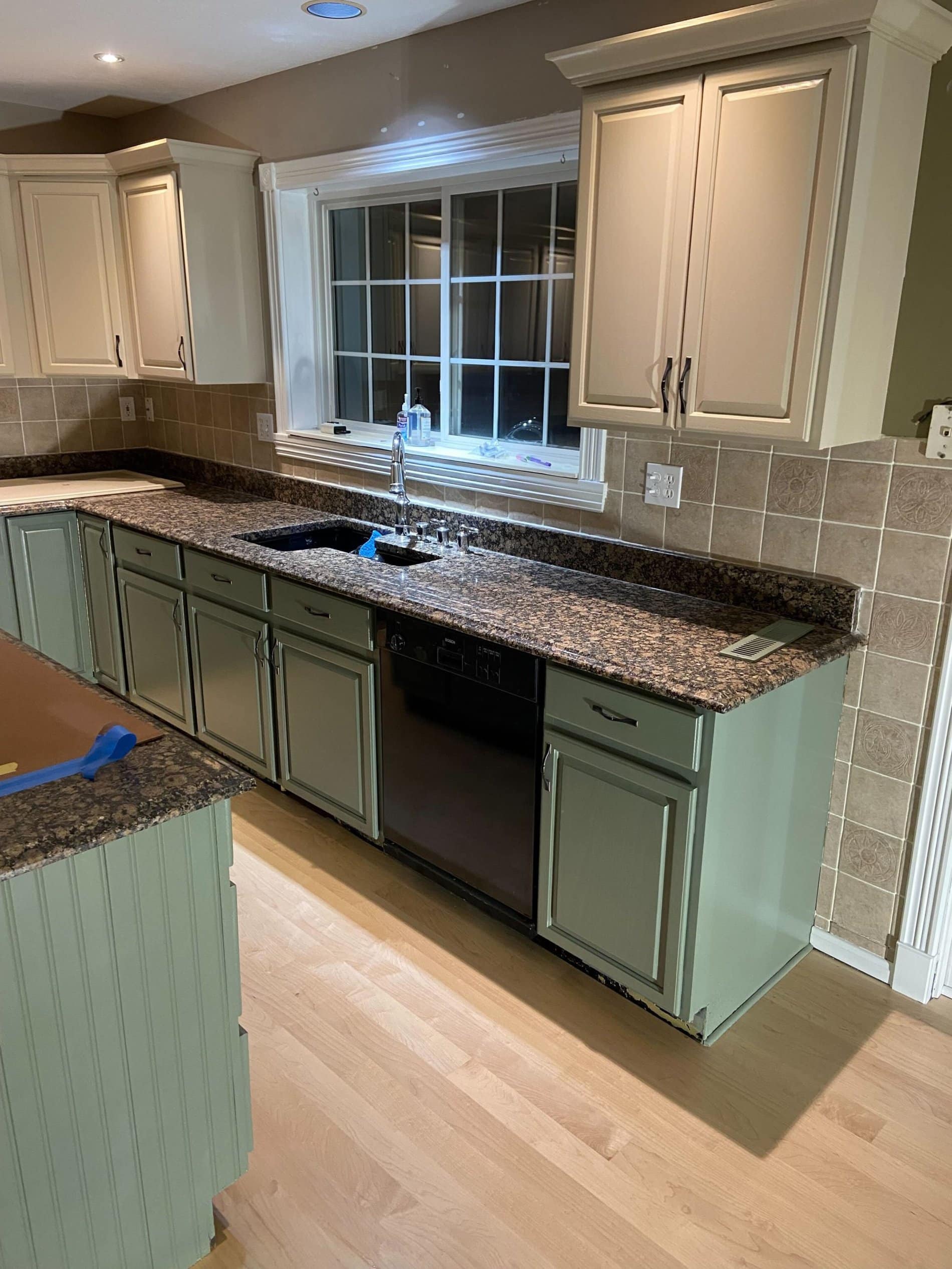
Image Source: thepickypainters.com
Cost Guide: How Much Is It To Replace Kitchen Cabinets?
Replacing kitchen cabinets can cost anywhere from $4,000 to $15,000 or more, depending on the size of your kitchen, the materials you choose, and the complexity of the installation. Many homeowners wonder, “What is the average kitchen cabinet replacement price?” The answer typically falls within the $4,000 to $15,000 range, but it’s crucial to break down the factors that influence this figure. This guide will help you understand the various aspects that contribute to the kitchen cabinet replacement cost, whether you’re opting for a full replacement, refacing, or a more budget-friendly renovation.
Deciphering the Total Kitchen Cabinet Replacement Cost
The overall kitchen cabinet remodel prices are a blend of several key components. It’s not just about the cabinets themselves; it also involves labor, hardware, and any necessary modifications to your kitchen’s layout. Let’s delve into the details that shape your final bill.
1. Cabinet Material Costs: The Foundation of Your Budget
The materials used for your kitchen cabinets are a significant driver of the overall kitchen cabinet replacement cost. Different woods and finishes offer varying aesthetics and price points.
Common Cabinet Materials and Their Price Implications
-
Particleboard/MDF (Medium-Density Fiberboard):
- Pros: Most affordable option, stable, good for painted finishes.
- Cons: Less durable than solid wood, susceptible to moisture damage, can sag over time.
- Cost: Typically the lowest, often used for cabinet boxes in less expensive or semi-custom options.
-
Plywood:
- Pros: More durable and moisture-resistant than particleboard, good structural integrity, holds screws well.
- Cons: More expensive than particleboard.
- Cost: A popular mid-range choice for cabinet boxes and doors, offering a good balance of price and quality.
-
Solid Wood (e.g., Maple, Oak, Cherry, Hickory):
- Pros: Most durable, beautiful natural grain, can be stained or painted, adds significant value to a home.
- Cons: Most expensive option, can be susceptible to warping or cracking with extreme humidity changes.
- Cost: The highest kitchen cabinet material costs, especially for premium woods like cherry or hickory. Maple and oak are generally more budget-friendly within the solid wood category.
-
Laminates and Thermofoil:
- Pros: Offer a wide range of colors and wood-grain effects, easy to clean, relatively affordable.
- Cons: Can chip or peel over time, especially around edges; cannot be repainted.
- Cost: Often comparable to or slightly higher than plywood, a good option for a modern look on a budget.
Specific Cabinet Components and Their Costs
- Cabinet Boxes: The internal structure of your cabinets. Plywood and solid wood are preferred for their durability.
- Cabinet Doors: The most visible part. Styles like Shaker, slab, raised panel, and inset doors each have different kitchen cabinet material costs.
- Drawer Boxes: Often made of solid wood or plywood, with metal glides.
- Shelving: Typically made of plywood or laminate. Adjustable shelving can add to the cost.
2. Cabinet Styles and Construction: Craftsmanship Matters
Beyond the raw materials, the style and construction of your cabinets significantly impact the cost to refurnish kitchen cabinets or replace them entirely.
Stock, Semi-Custom, and Custom Cabinets
-
Stock Cabinets:
- Description: Pre-manufactured in standard sizes and limited styles. Widely available at big box stores and online retailers.
- Pros: Most affordable, quick delivery.
- Cons: Limited design options, less flexibility in sizing and features, often lower quality construction.
- Cost: The lowest price point, typically starting around $75-$150 per linear foot.
-
Semi-Custom Cabinets:
- Description: Offer more choices in styles, finishes, and storage solutions than stock cabinets. You can often choose from various door styles, colors, and add-on features.
- Pros: Good balance of customization and cost, wider range of quality and design.
- Cons: Longer lead times than stock cabinets, more expensive.
- Cost: Mid-range, usually from $150-$300 per linear foot.
-
Custom Cabinets:
- Description: Built to your exact specifications, allowing for unique sizes, designs, and features tailored to your kitchen’s layout and your personal preferences.
- Pros: Ultimate flexibility, high-quality craftsmanship, unique designs.
- Cons: Most expensive option, longest lead times, requires professional design and installation.
- Cost: The highest cost of custom kitchen cabinets, ranging from $300-$1,000+ per linear foot, depending on materials and complexity.
Construction Quality
-
Framed vs. Frameless (European) Cabinets:
- Framed: Have a solid wood frame attached to the front of the cabinet box. This is a traditional American style.
- Frameless: Do not have a face frame; the doors attach directly to the cabinet box. This style offers a more modern look and slightly more accessible interior space. Frameless cabinets can sometimes be more expensive due to their construction precision.
-
Joinery: Dovetail drawer joints are a sign of high-quality construction and add to the kitchen cabinet replacement cost.
3. Cabinet Refacing vs. Replacement: A Crucial Distinction
Before diving into replacement, consider whether cabinet refacing is a viable option. This can significantly alter your budget for kitchen cabinets.
What is Cabinet Refacing Cost?
Cabinet refacing cost typically ranges from $4,000 to $9,000 for an average-sized kitchen. This process involves keeping your existing cabinet boxes and replacing only the doors, drawer fronts, and applying a new veneer or laminate to the visible exterior surfaces of the boxes.
Pros and Cons of Cabinet Refacing
- Pros:
- Significantly cheaper than full replacement.
- Faster installation time.
- Less disruptive to your kitchen.
- Environmentally friendly as it reduces waste.
- Cons:
- Does not address structural issues with the existing cabinet boxes.
- Limited to existing cabinet layouts; cannot reconfigure the kitchen.
- The quality of the refacing materials is critical.
Factors Affecting Cabinet Refacing Costs
- Materials: Wood veneer, laminate, or polymer films will have different prices.
- Number of Doors and Drawers: More components mean higher costs.
- Complexity of Existing Cabinets: Intricate door styles or existing damage can increase refacing expenses.
4. New Kitchen Cabinet Installation Cost: The Hands-On Expense
The new kitchen cabinet installation cost is a substantial part of your overall project budget. This covers the skilled labor required to remove old cabinets, prepare the space, and install new ones.
Labor Costs Breakdown
- Demolition and Removal: If you’re replacing old cabinets, this is the first labor step.
- Cabinet Installation: This involves carefully measuring, leveling, securing cabinets to walls, and ensuring proper alignment.
- Customization and Modifications: If you’re altering your kitchen layout, making adjustments for appliances, or adding special features, labor costs will increase.
- Plumbing and Electrical: If you’re moving sinks or appliances, you’ll need to factor in the costs for plumbers and electricians.
Average Kitchen Cabinet Labor Costs
Kitchen cabinet labor costs can range from $50 to $150 per hour for experienced installers. The total labor cost will depend on the number of installers, the duration of the project, and the complexity of the job. For a full kitchen cabinet replacement, expect labor to account for 20-40% of the total project cost.
5. Hardware and Accessories: The Finishing Touches
Don’t forget the smaller details that add up. Hardware, such as cabinet knobs, pulls, hinges, and drawer slides, can also influence your budget for kitchen cabinets.
- Cabinet Knobs and Pulls: Prices vary widely, from a few dollars for basic options to $50 or more for designer pieces.
- Hinges: Soft-close hinges are a popular upgrade that adds to the kitchen cabinet replacement cost but enhances usability.
- Drawer Slides: Undermount, soft-close glides are a significant upgrade from standard side-mount slides.
- Internal Accessories: Pull-out shelves, lazy Susans, spice racks, and trash pull-outs add functionality but increase the overall expense.
6. Installation Factors: What Else Affects the Price?
Several other elements can impact the final kitchen cabinet remodel prices.
- Kitchen Size: Larger kitchens naturally require more cabinets, increasing material and labor costs. The average kitchen cabinet replacement price is often quoted per linear foot, so a bigger kitchen will naturally have a higher total cost.
- Kitchen Layout Complexity: Challenging layouts with many corners, angles, or custom features will take more time and skill to install, leading to higher labor costs.
- Appliance Integration: If your new cabinets need to accommodate built-in appliances like ovens, microwaves, or refrigerators, this can add complexity and cost.
- Countertop Replacement: Often, when replacing cabinets, homeowners opt to replace countertops simultaneously. This is a separate but related expense that will significantly increase the overall project budget.
- Backsplash Installation: Similar to countertops, a new backsplash might be part of your renovation.
- Permits: Depending on your location and the scope of work, you might need building permits, which have associated fees.
Estimating Your Kitchen Cabinet Replacement Cost: A Sample Scenario
Let’s consider a hypothetical mid-range kitchen renovation to give you a clearer picture of the kitchen cabinet replacement cost.
Scenario: A medium-sized kitchen (approximately 100 linear feet of cabinetry) requiring a full replacement with semi-custom cabinets made from maple plywood with Shaker-style doors.
| Item | Estimated Cost Range | Notes |
|---|---|---|
| Cabinets (Materials) | $5,000 – $10,000 | Semi-custom maple, Shaker doors |
| Hardware | $500 – $1,500 | Knobs, pulls, soft-close hinges, undermount glides |
| Labor (Installation) | $3,000 – $5,000 | Demolition, installation, minor adjustments |
| Miscellaneous | $500 – $1,000 | Delivery fees, disposal of old cabinets, potential minor electrical/plumbing |
| Total Estimated Cost | $9,000 – $17,500 |
This example illustrates how the average kitchen cabinet replacement price can vary significantly. Remember, this is just one scenario, and your specific budget for kitchen cabinets may be higher or lower.
Fathoming the Cost of Custom Kitchen Cabinets
For those seeking unique designs and unparalleled quality, the cost of custom kitchen cabinets can be considerably higher.
What Goes into Custom Cabinet Pricing?
- Bespoke Design: Custom cabinet makers work with you to create a design tailored to your exact needs and aesthetic. This design process itself adds value and cost.
- Premium Materials: You have access to a wider array of premium woods, exotic veneers, and high-end finishes.
- Craftsmanship: Custom cabinets are often built by skilled artisans, using traditional joinery techniques, which command higher prices.
- Unique Features: Incorporating specialized storage solutions, intricate details, or specific dimensions all contribute to the cost.
Example: Custom Kitchen Cabinet Costs
For a similar-sized kitchen as our semi-custom example, opting for custom cabinets made from a premium wood like cherry with custom features could easily push the total kitchen cabinet replacement cost to $20,000 – $35,000 or more.
Ways to Manage Your Kitchen Cabinet Renovation Budget
It’s possible to achieve a beautiful kitchen cabinet update without breaking the bank. Here are some strategies to help you manage your budget for kitchen cabinets:
1. Prioritize What Matters Most
- Focus on Quality Where It Counts: Invest in durable materials for cabinet boxes and frequently used drawers. You might be able to save on less visible areas or decorative elements.
- Select Key Features: Decide which internal accessories are essential and which are nice-to-haves.
2. Consider Different Materials
- Explore Plywood: A good middle ground between particleboard and solid wood.
- Look at Laminate or Thermofoil: For a modern look at a lower cost.
3. Be Smart About Cabinet Styles
- Simple Door Styles: Shaker or slab doors are generally less expensive than raised panel or inset designs.
- Stock or Semi-Custom: If your kitchen layout is fairly standard, these options can save you money.
4. Get Multiple Quotes
- Always obtain quotes from at least three different cabinet suppliers and installers. Compare not only the price but also the quality of materials, warranties, and reputation.
5. DIY Where Possible (With Caution)
- If you have some DIY skills, you might consider handling demolition, painting, or hardware installation yourself to save on kitchen cabinet labor costs. However, cabinet installation requires precision, so professional help is often recommended for that aspect.
6. Reface Instead of Replace
- As mentioned earlier, cabinet refacing can offer a dramatic visual transformation at a lower cost than a full replacement.
7. Take Advantage of Sales and Promotions
- Keep an eye out for sales at home improvement stores or from cabinet manufacturers.
Frequently Asked Questions About Kitchen Cabinet Replacement
Q1: How long does it typically take to replace kitchen cabinets?
A: A full kitchen cabinet replacement typically takes anywhere from 3 to 10 days, depending on the size of the kitchen, the complexity of the installation, and whether other renovation tasks are being done concurrently. Cabinet refacing is usually quicker, often taking 2-5 days.
Q2: Can I save money by buying cabinets online versus in a store?
A: Sometimes, yes. Online retailers can offer competitive pricing due to lower overhead. However, it’s crucial to factor in shipping costs, the ability to see and feel the materials in person, and the quality of customer service.
Q3: What is the difference between cabinet refacing and refinishing?
A: Cabinet refinishing typically involves cleaning, sanding, and repainting or restaining existing cabinet doors and frames. It’s a more superficial update. Cabinet refacing involves replacing the doors and drawer fronts with new ones and often applying new veneer to the cabinet boxes, providing a more significant visual change. Refinishing is much cheaper but doesn’t change the style as much.
Q4: Are custom kitchen cabinets worth the extra cost?
A: For many, yes. Custom cabinets offer a perfect fit for unique spaces, personalized storage solutions, and superior craftsmanship that can last for decades. They also add significant value to a home. However, if your budget is tight or your kitchen layout is standard, semi-custom or even well-chosen stock cabinets can be an excellent alternative.
Q5: What are the most durable kitchen cabinet materials?
A: For cabinet boxes, solid wood or high-quality plywood is generally considered the most durable. For cabinet doors, solid wood is also the most durable and can be repaired or refinished. Laminates and thermofoils can be durable for everyday use but are more prone to chipping or peeling over time.
By carefully considering these factors, you can make informed decisions and get a realistic estimate for your kitchen cabinet replacement cost, ensuring your renovation stays within your desired budget for kitchen cabinets.