
Determining the right kitchen island overhang is crucial for both functionality and aesthetics. A general rule of thumb for seating is at least 12 inches of island seating overhang depth for comfortable dining, and 15 inches for a more relaxed feel or if you plan on serving meals. For a casual bar overhang for kitchen island, 10-12 inches is usually sufficient. The kitchen island countertop overhang directly impacts how much legroom people have when sitting at the island.
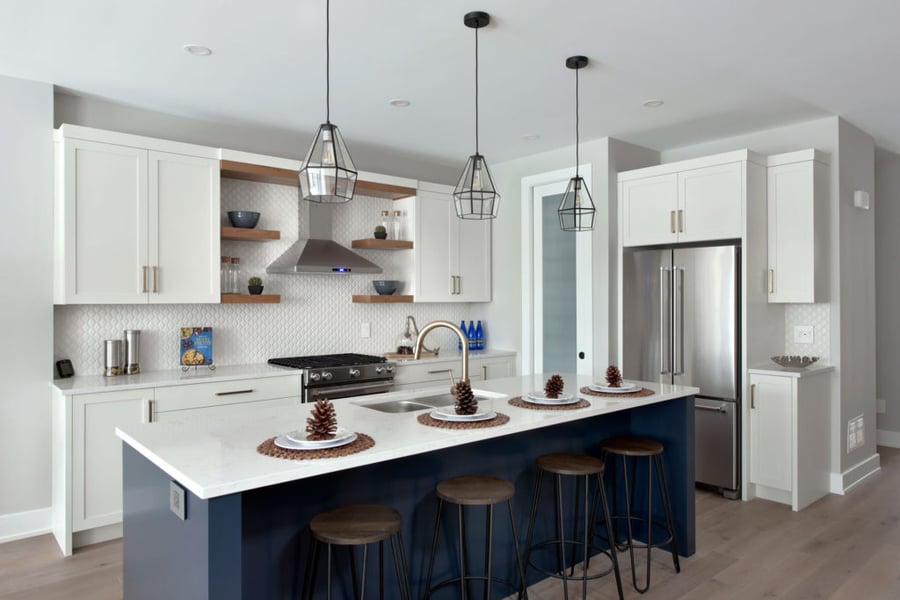
Image Source: www.deslaurier.com
Crafting Your Perfect Kitchen Island: The Overhang Essentials
The kitchen island is more than just a workspace; it’s the heart of many homes. It’s where meals are prepped, homework is done, and conversations flow. A key element that defines its usability and look is the kitchen island countertop overhang. This is the part of the countertop that extends beyond the base of the island. Getting this right makes a huge difference in how the island functions, especially if you plan to use it for seating.
Deciphering the Purpose of Your Overhang
The amount of overhang you choose largely depends on how you intend to use your island. Is it primarily for prep space? Will it serve as a casual dining spot? Or will it host lively bar-style gatherings? Each use case demands a different overhang measurement.
For Dining and Casual Meals
If you envision your kitchen island as a place for family meals or a quick breakfast bite, you need adequate dining overhang for kitchen island. This allows people to sit comfortably without their knees bumping into the island’s cabinet base.
- Comfortable Seating: A minimum of 12 inches of clear knee space is recommended for comfortable dining. This translates to a kitchen island overhang depth guidelines of at least 12 inches for the countertop itself.
- Generous Dining Overhang: For a more relaxed dining experience, consider 15 inches of overhang. This provides ample space for plates, glasses, and comfortable leg positioning.
For Bar-Style Seating
When your island doubles as a bar, the overhang needs to accommodate stools and allow guests to sit side-by-side.
- Bar Seating Requirements: A bar overhang for kitchen island of 10-12 inches is a good starting point. This allows enough space for people to sit without feeling cramped.
- Ergonomic Bar Height: Remember that standard bar height is 42 inches. At this height, a 12-inch overhang is generally sufficient. For counter height (36 inches), a 15-inch overhang offers more comfort.
For Working and Prep Space
If your island is mainly for cooking and food preparation, the overhang might be less about seating and more about creating a functional workspace.
- Minimal Overhang: In some cases, you might opt for a minimal overhang of 1-1.5 inches. This is primarily for aesthetic purposes and to protect the cabinet edges.
- Deeper Prep Space: Some designs incorporate a deeper overhang on one side to allow for seating on the other. This requires careful planning to ensure structural integrity.
Material Matters: How Your Countertop Affects Overhang
The material of your kitchen island countertop plays a significant role in how much overhang you can safely achieve. Some materials are stronger and more rigid than others, allowing for deeper unsupported overhangs.
Stone Countertops (Granite, Quartz, Marble)
These are popular choices due to their durability and beauty.
- Granite and Quartz: These are very strong and can typically support a 10-12 inch overhang without additional support.
- Marble: While beautiful, marble is softer and more porous than granite or quartz. It can be prone to chipping and staining, so a smaller overhang, perhaps 6-8 inches, is often recommended unless supported.
Wood Countertops (Butcher Block)
Wood offers a warm, natural look.
- Strength and Flexibility: Wood can handle a reasonable overhang, often up to 10-12 inches, depending on its thickness and the type of wood. It has a slight flex which can be beneficial.
Laminate Countertops
A more budget-friendly option.
- Support is Key: Laminate is generally less rigid than stone. For longer overhangs, you’ll need to ensure adequate support to prevent sagging or breaking.
Solid Surface Countertops (Corian)
These are seamless and versatile.
- Good Support: Solid surface materials can often support overhangs of up to 10-12 inches, depending on the specific product and thickness.
Stainless Steel Countertops
Common in professional kitchens and modern homes.
- Rigidity: Stainless steel is very strong and can accommodate overhangs of 10-12 inches or more, depending on its gauge and any reinforcing.
Structural Support: The Backbone of Your Overhang
Even with strong materials, there are limits to how much weight an unsupported countertop can hold. This is where kitchen island leg support and countertop overhang bracket systems come into play.
When Do You Need Support?
As a general rule, if your overhang exceeds 10-12 inches, you’ll likely need some form of support. This is especially true for seating areas where weight will be applied directly to the overhang.
Types of Support Systems
- Knee Braces: These are angled supports that attach from the underside of the countertop to the cabinet base or a supporting leg. They are often made of wood or metal and can be decorative or functional.
- Countertop Overhang Brackets: These are metal brackets, often made of steel, that are mounted to the cabinet base and extend under the countertop. They come in various styles, including flush-mount and recessed options. Flush-mount brackets sit flat against the cabinet, while recessed brackets are set into the cabinet face for a cleaner look.
- Corbels: Similar to knee braces, corbels are decorative supports that also provide structural integrity. They can be made from wood, stone, or metal and are often a design feature in themselves.
- Hidden Support Systems: For a sleek, minimalist look, consider hidden support systems. These can include steel plates integrated into the cabinet structure or solid stone or wood bases that extend outwards.
- Waterfall Island Overhang: In a waterfall island overhang, the countertop material extends down the sides of the island to the floor. This design inherently provides structural support to the countertop. However, the depth of the overhang at the seating or working edge still needs to be considered for legroom and stability.
Placement and Strength of Supports
- Even Distribution: Supports should be evenly spaced to distribute the weight effectively.
- Material Strength: The strength of the support material (wood, steel) should be considered based on the weight the overhang will bear.
Achieving Comfortable Kitchen Island Overhang
Comfort is paramount, especially if your island is a gathering spot. A comfortable kitchen island overhang ensures that everyone, from children to adults, can sit and enjoy the space without feeling awkward or cramped.
Key Considerations for Comfort
- Legroom: This is the most critical factor. Ensure sufficient clearance between the edge of the overhang and the island’s base.
- Seating Height: Match your overhang to your seating height. Counter-height islands (36 inches) with a 15-inch overhang are very comfortable. Bar-height islands (42 inches) with a 10-12 inch overhang are also standard.
- Stool Design: The thickness of your bar stools or chairs can also impact how much legroom you actually have. Slimmer stools will allow for slightly deeper seating within the same overhang measurement.
Table of Overhang Recommendations
Here’s a quick reference guide for common scenarios:
| Use Case | Recommended Overhang Depth (inches) | Support Needed? | Notes |
|---|---|---|---|
| Minimal Seating (occasional) | 6-8 | Maybe | Primarily for leaning, not full seating. |
| Casual Seating/Counter | 10-12 | Yes, if >10″ | Good for counter-height islands, provides decent legroom. |
| Dining/Comfortable Seating | 12-15 | Yes, recommended | Ideal for full meals, allows comfortable leg positioning. |
| Bar Seating | 10-12 | Yes, if >10″ | Standard for bar-height islands (42 inches). |
| No Seating (Prep only) | 1-1.5 | No | Primarily for edge protection and aesthetics. |
Popular Design Styles and Their Overhang Implications
Different island designs have unique overhang considerations.
The “Standard” Island
This is your typical rectangular or square island with cabinets on one or more sides. The overhang is usually applied to the seating side.
- Balancing Seating and Storage: A 12-15 inch overhang on the seating side balances ample legroom with usable cabinet space on the working side.
The “Peninsula” Island
A peninsula is attached to a wall or cabinetry on one end, creating an L-shape.
- Overhang on the Open Side: The overhang is typically on the open side, providing seating or a serving area. The principles of overhang depth remain the same.
The “Two-Tiered” Island
This design features a countertop at one height and a raised bar or dining area at another.
- Separate Overhangs: Each tier can have its own overhang, tailored to its specific function. The lower tier might have a smaller overhang for prep, while the upper tier has a more generous overhang for seating.
The “Waterfall” Island
As mentioned, the waterfall island overhang refers to the material flowing down the sides. While this adds structural integrity to the sides, the primary working or seating edge’s overhang still needs careful consideration for legroom.
- Edge Overhang: Ensure the overhang at the seating edge is sufficient for comfort, separate from the waterfall design itself.
Measuring for Your Overhang: Practical Tips
Accurate measurements are crucial to avoid costly mistakes.
Steps to Measure
- Determine Island Dimensions: Know the exact width and depth of your island’s base.
- Identify Seating Area: Decide which side(s) will accommodate seating.
- Factor in Stool/Chair Depth: If using stools or chairs, measure their footprint to ensure they don’t overlap too much with walkways.
- Calculate Required Overhang: Based on your desired legroom (12-15 inches for dining), add this to the island base depth.
- Consider Countertop Thickness: Remember that the overhang measurement is of the countertop material itself, extending beyond the cabinet.
Common Pitfalls to Avoid
- Insufficient Legroom: The most common mistake is not leaving enough space for knees.
- Ignoring Support Needs: Expecting a long overhang to hold without proper support can lead to sagging or breakage.
- Walkway Obstruction: Ensure your overhang, especially with seating, doesn’t block essential walkways around the island. Aim for at least 36-42 inches of clearance around the island.
- Material Limitations: Not accounting for the strength and rigidity of your chosen countertop material.
Integrating Support Seamlessly
The goal is to have a functional overhang that doesn’t detract from the visual appeal of your kitchen.
Hidden Support Solutions
- Under-Mount Brackets: These steel brackets are installed flush with the cabinet face and under the countertop, offering strong support with minimal visual impact.
- Back-Painted Glass or Stone Panels: For islands with open shelving or minimal cabinetry, integrating a solid panel on the underside can act as support.
Decorative Support Options
- Stylish Corbels: Choose corbels that complement your kitchen’s design, adding an architectural element.
- Tapered Legs: Instead of a solid cabinet base, consider legs that taper inwards, allowing for more legroom and a lighter visual feel.
Frequently Asked Questions About Kitchen Island Overhangs
Q1: What is the minimum overhang for a kitchen island with seating?
A1: For basic seating, a minimum of 10 inches is often cited, but 12 inches is significantly more comfortable for dining or extended use.
Q2: Can I have a 15-inch overhang on my kitchen island without support?
A2: While some very rigid materials like thick quartz or granite might handle a 15-inch overhang for light use, it is generally recommended to use support brackets or knee braces for this depth, especially for seating, to ensure safety and prevent sagging.
Q3: Who needs to approve the overhang amount?
A3: Typically, you work with your kitchen designer, cabinet maker, or countertop fabricator. They will advise on the structural limitations and recommend appropriate support based on your chosen materials and desired overhang.
Q4: What is the standard overhang for a kitchen island?
A4: The standard overhang varies by intended use. For seating, 12 inches is very common. For purely decorative purposes or minimal edge protection, 1.5 inches is standard.
Q5: How far should the island overhang extend for comfortable seating?
A5: For truly comfortable seating, aiming for 15 inches of overhang provides ample legroom for dining. 12 inches is a good compromise for most situations.
Q6: What is a waterfall island overhang?
A6: A waterfall island overhang is when the countertop material extends vertically down the sides of the island to the floor, creating a seamless, continuous look. This design inherently adds structural support to the island’s sides.
By carefully considering the intended use, material properties, and necessary structural support, you can create a kitchen island with the perfect overhang that enhances both the beauty and the functionality of your kitchen.