
How much space should I leave around my kitchen island? You need at least 36 inches of clear space on all sides of your kitchen island for comfortable movement and basic functionality. For more active cooking and entertaining, 42-48 inches is ideal, especially between the island and other major kitchen elements like counters or appliances.
Creating a functional and beautiful kitchen often hinges on the smart placement and spacing of its centerpiece: the kitchen island. But how much space do you really need around it? This isn’t just about fitting it in; it’s about ensuring your kitchen flows well, works efficiently, and feels inviting. Getting this right is crucial for good kitchen layout dimensions and a positive kitchen traffic flow.
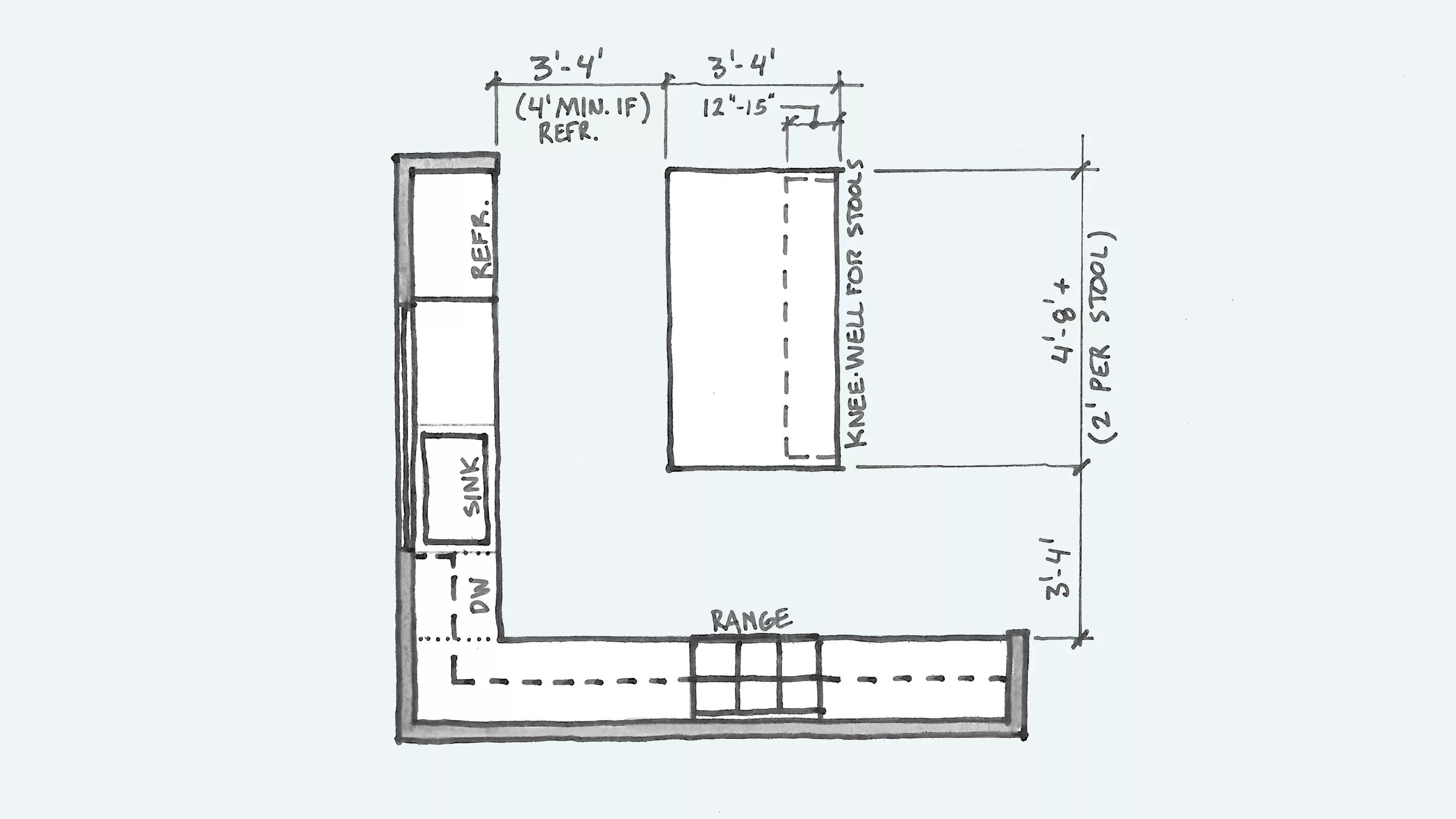
Image Source: www.boardandvellum.com
Deciphering the Ideal Kitchen Island Clearance
The amount of space you need around your kitchen island, often referred to as kitchen island clearance, is one of the most critical aspects of your kitchen design. It dictates how easily you can move, cook, and entertain. Too little space, and your kitchen feels cramped and frustrating. Too much, and it can feel cavernous or inefficient. The goal is to find that sweet spot that maximizes both usability and aesthetics.
The Minimum: 36 Inches of Walkway
A minimum of 36 inches for a walkway around island is generally accepted as the bare minimum for basic passage. This allows one person to comfortably walk past the island. Think of it as the space needed to retrieve something from a cabinet or open a dishwasher without feeling like you’re playing a game of kitchen obstacle course. However, if this is the only passageway in a high-traffic area, or if you plan to have multiple people in the kitchen, 36 inches can quickly feel inadequate.
The Sweet Spot: 42-48 Inches for Comfort and Functionality
For a truly comfortable and functional kitchen, aim for 42 to 48 inches of clearance. This extra space is invaluable, especially in key areas:
- Between the Island and Counters: This island to counter spacing is vital. With 42-48 inches, you can have two people working on opposite sides of the kitchen comfortably. It allows for easy access to refrigerators, ovens, and prep areas without bottlenecking.
- In Front of Appliances: Ensuring sufficient appliance clearance is non-negotiable. If your island is near a dishwasher, oven, or refrigerator door, you need enough room to open these fully and access them without hitting the island. For example, a dishwasher door swung open needs about 24-30 inches, so 42-48 inches of island clearance allows for this.
- For Kitchen Island Seating Clearance: If you plan on seating at your island, this is where the spacing becomes even more important. You need enough room for chairs to be pulled out and for people to get in and out easily.
The Maximum: Considerations for Larger Kitchens
In very large kitchens, you might consider more than 48 inches of clearance. However, be mindful of creating too much dead space. The kitchen work triangle (the path between the sink, refrigerator, and stove) can become inefficient if pathways are excessively long. The aim is to create a flow that feels natural, not like a marathon.
Factors Influencing Your Kitchen Island Spacing Needs
The “perfect” amount of space isn’t a one-size-fits-all answer. Several factors come into play when determining kitchen layout dimensions for your island:
1. Kitchen Size and Shape
- Small Kitchens: In a galley kitchen or a smaller footprint, a massive island with extensive clearance might not be feasible. Here, a smaller island or a movable cart might be a better solution. Even with a smaller island, prioritize at least 36 inches of clearance.
- Medium Kitchens: Most standard kitchens fall into this category. 42-48 inches of clearance is usually the sweet spot, balancing functionality with maximizing usable space.
- Large Kitchens: In expansive kitchens, you have more flexibility. You can afford to have wider walkways (54 inches or more) between the island and other elements. This can create a more open, airy feel and allow for more movement during gatherings.
2. How You Use Your Kitchen
- Primary Cook: If you’re the main chef, efficient movement is key. This means ensuring ample appliance clearance and easy access between prep areas. Good kitchen traffic flow is paramount.
- Entertainer: If your kitchen is the hub for parties, you’ll want wider walkways to accommodate guests mingling. Consider how people will move between the island, seating areas, and other parts of the house.
- Family Hub: For families, a kitchen island is often a gathering spot for homework, casual meals, and conversation. This means prioritizing comfortable kitchen island seating clearance and ensuring enough space for multiple people to interact without feeling crowded.
3. Island Functionality
- Seating: Islands with seating require more space. You need room for chairs to be pulled out, which typically adds about 18-24 inches per chair beyond the island’s depth. Aim for at least 42 inches between the island’s edge and any cabinetry or walls behind the seating.
- Workstation: If your island incorporates a sink, cooktop, or extra prep space, you’ll need even more clearance to allow for active work. Think about the space needed for chopping ingredients, plating food, and using appliances simultaneously.
- Storage: Islands with extensive cabinetry or drawers might require slightly more clearance to ensure doors and drawers can open fully without obstruction.
4. Appliance Placement
- Dishwashers: As mentioned, a dishwasher near an island needs careful consideration. Ensure at least 42 inches of clearance so the door can open fully and someone can stand there to load or unload.
- Ovens/Ranges: If your range or oven is adjacent to the island, you need clearance for oven doors and potentially for people to stand safely nearby when the oven is in use.
- Refrigerators: Refrigerator doors swing out. Make sure the island doesn’t impede this motion.
Creating the Perfect Kitchen Island Layout: Practical Steps
Let’s get practical. How do you ensure your kitchen island placement contributes to a perfect layout?
Step 1: Measure Your Kitchen
Before you even think about an island, measure your kitchen accurately. Note the dimensions of walls, doorways, windows, and existing cabinetry.
Step 2: Determine Your Island Size and Shape
Based on your measurements and needs, decide on a comfortable kitchen island size. Islands can be rectangular, square, L-shaped, or even curved. The shape can influence the amount of clearance needed.
- Rectangular Islands: These are the most common and offer the most flexibility in terms of spacing.
- Square Islands: Similar to rectangular, but can sometimes make turning corners tighter if not well-placed.
- Curved Islands: These can soften a space and may require slightly less clearance on the curved sides, but it’s essential to measure the widest points.
Step 3: Map Out Your Pathways
Use painter’s tape on the floor to visualize your island and the surrounding walkways. This is a crucial step for evaluating kitchen traffic flow.
- Primary Work Aisles: These are the main paths you’ll use to move between the sink, refrigerator, and stove (the kitchen work triangle). These should ideally be at least 42 inches, but 48 inches is even better if possible.
- Secondary Aisles: These are paths that might see less traffic but are still important for accessing storage or secondary work areas. 36 inches is generally acceptable here.
Step 4: Consider Appliance Doors and Drawer Clearance
When placing your island, visualize opening all appliance doors and drawers. If a refrigerator door swings towards the island, or a dishwasher door opens into a walkway, you’ll need to adjust your island’s position or size.
Step 5: Factor in Seating Needs
If seating is planned, mock this up with tape as well. Pull out chairs to their maximum extent to ensure people can sit and get up without bumping into anything. A good rule of thumb for kitchen island seating clearance is to have at least 15 inches behind the seat for knee space and another 24-30 inches for the chair to be pulled out. This means an island with seating can easily require 42-48 inches of clearance behind it.
Common Kitchen Island Layout Scenarios and Spacing Recommendations
Let’s look at some typical scenarios and how spacing applies:
Scenario 1: The Single-Wall Kitchen with Island
In a kitchen where all the main elements are on one wall, the island acts as a secondary work surface and a divider.
- Island to Wall/Cabinetry Clearance: Aim for 42-48 inches. This allows for comfortable passage behind the island and between it and the working wall.
Scenario 2: The U-Shaped Kitchen with Island
In a U-shaped kitchen, the island is placed within the “U”.
- Island to Counter/Cabinetry Clearance: This is critical. You need enough space in the center of the U for the island and comfortable movement. A minimum of 48 inches is highly recommended here, especially if there is seating. This allows for two people to work opposite each other or for guests to navigate easily.
Scenario 3: The L-Shaped Kitchen with Island
An L-shaped kitchen might have an island positioned perpendicular to the L.
- Island to Counter/Cabinetry Clearance: Again, 42-48 inches is the sweet spot. This ensures easy access to both arms of the L and prevents the island from feeling like it’s blocking access.
Scenario 4: The Galley Kitchen with Island
In a narrow galley kitchen, an island can make the space feel tight if not handled carefully.
- Island to Wall/Cabinetry Clearance: This is where you might have to compromise slightly, but never go below 36 inches. If you have appliances on both sides, consider a narrower island or a movable cart. If the island is purely for prep and not seating, 36-40 inches might be workable if traffic is low.
Island to Counter Spacing: The Critical Measurement
This island to counter spacing is arguably the most important measurement for ensuring a functional kitchen. Let’s break down why and what to aim for:
| Spacing Between Island and Counter/Wall | Description | Best Use Case |
|---|---|---|
| 36 inches | Minimum clearance. Allows for basic passage. Can feel tight in busy kitchens or with multiple people. | Small kitchens with low traffic, or as a secondary walkway where primary traffic is wider. |
| 42 inches | Comfortable clearance. Allows one person to pass easily, and two people to work on opposite sides with moderate ease. | Standard kitchens, good general walkway, allows for seating without much chair-scraping. |
| 48 inches | Ideal clearance. Excellent for high-traffic kitchens, allows two people to work comfortably side-by-side, and provides ample seating clearance. | Larger kitchens, kitchens used for entertaining, kitchens with significant prep work, islands with seating for multiple people. |
| 54+ inches | Very generous clearance. Creates an open, airy feel, excellent for large kitchens and extensive entertaining. | Expansive kitchens, creating distinct zones, accommodating very large islands or multiple seating areas. |
Kitchen Island Seating Clearance: Comfort is Key
When planning for kitchen island seating clearance, think about the entire experience of sitting at the island.
- Knee Space: Allow at least 15 inches of clear depth for knees behind the counter overhang.
- Chair Clearance: Chairs need to be pulled out. Add about 18-24 inches for a standard chair to be pulled out into the walkway.
- Passage Behind Seated Guests: If people will be walking behind those seated, you need even more space. Aim for a minimum of 42 inches from the island edge to the obstruction (wall, counter, etc.) if the walkway is directly behind seating. This allows someone to walk behind a seated person who has their chair pulled out.
Example: If your island is 3 feet deep and you have a 12-inch overhang for seating, the total depth needed is 4 feet. Then, add 15 inches for knee space, and 18-24 inches for the chair to pull out. This means you need roughly 4 feet + 15 inches + 24 inches = 63 inches, or about 5.25 feet, from the seated side of the island to the opposite wall/counter for truly comfortable seating. This highlights why 48 inches of walkway around island is so important when seating is involved.
Maximizing Functionality: Appliance Clearance and Traffic Flow
Let’s reiterate the importance of appliance clearance and kitchen traffic flow:
-
Appliance Clearance:
- Refrigerator Door: Needs to swing open fully without hitting the island. Measure the door swing.
- Dishwasher Door: Needs to open 90 degrees or more without obstruction.
- Oven Doors: Ensure they can open without the island blocking access.
- Drawer Clearance: All drawers, especially those in base cabinets or the island itself, need to open fully.
-
Kitchen Traffic Flow:
- The Kitchen Work Triangle: Ensure your island doesn’t disrupt the efficient path between your sink, refrigerator, and stove. The goal is to make these key areas easily accessible without large detours.
- Multiple Cooks/Users: Design for how people will actually use the kitchen. Will two people be cooking at once? Will kids be doing homework at the island while someone cooks?
- Access to Other Rooms: Consider how the island placement affects movement to and from dining rooms, living rooms, or other adjacent spaces.
What is a Comfortable Kitchen Island Size?
A comfortable kitchen island size is subjective but generally ranges from 3 feet by 5 feet to 4 feet by 8 feet. Smaller islands might be 2 feet by 4 feet. The key is that it should be proportional to your kitchen. A huge island in a tiny kitchen is impractical, as is a tiny island in a vast space. The size also depends on whether it’s primarily for prep, storage, or seating.
Frequently Asked Questions (FAQ)
Q1: Can I put an island in a small kitchen?
Yes, you can! In a small kitchen, opt for a smaller island, a movable cart, or a peninsula that attaches to a wall. Prioritize at least 36 inches of clearance. Sometimes, a narrow, rectangular island positioned parallel to the longest wall can work well.
Q2: What is the minimum walkway around an island?
The absolute minimum for a walkway around island is 36 inches. However, for comfortable use, especially in kitchens with multiple users or seating, 42-48 inches is strongly recommended.
Q3: How much space do I need behind island seating?
You need enough space for chairs to be pulled out and for people to walk behind them. Aim for at least 42 inches from the island edge to the wall or obstruction behind the seating. This accounts for the chair and a walkway.
Q4: Does island placement affect the kitchen work triangle?
Yes, it can. The kitchen work triangle is the path between the sink, refrigerator, and stove. Your island should not obstruct these essential pathways. When measuring, ensure the island doesn’t make the “legs” of the triangle excessively long or create awkward detours.
Q5: What is the ideal island to counter spacing?
The ideal island to counter spacing is typically 42-48 inches. This provides ample room for movement, working side-by-side, and comfortable seating.
By carefully considering these measurements and factors, you can create a kitchen island layout that is not only beautiful but also incredibly functional and a joy to work and live in.