
Can you put a sectional against a wall? Yes, absolutely! Placing a sectional against a wall is a very common and often effective way to arrange your living room.
Arranging a living room with a sectional can feel like a puzzle, but it’s a rewarding one. Sectionals are fantastic for creating cozy, inviting spaces, but their unique shape means they require a little extra thought when it comes to living room furniture placement. This guide will walk you through everything you need to know to create a functional and stylish living room layout with an L-shaped sofa or any other sectional configuration. We’ll explore various sectional layout ideas, discuss the best sectional placement, and offer tips for styling a sectional to truly make your living room shine.
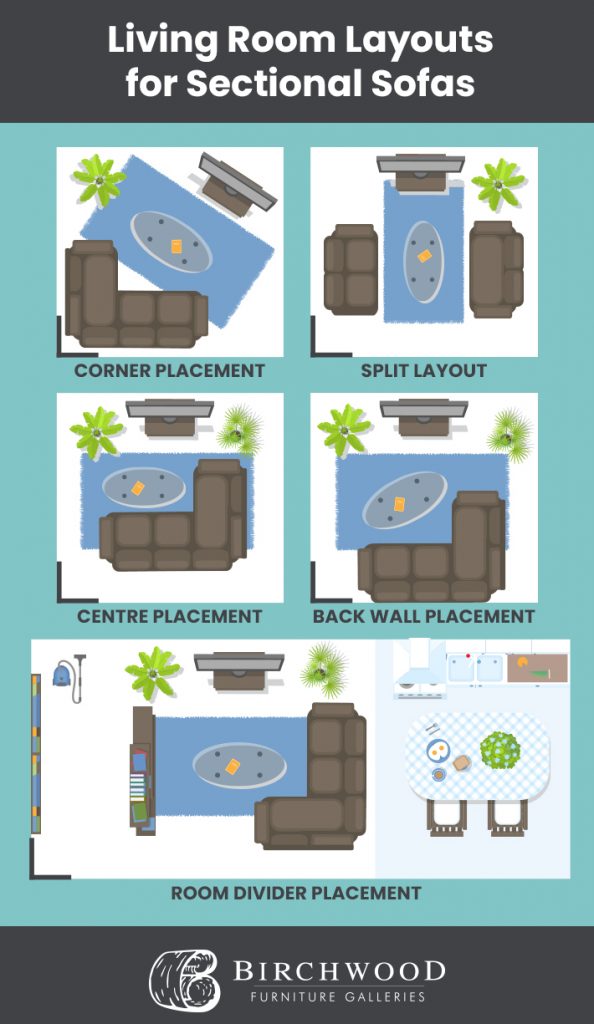
Image Source: birchwoodfurniture.ca
Fathoming Your Sectional’s Role
Before you start pushing furniture around, it’s crucial to understand how your sectional fits into the overall sectional room design. A sectional is often the largest piece of furniture in the room, so it naturally becomes a focal point. Think about its size, shape, and how it will interact with other elements in the space.
The Sectional’s Footprint: Size and Shape
Sectionals come in many forms: L-shaped, U-shaped, chaise lounges, and modular units. Each has its own set of considerations.
- L-shaped Sectionals: These are the most common. They work well in corners or floating in the middle of a room to define zones.
- U-shaped Sectionals: These offer a lot of seating and can create a very enclosed, conversational feel. They are best suited for larger rooms.
- Chaise Sectionals: The chaise end can be used to extend seating or as a visual anchor.
- Modular Sectionals: These offer the most flexibility, allowing you to reconfigure them as needed.
Key takeaway: Measure your room and your sectional carefully. You need enough space for the sectional itself, plus comfortable walkways around it.
Defining the Focal Point
What do you want people to look at when they enter your living room?
- Fireplace: A natural focal point, the sectional can be arranged to face or flank it.
- Entertainment Center/TV: This is a common focal point, especially in modern homes.
- Window with a View: A beautiful view can be the star of the show.
- Artwork or Architectural Feature: A striking piece can also be the center of attention.
The sectional couch placement should complement, not compete with, your chosen focal point.
Strategic Sectional Placement: Maximizing Living Room Space
The best sectional placement is one that balances comfort, function, and aesthetics. It’s about making the most of your living room furniture placement to create a cohesive and inviting atmosphere.
The Corner Classic: Utilizing Wall Space
Placing an L-shaped sectional in a corner is a popular choice for several reasons:
- Space Saving: It tucks neatly into a corner, making the most of often-underutilized space.
- Defining a Zone: It naturally creates a cozy seating area.
- Flow: It leaves ample room for walkways and other furniture.
Arranging in a Corner
- The Long Side: Typically, the longer portion of the L-shaped sectional will run along the longer wall.
- The Short Side: The shorter portion can extend into the room or sit against the adjacent wall.
- Focal Point Orientation: Position the sectional so the primary seating faces your focal point (e.g., the TV, fireplace).
Example Layout:
| Side of Room | Furniture Piece |
|---|---|
| Wall A | Long side of L-shaped sectional |
| Wall B | Short side of L-shaped sectional, possibly a console table against it |
| Opposite Wall C | Coffee table, accent chairs, or an entertainment unit |
| Wall D | Entryway or additional seating/storage |
Floating Freedom: Creating Zones and Conversation Areas
Sectionals don’t have to be shoved into corners. Floating a sectional in the middle of the room is a sophisticated way to define distinct zones and encourage sectional conversation areas. This is especially effective in open-plan living spaces.
Creating Conversation Areas
- Back to the Action: You can place the back of the sectional facing a walkway or another functional area.
- Facing Inward: Arrange the sectional so its pieces face each other, creating a natural gathering spot.
- Pairing with Other Seating: Add accent chairs or a sofa to complete the sectional conversation areas.
Considerations for Floating:
- Room Size: This works best in larger rooms where the sectional won’t obstruct traffic flow.
- Back Appeal: If the back of the sectional will be visible, consider styling a sectional‘s back with decorative pillows or a narrow console table.
- Traffic Flow: Ensure there are clear pathways around the floating sectional, typically at least 3 feet wide.
The Alcove Advantage: Embracing Built-in Features
If your living room has an alcove or a nook, this can be a perfect spot for your sectional.
- Built-in Seating Feel: It can give the illusion of a custom-built seating area.
- Cozy Ambiance: The walls of the alcove can enhance the sense of enclosure and intimacy.
Alcove Arrangement Tips
- Fit is Key: Ensure the sectional fits snugly within the alcove without feeling cramped.
- Access: Make sure you can easily access all parts of the sectional.
- Complementary Pieces: Place a rug within the alcove to anchor the space and add a coffee table or side tables for functionality.
Styling Your Sectional: Elevating the Look
Beyond placement, styling a sectional is key to making it a beautiful and comfortable centerpiece.
The Power of Pillows
Pillows are your best friend when it comes to styling a sectional. They add color, texture, and personality.
- Mix and Match: Combine different sizes, shapes, and textures.
- Color Palette: Use pillows to introduce accent colors or tie together your room’s color scheme.
- Placement: Place them strategically on the seat cushions and back cushions for comfort and visual appeal. Start with larger pillows at the back and smaller ones in front.
Rugs: Anchoring the Space
A well-chosen rug can tie your sectional couch placement together and define the seating area.
- Size Matters: Ideally, the front legs of your sectional (and any accompanying chairs) should sit on the rug. For larger sectionals, the entire unit might fit.
- Shape: Rectangular rugs are common, but round or square rugs can also work depending on the sectional’s configuration.
- Material and Pattern: Choose a material that complements your sectional and a pattern that adds interest without overwhelming the space.
Coffee Tables and Side Tables: Functionality First
These are essential for practicality and completing the look.
- Coffee Table: Position it at a comfortable distance from the sectional (about 14-18 inches) so you can reach it easily. Ensure it’s not too tall or too short for your sectional’s seating height.
- Side Tables: Place them next to the arms of the sectional for lamps, drinks, or decorative items.
- Material and Style: Match the material and style of your tables to your sectional and overall decor. Wood, glass, metal, or upholstered ottomans all offer different aesthetics.
Lighting: Setting the Mood
Layered lighting is crucial for creating a warm and inviting atmosphere.
- Ambient Lighting: Overhead fixtures or floor lamps provide general illumination.
- Task Lighting: Table lamps or reading lamps near seating areas are perfect for focused light.
- Accent Lighting: Wall sconces or spotlights can highlight artwork or architectural features.
Greenery and Decor: Adding Life and Personality
Plants and decorative items bring your sectional room design to life.
- Plants: Place potted plants on side tables, in corners, or on a console behind a floating sectional.
- Artwork: Hang art above the sectional or on adjacent walls.
- Decorative Objects: Vases, sculptures, or candles can add personal touches.
Common Sectional Layout Challenges and Solutions
Even with the best intentions, arranging a sectional can present unique challenges.
Challenge: The Room is Too Small
Problem: A large sectional can overwhelm a small living room, making it feel cramped and difficult to navigate.
Solutions for Maximizing Living Room Space with Sectional:
- Opt for a Smaller Scale Sectional: Look for sectionals with lower profiles, slimmer arms, and fewer pieces.
- Consider a Chaise Lounge: A chaise rather than a full corner piece can offer extra seating without taking up as much visual or physical space.
- Place it Strategically: Instead of against two walls, place the longer part of the sectional against one wall and the shorter part extending into the room, leaving one corner open.
- Use Light Colors: Lighter-colored upholstery can make the sectional appear less bulky.
- Minimize Other Furniture: Keep additional furniture to a minimum to maintain open floor space.
- Floating Only if Space Allows: In a small room, avoid floating a sectional. Stick to a corner placement or against a single wall.
Challenge: The Sectional Blocks the View or Doorway
Problem: The sectional’s size or shape can obstruct important sightlines or create awkward entrances and exits.
Solutions:
- Re-evaluate Focal Point: If the sectional is blocking the TV, try a different sectional couch placement where the TV is on a different wall.
- Measure Walkways: Ensure a minimum of 3 feet for main walkways. If a doorway is blocked, you may need to reposition the entire sectional.
- Consider a Modular Sectional: Modular pieces offer flexibility. You might be able to reconfigure it to allow better access.
- Use the Chaise Wisely: If the chaise end is the culprit, try reversing the configuration if possible or placing it against a wall rather than extending into a pathway.
Challenge: Awkward Room Shape
Problem: Non-rectangular rooms or rooms with many architectural features (bay windows, fireplaces on adjacent walls) can make living room furniture placement tricky.
Solutions for Sectional Room Design:
- Embrace the Angles: Use the sectional to hug the curves or angles of the room. An L-shaped sectional can fit beautifully into an L-shaped room.
- Create Zones: In a long, narrow room, a sectional can divide the space into distinct living and dining areas.
- Floating to Define: Float the sectional to create a central gathering space, letting the room’s natural features dictate the perimeter.
- Modular Magic: Modular sectionals are ideal for custom fits in non-standard spaces.
Challenge: Lack of Seating Beyond the Sectional
Problem: The sectional is the main seating, but you want to host more people.
Solutions:
- Add Accent Chairs: Place one or two stylish accent chairs opposite the open end of the sectional or perpendicular to it.
- Ottomans and Poufs: These can serve as extra seating or footrests and can be easily moved around.
- Bench Seating: A decorative bench can be placed against a wall opposite the sectional.
- Consider a Loveseat: If space allows, a small loveseat can complement the sectional.
Popular Sectional Layout Ideas
Here are some tried-and-true sectional layout ideas to inspire your living room layout with L-shaped sofa or other configurations.
1. The Classic Corner Hug
- Description: The L-shaped sectional is tucked into a corner, with the longer side against the main wall and the shorter side against the adjacent wall.
- Best For: Most living room sizes, especially those with a clear corner to define the seating area.
- Focal Point: Typically faces a TV or fireplace directly opposite the open end of the sectional.
- Pros: Space-efficient, creates a cozy, defined area.
- Cons: Can sometimes feel a bit static if not styled well.
2. The Room Divider
- Description: The sectional is floated in the middle of the room, with its back facing an entryway, dining area, or another functional zone.
- Best For: Open-plan living spaces, larger rooms.
- Focal Point: The seating area is oriented towards a TV, fireplace, or a conversation grouping.
- Pros: Creates distinct zones, promotes conversation, adds architectural interest.
- Cons: Requires ample space, needs careful consideration of the back of the sectional.
3. The Conversation Circle
- Description: The sectional is arranged to face inward, often with accent chairs or sofas completing a circular or semi-circular seating arrangement.
- Best For: Encouraging interaction and conversation.
- Focal Point: The conversation itself is the focal point, or a central coffee table.
- Pros: Fosters connection, very inviting.
- Cons: Can sometimes feel less focused on a specific visual focal point like a TV unless cleverly arranged.
4. The Wall Hugger (One Wall Focus)
- Description: The majority of the sectional (e.g., the long side of an L-shape) is placed against one primary wall, with other pieces of furniture or open space filling the rest of the room.
- Best For: Rooms where one wall is clearly dominant for the focal point.
- Focal Point: The focal point is directly opposite the main seating portion of the sectional.
- Pros: Simple, clean lines, good for rooms with other architectural features to consider.
- Cons: Can sometimes leave one side of the sectional feeling a bit exposed.
5. The U-Shape Embrace
- Description: A U-shaped sectional creates a deeply enclosed seating area.
- Best For: Larger rooms, family rooms, creating a very intimate and social space.
- Focal Point: Often centered around a coffee table or a fireplace within the “U.”
- Pros: Maximizes seating, very cozy and social.
- Cons: Can feel overwhelming in smaller rooms, limits other furniture placement.
Frequently Asked Questions (FAQ)
Q1: What is the best way to arrange a sectional in a small living room?
A: In a small living room, the best approach is often to place the sectional in a corner or against a single wall. Opt for a sectional with a smaller footprint, lighter upholstery, and consider using a chaise lounge instead of a full corner piece. Minimize other furniture and keep pathways clear.
Q2: How far should the coffee table be from the sectional?
A: Aim for about 14 to 18 inches between the edge of the coffee table and the edge of the sectional’s seating. This distance is close enough to reach easily but far enough to avoid bumping into it.
Q3: Can I put a sectional behind a sofa?
A: Yes, you can. This is a creative way to create distinct zones or a more layered seating arrangement. For example, you might have a sofa facing a TV, and a chaise sectional placed perpendicular to it, extending into the room to create a conversation nook or define a dining area. Ensure there’s still ample space to move between the pieces.
Q4: How do I make sure my sectional doesn’t look like it’s just “dumped” in the room?
A: The key is intentional living room furniture placement and thoughtful styling a sectional. Use a rug to anchor the sectional couch placement, add pillows and throws for texture and color, and incorporate side tables and lamps. Consider the flow of the room and the focal point. Even floating a sectional can look intentional if it serves a purpose like defining a zone.
Q5: How do I deal with the open end of an L-shaped sectional?
A: The open end can be a great place to add more seating. You can place an accent chair, a small sofa, a bench, or even a pair of ottomans there. Alternatively, you can place a console table or a floor lamp in that area to create a finished look and add functionality.
Q6: What are some good sectional layout ideas for a large, open-plan living room?
A: In a large, open-plan space, use the sectional to define different zones. You can float the sectional to create a cozy seating area, perhaps facing a fireplace or entertainment unit. Use the back of the sectional to divide the living area from a dining or kitchen space. You can also pair the sectional with other seating arrangements, like accent chairs or smaller sofas, to create multiple sectional conversation areas.
By following these guidelines and considering your specific space and needs, you can successfully arrange and style your living room with a sectional to create a beautiful, functional, and inviting heart for your home.