
Can you attach a kitchen island to the floor? Yes, you absolutely can and often should, especially for safety and stability. Securing a kitchen island to the floor is a crucial step for preventing tipping, particularly with heavier or taller units, or if you have children or pets. This DIY guide will walk you through the process of DIY kitchen island floor attachment, ensuring your kitchen island is fastened kitchen island securely and safely. We’ll cover everything from choosing the right hardware to the step-by-step installation, making your permanent kitchen island installation a success.
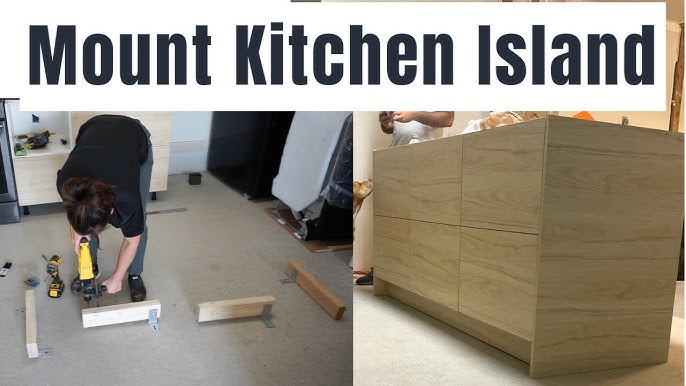
Image Source: i.ytimg.com
Why Anchor Your Kitchen Island?
A freestanding island to floor attachment might seem like overkill, but the benefits are significant. Beyond just preventing accidental movement, anchoring provides essential kitchen island stabilization.
Safety First
- Tip-Over Prevention: This is the most critical reason. A heavy island, especially if it has drawers or cabinets that can be opened, can become unbalanced. If someone leans on it or tries to climb it, it can tip over, causing serious injury.
- Child and Pet Safety: Young children are naturally curious and may try to climb on or pull on furniture. Anchoring provides a vital safety layer against accidents.
- Earthquake Preparedness: In regions prone to seismic activity, anchoring is a key measure to prevent furniture from shifting or toppling during an earthquake.
Stability and Durability
- Rocking Prevention: Even without a major incident, an unsecured island can shift slightly with normal use, leading to rocking and a feeling of instability.
- Long-Term Wear: Constant minor movements can put stress on the island’s joints and the flooring underneath, potentially leading to premature wear and tear.
- Enhanced Usability: A firmly anchored island feels more solid and professional, improving the overall experience of using your kitchen workspace.
Types of Kitchen Islands and Attachment Methods
The best way to attach your kitchen island to the floor depends on its design and your flooring.
Island Construction Types
- Cabinet-Style Islands: These are built like standard kitchen cabinets, often with a solid base cabinet structure. They are generally heavier and provide good anchor points.
- Butcher Block Islands (with legs): Many butcher block islands sit on separate legs or a frame. Attaching these to the floor might involve securing the legs directly.
- Portable Islands: These are designed to be moved and typically do not have provisions for floor anchoring. If you have a portable island and want to secure it, you’ll need to adapt the method.
Flooring Considerations
The type of flooring you have will dictate the best method for kitchen island anchoring.
- Hardwood and Engineered Wood: Screws can go directly into the subfloor beneath the hardwood. Be mindful of the thickness of your hardwood planks.
- Tile: You’ll need to drill through the tile and into the subfloor. Special drill bits for tile are essential. The grout lines can sometimes provide a starting point, but drilling through the tile itself is often cleaner.
- Laminate and Vinyl: Similar to tile, you’ll need to drill through these layers into the subfloor. If the laminate or vinyl is glued down, it might be more challenging.
- Concrete Subfloors: For concrete, you’ll use concrete anchors (like wedge anchors or sleeve anchors) instead of wood screws.
Gathering Your Tools and Materials
Before you start, ensure you have all the necessary tools and island mounting hardware.
Essential Tools
- Drill/Driver: A cordless drill is a must for drilling pilot holes and driving screws.
- Drill Bits: Various sizes, including bits for pilot holes and potentially masonry bits if you have tile or concrete.
- Tape Measure: For precise placement.
- Pencil: For marking.
- Level: To ensure the island is perfectly straight.
- Stud Finder: If you need to locate floor joists for added strength.
- Safety Glasses: Always wear eye protection when drilling.
- Screwdriver Set: In case manual adjustments are needed.
- Optional: Angle grinder or oscillating multi-tool for making minor adjustments to the island’s base if needed.
Island Mounting Hardware
The choice of hardware is critical for effective kitchen island anchoring.
- Wood Screws: Heavy-duty wood screws, typically 2.5 to 3 inches long, are common for attaching to wooden subfloors.
- Lag Bolts: For very heavy islands or for added strength, lag bolts can be used. These require a pilot hole drilled with a larger bit.
- Washers: Always use washers with lag bolts and often with screws to distribute the pressure and prevent the bolt head from pulling through the wood or mounting plate.
- L-Brackets or Mounting Plates: These are metal brackets designed for furniture anchoring. They often have multiple holes for screws, providing a strong connection. You can find specialized furniture anchoring kits that include these.
- Concrete Anchors: If your subfloor is concrete, you’ll need wedge anchors, sleeve anchors, or concrete screws (like Tapcons).
- Mounting Straps: Flexible or rigid straps that attach to the island and the floor.
Table 1: Recommended Screw Sizes for Different Subfloors
| Flooring Type | Subfloor Type | Recommended Fastener Type | Typical Length | Notes |
|---|---|---|---|---|
| Hardwood/Tile | Wood Subfloor | Heavy-duty Wood Screws | 2.5″ – 3″ | Ensure screws go into floor joists if possible. |
| Laminate/Vinyl | Wood Subfloor | Heavy-duty Wood Screws | 2.5″ – 3″ | |
| Tile/Concrete | Concrete Subfloor | Concrete Anchors (e.g., Tapcon) | 2″ – 3″ | Requires masonry drill bits and specific anchor types. |
| For Very Heavy Islands | Wood Subfloor | Lag Bolts with Washers | 3″ – 4″ | Requires pre-drilling a pilot hole. |
Step-by-Step: Attaching Your Kitchen Island
This guide focuses on the most common method: using L-brackets or mounting plates to attach the island’s base to the subfloor.
Step 1: Position and Prepare the Island
- Move the Island: Carefully position your kitchen island in its final location. If it’s a heavy island, use furniture sliders or have helpers.
- Level the Island: Use your level to ensure the island is perfectly level on all sides. If it’s not, use shims under the base to achieve levelness. This step is crucial for an even installation.
- Inspect the Base: Examine the base of your island. Look for solid wood panels or cabinet frames where you can securely attach brackets. Avoid attaching to thin decorative panels or particleboard if possible.
Step 2: Locate Anchor Points on the Floor
This is where you determine where the island to floor screws will go.
- Mark Bracket Placement: With the island in its final position and leveled, place your L-brackets or mounting plates against the inside base of the island’s frame. You want the bracket to sit flush against the cabinet’s base or structural support and extend down to the floor.
- Mark Screw Locations: Use a pencil to mark the screw hole locations on the floor through the bracket’s holes. It’s best to have at least two anchor points per side or support, distributing the load evenly. Ideally, aim to screw into floor joists if your subfloor is wood. A stud finder can help locate joists.
- Consider Access: Think about how accessible the floor will be after installation. Attaching from the inside of the island’s base is usually the most discreet method.
Step 3: Drill Pilot Holes
Pilot holes are essential to prevent wood from splitting and to make driving screws easier.
- Choose the Right Bit: Select a drill bit that is slightly smaller than the diameter of your screws or lag bolts. For concrete, use the appropriate masonry bit size for your chosen anchors.
- Drill Carefully: Drill pilot holes at the marked locations on the floor.
- For Wood Subfloors: Drill deep enough for the screw to get a good grip. If you’re going into joists, aim to sink the screw at least 1.5 inches into the joist.
- For Concrete Subfloors: Drill to the depth specified by your concrete anchor manufacturer. Clear out any dust from the hole.
Step 4: Attach the Brackets/Plates
This is the core of fastening kitchen island.
- Secure Brackets to Island (if separate): If your mounting hardware requires attaching the brackets to the island first, do so now using shorter, appropriate screws into the island’s frame.
- Attach Brackets to Floor:
- Wood Subfloors: Place your L-brackets or mounting plates over the pilot holes. Drive your chosen wood screws or lag bolts through the bracket and into the pilot holes. Use washers if your hardware requires them. Tighten firmly but avoid over-tightening, which can strip the wood.
- Concrete Subfloors: Insert your concrete anchors into the pilot holes as per the manufacturer’s instructions. Then, position the brackets and drive the appropriate screws through the brackets and into the anchors.
- Use Multiple Fasteners: Ensure each bracket is secured with at least two screws (one in each hole, if available) for maximum kitchen island stabilization.
Step 5: Final Checks
- Test Stability: Gently push and pull on the island from different sides. It should feel solid and not move.
- Re-level if Necessary: If the island shifted slightly during attachment, you might need to adjust shims and re-tighten.
- Conceal Hardware: If your brackets are visible, you can often find decorative screw caps or use wood putty to camouflage them, especially if they are on the interior base of the island.
Alternative Attachment Methods
Sometimes, L-brackets aren’t the ideal solution. Here are other ways to achieve kitchen island anchoring.
Direct Attachment Through the Island Base
If your island has a robust, solid base panel that is accessible from the top or sides, you might be able to attach it directly.
- Method: This involves drilling down through the island’s base cabinet or countertop support structure directly into the floor. You’ll need longer screws that will pass through the island’s base and into the subfloor.
- Considerations: This method requires careful measurement to ensure screws don’t protrude through the bottom of the island or into any critical components. It also means the screw heads will be visible on the top surface of the island unless you recess them and fill them with plugs or putty. This is often used for permanent kitchen island installation where the island is custom-built.
Securing to a Sturdy Kitchen Island Base
For islands with a defined kitchen island base attachment, you can often reinforce the connection.
- Method: If the island has a thicker base frame or skirt, you can attach mounting plates or L-brackets to these thicker members. This provides a more robust connection than just attaching to a thin floor panel.
- Considerations: Ensure the base material itself is sturdy and well-connected to the rest of the island.
Attaching to Floor Joists
For maximum security, especially in a basement or a home with accessible crawl spaces, anchoring directly into floor joists is the strongest method for securing kitchen island.
- Method: Locate the floor joists beneath the island’s position. You’ll need to drill pilot holes that go through your flooring, subfloor, and deep into the center of the joist. Use longer screws or lag bolts for this.
- Considerations: This requires knowing the exact layout of your joists. You might need to use a good quality stud finder or even carefully probe the subfloor to confirm their location.
Frequently Asked Questions (FAQ)
Q1: Will attaching my island damage my floor?
Attaching an island will involve drilling holes, which is a form of damage. However, if done correctly, these holes are small and can often be repaired or hidden if the island is ever moved. Using the correct drill bits and hardware minimizes collateral damage.
Q2: Can I attach a kitchen island to a vinyl or laminate floor without going into the subfloor?
No, for true kitchen island stabilization, you must anchor into the subfloor or a solid structural element below it. Attaching only to the vinyl or laminate will not provide the necessary stability and could damage those flooring layers.
Q3: What if my island is on a raised platform or has a different base?
The principle remains the same: find the strongest point of the island’s base that can be securely connected to the building’s structure. If your island has a unique base, you might need custom brackets or a specialized approach. Consulting with a contractor or experienced DIYer can be helpful in these cases.
Q4: Do I need to anchor a heavy kitchen island?
Yes, especially if it’s taller than it is wide, or if it has features like pull-out shelves or a thick countertop. The center of gravity is key, and anchoring significantly increases safety and stability regardless of weight.
Q5: How many anchor points do I need?
For most standard-sized islands, at least four anchor points (one at each corner or major support) are recommended. For larger or heavier islands, you might need more, distributed evenly around the base.
Q6: Is it possible to move a permanently installed kitchen island?
While the term “permanent kitchen island installation” implies it’s fixed, you can move it. It will involve unscrewing the fasteners, repairing the floor holes, and then re-securing it in a new location. It’s not as simple as sliding a freestanding unit, but it’s certainly not impossible.
Conclusion
Securing a kitchen island to the floor is a vital DIY project that enhances safety and stability in your kitchen. By gathering the right tools and island mounting hardware, following these steps carefully, and considering your specific flooring and island construction, you can confidently achieve a safe and secure permanent kitchen island installation. This DIY kitchen island floor attachment will give you peace of mind and a more functional kitchen for years to come. Remember, kitchen island anchoring is an investment in your home’s safety and your family’s well-being.