
What is the most important factor when choosing a kitchen faucet? Durability and functionality often top the list, followed closely by style and ease of use. Can you install a kitchen faucet yourself? Yes, many homeowners can, but if you’re not comfortable with plumbing, professional installation is recommended.
Picking the right kitchen faucet can make a big difference in your daily life. It’s not just about looks; it’s about how you wash dishes, fill pots, and even wash your hands. With so many choices out there, finding the perfect one can feel overwhelming. This guide will walk you through everything you need to know to make a smart decision. We’ll cover different types, features, materials, and finishes to help you find a faucet that works well and looks great in your kitchen.
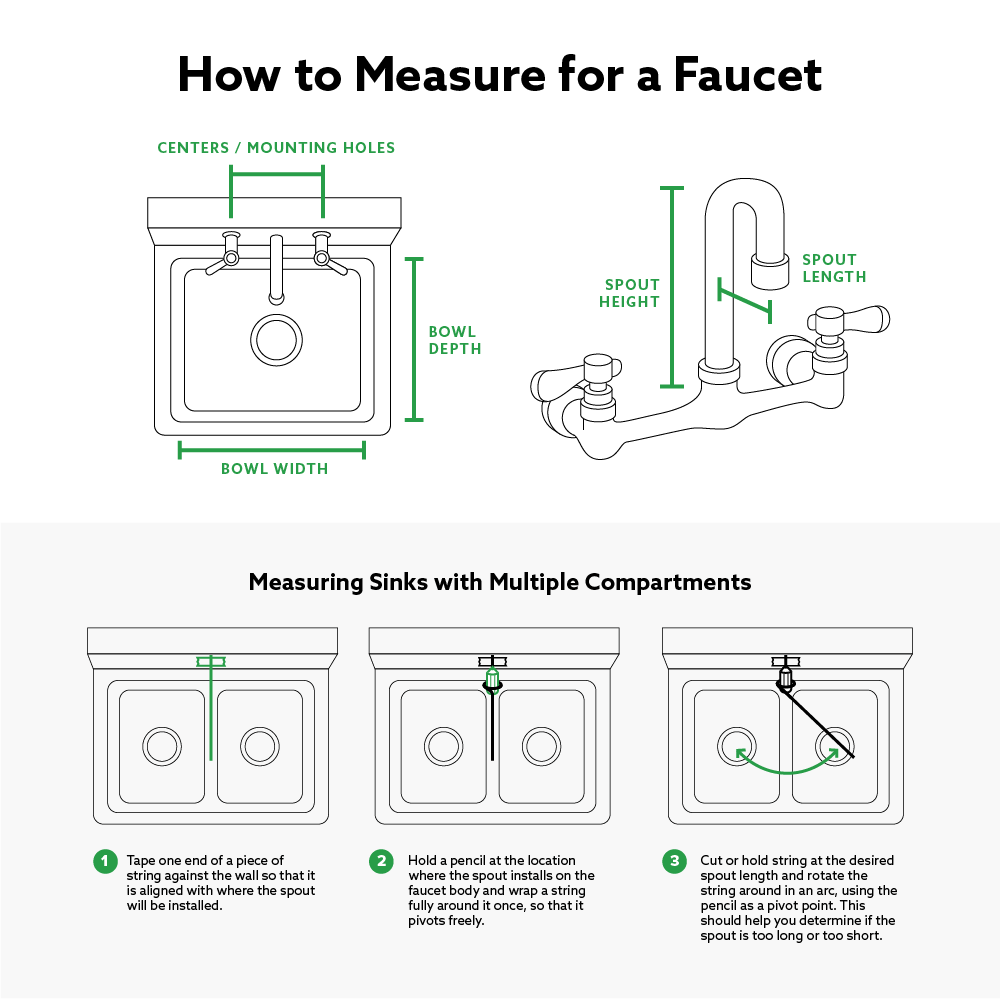
Image Source: lirp.cdn-website.com
Exploring Different Kitchen Faucet Styles
The style of your faucet should match your kitchen’s overall design. Whether you have a modern, farmhouse, or traditional kitchen, there’s a faucet style to complement it.
Modern Kitchen Faucet Styles
Modern kitchens often feature clean lines and minimalist designs. For these spaces, sleek, streamlined faucets are ideal. Think simple geometric shapes, brushed metal finishes, and minimal ornamentation.
- Gooseneck Faucets: These have a high, curved spout that offers ample clearance for large pots and pans. They provide a modern, elegant look.
- Commercial-Style Faucets: Inspired by restaurant kitchens, these faucets often have a professional spring spout. They offer high functionality and a bold, contemporary statement.
- Wall-Mounted Faucets: Mounting the faucet directly to the wall above the sink creates a clean, uncluttered countertop. This is a popular choice for a minimalist aesthetic.
Traditional Kitchen Faucet Styles
Traditional kitchens often have a more classic, ornate feel. Faucets in these styles tend to have softer curves and more decorative details.
- Bridge Faucets: These feature a distinct bridge connecting the spout to the handles. They often have a vintage charm and are suitable for farmhouse or classic kitchens.
- Cross-Handle Faucets: With two separate handles shaped like crosses for hot and cold water, these faucets evoke a timeless, elegant feel.
- High-Arc Faucets with Decorative Handles: Even high-arc designs can fit into traditional settings if they incorporate more detailed handle designs, like porcelain inserts or ornate metalwork.
Farmhouse Kitchen Faucet Styles
Farmhouse kitchens are known for their rustic charm and welcoming atmosphere. Faucets in this style often blend vintage elements with modern functionality.
- Pull-Down Faucets with a Vintage Finish: A pull-down faucet can offer modern convenience, but choosing one with a brushed nickel or oil-rubbed bronze finish can lend a farmhouse feel.
- Bridge Faucets: As mentioned earlier, bridge faucets are a perfect fit for farmhouse aesthetics, bringing a touch of vintage appeal.
- Side Sprayer Faucets: While less common now, side sprayers were a staple in older kitchens. Some modern versions have a retro look that complements a farmhouse sink.
Deciphering Faucet Types and Functions
Beyond style, the functional type of faucet is crucial. The most common and popular types offer different ways to control water flow and spray.
The Versatile Single Handle Kitchen Faucet
A single handle kitchen faucet is incredibly popular for its ease of use. A single lever controls both water temperature and flow rate.
- Pros:
- Easy to operate with one hand, ideal when your hands are full or messy.
- Simple and clean look, fitting well with many kitchen styles.
- Generally easier to clean due to fewer parts.
- Cons:
- Precise temperature control can sometimes be trickier than with two handles.
The High-Performance Pull Down Kitchen Faucet
A pull down kitchen faucet features a spout with a spray head that pulls out towards you. This design is incredibly practical for everyday kitchen tasks.
- Pros:
- Excellent for rinsing dishes, washing produce, and cleaning the sink.
- The retractable hose offers a clean look when not in use.
- Most come with multiple spray settings.
- Cons:
- Can be more expensive than basic faucets.
- Requires sufficient clearance above the sink for the spout to pull down fully.
The Practical Pull Out Kitchen Faucet
Similar to pull-down faucets, pull out kitchen faucets also have a retractable spray head. However, the spray head pulls straight out from the end of the spout, rather than down from the spout itself.
- Pros:
- Good for reaching different areas of a large sink.
- Can be more comfortable for some users to hold.
- Cons:
- The spout often has a shorter reach compared to pull-down models.
- The hose might be less robust.
The Convenient Spray Function Kitchen Faucet
Many kitchen faucets come with a spray function kitchen faucet. This is usually integrated into the spout or as a separate side sprayer.
- Spray Settings:
- Aerated Stream: The standard, bubble-filled stream for everyday use.
- Powerful Spray: A more forceful stream for tackling tough food residue.
- Pause Setting: Stops the water flow temporarily without changing the temperature or pressure settings.
- Benefits: Makes cleaning tasks easier and more efficient.
The Smart Touchless Kitchen Faucets
Touchless kitchen faucets, also known as motion-sensor faucets, activate the water flow when you wave your hand near a sensor.
- Pros:
- Highly hygienic – reduces germ transmission.
- Convenient for when your hands are dirty or full.
- Helps conserve water by automatically shutting off.
- Cons:
- Can be significantly more expensive.
- Requires batteries or an electrical connection.
- Slight learning curve to position your hands correctly.
The Specialized Bar Sink Faucet
If you have a secondary sink, like a bar or prep sink, a bar sink faucet is specifically designed for these smaller spaces.
- Characteristics:
- Typically smaller and more compact than main kitchen faucets.
- Often have a simpler design, sometimes just a single handle.
- Can be a great way to add a touch of style to a secondary sink.
Choosing the Right Kitchen Faucet Materials
The material of your faucet impacts its durability, appearance, and cost.
Common Kitchen Faucet Materials
- Brass:
- Description: A durable alloy of copper and zinc. Often plated with chrome, nickel, or other finishes.
- Pros: Very durable, resistant to corrosion, can be finished in many ways.
- Cons: Can be more expensive. Needs proper plating to prevent tarnishing.
- Stainless Steel:
- Description: An alloy of iron, chromium, and nickel.
- Pros: Highly durable, corrosion-resistant, modern look, does not tarnish.
- Cons: Can be prone to water spots if not wiped down.
- Zinc Alloy:
- Description: An alloy of zinc with other metals.
- Pros: More affordable.
- Cons: Less durable than brass or stainless steel, can corrode over time, less resistant to scratches.
- Plastic (ABS):
- Description: A strong plastic, often used for internal components or for less expensive faucet bodies.
- Pros: Very affordable.
- Cons: Least durable, prone to cracking or breaking, not as aesthetically pleasing.
Fathoming Kitchen Faucet Finishes
The finish not only affects the look but also the faucet’s resistance to wear and tear.
Popular Kitchen Faucet Finishes
- Chrome:
- Description: A bright, reflective silver finish.
- Pros: Very durable, scratch-resistant, easy to clean, affordable.
- Cons: Shows water spots and fingerprints easily.
- Brushed Nickel:
- Description: A matte, satin silver finish that’s warmer than chrome.
- Pros: Hides water spots and fingerprints well, durable, versatile look.
- Cons: Can be slightly more expensive than chrome.
- Stainless Steel:
- Description: The natural color and texture of stainless steel.
- Pros: Matches stainless steel appliances, durable, hides water spots.
- Cons: Can sometimes appear less “finished” than plated options if not well-maintained.
- Oil-Rubbed Bronze:
- Description: A dark, rich brown finish with reddish undertones, often with a hand-rubbed look.
- Pros: Adds warmth and character, hides water spots well, good for traditional and farmhouse styles.
- Cons: Can vary in color and may wear over time to reveal a bronze or brass tone beneath, which some people like.
- Matte Black:
- Description: A non-reflective black finish.
- Pros: Modern and striking, hides water spots well, creates a bold statement.
- Cons: Can show dust or mineral deposits if not cleaned regularly.
Finish Durability and Maintenance
| Finish | Durability | Fingerprint/Water Spot Resistance | Maintenance | Best For |
|---|---|---|---|---|
| Chrome | High | Low | Wipe clean | Modern, traditional, budget-friendly |
| Brushed Nickel | High | Medium | Wipe clean | Versatile, hides marks, farmhouse, modern |
| Stainless Steel | High | Medium | Wipe clean | Appliances, modern |
| Oil-Rubbed Bronze | Medium | High | Wipe clean | Farmhouse, traditional, rustic |
| Matte Black | Medium | High | Wipe clean | Modern, bold statement |
Identifying the Best Kitchen Faucet Brands
When investing in a kitchen faucet, choosing a reputable brand known for quality and customer service is wise. These brands often use superior materials and offer better warranties.
Top Kitchen Faucet Brands to Consider
- Moen:
- Known for: Innovation, wide range of styles, user-friendly features (like MotionSense touchless technology), excellent warranties.
- Popular lines: Arbor, Essie, Brantford.
- Delta Faucet:
- Known for: Durability, patented technologies (like MagnaTite docking for pull-down sprayers), elegant designs, good value.
- Popular lines: Trinsic, Leland, Cassidy.
- Kohler:
- Known for: High-end designs, robust construction, premium finishes, and a wide selection of styles from traditional to contemporary.
- Popular lines: Simplice, Purist, Fairfax.
- Kraus:
- Known for: Modern and commercial-style designs, high quality at competitive prices, durability, and often include accessories like soap dispensers.
- Popular lines: KPF series (pull-down faucets), Oletto.
- Pfister:
- Known for: Good value, diverse styles, reliable performance, and innovative features at accessible price points.
- Popular lines: Ashfield, Stellen, Tisbury.
Key Features to Look For
Beyond style and brand, several features can enhance your faucet’s usability.
Essential Faucet Features
- Spout Height and Reach:
- Height: Ensure there’s enough clearance under the spout for your largest pots and pans. A high-arc faucet offers more vertical space.
- Reach: The spout should extend far enough into the sink basin to be comfortable to use without splashing water outside the sink.
- Handle Type:
- Single Handle: Easy operation for temperature and flow.
- Double Handle: Offers more precise control over hot and cold water.
- Touchless/Motion Sensor: For ultimate hygiene and convenience.
- Spray Function:
- Pull-Down: Retracts into the spout.
- Pull-Out: Pulls straight out from the end of the spout.
- Side Sprayer: A separate unit next to the faucet.
- Spray Settings: Look for multiple options like spray, stream, and pause.
- Valve Type:
- Ceramic Disc Valves: The industry standard for durability and leak prevention. They are very reliable.
- Cartridge Valves: Can be made of plastic or brass; ceramic disc is generally preferred for longevity.
- Mounting Configuration:
- Single Hole: For faucets with integrated handles and spouts.
- Center-Set (4-inch spread): Handles and spout are mounted on a base plate.
- Widespread (8-inch or more spread): Handles and spout are separate pieces, allowing for flexible installation. Check your sink or countertop for pre-drilled holes.
Kitchen Sink Faucet Installation: What You Need to Know
While many faucets can be a DIY project, kitchen sink faucet installation involves connecting water lines and ensuring a watertight seal.
DIY Installation vs. Professional Help
- DIY:
- When it’s feasible: If you have basic plumbing knowledge, the right tools, and a straightforward installation (e.g., replacing an old faucet with a similar type).
- Tools commonly needed: Adjustable wrenches, basin wrench, pliers, screwdriver, plumber’s putty or silicone sealant, bucket, rags.
- Professional Installation:
- When to call a pro: If you’re installing a completely new type of faucet (like touchless or wall-mounted), if your existing plumbing is old or complex, or if you’re not confident in your abilities.
- Benefits: Ensures proper installation, avoids leaks, saves you time and potential frustration.
Steps in Kitchen Sink Faucet Installation (General Overview)
- Turn off the water supply: Locate the shut-off valves under the sink for both hot and cold water. Turn them clockwise until they stop. Turn on the old faucet to drain any remaining water.
- Disconnect old faucet: Use a wrench to detach the water supply lines from the faucet and the shut-off valves. Remove any mounting nuts holding the old faucet in place.
- Clean the sink surface: Remove old putty or sealant around the faucet holes.
- Assemble the new faucet: Follow the manufacturer’s instructions. This may involve attaching supply lines to the faucet body.
- Install the faucet: Insert the faucet through the holes in the sink or countertop. Secure it from underneath with mounting nuts and washers.
- Connect supply lines: Attach the new faucet’s supply lines to the corresponding shut-off valves. Tighten them with a wrench, but don’t overtighten.
- Turn on water and check for leaks: Slowly turn the shut-off valves back on. Check all connections for drips or leaks. Turn on the new faucet to test flow and temperature.
- Final checks: Ensure the faucet is stable and operates smoothly.
Frequently Asked Questions About Kitchen Faucets
Q1: How often should I replace my kitchen faucet?
A kitchen faucet can last anywhere from 5 to 15 years, depending on the quality of the faucet, the hardness of your water, and how well it’s maintained. If you notice persistent leaks, corrosion, low water pressure, or difficulty operating it, it might be time for a replacement.
Q2: Can I install a faucet with a different number of holes than my sink has?
Yes, often you can. If your sink has more holes than your new faucet needs, you can use a deck plate (escutcheon) to cover the unused holes. If your sink has fewer holes, you might need a new sink or a faucet designed for fewer holes.
Q3: What’s the difference between a pull-down and a pull-out faucet?
A pull-down kitchen faucet has a spray head that pulls down from the spout, usually with a hose that retracts into the spout body. A pull-out faucet has a spray head that pulls straight out from the end of the spout, with a hose typically located underneath. Both offer similar functionality for washing and rinsing.
Q4: Are touchless faucets worth the extra cost?
For many, the convenience and hygiene benefits of touchless kitchen faucets make them a worthwhile investment, especially in busy households. They can also help reduce water waste. However, they are more expensive than traditional faucets and require a power source.
Q5: How do I choose the right finish for my kitchen faucet?
Consider your kitchen’s overall style and the finishes of your appliances. Chrome and stainless steel are versatile and modern. Brushed nickel is warm and hides fingerprints well. Oil-rubbed bronze and matte black offer distinct aesthetic statements. Think about durability and ease of cleaning for each finish.
By carefully considering these aspects – from style and functionality to materials and finishes – you can select a kitchen faucet that not only looks fantastic but also serves your household efficiently for years to come. Happy choosing!