
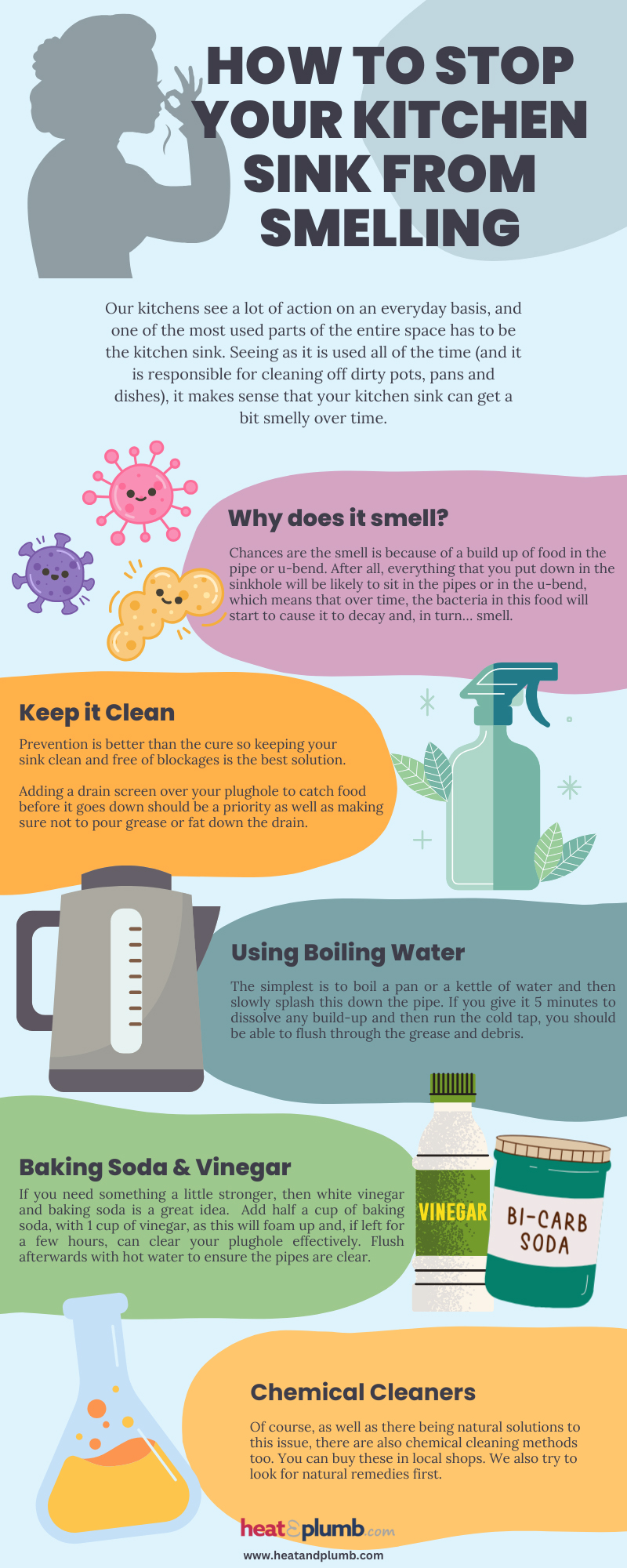
Image Source: www.heatandplumb.com
How To Make A Kitchen Sink Smell Better: Natural Fixes
Does your kitchen sink emit an unpleasant odor, even after you’ve washed the dishes? The good news is that you can often banish these lingering smells with simple, natural solutions. Most kitchen sink odors stem from food debris trapped in the drain or disposal, leading to bacterial growth and the release of foul gases. Can you use baking soda and vinegar to clean your sink? Yes, absolutely, and it’s one of the most effective natural methods!
The kitchen sink is a busy hub of activity. It handles everything from greasy dishes and food scraps to coffee grounds and vegetable peels. Over time, this constant stream of organic matter can accumulate in the drainpipes and garbage disposal, creating a breeding ground for bacteria and mold. These microorganisms break down the trapped food particles, releasing volatile organic compounds (VOCs) that we perceive as unpleasant smells. So, what can you do to combat this common kitchen nuisance? This guide will explore various natural remedies and practical tips to ensure your kitchen sink remains fresh and inviting. We’ll cover everything from simple daily habits to deeper cleaning techniques using readily available household ingredients.
Pinpointing the Source of Sink Odors
Before diving into the solutions, it’s helpful to know where those unwelcome smells might be coming from. Common culprits include:
- Food Particles: Small bits of food, grease, and oils that don’t get fully washed down the drain can stick to the sides of pipes and the disposal chamber.
- Grease and Fat Buildup: When hot grease cools, it solidifies and coats the pipes, trapping other debris.
- Trapped Moisture: Dampness in the drain or disposal unit can encourage mold and mildew growth.
- Garbage Disposal Issues: If your garbage disposal isn’t running efficiently, food waste can stagnate inside.
- Sink Overflow or Leaks: Any standing water under the sink can lead to mold and musty odors.
Natural Deodorizing Powerhouses: Baking Soda and Vinegar
The classic combination of baking soda and vinegar is a remarkably effective natural remedy for sink odors. Their chemical reaction creates a fizzing action that helps dislodge debris and neutralize smells.
The Baking Soda and Vinegar Method: Step-by-Step
- Clear the Sink: Remove any standing water from the sink basin.
- Pour Baking Soda: Sprinkle about ½ cup to 1 cup of baking soda directly down the drain and into the garbage disposal. Ensure it coats the sides as much as possible. Baking soda is a fantastic odor eliminator.
- Add Vinegar: Slowly pour about 1 cup of white vinegar over the baking soda. You’ll immediately notice a fizzing and bubbling reaction. This is the vinegar reacting with the baking soda, which helps to break down gunk and kill odor-causing bacteria.
- Let It Work: Cover the drain with a stopper or a damp cloth. Let the mixture sit for at least 15-30 minutes, or even longer for stubborn odors. This allows the reaction to work its magic.
- Flush with Hot Water: After the waiting period, pour a kettle of boiling water down the drain. This will flush away the loosened debris and any remaining residue. For an extra boost, you can follow up with a rinse of cold water.
Why it Works:
- Baking Soda: It’s alkaline, which helps neutralize acidic odors. It also acts as a mild abrasive, helping to scrub away grime.
- Vinegar: It’s acidic and acts as a disinfectant, killing bacteria and mold. The fizzing action helps to loosen blockages.
Leveraging Citrus Power: Lemon Juice
Lemon juice is another excellent natural ingredient for freshening your kitchen sink. Its acidity helps break down grease, and its natural scent leaves a pleasant citrus aroma.
Freshening with Lemon Juice
- Direct Pour: Pour the juice of half a lemon directly down the drain. Let it sit for a few minutes before flushing with hot water.
- Lemon Rinds in the Disposal: Cut up a lemon into smaller pieces, rind and all, and feed them through your garbage disposal. Run the disposal with cold water. This is a great way to clean and deodorize the disposal simultaneously. The essential oils in the lemon peel act as a natural degreaser and freshener.
Other Natural Odor Fighters
Beyond baking soda, vinegar, and lemon, several other natural ingredients can help keep your sink smelling fresh.
Salt and Ice Combination
For a cleaning boost specifically for the garbage disposal, try salt and ice.
- Add Ice: Fill the garbage disposal with ice cubes.
- Add Salt: Sprinkle in about ½ cup of coarse salt.
- Run Disposal: Turn on the cold water and run the garbage disposal. The ice cubes act as an abrasive, scraping away buildup from the disposal blades and chamber, while the salt helps to scrub and deodorize.
Essential Oils for Scent and Disinfection
Essential oils can add a pleasant aroma and some possess natural antibacterial properties.
- Add to Baking Soda: Mix a few drops of your favorite essential oil (like tea tree, eucalyptus, peppermint, or lavender) with baking soda before pouring it down the drain.
- On a Cotton Ball: Place a few drops of essential oil onto a cotton ball and drop it down the drain when not in use. This provides a subtle, continuous freshening effect.
Deep Cleaning Your Sink and Drains
Sometimes, a simple flush isn’t enough. You might need to perform a deeper clean to tackle more persistent odors.
Using a Natural Plumbing Cleaner
While commercial plumbing cleaner products can be harsh, you can create a natural version to help clear out sludge and deodorize your pipes.
- Baking Soda and Salt Soak:
- Pour 1 cup of baking soda and ½ cup of salt down the drain.
- Let it sit for at least an hour, or overnight for tougher jobs.
- Follow with a kettle of boiling water. This method is excellent for slowly breaking down grease and grime that contributes to odors.
Cleaning the Garbage Disposal
The garbage disposal is often the primary source of sink smells. Regular cleaning is crucial.
- Vinegar Ice Cubes: Freeze vinegar in ice cube trays. Once frozen, drop a few cubes into the disposal and run it with cold water. This chills and loosens debris, making it easier to break down.
- Cleaning Brush: Use a stiff brush to scrub the rubber splash guard and the inside of the disposal opening. This is where food particles often get stuck.
- Citrus Peels: As mentioned earlier, citrus peels are great for this.
Washing the Sink Basin and Strainer
Don’t forget the visible parts of your sink!
- Sink Basin: Scrub the sink basin with a paste of baking soda and water. Rinse thoroughly.
- Sink Strainer: Remove the sink strainer and scrub it clean with an old toothbrush and baking soda paste to remove any food residue and prevent odors.
Preventing Future Sink Odors
The best approach is often prevention. By adopting a few good habits, you can significantly reduce the likelihood of your sink smelling bad.
Daily Habits for a Fresh Sink
- Rinse After Every Use: Make it a habit to rinse your sink thoroughly with hot water after each use, especially after washing greasy dishes or disposing of food scraps.
- Avoid Putting Certain Foods Down the Drain: Certain items are notorious for causing clogs and odors. These include:
- Coffee grounds
- Eggshells
- Grease and fats
- Starchy foods (like rice and pasta)
- Fibrous vegetables (like celery and asparagus peels)
- Bones and fruit pits
- Use a Sink Strainer: A good sink strainer will catch food particles, making them easy to remove and preventing them from entering the drain. Empty it regularly into the trash.
- Run Cold Water with Disposal: Always run cold water when using your garbage disposal. This helps solidify any grease, allowing the disposal to break it up and wash it through the pipes more effectively. Hot water can melt grease, which can then re-solidify further down the pipes, causing clogs.
Weekly Maintenance for a Clean Sink
- Baking Soda and Vinegar Flush: Perform the baking soda and vinegar cleaning routine at least once a week, or more often if you notice any odors developing.
- Garbage Disposal Freshening: Run citrus peels through your disposal weekly.
When Natural Remedies Aren’t Enough: Commercial Solutions
While natural remedies are often highly effective, some situations might require more potent solutions.
Dishwasher Cleaner
If the odor seems to be coming from your dishwasher rather than the sink itself, a dishwasher cleaner can be very helpful. Follow the product instructions for use. These cleaners are designed to remove grease, limescale, and food residue from the dishwasher’s interior, which can also contribute to unpleasant smells.
Commercial Drain Cleaner
In cases of severe clogs or persistent odors that natural methods can’t resolve, a commercial drain cleaner might be necessary. However, it’s important to use these products with caution, as they often contain harsh chemicals. Always follow the instructions carefully, wear gloves and eye protection, and ensure good ventilation. Overuse or misuse of chemical drain cleaners can damage your plumbing.
Plumbing Cleaner for Deeper Issues
If you suspect a more significant issue within your plumbing cleaner might be needed, especially if odors are accompanied by slow drains or gurgling sounds. However, for persistent or severe problems, it’s best to call a professional plumber.
Troubleshooting Persistent Sink Odors
If your sink continues to smell despite your best efforts, consider these possibilities:
- Vent Pipe Blockage: A blocked vent pipe in your plumbing system can trap sewer gases, leading to sink odors. This is a job for a professional.
- P-Trap Issues: The P-trap (the U-shaped pipe under your sink) is designed to hold water, creating a seal that prevents sewer gases from entering your home. If it’s dry or cracked, odors can escape.
- Under-Sink Leaks: Check for any leaks or standing water under the sink, as this can promote mold and mildew growth.
- Main Sewer Line Problems: In rare cases, persistent odors could indicate a problem with your main sewer line.
Frequently Asked Questions (FAQ)
Q1: Can I use bleach to clean my kitchen sink and drains?
While bleach can kill bacteria and eliminate odors, it’s not generally recommended for regular drain cleaning. It can react negatively with other cleaning products and potentially damage certain types of pipes. Natural methods like baking soda and vinegar are safer and often just as effective for routine deodorizing.
Q2: How often should I clean my garbage disposal?
It’s a good idea to freshen your garbage disposal at least once a week. Deep cleaning it with ice and salt or citrus peels can be done as needed, or perhaps once a month, to keep it running smoothly and smelling fresh.
Q3: My sink still smells after using baking soda and vinegar. What else can I try?
If the baking soda and vinegar method doesn’t solve the problem, the issue might be more significant, such as a clog deeper in the pipes or a problem with the plumbing vent. You might consider a more intensive natural cleaning with salt and boiling water, or if the smell persists, it may be time to call a plumber.
Q4: Is it safe to put essential oils down the drain?
Yes, it is generally safe to put a few drops of pure, high-quality essential oils down the drain, especially when combined with other cleaning agents like baking soda. They can add a pleasant scent and some have natural antimicrobial properties.
Q5: What if I have a septic system? Can I still use these natural remedies?
For septic systems, it’s generally best to avoid harsh chemicals and large amounts of grease. Natural remedies like baking soda, vinegar, and citrus are usually safe. However, if you have any concerns, it’s always wise to consult your septic system professional.
By implementing these natural fixes and adopting good sink maintenance habits, you can ensure your kitchen sink remains a clean and pleasant part of your home, free from those unwelcome odors. Your kitchen will smell fresher, and you’ll feel more confident using your sink.