
What is a ghost kitchen? A ghost kitchen is a professional food preparation and cooking facility set up for the preparation of delivery-only meals. Can I open a ghost kitchen? Yes, you absolutely can! Who is a ghost kitchen for? It’s ideal for chefs looking to launch new concepts without the overhead of a traditional restaurant, established brands wanting to expand their reach, or food entrepreneurs prioritizing delivery and online orders.
Opening a ghost kitchen, also known as a dark kitchen setup or cloud kitchen operations, is a smart move for food businesses today. It allows you to serve customers through various delivery platforms without the need for a dine-in area. This guide will walk you through everything you need to know to get your delivery-only restaurant up and running.
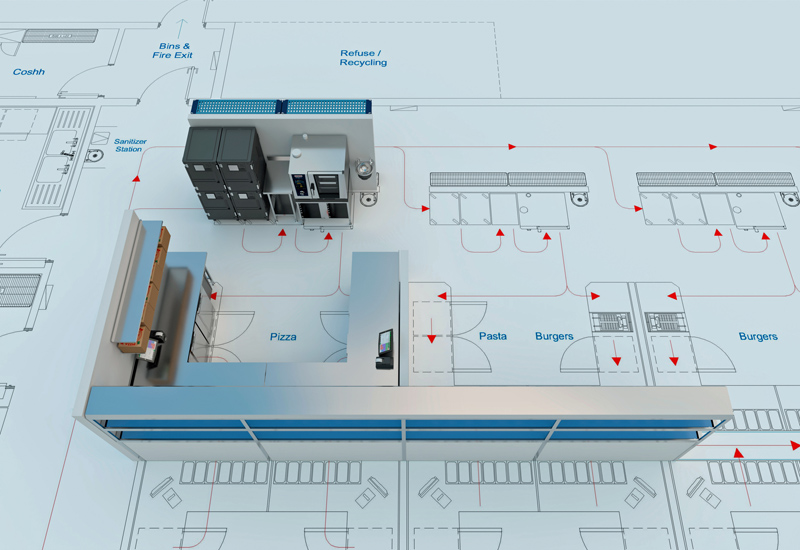
Image Source: www.upmenu.com
Fathoming the Ghost Kitchen Concept
The rise of food delivery apps has fueled the growth of ghost kitchens. These kitchens exist solely to fulfill online orders. You won’t find any tables, waiters, or storefront signage. Instead, their focus is on efficient food production and timely delivery. A virtual restaurant is a brand that operates out of a ghost kitchen, often with multiple brands housed within a single physical location.
Why Choose a Ghost Kitchen Model?
There are many compelling reasons to consider this model:
- Lower Startup Costs: Compared to a traditional brick-and-mortar restaurant, ghost kitchens require significantly less investment. You bypass the costs of prime real estate, dining room decor, and front-of-house staff.
- Reduced Overhead: Ongoing expenses are also lower. Think fewer staff, less utilities, and no need for extensive customer service.
- Flexibility and Agility: You can easily test new menu items, launch new brands, or pivot your strategy based on market demand without major disruption.
- Wider Reach: By partnering with multiple delivery platforms, you can access a much larger customer base than a single physical location might offer.
- Data-Driven Decisions: Delivery platforms provide valuable data on customer preferences, order volume, and peak times, allowing you to optimize your operations.
Crafting Your Ghost Kitchen Business Plan
A solid ghost kitchen business plan is your roadmap to success. It should clearly outline your vision, market, operations, and financial projections.
Key Components of Your Business Plan:
- Executive Summary: A brief overview of your entire plan.
- Company Description: What is your business? What mission drives it?
- Market Analysis:
- Target Audience: Who are you serving? What are their dining habits?
- Competitor Analysis: Who else is operating in your delivery zones? What are their strengths and weaknesses?
- Market Trends: What are the current trends in food delivery and dining?
- Menu and Concept:
- What type of cuisine will you offer?
- Will you operate one brand or multiple virtual restaurant concepts from the same kitchen?
- Consider menu items that travel well for delivery.
- Operations Plan:
- Where will your kitchen be located?
- What ghost kitchen technology will you use?
- How will you manage orders from different platforms?
- What are your staffing needs?
- Marketing and Sales Strategy:
- How will you promote your delivery-only restaurant?
- What platforms will you use?
- What are your pricing strategies?
- Management Team: Who is running the show?
- Financial Plan:
- Startup costs.
- Revenue projections.
- Profit and loss statements.
- Cash flow projections.
- Funding requirements.
Deciphering the Location: Finding Your Kitchen Space
The physical space is critical for a ghost kitchen. You don’t need a prime street-front location, but you do need a well-equipped kitchen that is strategically located for delivery.
Options for Your Kitchen Space:
- Renting a Ghost Kitchen Space: Many companies specialize in offering fully equipped kitchen spaces designed for ghost kitchens. These are often called commissary kitchen or shared kitchen spaces.
- Pros: Lower upfront cost, shared utilities and amenities, often pre-licensed.
- Cons: Less control over your specific setup, potential for scheduling conflicts if sharing.
- Dedicated Ghost Kitchen Facility: This is a space built or renovated specifically as a ghost kitchen, where you rent an entire unit.
- Pros: More control over your operations and branding.
- Cons: Higher rental costs than shared spaces.
- Existing Restaurant Kitchen: If you already own a restaurant, you could repurpose a section of your kitchen for a virtual restaurant concept. This can be a cost-effective way to expand.
- Food Truck Ghost Kitchen: Some operators utilize food truck ghost kitchen models, meaning they operate from a mobile unit that parks in strategic locations for pick-up or delivery dispatch. This offers mobility but requires careful planning for power, water, and waste.
Factors to Consider When Choosing a Location:
- Delivery Radius: Is the location central to your target delivery zones?
- Accessibility for Delivery Drivers: Is it easy for drivers to find and access for pick-ups?
- Kitchen Infrastructure: Does it have adequate ventilation, plumbing, gas lines, and electrical capacity for your equipment?
- Zoning and Permitting: Ensure the location is zoned for commercial food preparation.
- Cost: Does the rent or lease fit within your budget?
Navigating the Legalities: Licensing for Ghost Kitchens
Obtaining the correct licensing for ghost kitchens is paramount. Regulations can vary significantly by city, county, and state.
Essential Licenses and Permits:
- Business License: A general license to operate a business.
- Food Service Establishment Permit: Issued by the local health department, this confirms your facility meets food safety standards.
- Food Handler Permits: For all staff involved in food preparation.
- Health Department Inspection: You’ll need to pass regular inspections to maintain your permit.
- Fire Department Inspection: For compliance with fire safety codes.
- Zoning Permits: Confirmation that your business activity is allowed in the chosen location.
- Sales Tax Permit: To collect and remit sales tax.
It’s crucial to research the specific requirements in your area. Contact your local health department and small business administration for guidance.
Equipping Your Kitchen: The Right Gear
Your dark kitchen setup requires efficient and reliable kitchen equipment. Focus on durability, ease of cleaning, and suitability for your menu.
Essential Equipment:
- Cooking Equipment:
- Commercial ovens (convection, deck, combi)
- Ranges and stovetops
- Fryers
- Grills and flat-top griddles
- Microwaves
- Refrigeration and Storage:
- Reach-in refrigerators and freezers
- Walk-in coolers/freezers (if space and budget allow)
- Dry storage shelving
- Prep Equipment:
- Worktables (stainless steel)
- Slicers, mixers, food processors
- Cutting boards and knives
- Pots, pans, and utensils
- Dishwashing:
- Commercial dishwasher
- Three-compartment sink
- Ventilation:
- Commercial hood and exhaust system (crucial for safety and compliance)
- Point of Sale (POS) and Order Management:
- Systems to manage orders from multiple delivery platforms.
- Printers for order tickets.
- Packaging Supplies:
- High-quality, food-safe containers designed for delivery.
- Bags and labeling.
Table 1: Sample Ghost Kitchen Equipment Checklist
| Category | Equipment | Notes |
|---|---|---|
| Cooking | Convection Oven, Range, Fryer | Choose based on menu complexity. |
| Refrigeration | Reach-in Refrigerator, Freezer | Ensure sufficient capacity. |
| Prep | Stainless Steel Worktables, Slicer | Focus on sanitation and efficiency. |
| Sanitation | Commercial Dishwasher, 3-Compartment Sink | Essential for health code compliance. |
| Ventilation | Commercial Hood and Exhaust System | Non-negotiable for safety. |
| Technology | Tablet/POS System, Order Printers | Integrates with delivery platforms. |
| Packaging | Delivery-Ready Containers, Bags, Labels | Prioritize insulation and leak-proofing. |
Implementing Ghost Kitchen Technology
Leveraging the right ghost kitchen technology is key to streamlining operations and maximizing efficiency.
Essential Technology Solutions:
- Online Ordering System/POS: A robust system that can integrate with multiple third-party delivery apps (DoorDash, Uber Eats, Grubhub, etc.). This consolidates orders into one place.
- Kitchen Display System (KDS): Replaces paper tickets with digital displays showing orders to kitchen staff. This reduces errors and improves workflow.
- Inventory Management Software: Helps track ingredients, manage stock levels, and reduce waste.
- Delivery Management Software: For businesses handling their own deliveries, this optimizes routes and driver management.
- Customer Relationship Management (CRM) Tools: To gather customer data, manage feedback, and build loyalty.
Building Your Brand and Marketing Your Ghost Kitchen
Without a physical storefront, your brand identity and digital marketing are even more critical for a delivery-only restaurant.
Branding Strategies:
- Compelling Name and Logo: Create a memorable brand that resonates with your target audience.
- High-Quality Food Photography: Professional photos are essential for online menus.
- Unique Selling Proposition (USP): What makes your virtual restaurant stand out? Is it specific ingredients, a unique concept, or exceptional speed?
Digital Marketing Tactics:
- Online Presence:
- A professional website with your menu, story, and ordering links.
- Active social media profiles (Instagram, Facebook, TikTok) showcasing your food and behind-the-scenes.
- Delivery Platform Optimization:
- Ensure your menus are clear, concise, and visually appealing on all platforms.
- Run promotions and offer discounts.
- Encourage customer reviews.
- Local SEO: Optimize your online listings so customers searching for food in your area can find you.
- Email Marketing: Build an email list and send out promotions and updates.
- Influencer Marketing: Partner with local food bloggers or influencers.
Managing Cloud Kitchen Operations
Smooth cloud kitchen operations require meticulous attention to detail in every aspect, from order taking to delivery dispatch.
Key Operational Areas:
- Order Flow Management:
- Establish a clear system for receiving orders from various platforms.
- Assign orders to kitchen staff efficiently.
- Monitor cooking times and ensure orders are ready when drivers arrive.
- Quality Control:
- Maintain high standards for food preparation and presentation.
- Ensure food is packaged correctly to arrive at the customer’s door fresh and intact.
- Staffing:
- Hire skilled cooks and kitchen staff.
- Train staff on your specific processes and hygiene standards.
- Consider roles like order expediter or packaging specialist.
- Delivery Logistics:
- If using third-party drivers, ensure smooth handoffs and clear communication.
- If managing your own delivery fleet, invest in reliable vehicles and route optimization software.
- Inventory and Waste Management:
- Regularly take inventory to prevent stockouts and overstocking.
- Implement practices to minimize food waste.
- Hygiene and Sanitation:
- Maintain impeccable cleanliness standards in the kitchen.
- Adhere strictly to health department regulations.
Considerations for a Food Truck Ghost Kitchen
Operating a food truck ghost kitchen offers unique advantages and challenges. It’s a mobile extension of the ghost kitchen model.
Advantages:
- Mobility: Ability to move to different locations with high demand or for special events.
- Lower Initial Investment: Often less than a brick-and-mortar kitchen.
- Direct Customer Interaction: For pick-up orders, you can have a direct connection.
Challenges:
- Limited Space: Kitchen operations must be highly efficient.
- Permitting for Locations: Finding approved parking spots can be complex.
- Power and Water: Ensuring reliable access to utilities.
- Weather Dependency: Operations can be affected by weather conditions.
- Storage: Often requires a separate commissary kitchen for prep and storage.
Frequently Asked Questions (FAQ)
What is the average cost to open a ghost kitchen?
The cost can vary widely depending on your location, equipment needs, and whether you rent a shared space or a dedicated facility. Start-up costs can range from \$10,000 for a very basic setup in a shared kitchen to \$100,000 or more for a fully equipped, dedicated facility.
How do I get customers to find my virtual restaurant?
Marketing through online channels is crucial. This includes optimizing your presence on delivery apps, social media marketing, local SEO, and potentially paid advertising. High-quality photos and a strong brand identity are key.
Can I operate multiple virtual restaurants from one ghost kitchen?
Yes, this is a common and often very profitable strategy. It allows you to test different concepts and cater to a wider range of customer preferences from a single operational base.
What are the most important licenses for a ghost kitchen?
The most critical licenses are typically the Business License and the Food Service Establishment Permit from your local health department. Specific requirements vary by region.
How important is the location of a ghost kitchen if there’s no dine-in service?
Location is still vital, but for different reasons. It’s crucial for proximity to your target delivery zones and ease of access for delivery drivers. A central location within your desired service area is key to fast and efficient deliveries.
What is a commissary kitchen in the context of ghost kitchens?
A commissary kitchen is a shared commercial kitchen facility that can be rented by multiple food businesses. It’s a popular option for ghost kitchens as it often comes equipped with necessary appliances and utilities, and sometimes includes licensing support.
This comprehensive guide should equip you with the foundational knowledge to embark on your ghost kitchen journey. Remember that thorough research, meticulous planning, and adaptability are your greatest assets in this dynamic industry.