
Can I put a rug under a sectional? Yes, you absolutely can and should! A well-placed rug is crucial for defining zones, adding warmth, and pulling together the look of your living room, especially when you have a sectional sofa. This guide will explore how to place a rug in a living room with a sectional, covering everything from rug size for sectional dilemmas to creative living room rug ideas.
Sectionals are fantastic for maximizing seating and creating a cozy, communal feel in a living room. However, their unique shape can sometimes make rug placement a bit tricky. But don’t worry! With a few key principles and some practical tips, you can achieve a stylish and functional layout. This sectional sofa rug guide will help you navigate the nuances of area rug placement to create a harmonious and inviting space. We’ll delve into sectional and rug pairing, discuss the best rug for sectional arrangements, explore various rug options for living room setups, and offer advice on decorating with rugs and sectionals, including how to choose a rug for sectional arrangements.
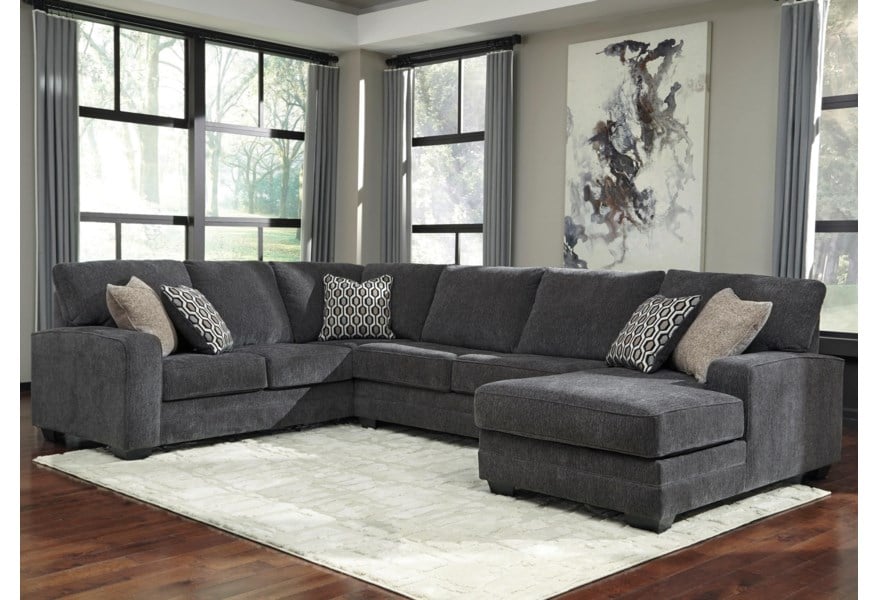
Image Source: blog.northeastfactorydirect.com
Deciphering the Purpose of a Rug with a Sectional
Before we dive into placement strategies, let’s quickly touch on why a rug is so important when you have a sectional.
- Zoning: Sectionals often command a significant presence in a room, and a rug helps to anchor them, clearly defining the main seating area. This is especially helpful in open-plan living spaces.
- Comfort & Warmth: Rugs add a layer of softness underfoot, making your living room feel more inviting and comfortable. They also provide a buffer against cold floors.
- Style & Personality: A rug is a powerful design element. It can introduce color, pattern, texture, and personality, tying your décor together.
- Noise Reduction: Carpets and rugs are excellent at absorbing sound, reducing echo and making your living room a quieter, more peaceful space.
- Floor Protection: A rug can protect your flooring from wear and tear, especially in high-traffic areas around your sectional.
Fathoming the Right Rug Size for Your Sectional
This is often the most significant hurdle when it comes to sectional rug placement. Getting the size wrong can make the entire arrangement feel off. The golden rule here is bigger is usually better, provided it fits the overall scale of your room.
Common Sectional Rug Placement Scenarios
When thinking about area rug placement, consider how much of your sectional will rest on the rug. Here are the most popular approaches:
-
All Legs On: This is the ideal scenario for most situations. Aim for a rug large enough that all the legs of your sectional (including any freestanding pieces) can sit entirely on the rug. This creates a cohesive, grounded look.
- Benefit: Creates a unified and luxurious feel.
- Consideration: Requires a larger rug, which might be more expensive.
-
Front Legs On: If the “all legs on” approach isn’t feasible due to room size or rug availability, having at least the front legs of the sectional on the rug is the next best option. This still anchors the furniture and provides a visual connection.
- Benefit: A good compromise that still defines the seating area.
- Consideration: Ensure the rug extends far enough into the seating area to feel intentional.
-
Just Coffee Table: In some cases, especially with very large or unusually shaped sectionals, a rug might primarily serve to center the coffee table and provide a small visual anchor. This is less common and generally less impactful than having furniture on the rug.
- Benefit: Can work for extremely large rooms or challenging layouts.
- Consideration: May not feel as cohesive or comfortable.
How to Measure for Your Sectional Rug
- Visualize Your Layout: Place your sectional in your living room. Imagine the rug’s placement.
- Measure the Seating Area: Measure the length and width of the primary seating area that your sectional occupies.
- Add Extra Space: For the “all legs on” approach, add at least 6-12 inches (15-30 cm) to each side of your sectional’s footprint. This ensures the rug extends beyond the furniture.
- Consider Traffic Flow: Make sure the rug doesn’t create tripping hazards. There should be at least 18 inches (45 cm) of exposed floor around the edges of the rug to allow for comfortable walking.
- Think About Other Furniture: If you have accent chairs or a console table that you want to include in the rug zone, measure their placement too.
Tip: Use painter’s tape to mark out potential rug sizes on your floor. This helps you visualize the scale and impact before committing to a purchase.
Exploring Sectional and Rug Pairing: Styles and Considerations
Choosing the right rug for sectional arrangements involves thinking about style, color, pattern, and material.
Style Harmony
- Modern Sectionals: Often sleek and minimalist. Pair with rugs that have geometric patterns, solid colors, or subtle textures. A high-pile shag rug can add warmth and softness to balance sharp lines.
- Traditional Sectionals: Typically feature rolled arms and classic silhouettes. Complement these with Persian, Oriental, or floral patterned rugs. Natural fibers like wool or jute can also enhance a traditional feel.
- Transitional Sectionals: Blend modern and traditional elements. These are versatile and can be paired with a wide range of rug styles, from subtly patterned to more abstract designs.
- Bohemian Sectionals: Often layered with pillows and throws. Think globally inspired patterns, vibrant colors, or natural fiber rugs like jute or sisal.
Color and Pattern
- Neutral Sectionals: If your sectional is a neutral color (gray, beige, cream, white), you have a lot of freedom with rug color and pattern.
- Bold Color: A vibrant rug can be a fantastic focal point.
- Intricate Pattern: A detailed pattern can add visual interest and sophistication.
- Texture: A rug with a distinct texture (like a cable knit or a woven design) can add depth without relying on color or pattern.
- Patterned Sectionals: If your sectional already has a pattern, it’s often best to choose a rug that complements it rather than competes.
- Subtle Pattern: A rug with a tone-on-tone pattern or a more subdued design can work well.
- Solid Color: A solid-colored rug that picks up a color from the sectional’s pattern can create a harmonious link.
- Neutral with Texture: A neutral rug with interesting texture can add depth without adding visual noise.
Material Matters: Best Rug for Sectional Comfort and Durability
The material of your rug impacts its feel, durability, and maintenance.
- Wool:
- Pros: Durable, soft, stain-resistant, naturally flame-retardant. Excellent for high-traffic areas.
- Cons: Can be expensive, may shed initially.
- Best for: Families, high-traffic living rooms, creating a luxurious feel.
- Synthetic Fibers (Nylon, Polyester, Polypropylene/Olefin):
- Pros: Durable, stain-resistant, water-resistant, generally affordable, easy to clean. Polypropylene is particularly good for stain resistance.
- Cons: Can feel less luxurious than wool, may flatten over time with heavy use.
- Best for: High-traffic areas, homes with pets and children, budget-conscious shoppers.
- Natural Fibers (Jute, Sisal, Seagrass):
- Pros: Eco-friendly, offer a natural, earthy texture, durable.
- Cons: Can be rough underfoot, prone to staining, not ideal for very damp environments.
- Best for: Adding natural texture, layering with other rugs, achieving a bohemian or coastal look.
- Cotton:
- Pros: Soft, breathable, often washable (especially smaller rugs).
- Cons: Less durable than wool or synthetics, prone to staining and fading.
- Best for: Lower-traffic areas, layering, adding softness.
- Viscose/Rayon/Art Silk:
- Pros: Offer a luxurious sheen and very soft feel, can mimic silk.
- Cons: Not durable, highly susceptible to staining and water damage, difficult to clean.
- Best for: Very low-traffic, formal living areas where durability isn’t a primary concern.
Table: Rug Material Comparison for Sectionals
| Material | Durability | Softness | Stain Resistance | Ease of Cleaning | Cost (Approx.) | Best For |
|---|---|---|---|---|---|---|
| Wool | High | High | High | Moderate | $$$ | High traffic, luxury, families |
| Nylon | High | Moderate | High | High | $$ | High traffic, pets, kids |
| Polyester | Moderate | Moderate | High | High | $$ | Moderate traffic, comfort |
| Polypropylene | High | Moderate | Very High | Very High | $ | High traffic, pets, kids, budget |
| Jute/Sisal | High | Low | Low | Moderate | $$ | Natural texture, layering |
| Cotton | Low | High | Low | Moderate | $ | Low traffic, layered rugs |
| Viscose/Rayon | Very Low | Very High | Very Low | Low | $$$$ | Very low traffic, aesthetic focus |
When choosing rug options for living room spaces with sectionals, consider your lifestyle. If you have pets or young children, prioritize stain resistance and durability. If your living room is more of a formal space, softness and appearance might take precedence.
Creative Living Room Rug Ideas with Sectionals
Let’s get inspired with some styling ideas for decorating with rugs and sectionals.
The “All Legs On” Grandeur
- Scenario: You have a large living room and a generous rug.
- Placement: Ensure all parts of your sectional, including any return pieces or chaises, have their front legs resting comfortably on the rug. The rug should extend well beyond the seating area, creating a defined “room within a room.”
- Rug Choice: A large, plush rug in a solid color or a subtle all-over pattern works beautifully. Consider a patterned rug that complements your sectional’s color. This is the ideal way to use a rug to truly anchor your space.
The Anchoring Effect: Front Legs Only
- Scenario: Your rug is a bit smaller, or your sectional is particularly large, making the “all legs on” approach impossible.
- Placement: Position the rug so that at least the front legs of all main sectional pieces (the sofa portion and any return/chaise) are on the rug. The rug should extend at least 12-18 inches (30-45 cm) in front of the seating.
- Rug Choice: This is where you can play with bolder patterns or colors, as the rug will be a prominent feature. A geometric rug can add a modern edge, while a vintage-inspired pattern can add character.
Layering for Texture and Interest
- Scenario: You want to add depth, or perhaps your current rug is a bit too plain.
- Placement: Start with a larger, neutral base rug (like jute or a low-pile neutral rug) that covers a significant portion of your sectional’s footprint. Then, layer a smaller, more decorative rug on top. The smaller rug can be placed off-center, perhaps under the coffee table or extending partially under one section of the sofa.
- Rug Choice: The base rug provides a foundation, while the top rug can introduce color, pattern, or a different texture. Think a faux sheepskin rug over a jute rug, or a smaller Persian rug layered over a neutral sisal.
Defining Zones in Open-Plan Spaces
- Scenario: Your living room is part of a larger open-plan area (e.g., living/dining).
- Placement: Use a generously sized rug to clearly delineate the seating area around your sectional. Extend the rug so that it almost touches other furniture groupings or walkways. For example, the rug should extend past the front legs of the sectional and reach towards the coffee table and any accent chairs.
- Rug Choice: A rug with a defined border or a bold pattern can effectively create a visual boundary.
The Circular Approach
- Scenario: You want to break up the straight lines of a sectional and add a softer feel.
- Placement: A round rug can be surprisingly effective with sectionals. Place the round rug centrally in front of the sectional, ensuring that at least the front legs of the main sofa portion are on the rug. The circular shape can soften the angularity of the furniture.
- Rug Choice: A round rug in a complementary color or pattern can add an unexpected and stylish element. It’s a great way to introduce visual interest.
Rugs for L-Shaped vs. U-Shaped Sectionals
- L-Shaped Sectionals: These are the most common. You typically want a rectangular rug that runs parallel to the longer side of the “L” and extends under the corner and part of the shorter side. Aim to have the front legs of both sides of the “L” on the rug.
- U-Shaped Sectionals: These are trickier as they have seating on three sides. A very large rectangular rug can work if it runs across the front of the main seating areas. Alternatively, you might consider using two smaller rugs or a very large circular rug to define the center seating space.
Decorating with Rugs and Sectionals: Bringing it All Together
Once you’ve mastered area rug placement, consider these additional tips for a cohesive look.
The Coffee Table Connection
- Rule of Thumb: The coffee table should sit entirely on the rug, or at least have its front legs on the rug.
- Spacing: There should be enough space between the sectional and the coffee table for comfortable legroom – typically 14-18 inches (35-45 cm). The coffee table should look proportional to the rug and the sectional.
Accent Furniture Placement
- Accent Chairs: If you have accent chairs facing or adjacent to your sectional, ensure their front legs are also on the rug. This further unifies the seating arrangement.
- Side Tables: Side tables can also rest partially on the rug to enhance the grounded feel.
Traffic Flow and Rug Borders
- Clear Pathways: Always ensure there are clear, unobstructed pathways around the rug. Nobody likes tripping over a rug edge!
- Rug Pad: Use a rug pad. It prevents slipping, adds cushioning, and helps protect your floors. This is especially important for protecting delicate flooring from the sometimes-rough fibers of natural rugs or the weight of a sectional.
Frequently Asked Questions (FAQ)
Q1: What is the best rug size for a sectional sofa?
A1: The ideal rug size for a sectional sofa is one that allows at least the front legs of all main seating components to rest on the rug. For a truly luxurious and unified look, aim for a rug large enough that all legs of the sectional can sit entirely on it. Always measure your sectional and the intended space, adding at least 6-12 inches (15-30 cm) to the sectional’s footprint for the “all legs on” approach.
Q2: Can a round rug work with a sectional?
A2: Yes, a round rug can work very well with a sectional, especially to soften the sectional’s angular lines. Place the round rug centrally in front of the sectional, ensuring the front legs of the main sofa part rest on the rug. It adds an unexpected and stylish touch.
Q3: What kind of rug is best for a sectional sofa in a high-traffic area?
A3: For high-traffic areas, opt for durable and stain-resistant materials. Wool, nylon, and polypropylene (olefin) are excellent choices. These materials can withstand frequent use and are easier to clean, making them practical for family rooms or living rooms with a lot of activity.
Q4: Should the rug be the same color as the sectional?
A4: Not necessarily. If your sectional is neutral, you have a lot of freedom with rug color and pattern. You can choose a rug that complements the sectional, adds a pop of color, or introduces a contrasting pattern. If your sectional is patterned, a more subdued or solid-colored rug is often a safer choice to avoid a clash.
Q5: How much space should be between the sectional and the rug?
A5: Ideally, the rug should extend beyond the edges of your sectional. For the “all legs on” approach, aim for at least 6-12 inches (15-30 cm) of rug visible beyond the sectional’s footprint. If only the front legs are on the rug, ensure it extends at least 12-18 inches (30-45 cm) in front of the seating. You should also leave at least 18 inches (45 cm) of bare floor around the rug’s perimeter for traffic flow.
Q6: How do I choose a rug for a sectional if I have pets?
A6: When choosing a rug for a sectional with pets, prioritize durability, stain resistance, and ease of cleaning. Synthetic fibers like polypropylene or nylon are excellent choices. Look for rugs with low piles or tight weaves, as these are less likely to snag on claws and easier to vacuum. Avoid delicate materials like silk or viscose.
Q7: Can I use a rug that is smaller than my sectional?
A7: While not ideal, you can use a rug that is smaller than your sectional if necessary. In such cases, the best practice is to ensure at least the front legs of the main seating pieces are on the rug. This still provides some grounding and definition. However, be aware that a rug that is too small can make the entire seating arrangement look awkward or incomplete.
Conclusion
Placing a rug with a sectional is about creating balance, defining your space, and adding that essential layer of comfort and style. By paying attention to rug size for sectional arrangements, choosing complementary living room rug ideas, and considering the practicalities of sectional and rug pairing, you can transform your living room. Whether you’re aiming for a cozy retreat or a chic entertaining space, the right area rug placement is key. Remember to experiment with different rug options for living room settings and don’t be afraid to let your personal style shine through when decorating with rugs and sectionals. With this sectional sofa rug guide, you’re well-equipped to make the perfect choice and enhance your home’s aesthetic and functionality.