
Can you remove a kitchen soffit yourself? Yes, with careful planning and the right tools, you can safely undertake kitchen soffit removal as a DIY project. This guide will walk you through the process, helping you to remove kitchen cabinet soffit and potentially open up your kitchen space.
Kitchen soffits are often found above kitchen cabinets, sometimes housing ductwork, pipes, or electrical wiring. While they can sometimes feel like wasted space, they also serve a purpose. Knowing how to take down soffit is crucial if you’re planning a kitchen cabinet renovation or simply want a more streamlined look. This guide is designed to equip you with the knowledge for successful kitchen soffit removal.
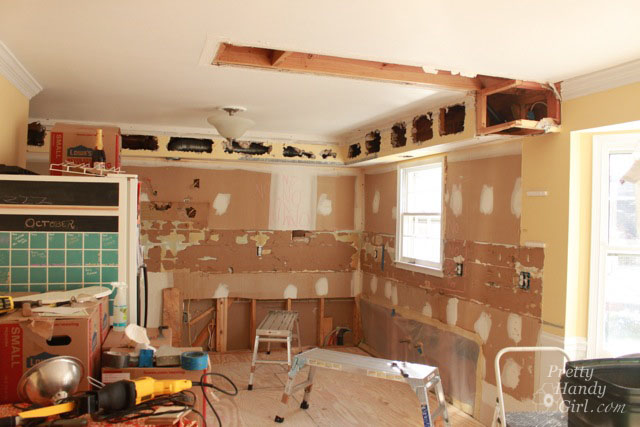
Image Source: prettyhandygirl.com
Preparing for Kitchen Soffit Removal
Before you begin any demolition, thorough preparation is key. This ensures your safety, protects your kitchen, and makes the removal process smoother.
Assessing the Soffit’s Purpose and Contents
The very first step in kitchen soffit removal is to determine what’s inside. This is the most critical safety consideration.
- Identify potential hazards: Soffits can conceal electrical wiring, plumbing pipes, HVAC ductwork, and even ventilation systems. You must know what you’re dealing with before making any cuts.
- Consult building plans: If you have them, review your home’s original building plans. These might indicate what services are run through the soffit.
- Visual inspection: Carefully examine the soffit’s exterior for any obvious signs of wiring or plumbing penetrations. Look for any access panels that might provide a glimpse inside.
- Professional consultation: If you suspect significant electrical or plumbing within the soffit, or if you’re unsure, it’s highly advisable to consult with an electrician or plumber. They can help identify and safely disconnect any utilities before you proceed with diy soffit removal.
What is a soffit in a kitchen? A kitchen soffit is a built-in structure, usually extending from the top of kitchen cabinets to the ceiling. It often serves to hide building services like ductwork or wiring, or it can be purely decorative.
Can I remove a kitchen soffit without an electrician? You can remove a kitchen soffit if there are no electrical wires present. However, if electrical wiring is found within the soffit, you absolutely must consult or hire a qualified electrician to safely disconnect it before you proceed. Attempting to work with live electrical wires is extremely dangerous.
Gathering Essential Tools and Materials
Having the right tools makes the job easier and safer. For kitchen soffit removal, you’ll need a variety of items.
Table 1: Essential Tools for Soffit Removal
| Tool | Purpose |
|---|---|
| Safety Glasses | Protects eyes from dust and debris. |
| Dust Mask/Respirator | Prevents inhalation of dust and potentially hazardous materials. |
| Work Gloves | Protects hands from splinters, sharp edges, and general debris. |
| Utility Knife | Useful for scoring drywall, cutting caulk, and trimming materials. |
| Pry Bar (Flat Bar) | Essential for gently prying apart the soffit structure and separating it from cabinets and walls. |
| Screwdriver Set | To remove any visible screws holding the soffit in place. |
| Stud Finder | To locate wall studs and ceiling joists, helping you avoid cutting into structural elements. |
| Reciprocating Saw | A powerful tool for cutting through wood framing and drywall quickly. Use with a fine-tooth blade. |
| Drywall Saw (Jab Saw) | For making precise cuts in drywall where a reciprocating saw might be too large or cause damage. |
| Putty Knife | To scrape away old caulk or paint where the soffit meets other surfaces. |
| Drop Cloths | To protect your countertops, floors, and cabinets from dust and debris. |
| Ladder or Step Stool | For safely reaching the soffit area. Ensure it’s stable and appropriate for the height. |
| Vacuum Cleaner | For cleaning up dust and debris throughout the process. |
| Extension Cord | If using power tools. |
| Painter’s Tape | To secure drop cloths and for marking cut lines. |
| Caulk Scraper | For removing sealant. |
| Soffit Removal Tool | While not a single specific tool, a combination of pry bars, scrapers, and saws acts as your soffit removal tool kit. |
Protecting Your Kitchen Space
Minimizing dust and damage is crucial for a clean and efficient renovation.
- Cover everything: Lay down drop cloths or old sheets over your countertops, cabinets, and floors. Secure them with painter’s tape to prevent shifting.
- Seal off the area: If possible, close off the kitchen from the rest of the house using plastic sheeting and tape. This significantly reduces dust migration.
- Remove items from cabinets: Empty the cabinets directly below and around the soffit. You don’t want your dishes or belongings coated in drywall dust.
The Step-by-Step Kitchen Soffit Removal Process
Now that you’re prepared, let’s get to the actual removal. This process involves carefully dismantling the soffit structure.
Step 1: Locating and Disconnecting Utilities (If Necessary)
This is a critical safety step.
- Confirm utility presence: If your initial assessment revealed any electrical wires, plumbing, or HVAC components within the soffit, this is where you need professional help or extreme caution.
- Electrical: If there are wires, turn off the power at the circuit breaker that controls those outlets or lights. Use a voltage tester to confirm the power is off before touching any wires. If you are uncomfortable or unsure, stop and call an electrician.
- Plumbing: If pipes are present, identify their purpose. If they are active water lines, you’ll need to shut off the main water supply to your house and drain the pipes.
- HVAC: If ductwork is present, you may simply need to cut around it. Ensure no essential ventilation is being disrupted without a plan for its rerouting.
Step 2: Scoring and Cutting the Drywall or Facing Material
Most soffits have a drywall or wood panel facing. You’ll need to cut through this first.
- Score edges: Use a sharp utility knife to score the caulk or paint lines where the soffit meets the cabinets, walls, and ceiling. This will help create a cleaner break.
- Mark your cut lines: Decide where you want to cut. Often, the goal is to remove the entire soffit down to the framing. Use a pencil to draw your cut lines on the soffit material. A stud finder can help you locate studs or joists to avoid cutting directly into them if you plan to re-frame.
- Make the cuts:
- For drywall: You can use a drywall saw (jab saw) for precise cuts or a reciprocating saw with a fine-tooth blade for faster removal. Be gentle and let the saw do the work. Make plunge cuts carefully to avoid damaging what’s behind.
- For wood panels: A reciprocating saw or a circular saw (set to a shallow depth) can be used.
How to take down soffit: The general process involves cutting through the facing material, then dismantling the underlying frame.
Step 3: Dismantling the Soffit Frame
Once the facing is removed, you’ll see the underlying structure, typically made of wood studs or framing.
- Expose the framing: After cutting the drywall, carefully pry it away to expose the wooden structure. Use your pry bar.
- Identify fasteners: Look for nails or screws that attach the soffit framing to the cabinets, walls, and ceiling.
- Remove screws: If screws are present, use a screwdriver or a drill with the appropriate bit to remove them.
- Pry away sections: For nails, use your pry bar to gently leverage and pull sections of the frame away. Work systematically, section by section. You might need to cut through stubborn nails with a reciprocating saw.
- Be mindful of connections: Pay attention to how the soffit is attached to cabinets and walls. Force can damage your existing cabinets or drywall.
Step 4: Removing Any Concealed Services
If you found services within the soffit during your initial assessment, this is where you carefully manage their removal or disconnection.
- Electrical Wires: If wires were safely disconnected by an electrician, you can now carefully pull them out of the way or trim them back to the wall. Ensure they are safely capped off if they are no longer needed.
- Plumbing Pipes: If pipes were disconnected, ensure they are properly sealed and cannot leak.
- HVAC Ducts: If ductwork was part of the soffit, you may need to make decisions about its future. You might be able to reroute it, or if it’s no longer functional, it can be cut and removed.
Step 5: Cleaning Up Debris
Once the soffit is completely removed, the real work of cleaning begins.
- Large debris removal: Bag up all the larger pieces of drywall, wood, and insulation.
- Vacuum thoroughly: Use a shop vac or a regular vacuum with a good filter to clean up all the fine dust from the floors, cabinets, and surrounding areas.
- Wipe down surfaces: Use damp cloths to wipe down all surfaces, paying attention to cabinets and countertops.
Table 2: Soffit Material Identification and Removal Considerations
| Material Type | Typical Construction | Removal Notes |
|---|---|---|
| Drywall | Typically a layer of drywall attached to a wood or metal frame. | Score and cut with a utility knife, jab saw, or reciprocating saw. Be prepared for significant dust. |
| Plywood/OSB | Sheets of plywood or oriented strand board, often used for a smoother finish. | Can be cut with a circular saw or reciprocating saw. May be less dusty than drywall but can still produce fine particles. |
| Plaster and Lath | Older homes may have plaster over wooden lath. | This is messier and more labor-intensive. Lath can be stubborn. A pry bar is essential. Expect more dust and larger debris pieces. A reciprocating saw can be helpful for cutting through the lath and plaster. |
| Integrated Cabinets | Some soffits are built as extensions of the cabinet boxes. | In this case, removing the soffit might mean dismantling part of the cabinet structure itself. Carefully unscrew and detach sections. |
| Metal/Ventilation | May include metal ductwork or soffit panels. | Metal can have sharp edges. Use gloves and eye protection. Cut metal with a metal-cutting blade on a reciprocating saw or an angle grinder. |
Post-Removal Considerations and Next Steps
Removing a kitchen soffit opens up possibilities for your kitchen cabinet renovation.
Addressing Exposed Services and Framing
What do you do with the opened space?
- Rerouting or removing utilities: If you removed ductwork or pipes, ensure the openings are properly sealed to prevent drafts or pest entry. If electrical wires remain, they should be properly capped off and secured within a junction box by a qualified electrician if they are no longer in use.
- Repairing the framing: Inspect the exposed studs and joists for any damage. You may need to add blocking or trim pieces to create a clean edge where the soffit used to be.
Finishing the Ceiling and Walls
This is where the aesthetic transformation happens.
- Drywall repair: If you removed drywall, you’ll likely need to install new drywall to create a clean ceiling line. You might need to extend existing drywall or create a new edge.
- Taping and mudding: New drywall will require taping the seams and applying joint compound (mud) in multiple layers, followed by sanding. This is a skill that takes practice.
- Sanding and priming: Once the mud is dry and sanded smooth, you’ll need to prime the new drywall.
- Painting: Apply your chosen ceiling and wall paint to match or complement your existing decor.
When to Call a Professional
While this is a DIY guide, there are times when professional help is essential.
- Electrical or Plumbing Concerns: If you are uncomfortable with any aspect of utility disconnection or if significant services are present, always hire a licensed electrician or plumber.
- Structural Issues: If the soffit seems to be integral to the building’s structure, or if you uncover unexpected structural damage, consult a contractor or structural engineer.
- Complex Finishes: If you’re not confident in your drywall, taping, mudding, or painting skills, hiring a drywall professional or painter can ensure a flawless finish.
- Lack of Time or Comfort: DIY projects can be time-consuming and physically demanding. If you lack the time or the confidence, professional kitchen cabinet renovation services can handle the soffit removal efficiently.
Frequently Asked Questions (FAQ) about Kitchen Soffit Removal
Q1: What is the purpose of a kitchen soffit?
A kitchen soffit is typically built to conceal plumbing, electrical wiring, HVAC ductwork, or ventilation systems that run through the ceiling space above cabinets. It can also be a decorative element.
Q2: Can I remove a kitchen soffit myself?
Yes, you can perform kitchen soffit removal yourself if you have basic DIY skills, the right tools, and take appropriate safety precautions, especially regarding utilities.
Q3: How much does it cost to remove a kitchen soffit?
The cost varies greatly. DIY removal only costs for tools and materials (around $50-$200). Hiring professionals can range from $500 to $3,000 or more, depending on the complexity and the extent of any necessary utility rerouting or finishing work.
Q4: What tools are needed for soffit removal?
Essential tools include safety glasses, gloves, a dust mask, a utility knife, a pry bar, screwdrivers, a reciprocating saw or drywall saw, a stud finder, drop cloths, and a ladder.
Q5: What if I find electrical wires in my soffit?
If you discover electrical wires, you MUST turn off the power at the breaker for that circuit. Use a voltage tester to confirm it’s off. If you are not comfortable or experienced with electrical work, hire a qualified electrician to disconnect or reroute the wires safely.
Q6: Can I remove a soffit without damaging my cabinets?
Careful work with a pry bar and precision cutting can minimize damage to cabinets. However, some minor touch-ups or repairs to cabinet edges might be necessary. Protecting cabinets with drop cloths is crucial.
Q7: What is involved in a soffit installation after removal?
After soffit removal, the next steps usually involve finishing the exposed ceiling and wall areas. This might include installing new drywall, taping, mudding, sanding, priming, and painting to create a clean, finished look.
Q8: Is a soffit removal considered part of a kitchen cabinet renovation?
Yes, kitchen soffit removal is a common step in many kitchen cabinet renovation projects, especially when aiming for a more modern look with taller cabinets or a completely open ceiling.
Q9: How do I repair a soffit if it’s damaged instead of removing it?
Soffit repair typically involves patching small holes in drywall, replacing damaged sections of wood framing, or re-securing loose panels. It’s less involved than full removal but requires similar attention to material and fasteners.
Q10: What is a soffit ceiling?
A soffit ceiling refers to a ceiling that incorporates soffit structures, often designed to hide services or create architectural interest. Removing a soffit ceiling means removing these integrated elements.
This comprehensive guide should provide you with the confidence and knowledge to tackle kitchen soffit removal safely and effectively. Remember, safety first, and don’t hesitate to seek professional help when needed for your kitchen cabinet renovation or any diy soffit removal project.