
Can you effectively separate your kitchen and living room in a small apartment to create distinct zones? Yes, you absolutely can! Even in a compact living situation, smart design choices and clever furniture arrangements can transform a combined space into functional and visually separated areas. This guide offers in-depth, research-backed strategies for achieving this common small apartment challenge.
Living in a small apartment often means embracing an open concept layout. While this can make a space feel larger, it can also lead to a lack of definition between areas. If your kitchen and living room are blended, you might find yourself battling cooking smells in your relaxation space or feeling like your living area is constantly encroaching on your culinary zone. This is where the magic of small space partitioning comes in. It’s all about creating creating distinct zones without the need for permanent walls, thus maximizing your usable square footage and improving the overall flow and feel of your home. These small apartment design tips focus on intelligent solutions for apartment living room ideas and kitchen separation techniques.
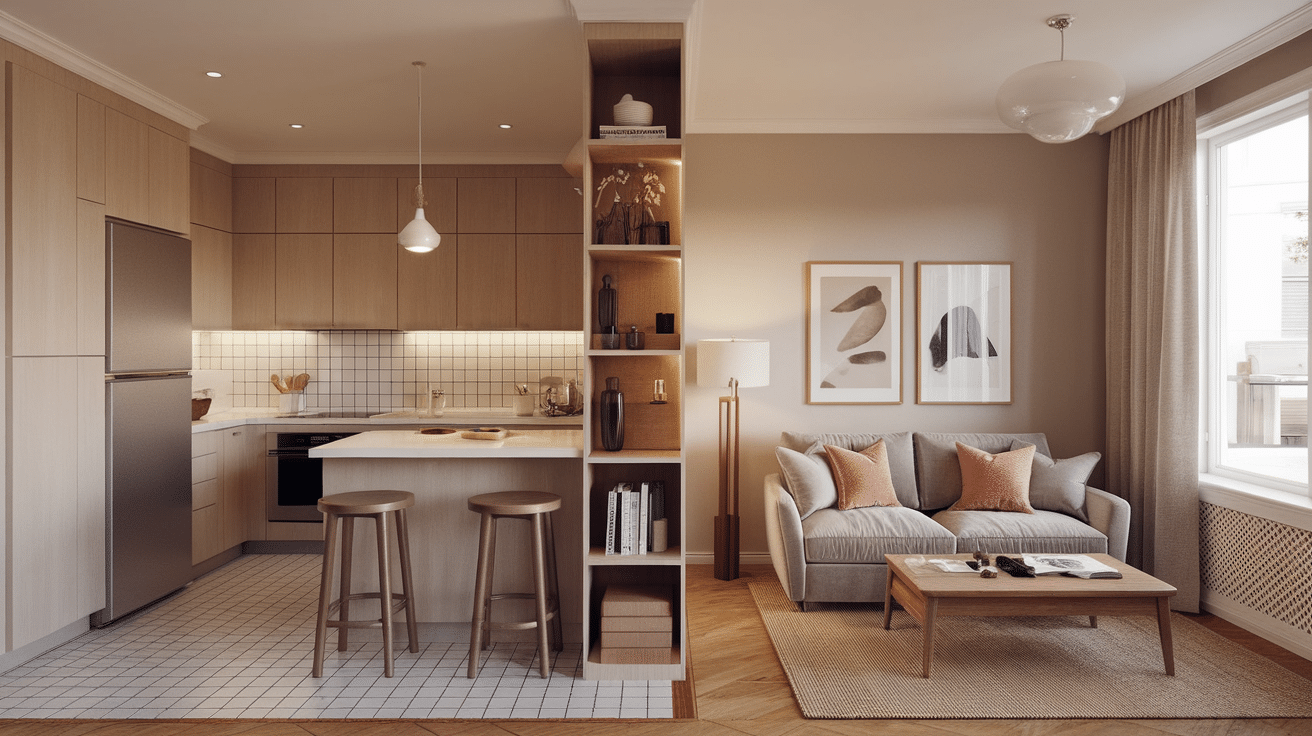
Image Source: opplehouse.com
The Challenge of Combined Spaces
When your kitchen and living room are one, several issues can arise:
- Lack of Privacy: The separation between cooking and relaxing is blurred.
- Visual Clutter: Kitchen mess can easily spill over into the living area.
- Odor Control: Cooking smells can permeate the entire living space.
- Functional Overlap: It can be difficult to engage in different activities simultaneously without disturbance.
The goal is to introduce visual room division that enhances usability without making the space feel smaller. We’ll explore various room divider ideas and furniture arrangement for small spaces that can achieve this.
Smart Solutions for Kitchen & Living Room Separation
Let’s dive into the practical strategies for delineating your kitchen and living room. These methods are designed to be effective for maximizing small spaces and offering open concept layout solutions.
1. Furniture as Dividers
This is one of the most accessible and versatile methods. Strategic placement of furniture can act as natural barriers, defining the edges of each zone.
Bookshelves and Open Shelving Units
- Why it works: Open shelving units, like tall bookshelves or modular storage systems, are fantastic for visual room division. They allow light to pass through, preventing the space from feeling boxed in, while still creating a clear separation.
- How to use them: Place a tall, open-backed bookshelf perpendicular to a wall, running from floor to ceiling or a substantial height. You can fill it with books, plants, decorative items, or even storage bins to add personality and functionality. This acts as a strong visual cue for the separation.
- Considerations: Opt for units with shelves at varying heights to break up the visual mass. Consider a unit with a back panel on one side if you want a more solid division for a specific purpose (e.g., to hide a messy kitchen corner).
Sofas and Console Tables
- How to use them: The back of your sofa can be a powerful, albeit subtle, divider. Position your sofa with its back facing the kitchen area. This immediately signals a transition from the cooking zone to the living zone.
- Enhancing the effect: Place a slim console table behind the sofa. This adds another layer of definition and provides a surface for lamps, decorative objects, or even a breakfast bar extension from the kitchen if space allows. This is a classic furniture arrangement for small spaces.
Room Dividers (Freestanding Screens)
- Why it works: These are specifically designed for small space partitioning. They offer flexibility and can be moved or folded away when not needed.
- Types:
- Folding Screens: Available in various materials (wood, bamboo, fabric) and styles, these can be easily adjusted to suit your needs.
- Panel Dividers: These are more permanent-looking but still movable, often featuring a track system or standing on their own.
- Curtains: Hanging a thick curtain from the ceiling or a wall-mounted rod can provide a soft, elegant division. This is a particularly good kitchen separation technique for blocking smells and visual mess.
- Placement: Position a screen strategically between the two zones. A beautiful folding screen can also act as a decorative element.
2. Flooring as a Visual Cue
Changing the flooring in different zones is a highly effective, though more permanent, method of creating distinct zones.
Different Flooring Materials
- Kitchen: Opt for durable, easy-to-clean materials like tile, laminate, or vinyl.
- Living Room: Choose warmer, softer materials like wood, carpet, or a large area rug over existing flooring.
- Why it works: The change in texture and material naturally draws a line between the two areas, providing a strong visual room division.
Area Rugs
- Why it works: Area rugs are excellent for defining zones without any structural changes. They are a cornerstone of apartment living room ideas.
- How to use them: Place a large area rug in the living room portion. This anchors the furniture and clearly marks the living space. You can even place a smaller, different-style rug in the kitchen if you have a defined kitchen floor area.
- Considerations: Ensure the rug is large enough to accommodate the main seating area of your living room. The rug’s design and color can also contribute to the aesthetic separation.
3. Lighting to Delineate Zones
Lighting is a powerful tool for setting moods and defining spaces. It’s a subtle yet effective way to achieve small space partitioning.
Layered Lighting
- Kitchen Lighting: Focus on task lighting. This could include under-cabinet lights, pendant lights over an island or counter, and bright overhead lighting for cooking.
- Living Room Lighting: Aim for ambient and accent lighting. Think floor lamps, table lamps, dimmer switches for overhead lights, and perhaps some mood lighting like string lights.
- Why it works: Distinct lighting schemes create different atmospheres, making each zone feel separate even without a physical barrier.
Pendant Lights and Chandeliers
- Placement: Hanging pendant lights over a kitchen island or dining table (if you have one within the combined space) acts as a strong visual anchor for the kitchen zone. A stylish chandelier or a cluster of interesting pendant lights in the living area can do the same for that space.
- Why it works: These focal points draw the eye and create a sense of enclosure for their respective areas, contributing to creating distinct zones.
4. Strategic Furniture Arrangement
Beyond using furniture as dividers, the overall layout plays a crucial role in separating the kitchen and living room. This is key for furniture arrangement for small spaces.
Creating Pathways
- How to do it: Ensure there are clear, unobstructed pathways between the kitchen and living room, and into other parts of the apartment. This flow helps define the areas.
- Why it works: A well-planned layout prevents the furniture from feeling like it’s all crammed together. It guides movement and helps the brain interpret the spaces as separate entities.
Facing Furniture Away
- How to do it: Arrange living room seating (sofas, armchairs) to face into the living area, away from the kitchen.
- Why it works: This creates a psychological barrier, directing attention towards the living room’s designated space.
Utilizing Multi-functional Furniture
- What to consider: In small apartments, every piece of furniture should ideally serve multiple purposes. A coffee table with storage, an ottoman that can be used for seating or a table, or a sofa bed are all excellent choices for maximizing small spaces.
- How it helps with separation: Multi-functional furniture can be cleverly used to create temporary divisions or to keep clutter contained, indirectly aiding in the separation of zones.
5. Color and Decor as Visual Dividers
The use of color and decorative elements can significantly influence the perception of space and help in visual room division.
Accent Walls and Color Blocking
- Kitchen Zone: Consider a bolder color or a distinct backsplash material that defines the kitchen area.
- Living Room Zone: Use a different paint color, wallpaper, or even a different wall treatment (like wood paneling) for the living room wall.
- Why it works: Color is a powerful psychological tool. Contrasting colors can subtly demarcate different areas, creating a sense of separation.
Wall Art and Decor
- How to use it: Hang art or decorative pieces on the walls that define each zone. For example, kitchen-themed art in the kitchen area and landscape or abstract art in the living room.
- Why it works: This reinforces the purpose of each area and adds to the overall aesthetic of creating distinct zones.
6. Smart Kitchen Separation Techniques
Specific methods can help keep the kitchen’s practicalities (like cooking smells and visual mess) from intruding on the living space.
Kitchen Islands or Breakfast Bars
- Why it works: If your layout allows, a kitchen island or a peninsula bar acts as a natural, functional divider. It provides extra counter space and seating, clearly separating the kitchen from the living area. This is a fantastic open concept layout solution.
- Considerations: Ensure it doesn’t block essential pathways. Even a slim, movable island can be effective.
Sliding Doors or Barn Doors
- Why it works: For a more defined separation, consider installing sliding doors or barn doors between the kitchen and living room. This offers a solid barrier when needed but can be opened up to create an open feel. This is an excellent kitchen separation technique.
- Considerations: This is a more significant undertaking but offers maximum flexibility.
Ceiling-Mounted Tracks with Curtains
- Why it works: A stylish curtain hung from a ceiling track can offer a soft, elegant, and easily retractable visual room division. It’s great for blocking cooking smells and visual clutter.
- Material choice: Opt for thicker fabrics like velvet or heavy linen for better sound and smell insulation.
7. Plants as Natural Dividers
Greenery can add life and also serve as functional dividers in small space partitioning.
Tall Potted Plants
- How to use them: Place several tall potted plants in a line between the kitchen and living room.
- Why it works: Plants create a natural, airy screen that softens the look and improves air quality. They offer a gentle visual room division.
Vertical Gardens
- Why it works: A vertical garden on a wall or a freestanding unit can be a stunning focal point that also divides space.
- Considerations: Ensure good lighting for the plants and consider a drip tray for any potential water spillage.
Bringing It All Together: A Case Study Example
Imagine a studio apartment.
- Initial State: A single open room with a kitchenette at one end and a sofa and bed in the middle.
- Solution:
- Furniture Placement: Place the sofa with its back to the bed area, facing the kitchenette. Add a slim console table behind it.
- Flooring: Lay a large, textured rug under the sofa and coffee table to define the living area.
- Lighting: Install pendant lights over the kitchen counter and a floor lamp in the living area.
- Divider: Place an open-backed bookshelf between the bed and the sofa to create a subtle separation for the sleeping zone.
- Decor: Use a warmer paint color on the wall behind the sofa and a backsplash in the kitchenette.
This combination of strategies creates distinct zones for sleeping, living, and cooking without making the space feel cramped. It exemplifies effective small apartment design tips and furniture arrangement for small spaces.
Frequently Asked Questions (FAQ)
Q: What is the best way to separate a kitchen and living room in a very small studio?
A: For very small studios, the most effective methods often involve furniture placement and visual room division. Using the back of your sofa as a divider, employing an open-backed bookshelf, or hanging a stylish curtain from a ceiling track are excellent, non-permanent solutions. Area rugs are also crucial for defining the living zone.
Q: Can I use plants to separate my kitchen and living room?
A: Absolutely! Tall, strategically placed potted plants can create a natural, airy screen that visually divides the space. They add greenery and improve air quality, contributing to a pleasant atmosphere. This is a beautiful approach to small space partitioning.
Q: What are some low-cost room divider ideas for a small apartment?
A: Low-cost options include using existing furniture like bookshelves or sofas, hanging fabric curtains from tension rods or ceiling tracks, or utilizing folding screens found at affordable home goods stores. Even a well-placed large plant can serve as a divider.
Q: How do I prevent kitchen smells from reaching my living room?
A: This is where kitchen separation techniques are vital. Good ventilation is key. Consider a strong extractor fan. Hanging a thick fabric curtain between the zones can also help trap odors. Ensuring your kitchen area is clean and tidy also minimizes lingering smells.
Q: What kind of furniture works best for maximizing small spaces and dividing areas?
A: Look for multi-functional furniture. Items like ottomans with storage, sofa beds, nesting tables, and modular shelving units are ideal. For dividing, consider slim console tables, open-backed bookshelves, or low-profile cabinets that don’t block sightlines.
By employing these diverse strategies, you can effectively transform your combined kitchen and living room space into well-defined, functional, and aesthetically pleasing zones, proving that even in the smallest apartments, thoughtful design can create harmony and separation.