
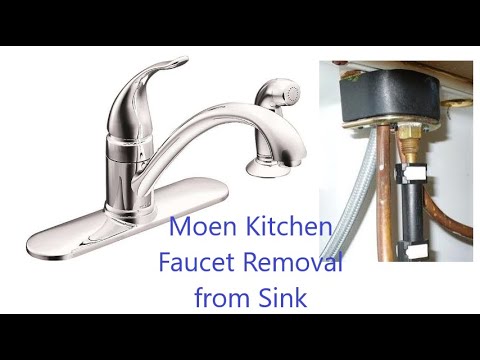
Image Source: i.ytimg.com
How to Take Apart a Moen Kitchen Faucet Step-by-Step: DIY Guide & Repair Tips
Can I take apart a Moen kitchen faucet myself? Yes, absolutely! With a few common tools and this step-by-step guide, you can successfully take apart your Moen kitchen faucet for repairs or maintenance.
What tools will I need to take apart a Moen kitchen faucet? You’ll typically need a Phillips head screwdriver, a flathead screwdriver, an adjustable wrench or pliers, and a bucket or old towels. Sometimes, a small Allen wrench is also required, depending on the faucet model.
A dripping faucet can be incredibly annoying and wasteful. Fortunately, most Moen faucet repair jobs are well within the reach of a DIY enthusiast. The first step to tackling most Moen faucet issues, from leaks to stiff handles, is to learn how to disassembling Moen faucet components correctly. This guide will walk you through the process, helping you identify and replace common Moen kitchen faucet parts to get your faucet working like new again.
Step 1: Preparation and Safety First
Before you begin disassembling Moen faucet components, it’s crucial to prepare your workspace and ensure your safety.
- Turn off the water supply: This is the most critical step. Look for the shut-off valves located beneath your sink. They usually have a round or oval handle. Turn these handles clockwise until they are fully closed. If you can’t find individual shut-off valves or they don’t work, you’ll need to turn off the main water supply to your house.
- Test the water shut-off: Turn on the faucet to confirm that the water supply has been successfully turned off. No water should flow out, or only a trickle might remain, which you can then drain.
- Protect your workspace: Place a bucket or old towels under the faucet to catch any residual water or dropped parts. This will also help protect your sink and countertop from scratches.
- Gather your tools: Have your screwdrivers, wrench, pliers, and any other necessary tools ready.
Step 2: Removing the Moen Faucet Handle
The Moen faucet handle removal is usually the first major step in taking apart your faucet. Moen uses a few different methods for securing their handles.
Common Handle Attachment Methods:
- Decorative Cap: Many Moen faucets have a decorative cap or button on the front or top of the handle. This cap often hides a set screw.
- How to remove: Gently pry off the decorative cap using a small flathead screwdriver or a putty knife. Be careful not to scratch the finish. Once the cap is off, you’ll see a set screw.
- Set Screw: Once the decorative cap is removed, you’ll typically find a set screw.
- How to remove: Use the appropriate size Phillips head screwdriver or Allen wrench to loosen and remove the set screw. You usually don’t need to remove the screw completely; just loosening it is enough to allow the handle to lift off.
Removing the Handle:
- Locate the set screw: As described above, find the set screw. It’s often recessed.
- Loosen the set screw: Use your screwdriver or Allen wrench to turn the screw counter-clockwise. Turn it until you feel it loosen significantly. You don’t need to remove it entirely.
- Lift off the handle: Once the set screw is loose, the handle should lift straight up and off the faucet body. If it’s stuck, you might need to gently wiggle it or use a handle puller (available at hardware stores) for stubborn cases. Avoid excessive force, as this can damage the faucet.
Step 3: Accessing the Cartridge
The cartridge is the heart of your Moen faucet. It controls the flow and temperature of the water. Moen faucet cartridge replacement is a common fix for leaks and inconsistent water temperature.
Removing the Handle Adapter or Escutcheon (if applicable):
Some Moen faucets have an additional decorative piece or adapter that sits beneath the handle.
- Check for retaining clips or screws: This piece might be held in place by a small screw or a metal clip.
- Remove the clip or screw: If there’s a screw, remove it. If there’s a clip, you might need to gently pry it out with a flathead screwdriver.
Removing the Cartridge Retaining Nut or Clip:
Once the handle is off, you’ll see the cartridge. It’s usually held in place by a retaining nut or a clip.
- Retaining Nut: Many Moen cartridges are secured by a brass or plastic retaining nut.
- How to remove: Use an adjustable wrench or pliers to grip the nut and turn it counter-clockwise to loosen and remove it.
- Retaining Clip: Some Moen faucet models use a metal clip to hold the cartridge in place.
- How to remove: This clip is usually U-shaped. You’ll need to gently pull it straight up and out using needle-nose pliers or a flathead screwdriver. Note its orientation so you can reinsert it correctly.
Pulling the Cartridge:
- Grip the cartridge stem: Once the retaining nut or clip is removed, the cartridge should be accessible. You might be able to grip the stem of the cartridge with pliers.
- Wiggle and pull: Gently wiggle the cartridge back and forth while pulling it upwards. Some cartridges have a “twist and pull” mechanism.
- Use a cartridge puller tool: For very stubborn cartridges, a Moen cartridge puller tool is invaluable. These tools are designed to grip the cartridge securely and provide leverage for removal. You can often rent these from hardware stores or purchase them online. Make sure to get the correct puller for your Moen cartridge type.
Step 4: Identifying Moen Faucet Parts and Troubleshooting
Knowing the names of different Moen kitchen faucet parts can help immensely when you need to find replacements or communicate with customer service.
Common Moen Faucet Components:
| Part Name | Description | Common Issues |
|---|---|---|
| Handle | The part you use to turn the water on/off and adjust temperature. | Stiff, loose, or cracked. |
| Decorative Cap | Covers the set screw on the handle. | Can become loose or fall off. |
| Set Screw | Secures the handle to the faucet stem. | Can strip or become stripped. |
| Escutcheon/Bonnet | A decorative cover that sits below the handle, often covering the cartridge mechanism. | Can become loose or corroded. |
| Cartridge | The internal mechanism that controls water flow and temperature. This is the most common replacement part. | Leaks, drips, difficult to turn, poor temperature control. |
| Retaining Nut/Clip | Holds the cartridge in place within the faucet body. | Can become loose or break. |
| O-rings/Seals | Rubber seals that prevent leaks around the cartridge and spout. | Deteriorate over time, leading to leaks. |
| Aerator | Located at the tip of the spout, it mixes air with water for a smooth stream and saves water. | Can get clogged with sediment. |
| Spout | The part from which the water flows. | Can leak at the base or become stiff. |
Moen faucet troubleshooting often involves inspecting these parts for wear, damage, or mineral buildup. If you’re experiencing a Moen faucet leak repair, the cartridge and O-rings are the most likely culprits.
Examining the Cartridge:
Once removed, inspect the cartridge for any visible damage, such as cracks or worn-out seals. Mineral deposits can also build up, affecting its performance. You can try cleaning the old cartridge with white vinegar and a soft brush, but if it’s damaged, replacement is usually the best option.
Step 5: Replacing the Cartridge (Moen Faucet Cartridge Replacement)
If your troubleshooting points to a faulty cartridge, here’s how to replace it.
- Purchase the correct replacement cartridge: Moen uses various cartridge types. It’s essential to get the exact match for your faucet model. You can find the model number on the faucet itself or in your original purchase documentation. Alternatively, take the old cartridge to a hardware store to find a match, or consult a Moen faucet diagram online or in your faucet’s manual.
- Lubricate new O-rings: If your new cartridge comes with O-rings, apply a small amount of plumber’s grease to them. This helps them seal properly and prevents damage during installation.
- Insert the new cartridge: Align the new cartridge with the opening in the faucet body. There are usually notches or tabs that ensure it’s inserted in the correct orientation. Push it firmly into place.
- Reinstall the retaining nut or clip: Secure the new cartridge by reinstalling the retaining nut or clip. Tighten the nut snugly, but don’t overtighten it. If it’s a clip, ensure it’s fully seated.
Step 6: Reassembling the Faucet
Once the new cartridge is in place, it’s time to put everything back together. This is essentially the reverse of the disassembly process.
- Reattach any escutcheons or adapters: If you removed a decorative cover or adapter, place it back into position.
- Reinstall the handle: Slide the handle back onto the cartridge stem.
- Tighten the set screw: Secure the handle by tightening the set screw with your screwdriver or Allen wrench.
- Replace the decorative cap: Snap the decorative cap back into place over the set screw.
Step 7: Testing for Leaks and Functionality
- Turn the water supply back on: Slowly turn the shut-off valves back on clockwise.
- Check for leaks: Carefully inspect all the areas where you disassembled the faucet, especially around the handle and the base of the spout, for any signs of leakage.
- Test the faucet: Turn the faucet on and off several times. Check the hot and cold water flow and temperature control. Ensure the handle moves smoothly.
Moen Faucet Maintenance Tips for Longevity
Regular Moen faucet maintenance can prevent many issues and extend the life of your faucet.
- Clean regularly: Wipe down your faucet with a soft, damp cloth after each use to prevent water spots and mineral buildup.
- Address minor drips promptly: Don’t ignore small drips. They can worsen over time and waste water.
- Descale the aerator: Periodically unscrew the aerator at the tip of the spout and soak it in white vinegar to remove mineral deposits. Rinse it thoroughly before reattaching.
- Check for loose parts: Occasionally, check if handles or other visible parts are loose and tighten them as needed.
When to Call a Professional
While many Moen faucet repair tasks are DIY-friendly, there are times when it’s best to call a professional plumber:
- If you’re uncomfortable with any part of the process.
- If you’ve tried replacing the cartridge and the leak persists.
- If the faucet body itself appears damaged or corroded.
- If you encounter specialized fittings or connections you’re unfamiliar with.
Understanding Moen Faucet Diagrams
A Moen faucet diagram, often found in the faucet’s installation manual or on Moen’s website, is an invaluable resource. It provides a visual breakdown of all the components, their order, and often includes part numbers. When you’re trying to identify a specific Moen kitchen faucet part for replacement, or if you’re unsure how a piece fits, referring to the diagram is essential. It can help you navigate complex assemblies and ensure you’re disassembling Moen faucet components in the correct sequence. For instance, a diagram will clearly show how the retaining clip engages with the cartridge and faucet body, which is crucial for correct reassembly.
Moen Faucet Installation Guide Considerations
While this guide focuses on disassembly for repair, it’s worth noting that the principles of careful handling and understanding of components are also vital during Moen faucet installation guide processes. Proper installation ensures a watertight seal and smooth operation from the start, reducing the likelihood of future issues.
Frequently Asked Questions (FAQ)
Q1: How often should I replace my Moen faucet cartridge?
There’s no set schedule for replacing a Moen faucet cartridge. They are designed to last for many years. Replacement is typically only needed when you experience issues like leaks, reduced water flow, or difficulty controlling temperature.
Q2: My handle is very stiff. What could be the problem?
A stiff handle is often caused by a buildup of mineral deposits on the cartridge or a need for lubrication. Try removing the handle, cleaning the cartridge, and reapplying plumber’s grease to the O-rings before reinserting. If the problem persists, the cartridge may need replacement.
Q3: I lost the small decorative cap on my faucet handle. Can I get a replacement?
Yes, you can usually purchase replacement decorative caps from Moen or a plumbing supply store. You’ll need to know your faucet model to ensure you get the correct part.
Q4: What is the difference between a cartridge and a valve in a faucet?
In many modern faucets, like most Moen models, the “cartridge” is the component that houses the valve mechanisms. It’s a self-contained unit that controls water flow and temperature. Older faucet designs might have separate valve seats and stems, but Moen predominantly uses cartridges.
Q5: Can I use a universal faucet repair kit for my Moen faucet?
It’s highly recommended to use parts specifically designed for your Moen faucet model. Universal kits may not have the correct size or type of cartridge or O-rings, leading to leaks or improper function. Always try to find genuine Moen replacement parts or high-quality equivalents specific to your faucet.
By following these steps, you can confidently tackle Moen faucet repair and maintenance, saving yourself time and money. Remember to work carefully, use the right tools, and refer to your faucet’s specific Moen faucet diagram if you have one.