
Kitchen counters are typically 25 inches deep and range from 36 to 48 inches in width for standard base cabinets, though this can vary significantly based on design and needs. The most common kitchen counter depth is 25 inches, providing ample space for most kitchen tasks and accommodating standard base cabinets. When considering standard counter width, think about the size of your cabinets. A typical 36-inch base cabinet will usually have a countertop that extends slightly beyond it, making the countertop dimensions around 37-39 inches.
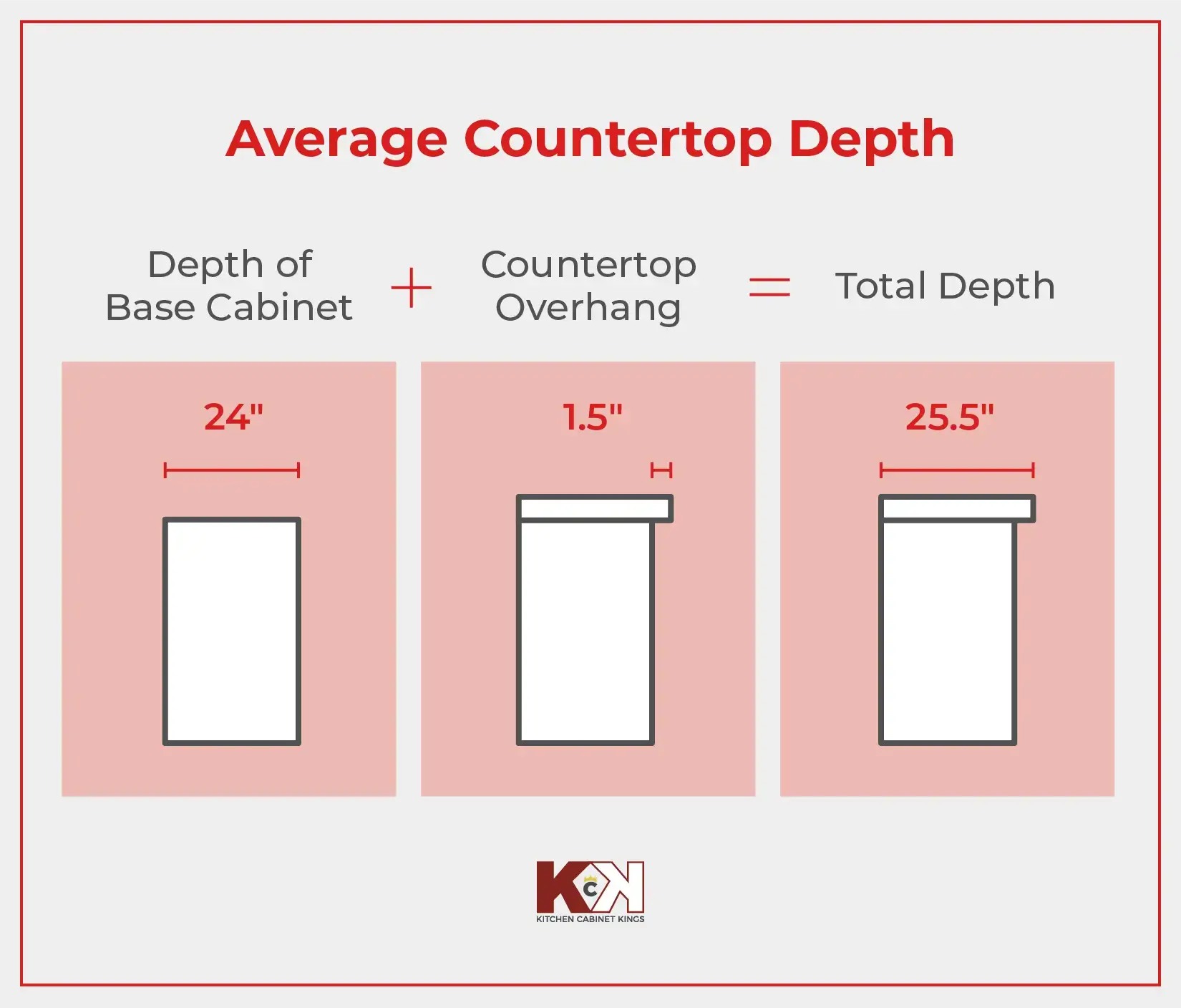
Image Source: cdn.kitchencabinetkings.com
Deciphering Countertop Dimensions: Beyond the Standard
When planning or remodeling a kitchen, one of the most fundamental questions revolves around how wide are kitchen counters and, equally important, how deep they should be. These dimensions are not arbitrary; they are carefully considered to maximize functionality, ensure safety, and optimize the overall kitchen layout width. Let’s delve into the specifics, exploring the factors that influence these crucial measurements.
The Standard Kitchen Counter Depth: A Foundation of Functionality
The most common kitchen counter depth is 25 inches. This measurement is designed to work seamlessly with standard 24-inch deep base cabinets.
-
Why 25 inches? This extra inch (or sometimes 1.5 inches) beyond the cabinet depth allows the countertop to overhang the front of the cabinets. This overhang serves several important purposes:
- Protection: It shields the cabinet front from spills and drips, making cleanup easier and preventing damage to the cabinet material.
- Ergonomics: It provides a comfortable space for your hands to grip the edge of the counter when working, or to comfortably lean against the counter.
- Aesthetics: It creates a finished look, softening the hard edge of the cabinets.
-
Variations in Depth: While 25 inches is the norm, some custom designs or specific functional needs might lead to variations. For instance, a deeper counter might be desired in areas where large appliances are placed or where extensive prep work is performed. However, extending counter depth significantly can impact walkway space in smaller kitchens, so it’s a trade-off to consider carefully.
Exploring Standard Counter Width: Balancing Cabinetry and Workspace
The concept of standard counter width is often tied to the width of the base cabinets they sit upon.
-
Cabinet Width as a Guide: Standard base cabinets come in various widths, typically in 3-inch increments, starting from 12 inches up to 36 inches or even wider for corner cabinets and specialty units. A 36-inch wide base cabinet is a very common size for standard kitchen layouts.
-
Countertop Extension: Similar to depth, countertops also overhang the sides of the cabinets. This means a 36-inch wide cabinet will typically support a countertop that is slightly wider, often around 37 to 39 inches. This extension provides a more pleasing visual appearance and a slightly larger working surface.
-
The Role of Seams: For very long runs of countertops, especially with materials like granite or quartz, seams may be unavoidable. The maximum achievable width without a seam depends on the slab size of the chosen countertop material width. This is a critical consideration for designers and fabricators to minimize visible seams and maintain a clean aesthetic. For example, a very wide island might require multiple slabs joined together.
Kitchen Islands: Islands of Opportunity for Width
Kitchen islands are often a focal point and offer more flexibility in terms of size, including width.
-
Minimum Island Width: For a functional kitchen island, a minimum width of 36 inches is generally recommended to allow for adequate clearance and usable workspace.
-
Ideal Island Width: Many designers aim for kitchen island width of at least 42 inches to 48 inches, especially if it incorporates seating or significant storage. This provides a generous workspace and comfortable seating arrangement.
-
Clearing the Path: It’s crucial to balance the desired island width with the necessary clearance behind counters and walkways. A common guideline is to maintain at least 36 inches of clearance for primary walkways, and ideally 42-48 inches for areas where two people might pass or where appliances are opened.
Optimizing Your Workspace Width: Function Meets Flow
The width of your countertops directly impacts your workspace width and the overall efficiency of your kitchen.
-
Prep Areas: The ideal workspace width for food preparation is generally considered to be at least 36 inches. This allows you to spread out ingredients, chopping boards, and bowls without feeling cramped.
-
Appliance Integration: Consider the appliance depth when planning countertop width. Standard refrigerators, for example, often have depths of around 30-33 inches, and they typically protrude slightly beyond a standard 25-inch deep counter. Overhangs can help camouflage this protrusion. Similarly, dishwashers (usually 24 inches deep) fit neatly under most countertops.
-
Layout Considerations: The overall kitchen layout width dictates how much countertop space you can practically incorporate. A galley kitchen might have two parallel runs of countertops, while an L-shaped or U-shaped kitchen offers more expansive countertop real estate.
Cabinet Width and Countertop Dimensions: A Synergistic Relationship
The width of your base cabinets directly informs the countertop dimensions.
-
Standard Cabinet Sizes:
- 12-inch cabinet
- 15-inch cabinet
- 18-inch cabinet
- 24-inch cabinet
- 30-inch cabinet
- 36-inch cabinet
-
Corresponding Countertop Widths (approximate, including overhang):
- 12-inch cabinet: ~14-15 inches
- 15-inch cabinet: ~17-18 inches
- 18-inch cabinet: ~20-21 inches
- 24-inch cabinet: ~26-27 inches
- 30-inch cabinet: ~32-33 inches
- 36-inch cabinet: ~38-39 inches
-
Corner Cabinet Challenges: Corner cabinets, often 36×36 inches or larger, can present unique challenges for countertop installation. Specialty corner solutions like L-shaped countertops or angled corner sections are employed to maximize usability. The resulting countertop width in these areas can be quite substantial but requires careful planning.
Countertop Material Width: Constraints and Possibilities
The choice of countertop material width can also influence design decisions, particularly regarding seams.
-
Natural Stone (Granite, Marble): Slabs are typically 10-12 feet long. This means longer countertops might require seams. The width of individual slabs can vary, but often ranges from 26 to 30 inches.
-
Quartz: Quartz slabs are manufactured and often come in consistent sizes, frequently around 56 inches by 120 inches. This larger size can allow for wider single-piece countertops, especially for islands.
-
Laminate: Laminate is manufactured in rolls or sheets and can be cut to virtually any length and width. Seams are typically only present where different pieces are joined.
-
Solid Surface (e.g., Corian): Similar to laminate, solid surface materials can be fabricated into seamless, large-format pieces, offering design flexibility in both length and width.
-
Wood (Butcher Block): Butcher block countertops are created by joining strips of wood. The width of these can be customized, but is limited by the width of the wood planks and the joining process.
Clearance Behind Counters: Ensuring Smooth Operation
The space behind your countertops is critical for easy movement and appliance use.
- Standard Walkways: As mentioned, 36 inches is a minimum for primary walkways.
- Passage Areas: If two people need to pass each other comfortably, 42-48 inches is ideal.
- Appliance Doors: Consider the swing of refrigerator doors, oven doors, and dishwasher doors. Ensure there’s enough room for them to open fully without obstruction from other counters or cabinets. A 48-inch clearance is often recommended in front of appliances that open outwards.
Fathoming the Factors: What Influences Your Countertop Width?
Several key factors will influence the ideal countertop dimensions for your kitchen:
- Kitchen Size and Shape: A compact kitchen demands more efficient use of space, potentially limiting countertop width to maximize walkway clearance. A larger kitchen offers more freedom.
- Intended Use: Will the counter be a primary prep zone, a casual dining spot, or both? The more you plan to do on the counter, the wider it should ideally be.
- Appliance Placement: The size and type of appliances you plan to install will dictate necessary clearances and can influence the layout and width of surrounding countertops.
- Aesthetics and Design Goals: Sometimes, a visually striking island with a generous width is a design priority. Other times, the focus might be on creating a highly functional, ergonomic workspace.
- Budget: Larger countertops require more material, which can increase the overall cost, especially with premium materials.
Practical Examples and Visualizations
Let’s consider a few scenarios:
Scenario 1: The Compact Galley Kitchen
- Layout: Two parallel runs of cabinets and countertops.
- Cabinet Width: 24-inch base cabinets on both sides.
- Countertop Depth: Standard 25 inches.
- Walkway Clearance: Aim for a generous 48 inches between the countertop edges. This allows comfortable movement and appliance door opening.
- Considerations: In this layout, the kitchen layout width is key. Maximizing workspace width on each side while maintaining ample central passage is the primary goal.
Scenario 2: The Open-Concept Kitchen with an Island
- Layout: Perimeter cabinets with a central island.
- Perimeter Countertop Depth: Standard 25 inches.
- Island Dimensions:
- Kitchen island width: 42 inches for good workspace and seating.
- Kitchen island depth: 36 inches for a substantial prep surface.
- Clearance:
- Around the island: 42-48 inches on all sides to allow easy movement and interaction.
- Considerations: Here, the island becomes a functional hub. Its width contributes significantly to the overall workspace width and the aesthetic appeal of the room.
Scenario 3: The Gourmet Prep Kitchen
- Layout: Extensive perimeter countertops and potentially a dedicated prep island.
- Cabinet Width: Wider cabinets (e.g., 30-36 inches) might be used to create longer runs of uninterrupted countertop.
- Countertop Depth: May opt for slightly deeper counters (e.g., 30 inches) in key prep zones to accommodate larger appliances or more extensive work.
- Workspace Width: Prioritize creating large, clear spans of workspace width, perhaps 48 inches or more in a primary prep area.
- Considerations: This kitchen prioritizes maximum functionality for cooking. Appliance depth is carefully factored in, and clearance behind counters is maintained, but the emphasis is on uninterrupted prep surfaces.
Choosing the Right Countertop Material Width for Your Project
When selecting your countertop material width, remember that while standard sizes are readily available, customization is often possible, albeit at a premium.
- Material Thickness: It’s worth noting that while we’ve discussed width and depth, countertop thickness also plays a role in the overall look and feel. Standard thicknesses are typically 3 cm (about 1 ¼ inches). Thicker slabs (e.g., 2 cm or edge build-ups) can create a more substantial appearance.
Frequently Asked Questions (FAQ)
Q1: What is the minimum clearance needed behind a kitchen counter?
A1: The minimum clearance needed behind a kitchen counter for a walkway is generally 36 inches. For areas where two people might pass or where appliance doors open, 42 to 48 inches is recommended.
Q2: Can I have kitchen counters that are wider than standard?
A2: Yes, you can have kitchen counters that are wider than standard. This is common for kitchen islands or custom cabinet designs. The maximum width without a seam will depend on the specific countertop material width and fabrication capabilities.
Q3: How much overhang should my kitchen counter have?
A3: A typical overhang for a kitchen counter is 1 to 1.5 inches on the front edge of the cabinets for functionality and aesthetics. For islands with seating, the overhang for seating is usually 10-15 inches to comfortably accommodate knees.
Q4: Does appliance depth affect countertop width?
A4: Appliance depth is a key consideration for kitchen layout and can indirectly influence countertop width decisions to ensure proper clearances and functional flow. For example, a standard appliance depth for a refrigerator is about 30-33 inches. While the counter might be 25 inches deep, the appliance will likely protrude slightly.
Q5: What is the standard width of a kitchen island?
A5: While there’s no single “standard,” a functional kitchen island typically starts at a minimum width of 36 inches. Many popular kitchen island width dimensions range from 42 to 48 inches to provide ample workspace and potential seating.
Q6: How does cabinet width influence countertop dimensions?
A6: The width of your base cabinets is the primary factor determining the countertop’s width. Countertops will extend slightly beyond the cabinet width on the sides and front due to overhangs, so a 36-inch cabinet will have a countertop approximately 38-39 inches wide.
In conclusion, while standard dimensions provide a reliable baseline, the ideal countertop dimensions for your kitchen are a blend of established guidelines and personalized needs. By carefully considering kitchen counter depth, standard counter width, kitchen island width, workspace width, clearance behind counters, cabinet width, appliance depth, and the properties of your chosen countertop material width, you can create a kitchen that is both beautiful and highly functional.