
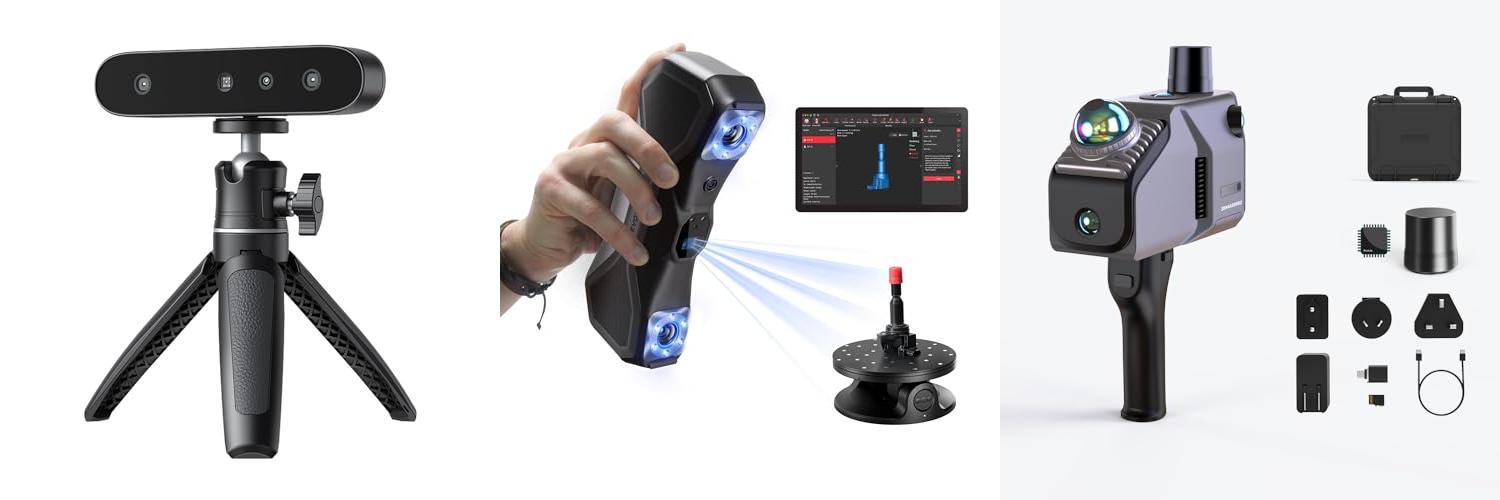
Imagine holding a real-world object and instantly turning it into a perfect digital copy. Sounds like science fiction, right? But that’s exactly what 3D scanners do! They capture the shape and details of anything, from a tiny screw to a whole building, and create a 3D model on your computer.
Choosing a 3D scanner can feel overwhelming. There are so many different types, each with its own strengths and weaknesses. You might be wondering which one is best for your project, or if it’s even worth the investment. Many people get stuck trying to figure out the technical jargon and find it hard to know where to start.
But don’t worry! This guide is here to help. We’ll break down the confusing world of 3D scanners into easy-to-understand pieces. You’ll learn what makes each type special and how to pick the perfect one for your needs. By the end, you’ll feel confident about choosing a scanner that fits your budget and your goals.
Our Top 5 3D Scanner Recommendations at a Glance
Top 5 3D Scanner Detailed Reviews
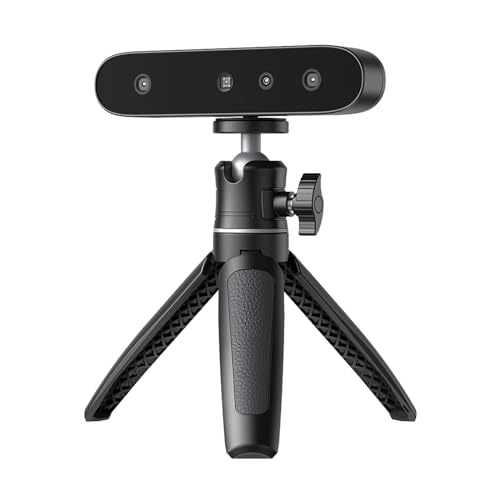
1. Creality CR-Ferret SE 3D Scanner Desktop Fast 0.1 Mm High Accuracy Flexible Scanning Range Anti-Shake 24-Bit Full-Color Scanning for Black Metal Non-Reflective Objects Mac Windows
Rating: 9.2/10
Meet the Creality CR-Ferret SE 3D Scanner, a desktop scanner that makes 3D scanning easier than ever. It’s fast, accurate, and can even scan tricky black or metallic objects without any special sprays. This scanner is packed with cool technology to help you capture detailed, full-color 3D models.
What We Like:
- Steady Scanning: Its anti-shake technology stops shaky hands from ruining your scans. You get precise models every time.
- Scan Anything: You can scan black metal and shiny objects without needing to spray them first. This is great for car parts or tires.
- Vibrant Colors: The 24-bit full-color scanning captures amazing detail and the true colors of your objects.
- Easy to Use: Getting started is simple. Just scan and click to begin modeling.
- Super Portable: It’s very lightweight (only 105g) and small, so you can take it anywhere.
- Outdoor Ready: It works well even outside with changing light thanks to its smart design.
- Fast Wireless: The WiFi6 bridge means super-fast wireless data transfer for quick scans.
What Could Be Improved:
- System Requirements: You need a fairly new computer (Windows or Mac) or a recent Android/iOS device to use it. Make sure your device meets the specs before buying.
The Creality CR-Ferret SE is a fantastic tool for anyone wanting to dive into 3D scanning, offering impressive features in a compact package. It’s a great option for creators, hobbyists, and even professionals needing a portable and capable scanning solution.
2. Revopoint MetroX 3D Scanner for 3D Printing

Rating: 8.8/10
The Revopoint MetroX 3D scanner is a powerful tool for anyone needing high-accuracy 3D models. It uses industrial-grade blue laser technology to capture incredible detail, making it perfect for 3D printing, industrial measurements, and quality control. This scanner can handle tough surfaces like dark or shiny objects without needing messy sprays. It also offers different scanning modes and tracking options to ensure you get the best results for any project.
What We Like:
- Industrial-Grade Blue Laser Scanning: Get super detailed 3D models with amazing accuracy (up to 0.02 mm).
- Efficient Dark/Shiny Surface Scanning: No more scanning spray needed for tricky objects thanks to its powerful blue laser lines.
- Automated Scanning: The Auto Turntable mode makes scanning simple and repeatable, perfect for quality checks.
- Versatile Tracking Modes: Choose the best tracking method for any object, from detailed to plain surfaces.
- Professional Software: Comes with Revo Scan 5 MetroX software for easy editing and exporting to other design tools.
- Included Calibration Board: Ensures your scans are always accurate and reliable.
- Multi-Application Use: Great for reverse engineering, 3D printing, prototyping, and more.
What Could Be Improved:
- Laser Safety Warning: Users need to be careful not to look directly at the laser source up close.
- GPU Compatibility: The GPU acceleration feature requires checking for compatibility with your system.
- Software Architecture: Revo Scan 5 MetroX software is only compatible with x86_64 architecture, which might limit some users.
The Revopoint MetroX is a top-notch 3D scanner that offers incredible precision and ease of use for a wide range of applications. Its advanced features make it a valuable asset for professionals and serious hobbyists alike.
3. 3DMakerpro Eagle LiDAR 3D Scanner (Max)

Rating: 9.2/10
The 3DMakerpro Eagle LiDAR 3D Scanner (Max) is a powerful tool that lets you capture the world in amazing detail. It’s like taking super-detailed photos, but in 3D! You can use it for all sorts of projects, from scanning big objects to creating digital models of places.
What We Like:
- Its 8K Ultra Imaging captures every tiny detail with incredible sharpness.
- You can scan objects from far away, up to 140 meters, which is super far!
- It’s very accurate, with up to 2cm precision, so your 3D models will be spot on.
- The all-in-one workflow makes it easy to go from scanning to having a usable 3D model without a lot of complicated steps.
- It’s designed to be user-friendly, making 3D scanning more accessible.
What Could Be Improved:
- While powerful, the advanced features might have a learning curve for absolute beginners.
- The “Max” version, with its extended range and high resolution, might come with a higher price point.
This scanner truly brings your digital creations to life with its impressive capabilities. It’s a fantastic option for anyone serious about 3D scanning.
4. Creality CR-Ferret SE 3D Scanner for 3D Printing

Rating: 9.1/10
The Creality CR-Ferret SE 3D Scanner is an upgraded desktop scanner designed to make capturing objects for 3D printing easier and more accurate than ever. It promises high precision, fast scanning speeds, and the ability to capture vibrant colors, all without the hassle of special sprays for tricky materials.
What We Like:
- It scans with great accuracy, up to 0.1mm, so your models will be very detailed.
- The scanner is fast, with a speed of 30 frames per second, which means you can scan objects quickly.
- Its anti-shake technology helps you get smooth scans even if your hands move a bit, making it beginner-friendly.
- The built-in color camera captures vivid textures, so your 3D models will look just like the real object.
- It can scan objects from 150mm all the way up to 2000mm, so it works for small and big things.
- You can scan black and metal objects without needing to use any special powder or spray, which saves time and effort.
What Could Be Improved:
- While it handles black and metal well, very shiny or transparent objects might still be a bit tricky to scan perfectly.
- The software interface, though functional, could be made more intuitive for absolute beginners.
Overall, the Creality CR-Ferret SE 3D scanner offers impressive features for its price, making 3D scanning more accessible and less frustrating.
5. Creality 3D Scanner Otter Lite

Rating: 9.1/10
The Creality 3D Scanner Otter Lite is a game-changer for anyone looking to bring real-world objects into the digital realm. This handheld wireless scanner offers incredible accuracy and speed, making it easy to capture everything from tiny trinkets to large furniture pieces. Its true wireless design means no more tangled cords, and its lightweight build makes it comfortable to use for extended periods.
What We Like:
- True Wireless Freedom: No more messy cables! It connects wirelessly with super-fast data transfer, giving you a clean workspace and seamless scanning.
- Super Lightweight and Portable: At only 330g, it’s easy to hold and carry. Take it anywhere for outdoor scans with its 3-hour battery life.
- Fast and Stable Scanning: Scan up to 30 frames per second. The anti-shake technology keeps your scans steady, even if you move or pause. It also remembers where it left off if interrupted.
- Versatile Scanning Range: It can scan objects from a tiny 20mm cube all the way up to a massive 2000mm cube, making it suitable for almost any project.
- User-Friendly Software: The CrealityScan app makes scanning easy with step-by-step guides and one-click processing. It also has special modes for scanning faces and bodies quickly.
- Adapts to Any Object: With its smart quad-lens system, it automatically adjusts to scan both very small and very large items without needing to change parts.
- Quick Charging: Get back to scanning fast with 40W HyperCharge, reaching 80% battery in just 60 minutes.
What Could Be Improved:
- While the software is powerful, some advanced users might desire even deeper customization options for fine-tuning scans.
- The “limited availability” mentioned in the prompt is a potential drawback if it restricts access for potential buyers.
Overall, the Creality Otter Lite offers an impressive combination of portability, performance, and ease of use for both beginners and experienced users. It truly simplifies the 3D scanning process for a wide range of applications.
Choosing Your Perfect 3D Scanner: A Buyer’s Guide
So, you’re thinking about diving into the world of 3D scanning! It’s a super cool technology that lets you capture real-world objects and turn them into digital models. Whether you’re a hobbyist, a student, or a professional, picking the right 3D scanner can feel a bit tricky. This guide will help you understand what to look for.
Key Features to Look For
When you’re shopping for a 3D scanner, keep these important features in mind:
- Resolution: This tells you how much detail the scanner can capture. Higher resolution means you get a more accurate and detailed digital model. Think of it like the megapixels on a camera. A higher number gives you a sharper picture.
- Accuracy: This is how close the digital model is to the real object. A scanner with high accuracy will create a digital copy that’s almost identical in size and shape.
- Scanning Speed: How fast can the scanner capture the object? Some scanners are super quick, while others take more time. This matters if you’re scanning many things or large objects.
- Portability: Do you need to take your scanner to different places? Some scanners are small and lightweight, perfect for on-the-go use. Others are bigger and meant to stay in one spot.
- Software: The scanner comes with software that helps you process the scanned data. Good software makes it easy to clean up your models and get them ready for use. Look for software that’s user-friendly.
Important Materials and What They Scan
3D scanners work best on different types of materials.
- Shiny or Reflective Surfaces: These can be tricky for some scanners. The scanner’s light might bounce off in weird ways. You might need to use a special spray to coat these objects first.
- Dark or Black Surfaces: Some scanners have trouble with very dark colors. The light might not reflect back well enough. Again, a coating can help.
- Transparent Objects: Clear things like glass are also challenging. The scanner’s light can pass right through them.
- Textured Surfaces: Objects with interesting textures often scan very well. The texture helps the scanner track the object’s shape.
- Matte Surfaces: These are usually the easiest to scan. They reflect light predictably, giving the scanner a clear picture.
Factors That Improve or Reduce Quality
Several things can make your 3D scans better or worse.
- Lighting: Good, consistent lighting is crucial. Avoid shadows or bright spotlights that can confuse the scanner. Natural daylight can be great, but make sure it’s not changing too much.
- Object Stability: The object you’re scanning needs to stay still. If it moves even a little bit during scanning, your model will be blurry or distorted.
- Scanner’s Distance: Most scanners have an ideal range for scanning. If you’re too close or too far, the quality will suffer. Read the scanner’s manual to find this sweet spot.
- Surface Preparation: As we mentioned, sometimes you need to prepare the object’s surface. Using a matte spray or powder can make a big difference for tricky materials.
- Environmental Factors: Dust or vibrations in the air can sometimes affect the scan. Try to scan in a clean, stable environment.
User Experience and Use Cases
How you use your 3D scanner depends on what you want to do with it.
- Hobbyists: People who love making things might use a 3D scanner to recreate parts for their projects, scan toys, or capture cool objects they find.
- Students: For school projects, students can use scanners to study anatomy, create models for history lessons, or design prototypes for science fairs.
- Designers and Engineers: Professionals use scanners to reverse engineer parts, inspect products for quality control, or create digital archives of existing items.
- Artists: Artists can scan sculptures, objects for digital art, or even their own faces to create 3D avatars.
- Gamers: Some gamers scan real-world objects to use in their favorite video games.
The user experience should be straightforward. You’ll typically set up the scanner, place your object, and run the scanning software. Then, you’ll often clean up the digital model. Look for scanners with clear instructions and helpful online communities.
Frequently Asked Questions About 3D Scanners
Q: What is a 3D scanner used for?
A: A 3D scanner captures the shape of real objects and turns them into digital 3D models. You can use these models for 3D printing, animation, design, and more.
Q: Are 3D scanners difficult to use?
A: It depends on the scanner. Some are designed for beginners and are quite easy. Others have more advanced features and might take some practice.
Q: What is the difference between resolution and accuracy?
A: Resolution is about how much detail the scanner can capture, like tiny bumps. Accuracy is how close the digital model is to the real object’s size and shape.
Q: Can I scan anything with a 3D scanner?
A: Most scanners work best on matte, non-shiny, and opaque objects. Very shiny, transparent, or dark objects can be harder to scan without special preparation.
Q: Do I need special software to use a 3D scanner?
A: Yes, 3D scanners come with software to capture and process the scan data. Some scanners also work with other popular 3D modeling programs.
Q: How much does a 3D scanner cost?
A: Prices vary a lot. You can find basic hobbyist scanners for a few hundred dollars, while professional scanners can cost thousands or even tens of thousands of dollars.
Q: What is a good resolution for a 3D scanner?
A: For most hobbyist uses, a resolution of 0.1mm to 0.5mm is usually good enough. Professionals might need much higher resolutions.
Q: How does lighting affect 3D scanning?
A: Good, even lighting is very important. Shadows or very bright spots can make the scanner misinterpret the object’s shape, leading to poor quality scans.
Q: Can I 3D print a model after scanning it?
A: Yes, that’s one of the most common uses for 3D scanners! You can scan an object and then use the digital model to 3D print a replica.
Q: What is “mesh cleanup” in 3D scanning?
A: After scanning, the digital model might have holes or imperfections. Mesh cleanup is the process of fixing these issues using software to make the model perfect.
In conclusion, every product has unique features and benefits. We hope this review helps you decide if it meets your needs. An informed choice ensures the best experience.
If you have any questions or feedback, please share them in the comments. Your input helps everyone. Thank you for reading.