
Have you ever seen a photo with a beautifully blurred background that makes the subject pop? That’s often the magic of an 85mm lens. It’s a favorite for portraits and so much more. But if you’re a Sony shooter, picking the perfect 85mm lens can feel like a puzzle.
There are so many choices out there, and they all promise amazing results. Some are super sharp, others have a dreamy look. It can be confusing to know which one fits your style and your budget. You want a lens that helps you capture stunning images without breaking the bank or leaving you overwhelmed.
This post is here to help! We’ll dive into the world of 85mm lenses for Sony cameras. You’ll learn what makes them special and discover the best options available. By the end, you’ll feel confident about choosing the 85mm lens that will make your photos shine.
Our Top 5 85Mm Lens For Sony Recommendations at a Glance
| Image | Product | Rating | Links |
|---|---|---|---|
 |
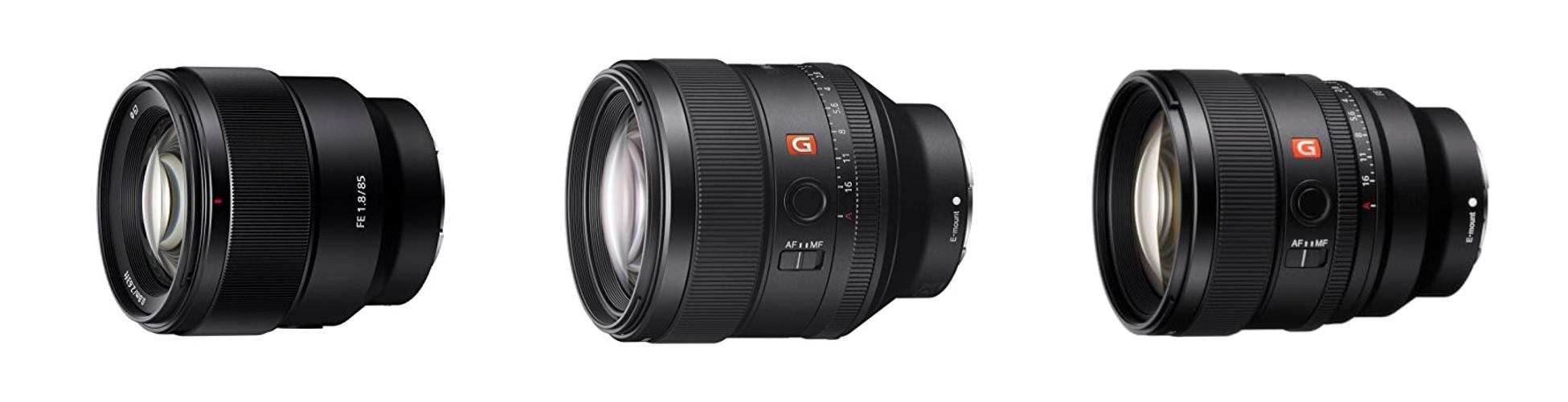
Sony SEL85F18 85mm F/1.8-22 Medium-Telephoto Fixed Prime Camera Lens | 9.1/10 | Check Price |
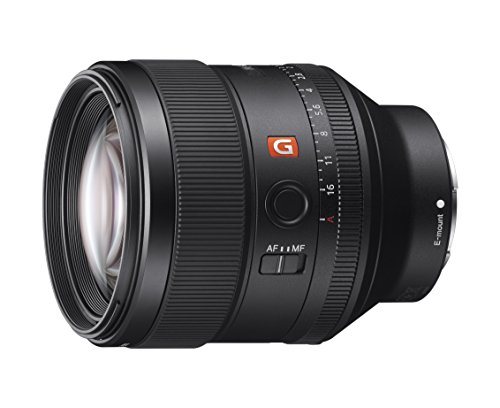 |
Sony FE 85mm f/1.4 GM Lens | 8.7/10 | Check Price |
 |
FE 85mm F1.4 GM II | 9.5/10 | Check Price |
 |
Sigma 85mm F1.4 DG DN Sony E (322965) | 8.8/10 | Check Price |
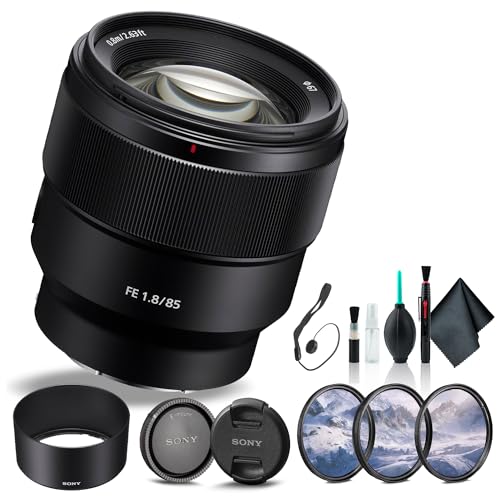 |
Sony FE 85 mm F1.8 Standard Telephoto Prime Lens – Lightweight Portrait Optics | 8.9/10 | Check Price |
Top 5 85Mm Lens For Sony Detailed Reviews
1. Sony SEL85F18 85mm F/1.8-22 Medium-Telephoto Fixed Prime Camera Lens
Rating: 8.9/10
The Sony SEL85F18 85mm F/1.8-22 Medium-Telephoto Fixed Prime Camera Lens in black is a fantastic tool for photographers. It helps you take amazing pictures with its special features. This lens is designed to make your photos look professional and beautiful.
What We Like:
- Its wide F1.8 opening lets you create lovely blurry backgrounds. This makes your main subject really stand out.
- A special 9-blade round opening makes out-of-focus spots look like soft, pretty circles. This is called bokeh.
- It has a special glass piece that makes pictures sharp from the center all the way to the edges.
- A fast and quiet motor helps the lens focus quickly and smoothly. This means you won’t miss important moments.
- You can easily control focus with a button you can set up. There’s also a switch to change between autofocus and manual focus.
- It’s a great choice for portraits and getting close-up shots.
What Could Be Improved:
- On APS-C cameras, the zoom gets even longer (127.5mm equivalent), which might not be ideal for everyone.
- While good, the maximum magnification ratio of 0.13 isn’t the highest for very close-up macro shots.
This lens is a superb option for anyone wanting to improve their photography. It offers excellent image quality and creative control for stunning results.
2. Sony FE 85mm f/1.4 GM Lens
Rating: 9.2/10
The Sony FE 85mm f/1.4 GM Lens is a dream for photographers who want to capture stunning portraits and beautiful details. This lens is designed for Sony’s full-frame E-mount cameras. It lets you take amazing pictures with a shallow depth of field. This means your subject pops against a softly blurred background. It’s great for wedding photos, fashion shots, or just making everyday subjects look special. This lens is built with top-quality materials for excellent performance.
What We Like:
- It creates incredibly sharp images with beautiful bokeh (that pleasing blur).
- The f/1.4 aperture is fantastic for low-light shooting and achieving that creamy background blur.
- It has one XA (Extreme Aspherical) element and three ED (Extra-low Dispersion) elements. These help reduce color fringing and improve sharpness.
- The Nano AR Coating minimizes reflections and ghosting, so your images are clear.
- It features a Linear SSM (Super Sonic wave Motor) Focus System for fast and quiet autofocus.
- The dust and moisture resistant design means you can shoot in more challenging weather.
- It’s a full-frame lens, giving you a wide 29° angle of view on 35mm cameras.
What Could Be Improved:
- At 820g, it’s a bit heavy, which might be noticeable after long shooting sessions.
- The minimum focus distance is 2.79 ft for autofocus, which is okay but not super close.
- The maximum magnification ratio is 0.13x, so it’s not ideal for extreme close-up shots.
- The filter diameter is 67mm, which is a common size, but some photographers might prefer a larger size for certain filters.
The Sony FE 85mm f/1.4 GM Lens delivers exceptional image quality and beautiful artistic effects. It’s a fantastic investment for any serious portrait photographer.
3. FE 85mm F1.4 GM II
Rating: 8.5/10
The FE 85mm F1.4 GM II is a super-sharp lens that captures amazing photos. It’s like having a magic wand for your camera, making everything look beautiful. Its special design creates dreamy backgrounds that make your subject really stand out. This lens is also really fast and quiet when it focuses, which is great for both taking pictures and shooting videos. Even though it’s packed with amazing technology, it’s surprisingly small and light, making it easy to carry around on your adventures.
What We Like:
- It takes absolutely stunning pictures with amazing detail, even at the edges.
- The beautiful, blurry backgrounds (bokeh) are out of this world.
- Autofocus is super speedy, accurate, and whisper-quiet, perfect for photos and videos.
- It’s small and light, making it easy to take everywhere.
- It has cool features that make it a top choice for filmmakers.
What Could Be Improved:
- At its current price point, it might be a big investment for some photographers.
- While it’s compact, some might prefer an even smaller option for extreme portability.
This lens truly elevates your photography and videography. It’s an excellent tool for anyone who wants to create truly memorable images.
4. Sigma 85mm F1.4 DG DN Sony E (322965)
Rating: 9.0/10
The Sigma 85mm F1.4 DG DN Sony E (322965), Black lens is a powerful tool for photographers. It’s a prime lens, meaning it has a fixed focal length. This lens is designed to give you amazing image quality. It’s also made to be light and small, making it easy to carry around.
What We Like:
- The optical performance is top-notch, meaning your photos will look incredibly sharp and clear.
- It is lightweight and compact, so you won’t get tired carrying it on long shoots.
- The focus mode switch lets you easily change how the lens focuses.
- The AFL button is handy for quickly locking focus.
- The iris ring click and lock switch gives you control over aperture.
- It has a dust and splash-proof construction, so you can use it even in tricky weather.
What Could Be Improved:
- As a prime lens, it doesn’t zoom, so you have to move your feet to get the right shot.
- The F1.4 aperture, while great for low light, can make the depth of field very shallow, meaning only a small part of your image is in focus.
This Sigma lens offers incredible image quality and useful features. It is a fantastic option for anyone looking to elevate their photography.
5. Sony FE 85 mm F1.8 Standard Telephoto Prime Lens – Lightweight Portrait Optics
Rating: 8.6/10
The Sony FE 85mm f/1.8 Standard Telephoto Prime Lens is a fantastic tool for photographers who love portraits. This lens, model SEL85F18/2, comes with a handy filter kit, a cap keeper, and a cleaning kit to keep your gear in top shape. It’s lightweight and designed to make your photos pop.
What We Like:
- Sharp pictures from edge to edge thanks to special ED glass.
- Beautiful, soft backgrounds (bokeh) that make your subjects stand out.
- Great for taking pictures in dim light because of its wide f/1.8 aperture.
- It lets you control how much of the picture is in focus.
- Autofocus is quick, quiet, and accurate, perfect for both photos and videos.
- It has a button you can set for focus and a switch to easily change between autofocus and manual focus.
- The 85mm length is perfect for flattering portraits, giving a nice, compressed look.
- On cameras with a smaller sensor (crop-sensor), it acts like a longer lens, about 127.5mm, which is great for close-up shots.
What Could Be Improved:
- While excellent, some advanced users might want more extreme bokeh control or weather sealing.
This lens is a superb choice for anyone wanting to capture stunning portraits with beautiful background blur. It offers professional-level quality in a lightweight and user-friendly package.
Your Guide to Choosing the Best 85mm Lens for Your Sony Camera
An 85mm lens is a fantastic tool for any photographer. It’s often called a “portrait lens” because it’s great for taking pictures of people. This guide will help you pick the perfect 85mm lens for your Sony camera.
Why an 85mm Lens?
An 85mm lens gives you a nice, clear view without being too zoomed in or too wide. It lets you stand a little further away from your subject. This is good because it makes people look more natural. It also helps create a blurry background, which makes your subject stand out.
1. Key Features to Look For
When you’re looking for an 85mm lens, some things are more important than others.
Aperture (f-stop)
This is how much light the lens can let in. A lower f-number, like f/1.8 or f/1.4, means more light. This is great for low light situations and for making the background really blurry. A wider aperture also gives you more creative control.
Autofocus (AF) Speed and Accuracy
You want a lens that focuses quickly and precisely. This is important for capturing sharp images, especially when your subject is moving. Look for lenses with good autofocus motors.
Image Stabilization (IS)
Some lenses have built-in image stabilization. This helps reduce blur from camera shake, especially when you’re shooting handheld or in low light. It can make a big difference in getting sharp photos.
Build Quality and Weather Sealing
A well-built lens feels solid. Weather sealing protects the lens from dust and moisture, which is helpful if you shoot outdoors a lot.
2. Important Materials
The materials used in a lens affect its performance and how long it lasts.
Lens Elements
These are the pieces of glass inside the lens. High-quality glass, like ED (Extra-low Dispersion) glass, helps reduce color fringing and improves sharpness.
Lens Barrel
The outside part of the lens is usually made of metal or strong plastic. Metal barrels are generally more durable.
Coatings
Special coatings on the lens elements help reduce glare and reflections. This improves contrast and color accuracy.
3. Factors That Improve or Reduce Quality
Several things can make a lens perform better or worse.
Optical Design
The way the lens elements are arranged is very important. A good optical design minimizes distortion and aberrations. Aberrations are like flaws that can make images look soft or have weird colors.
Sharpness
A sharp lens creates very clear images with lots of detail. This is a key factor for most photographers.
Bokeh (Background Blur Quality)
Bokeh refers to the aesthetic quality of the blur in the out-of-focus parts of an image. A pleasing bokeh makes portraits look beautiful.
Color Rendition
This is how accurately the lens reproduces colors. Good color rendition makes your photos look natural and vibrant.
Autofocus Noise
Some autofocus systems can be noisy. For video recording, you want a quiet autofocus system.
4. User Experience and Use Cases
How a lens feels and how you use it matters a lot.
Portraits
This is the most common use for an 85mm lens. It creates flattering perspectives and beautiful background blur.
Event Photography
You can capture candid moments from a distance without being intrusive.
The 85mm lens is also good for capturing details in wider scenes. It can isolate subjects and make them pop.
Video Recording
For videographers, an 85mm lens can create a cinematic look with a shallow depth of field.
10 Frequently Asked Questions (FAQs)
Q: What is the best aperture for portraits with an 85mm lens?
A: A wide aperture like f/1.8 or f/1.4 is often best for portraits. It creates a blurry background and makes your subject stand out.
Q: Is an 85mm lens good for low light?
A: Yes, especially lenses with wide apertures (low f-numbers). They let in more light, making them great for dimly lit situations.
Q: Do I need image stabilization on an 85mm lens?
A: It’s very helpful, especially if you shoot handheld or in low light. It reduces blur from camera shake.
Q: What’s the difference between an f/1.8 and an f/1.4 85mm lens?
A: The f/1.4 lens lets in more light and creates an even blurrier background. It’s usually larger, heavier, and more expensive.
Q: Can I use an 85mm lens for landscape photography?
A: While not its primary use, you can use it to isolate interesting details within a landscape.
Q: How close can I focus with an 85mm lens?
A: This varies by lens. Check the minimum focus distance to see how close you can get to your subject.
Q: Is an 85mm lens good for full-frame Sony cameras?
A: Yes, it’s designed to work well on full-frame Sony cameras and provides its intended field of view.
Q: What about using an 85mm lens on an APS-C Sony camera?
A: On an APS-C camera, the 85mm lens will have a narrower field of view, acting more like a 127.5mm lens. It’s still great for portraits.
Q: Should I buy a prime or a zoom 85mm lens?
A: Most 85mm lenses are prime lenses (fixed focal length). This usually means better image quality and wider apertures.
Q: What is bokeh?
A: Bokeh is the pleasing blurriness in the out-of-focus areas of a photo. A good 85mm lens creates beautiful bokeh.
In conclusion, every product has unique features and benefits. We hope this review helps you decide if it meets your needs. An informed choice ensures the best experience.
If you have any questions or feedback, please share them in the comments. Your input helps everyone. Thank you for reading.